Featured

A Hard Journey Toward a New World

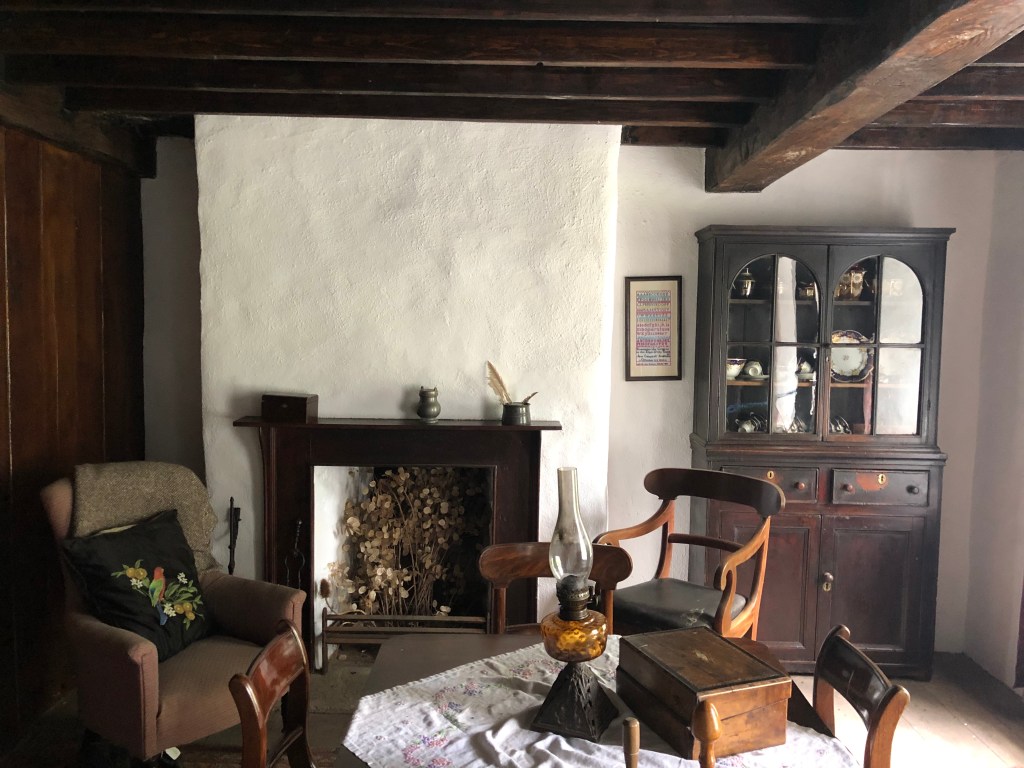
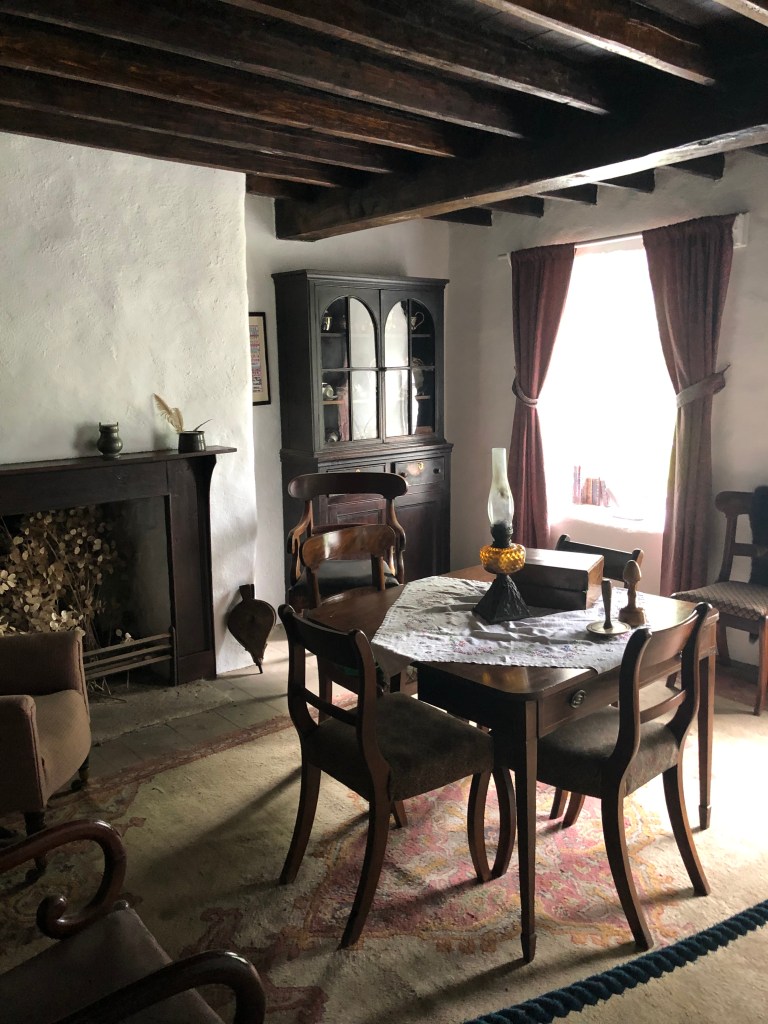
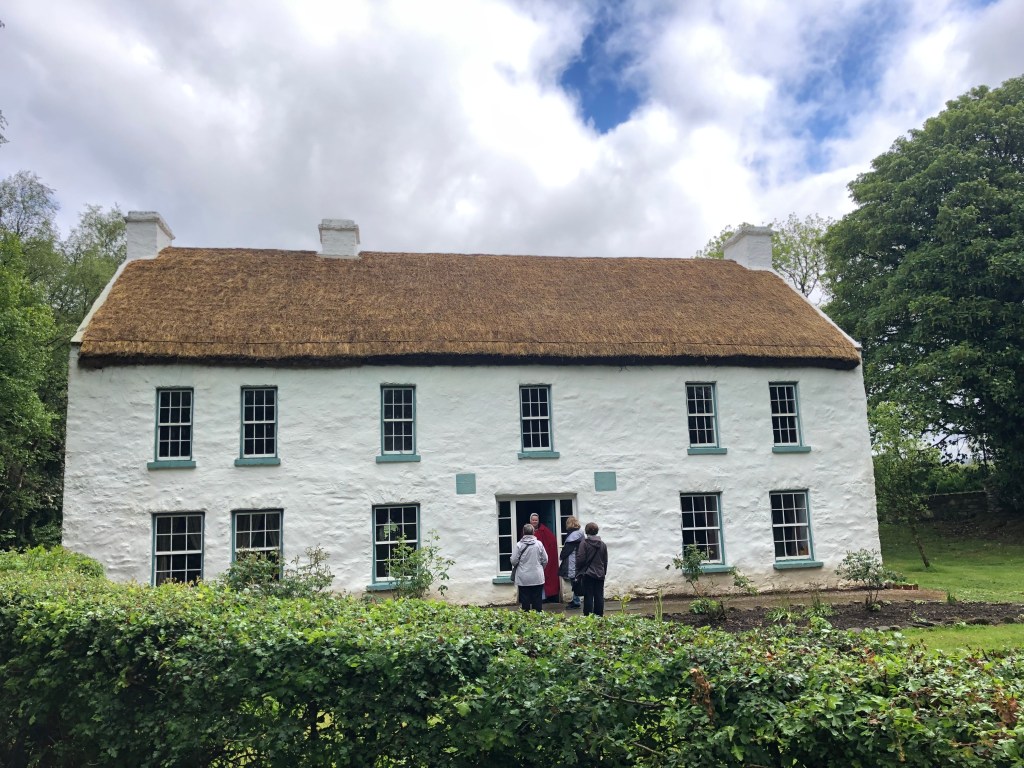
Wealthy person’s house in Ulster Northern Ireland

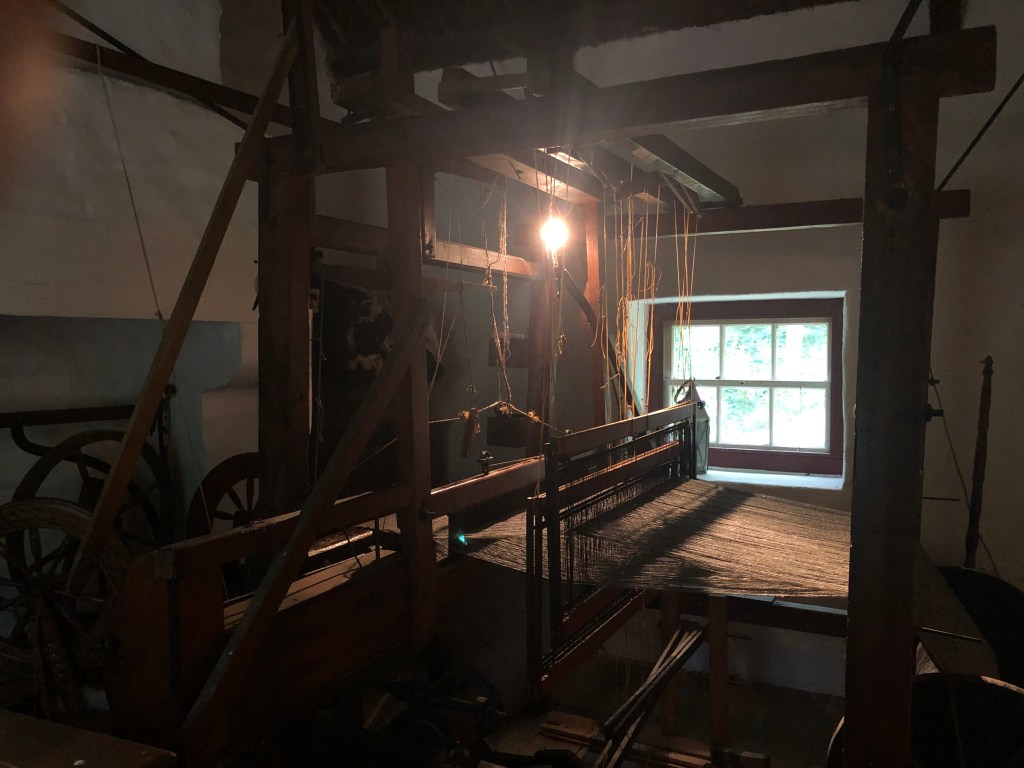
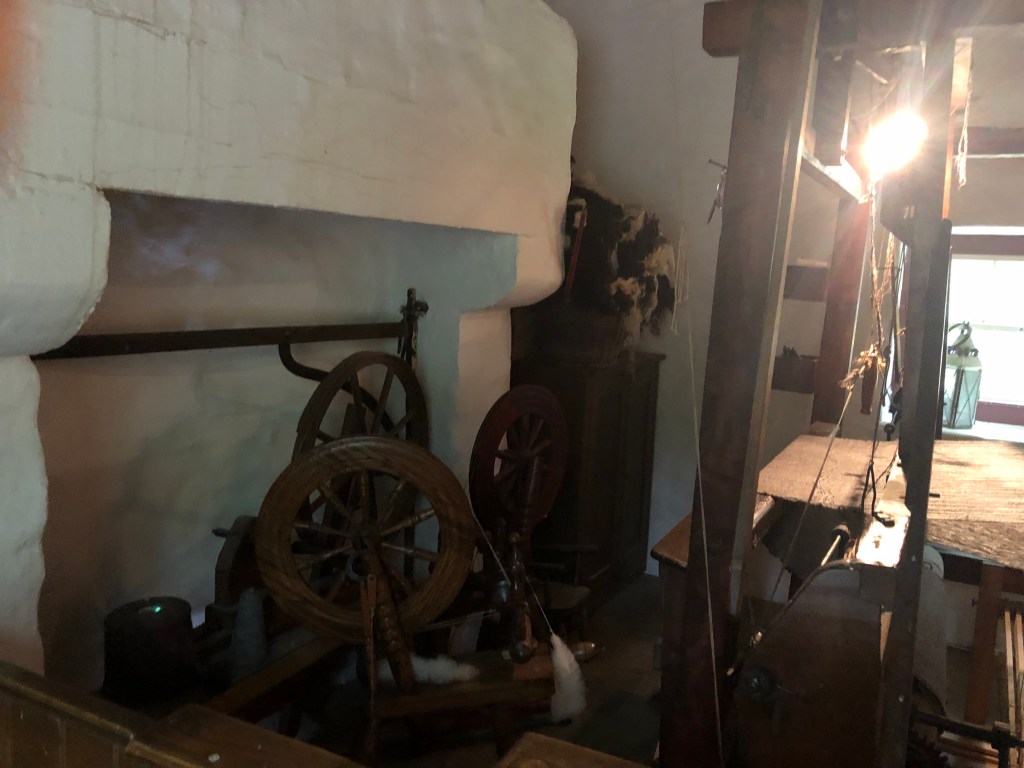
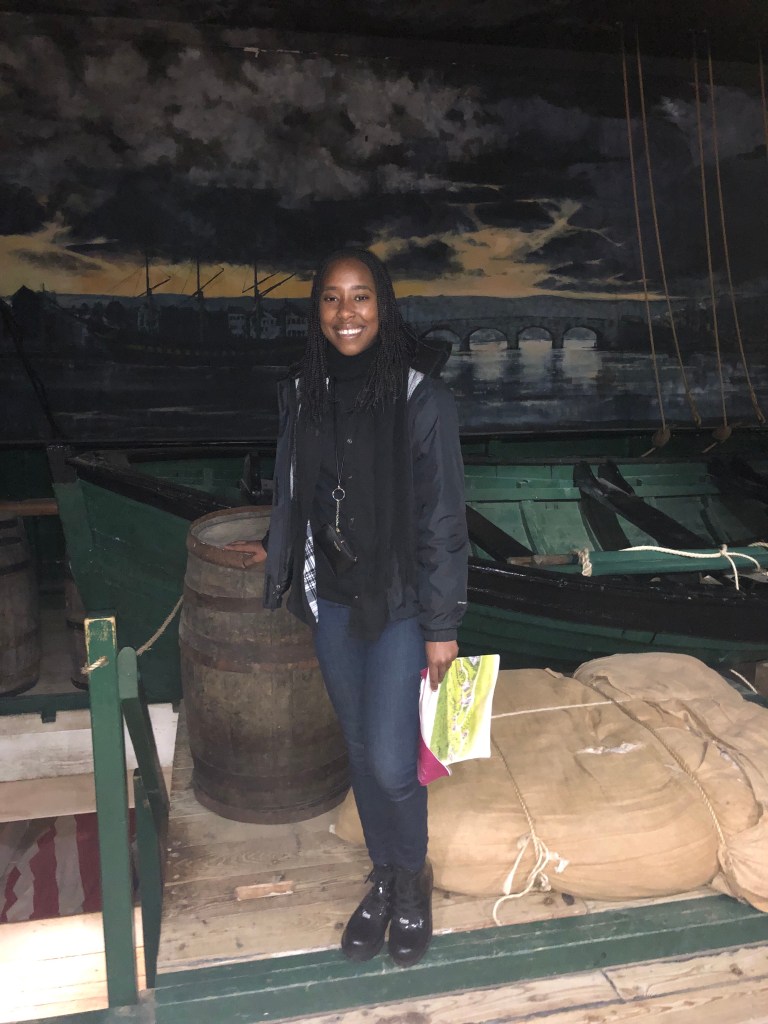
The Ulster Folk Museum is one that replicates the lives of Irish people during the potato famine in Ireland and their live in America. It is separated into two parts. The first part being the old world, which is Ireland during the potato famine. The second part is the new world. The new world, in this case, is America. The two parts of the museum are separated by a replica of the type of ship that would have carried the Irish to America.
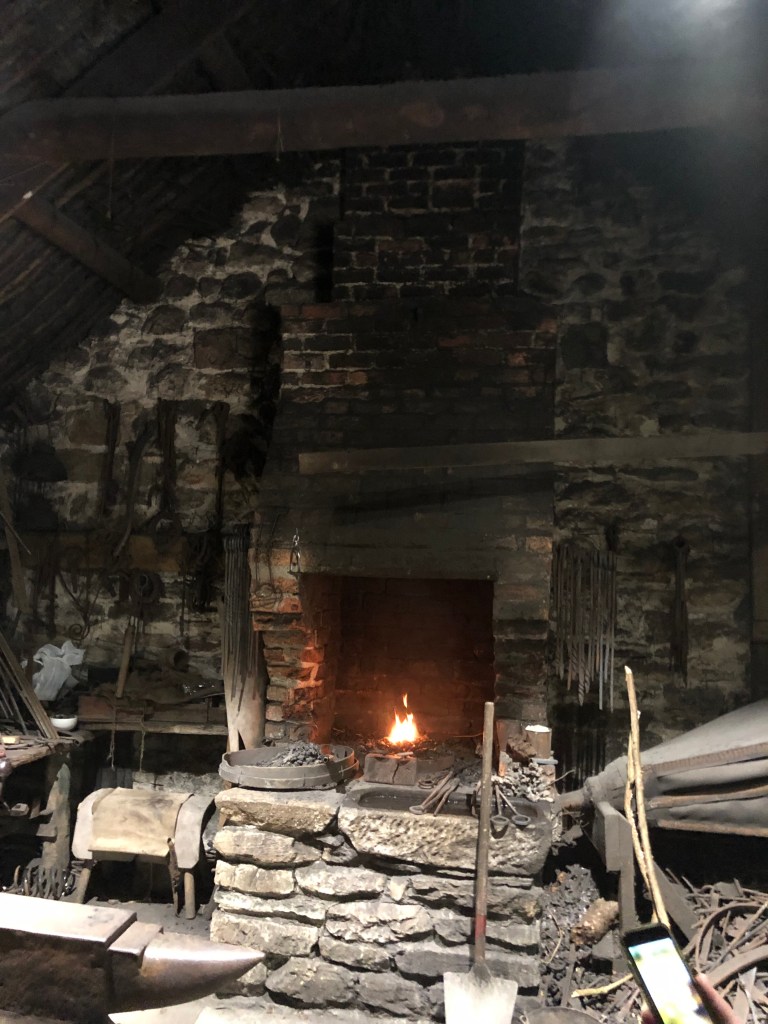
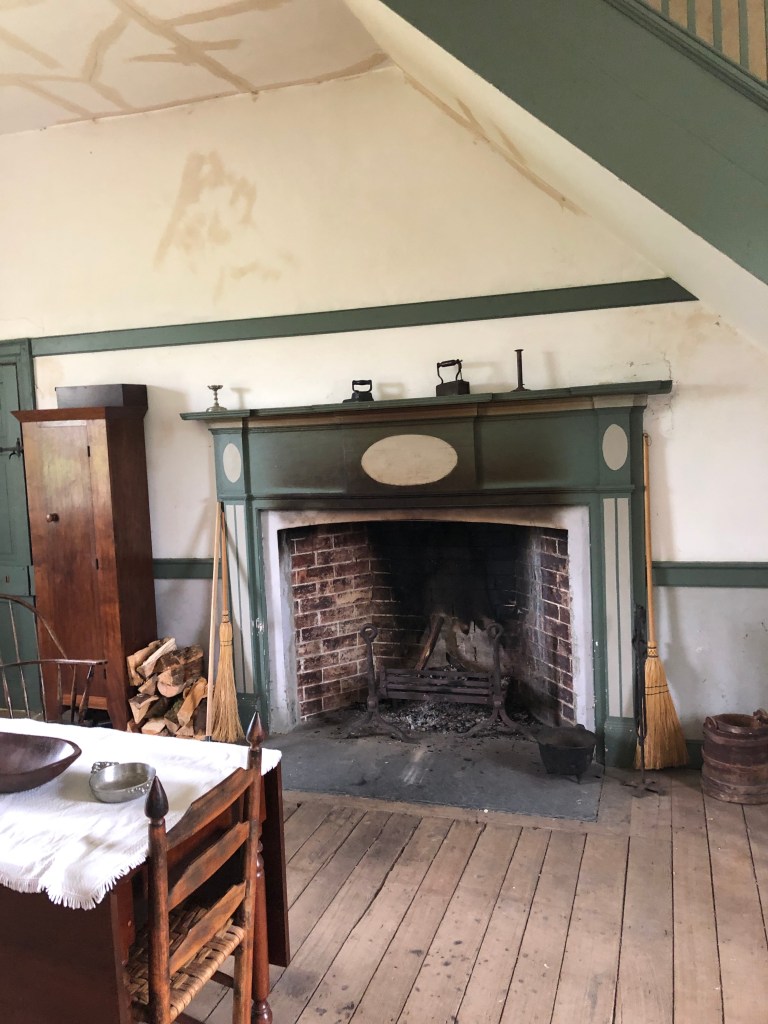
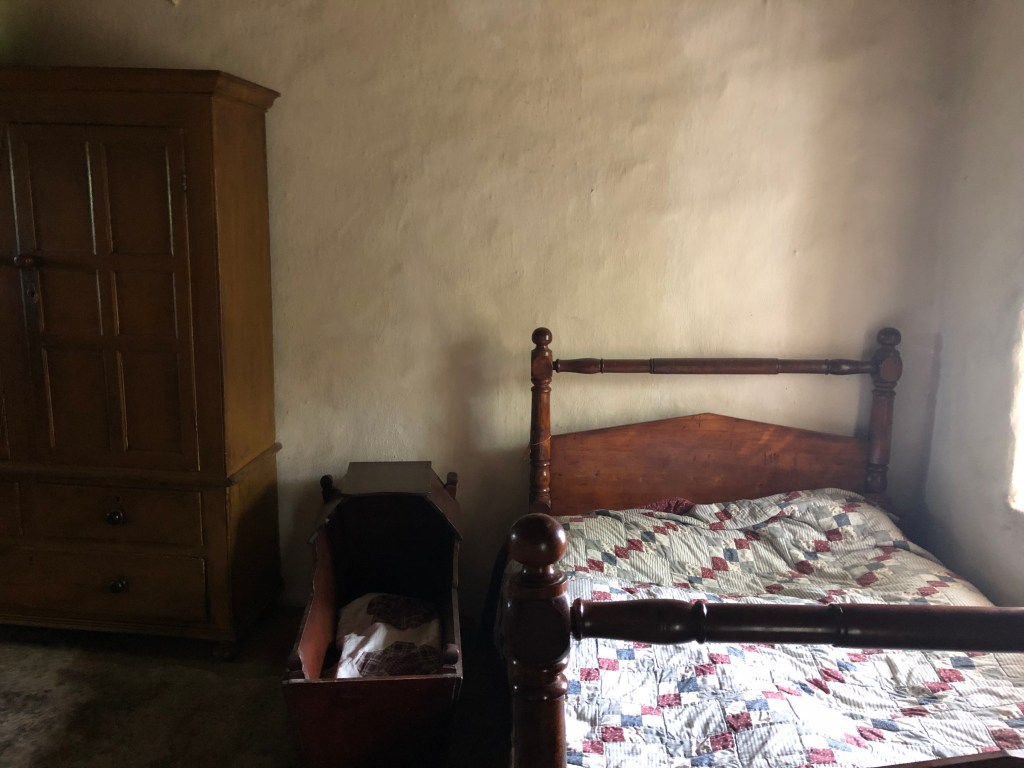
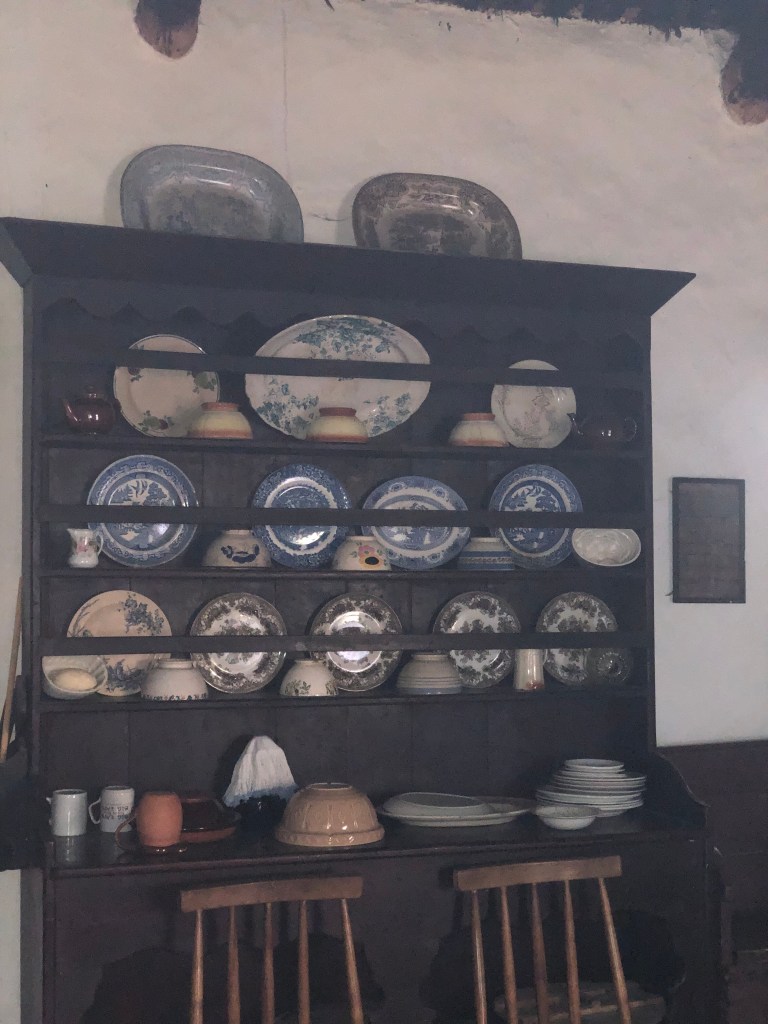
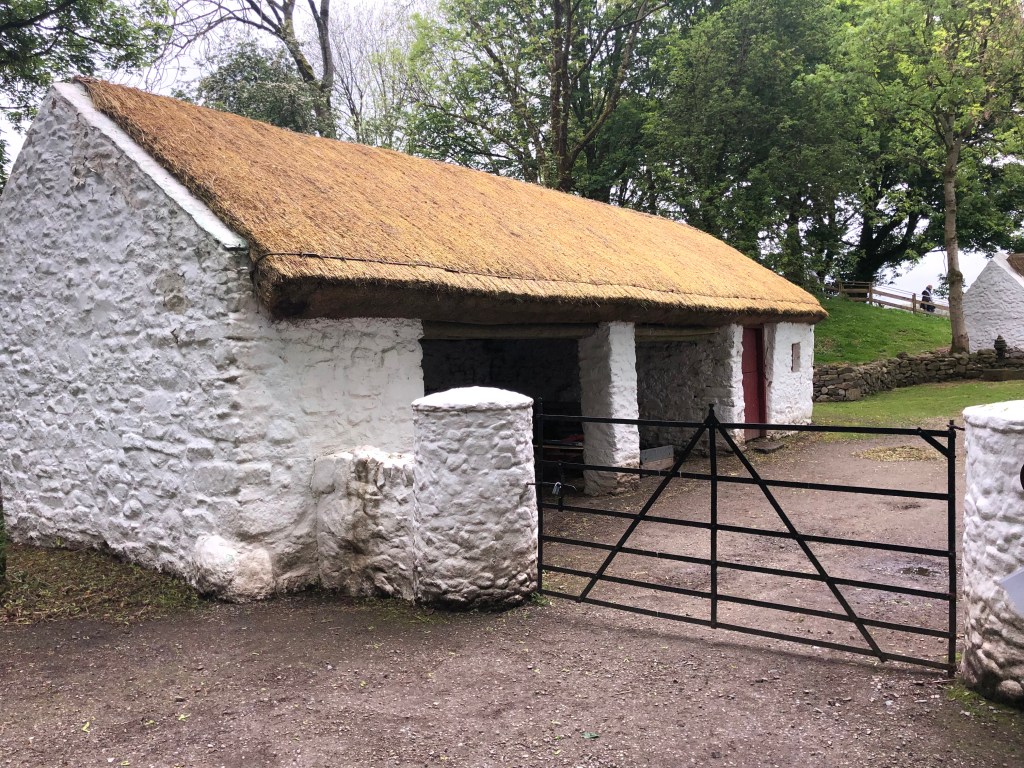
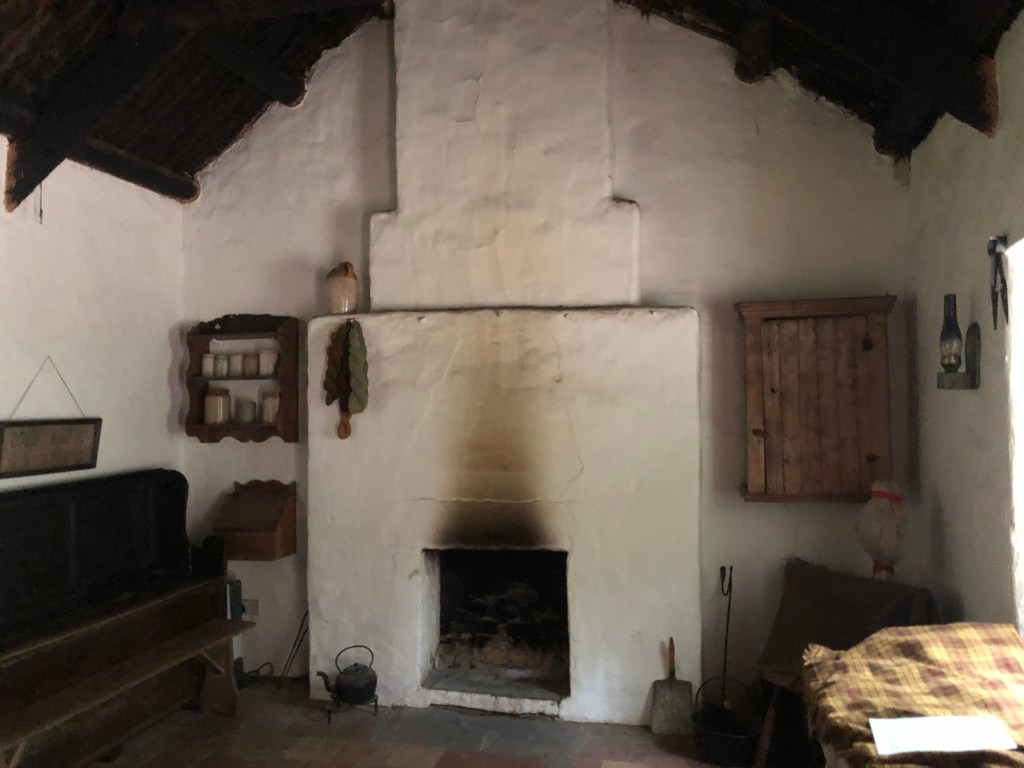
The first part of the museum takes one through the development of Irish life in the country. It shows the different types of houses that they lived in and has actors in most of the buildings that tell the story of the different types of people who would have occupied the dwellings. The first stop, on my walk through the outdoor museum, was a single room cabin. This cabin would have housed a large family in Ireland. They would have all slept in the one room that had the single heat source of a fire place. The family would live in the cabin, and work the fields of a wealthy landowner. They would drink water and eat potatoes, skin and all, for every meal because it was the only thing that they grew on the small plot of land they had. Life was hard for the average Irishman and infant mortality was very high because of the awful conditions that they lived in.
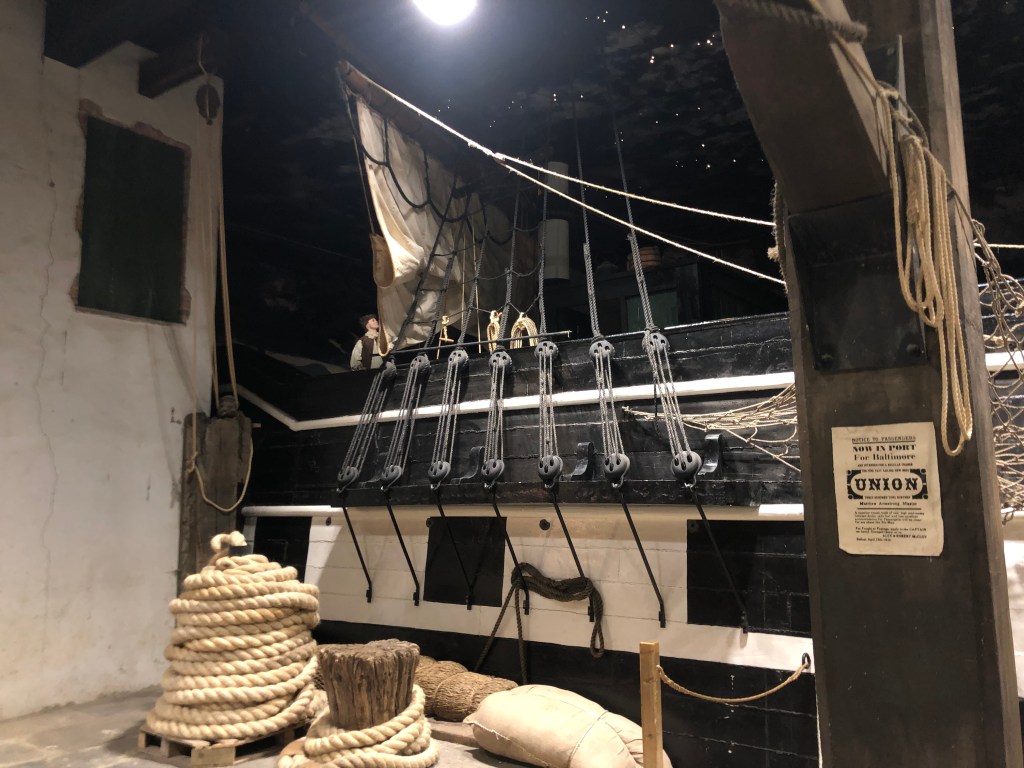
Ship to America

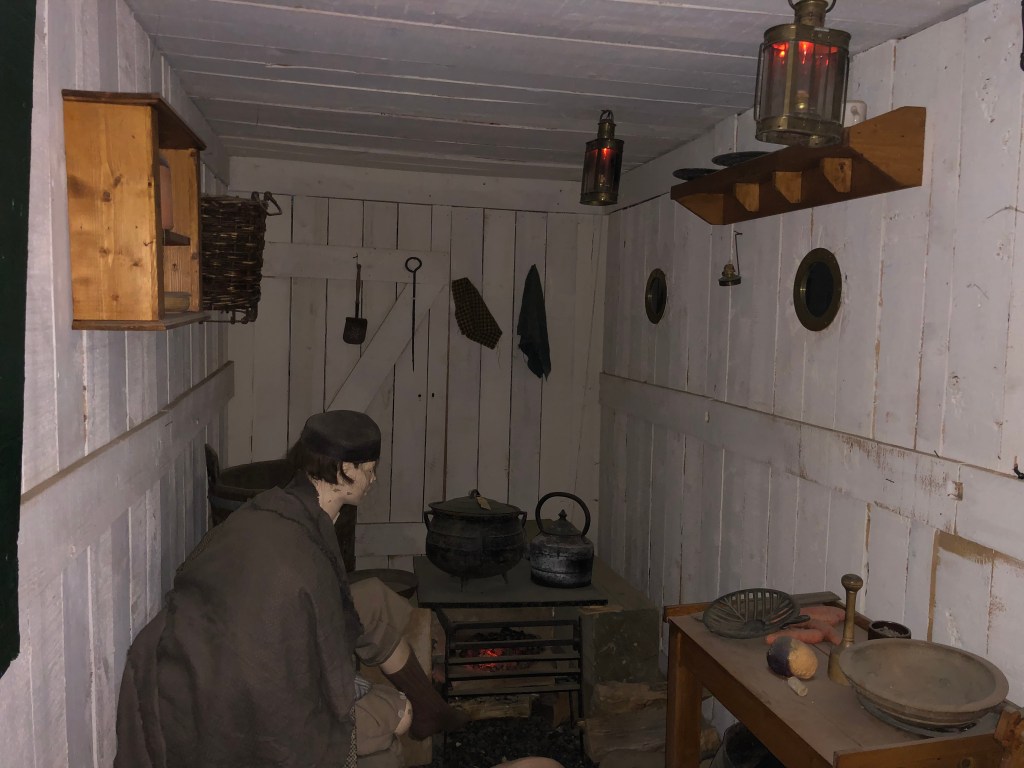
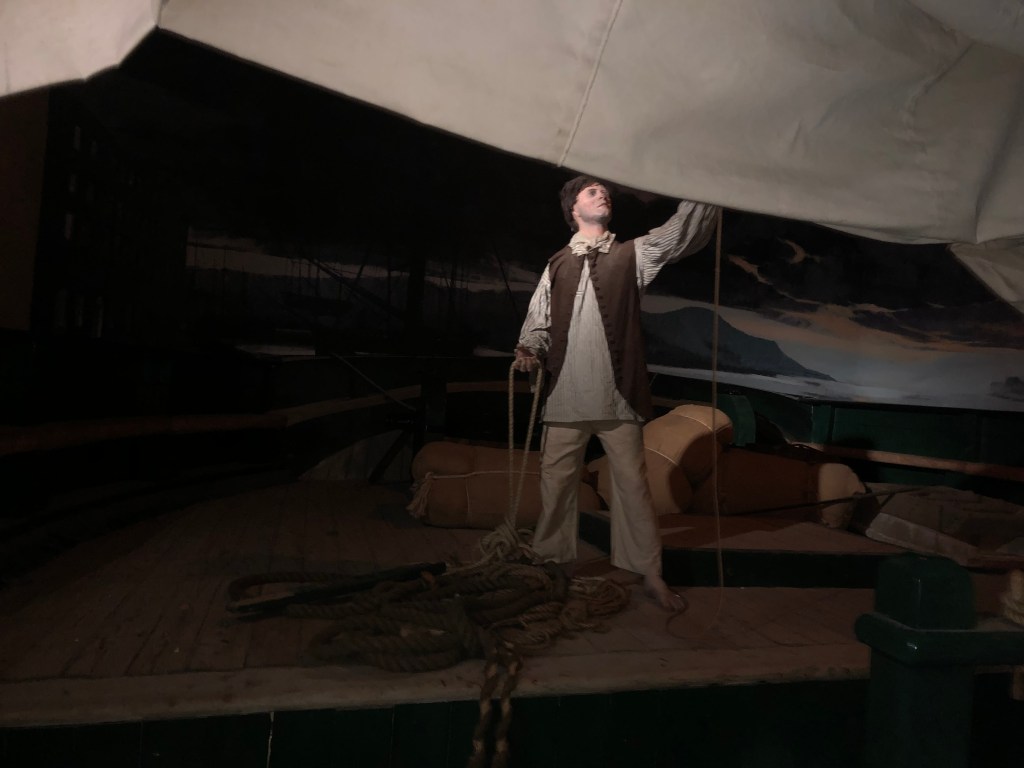
Since the living conditions in Northern Ireland were so abysmal, many irishmen immigrated to America, with the hope of finding a better life. They went on a three month journey from Northern Ireland to America on the ship featured above. The conditions that they had to endure on the ship were unimaginable. Four people had to share one bed during the three month trip, and everyone was confined to the bottom of the ship. They were not allowed to go on deck for fresh air. One can only imagine how uncomfortable and stinky the living area of the ship would have become during the tree month trip. One would have had to endure the sickness and feces of everyone that was on the trip, all on the slim chance that one would be able to make a better life in America. I never would have imagined how dangerous and hard the lives of those emigrating from Ireland was. Going into a replica of the ship and seeing the conditions for myself allowed me to really understand the gravity of the situation that they faced.
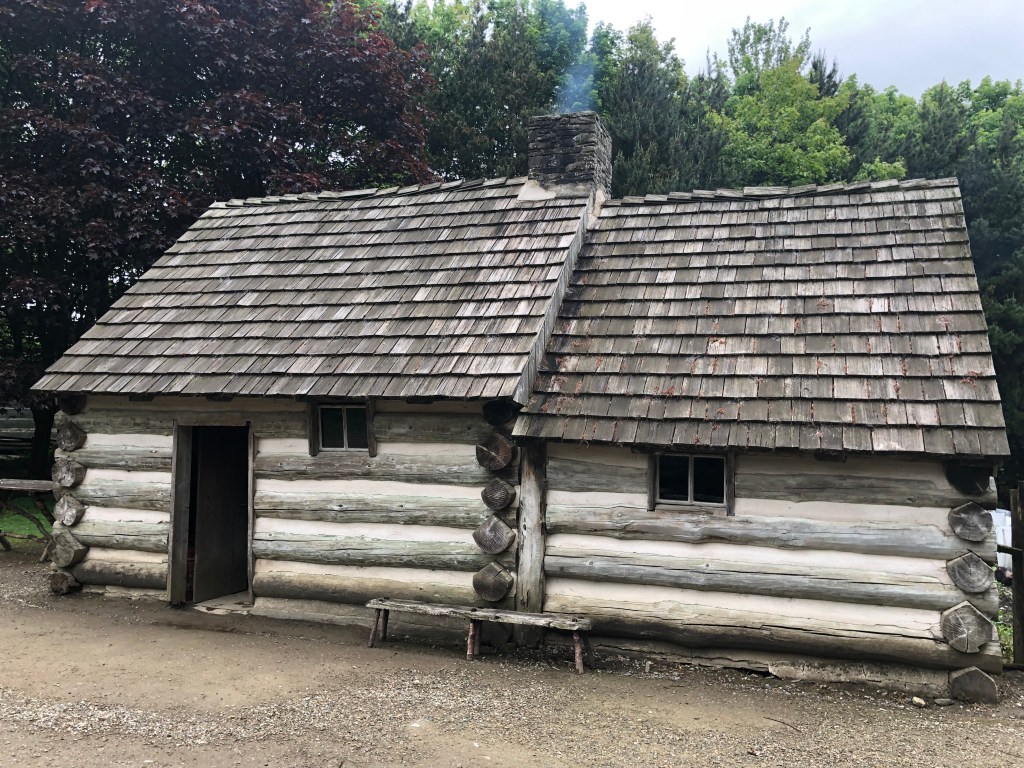
Small log cabin in America

Once one arrived in America, everything did not just fall into place. Those who emigrated from Ireland faced immense challenges when they arrived. They had a hard time finding jobs and places to live. During my tour of the indoor part of the museum, I learned that, in New York, many Irishmen had to live in terrible conditions. They sometimes had to share damp, cold, tiny apartments with at least ten other individuals. They immigrated to America because they believed that land was in abundance and that they would be able to become self sufficient. However, the places they arrived at, such as Boston and New York, were full and not much empty land was around for the taking. They would have to travel to places like Pennsylvania and contend with Native Americans for the land there.
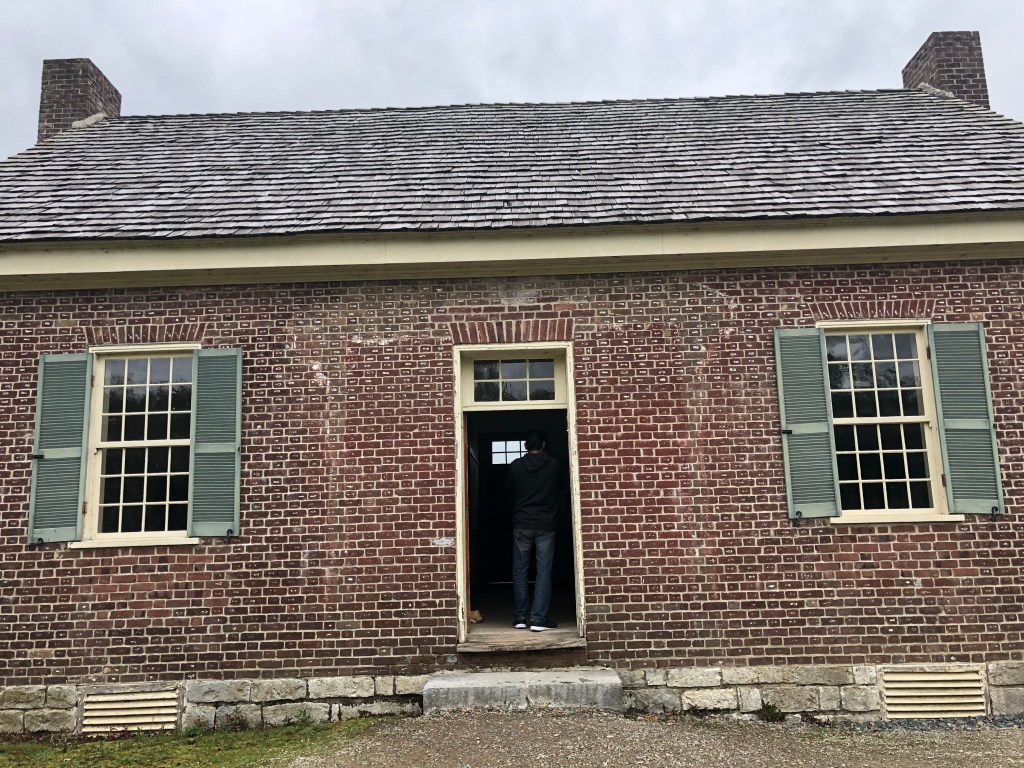
Irish Brick House in America

Even though life in America wasn’t exactly as easy as some Irishmen believed it would be, many of them succeeded. The Melon family opened a bank and did very well for themselves. Ulysses S. Grant the general for the union army, during the American Civil War, and President Andrew Jackson were both Ulster- scots and thus from Northern Ireland. America is full of Irishmen because of their emigration from Ireland. In fact, a fun fact that I learned, that may surprise most, is that more Irish people live in American now than in Ireland!
Featured

Peace Wall or Segregation

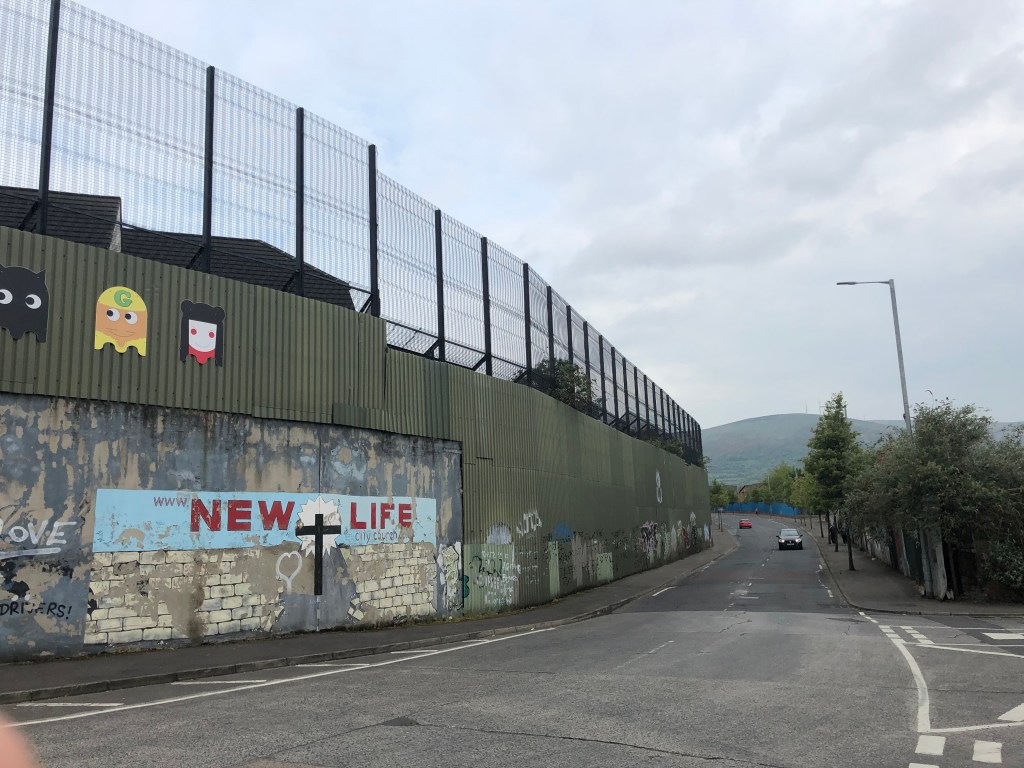
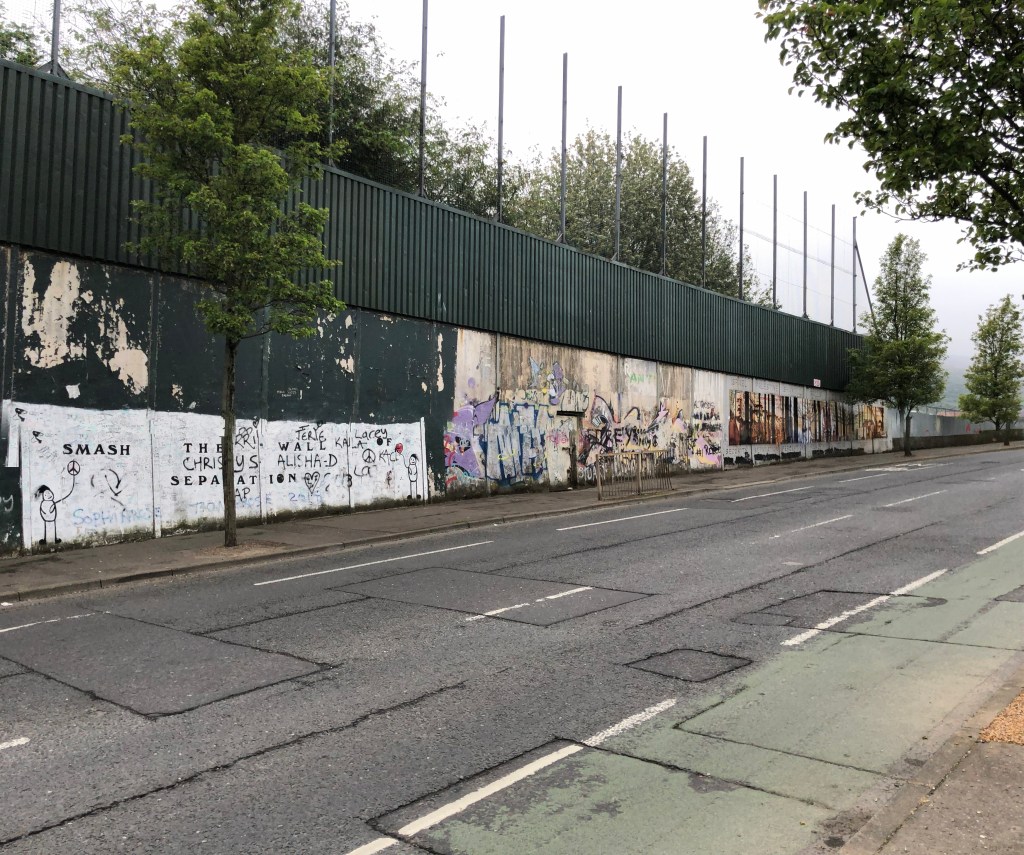
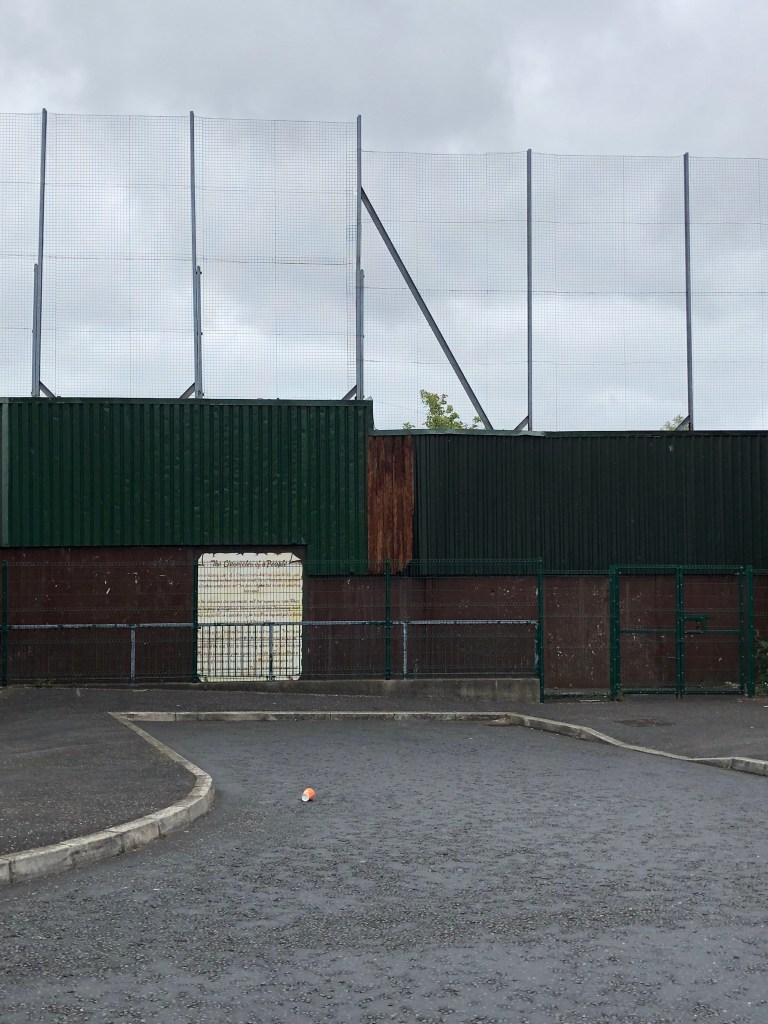
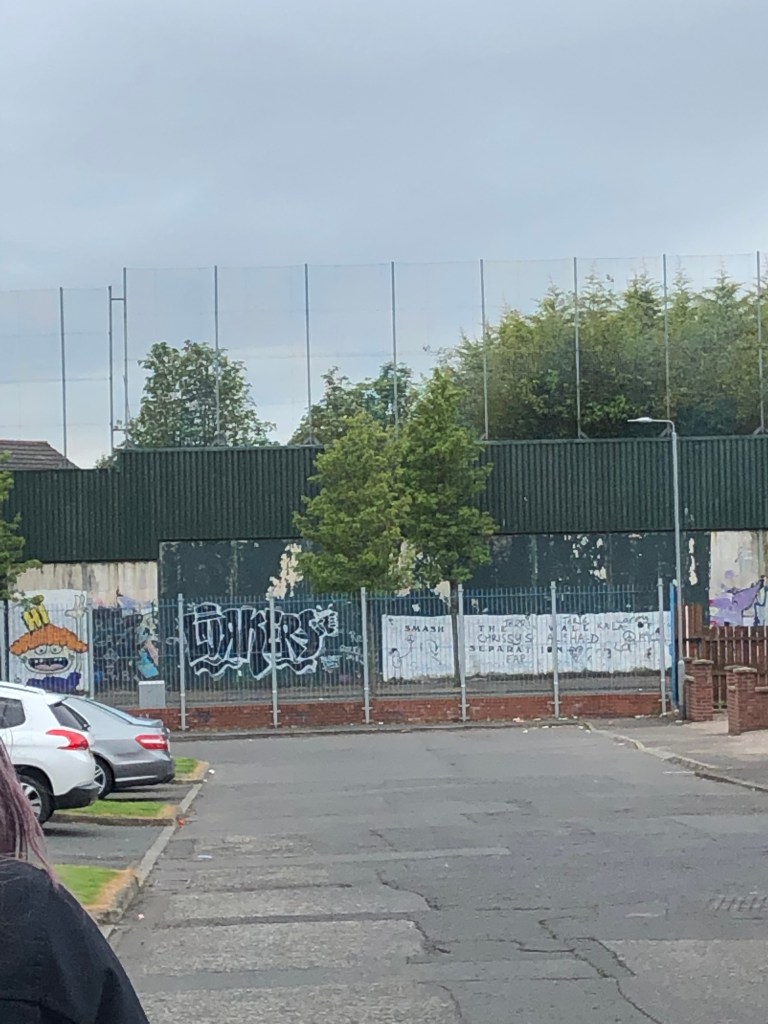
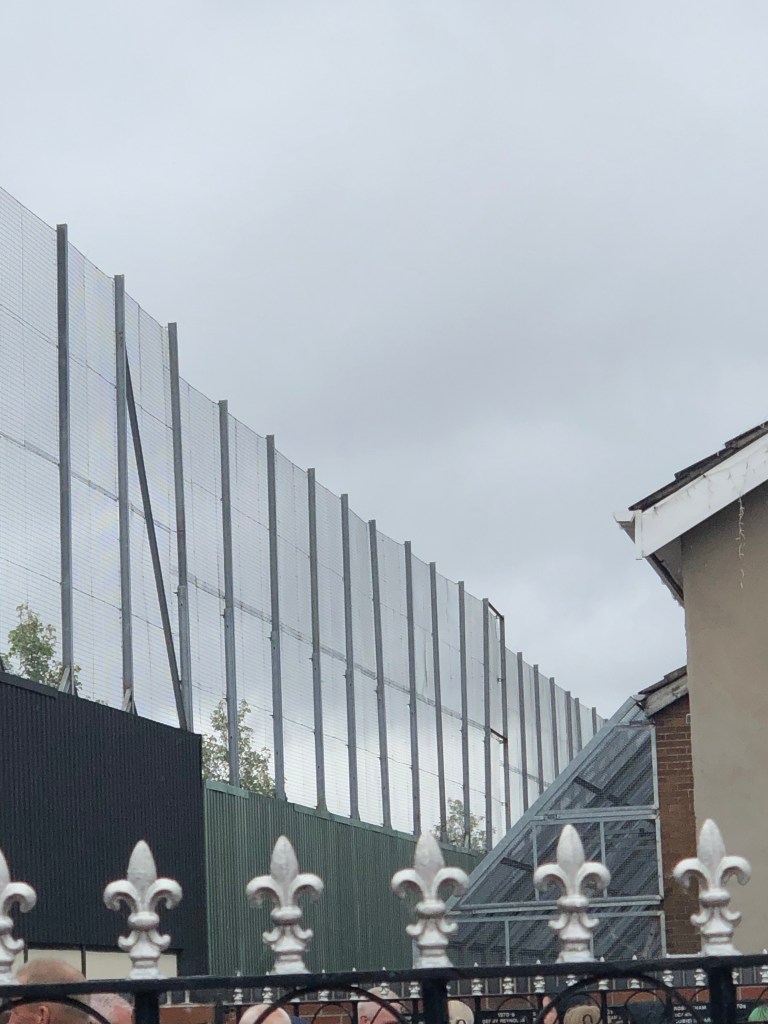
Peace Wall between Shankill Road and Falls Road community

Northern Ireland has been the victim of a tremendous amount of horrible violence, in its long history. Protestant- unionists- and Catholic- nationalist- tend to not get along very well, and the peace wall that was necessary between the two communities speaks to the extent of mistrust between them. The peace wall was put in place in order to stop the violent conflicts that regularly occurred between the Protestant and Catholic communities of Shankill Road and Falls Road. The wall itself runs 2,624.6 meters.
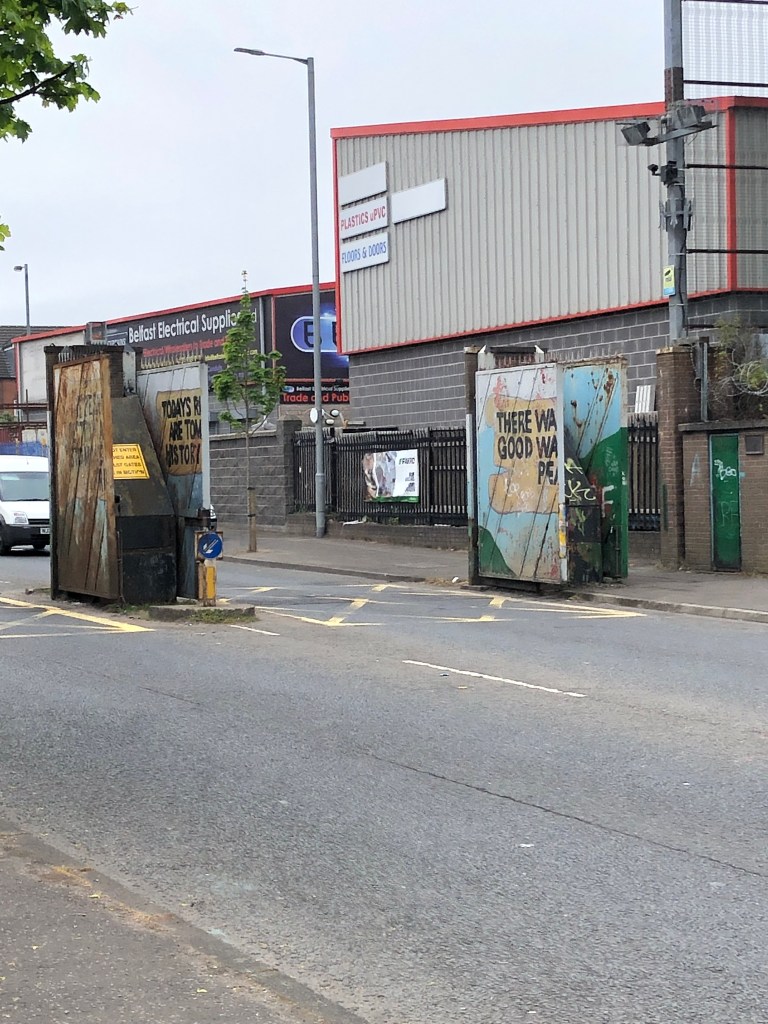
Gates that separate the 2 communities

The communities of Shankill Road and Falls Road also have a gate that accompanies the wall that separates them. This gate is heavily monitored by the Police Service of Northern Ireland (PSNI). They keep track of the goings and comings of those who cross back and forth through the communities through meticulous surveillance. On a walking tour of the communities, I was informed that the gates have been closing at 8 pm every night. in order to keep the two communities separate and stop troublemakers from getting in to each community. The presence of a gate that locks Protestants out of the Catholic community and vice versa shows that the conflict between the two communities is not simply what one would deem a petty squabble. It is dangerous and can escalate at a moments notice.

To those who are not aware of the years of conflict between the two opposing sects in Ireland, the wall may seem imposing and over the top, but it is an integral component in maintaining peace between the Catholic and Protestant communities. While on the walking tour of the wall in the Shankill Road community (Protestant), my tour guide, an ex- combatant, stated that the wall was simply a barrier that stopped the two communities from finding common ground and getting to know each other. He said that he believed that the wall would be down in 2023, so that the new generation would be able to learn to work and live together. His belief is that the wall is a part of the problem and that it is why the two communities continued to be so segregated.

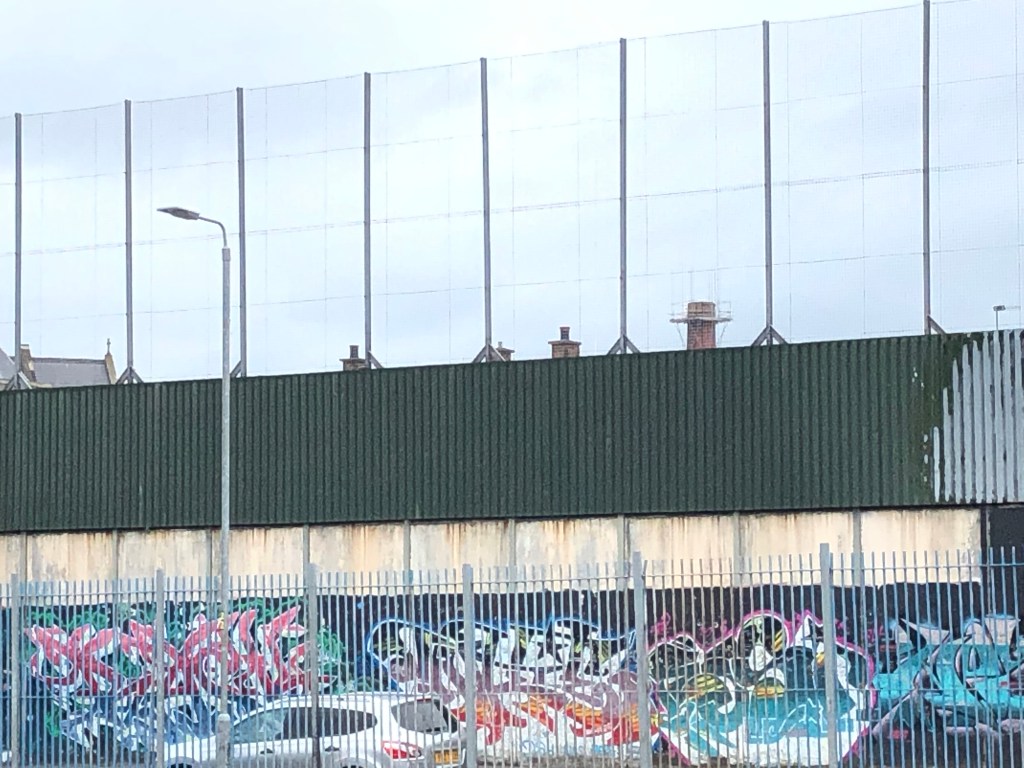
Grated gate protecting someone’s backyard from bombings

In contrast, my second tour guide, a Catholic ex – combatant, stated that he did not see the walls coming down anytime soon. To him, the walls are still a form of protection for the Catholic community and not simply a barrier to the integration of the two communities. In the photo above, if one looks closely, one can see that there is a fence like structure covering up the backyard of a person’s house. This photo was taken in the Falls Road Catholic community. People in the Catholic community who live close to the wall often had bombs and such thrown over into their backyards, and this was the solution to the problem. So for lots of Catholics, the walls are simply more than a means to an end; they are a blanket of safety.

In this way, the wall comes to be seen in the two communities as two different things. It is either a savior or a hinderer. But, I think that such a dichotomy may be too simple. The Peace Wall is complicated and perhaps is a combination of both savior and hinderer to progress. What I do think, though, is that until both communities come to understand how the other views the wall, the wall will remain in place.

Featured

A Picture is Worth a 1000 Words and in Northern Irelands Case Maybe 2000.

I know the title may be a little, okay maybe a lot, cliche, but it is certainly an accurate saying when it comes to Northern Ireland.

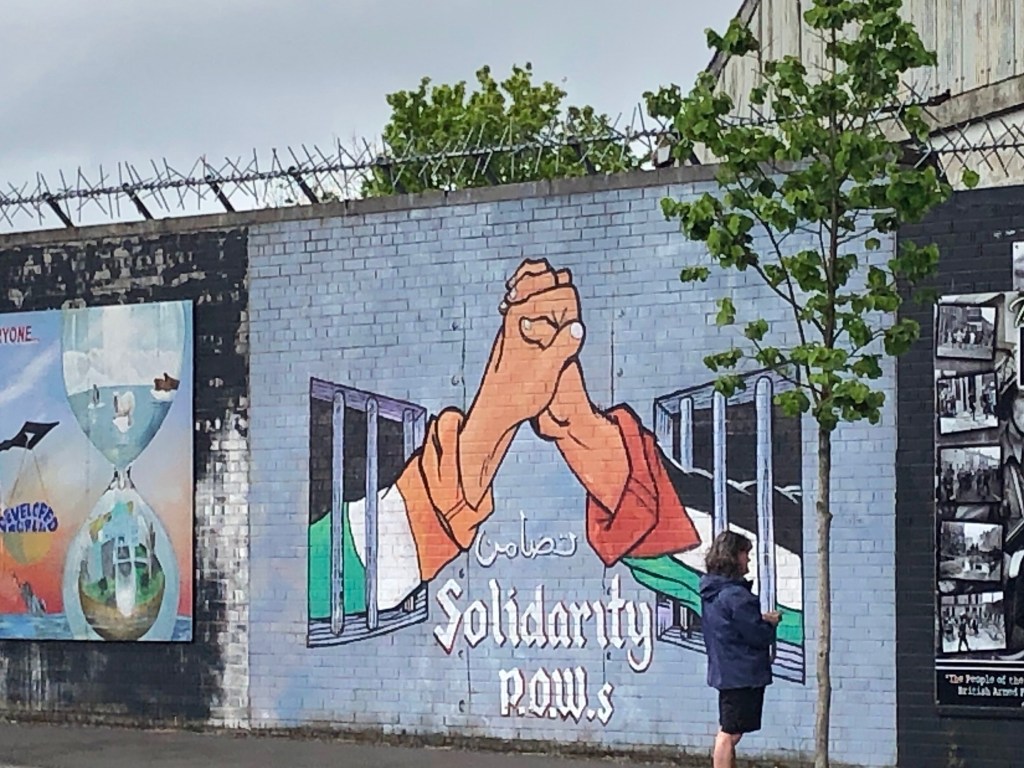
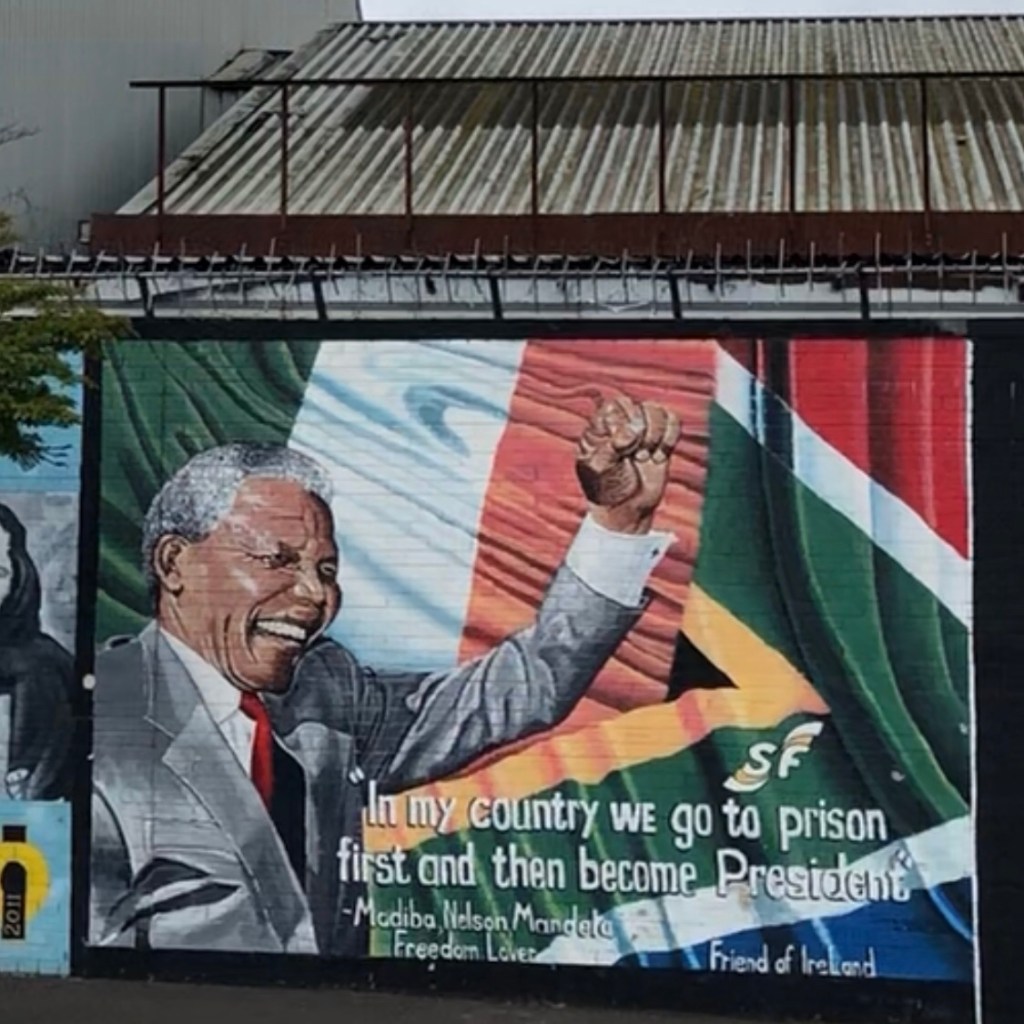
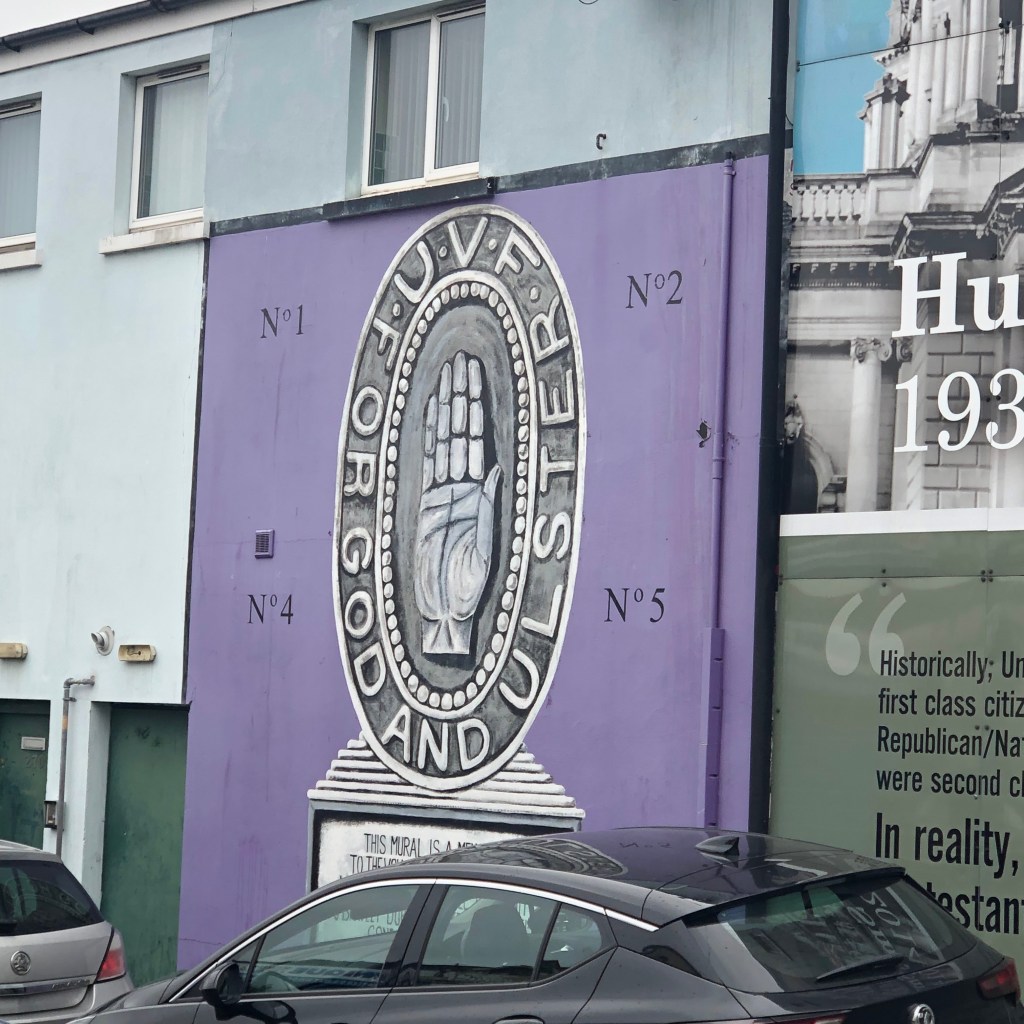
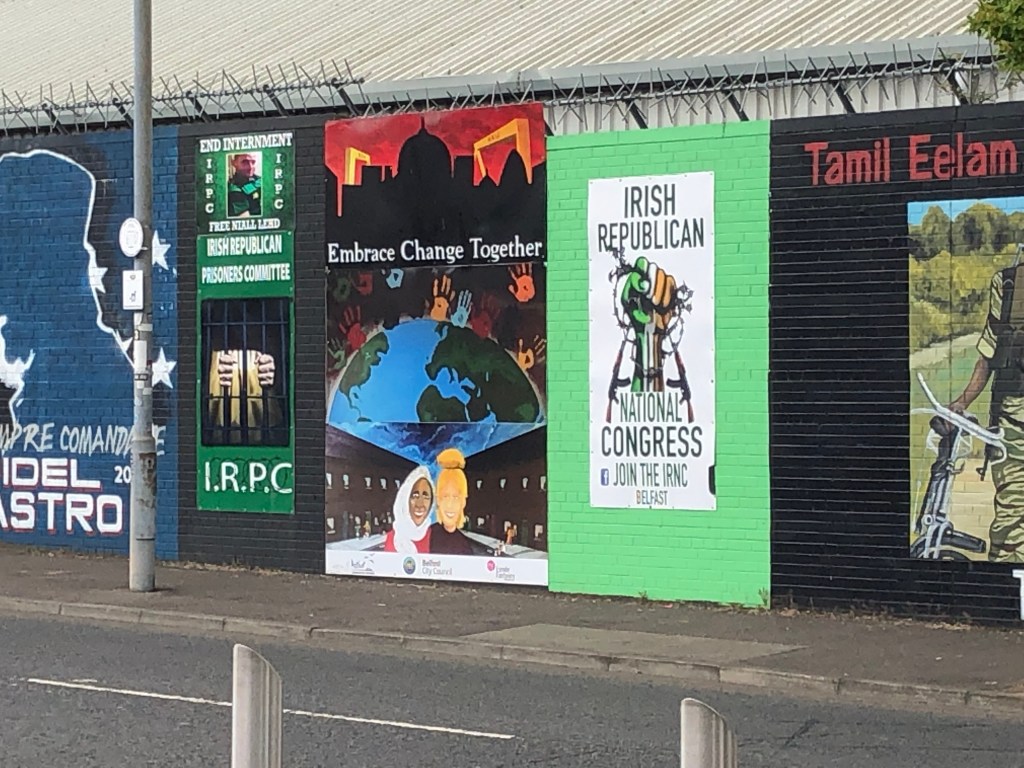
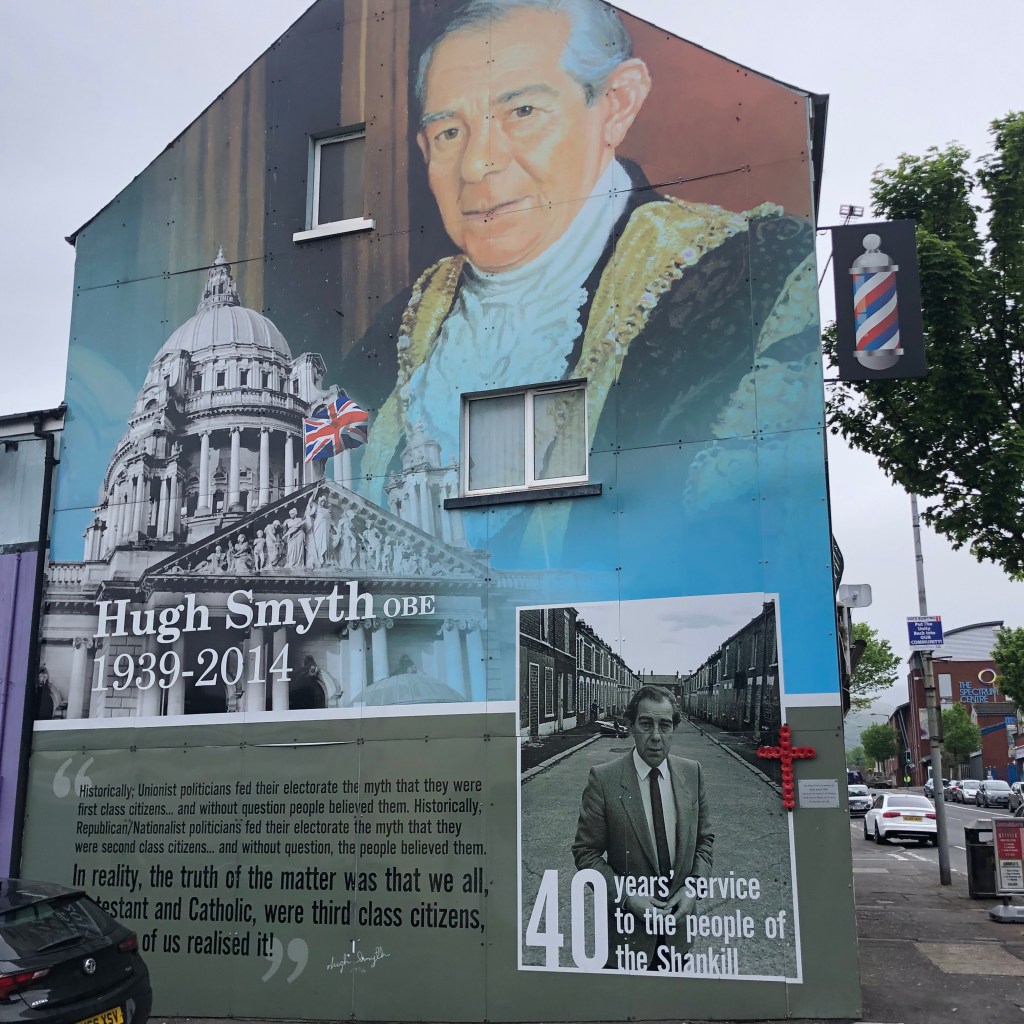
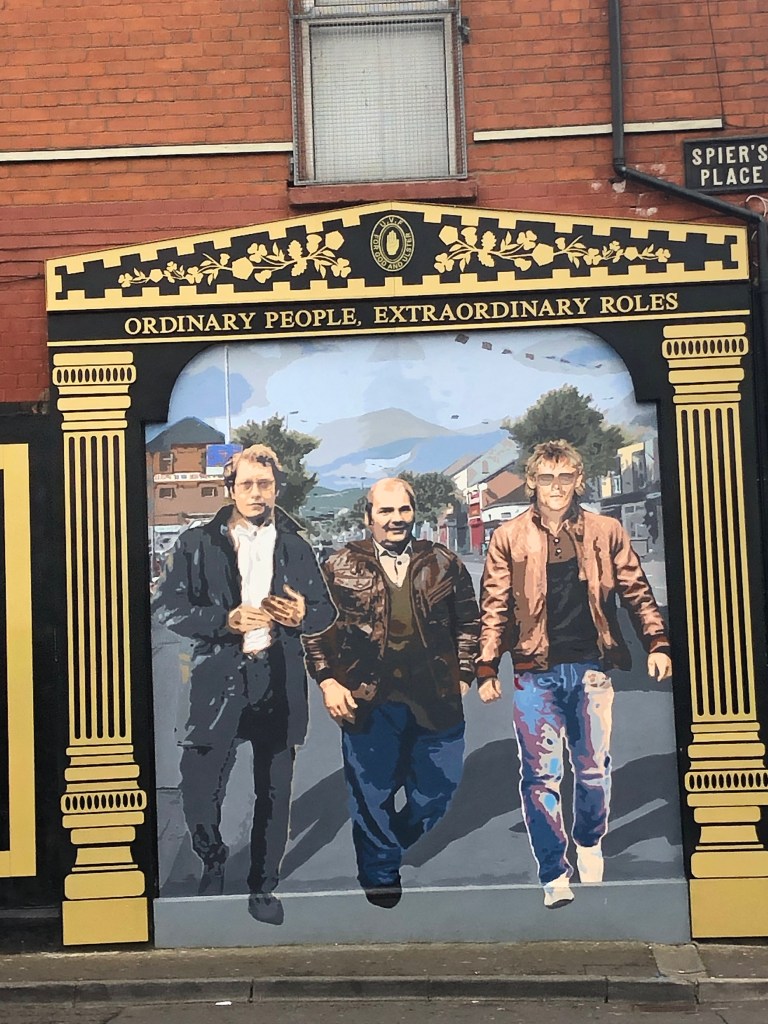
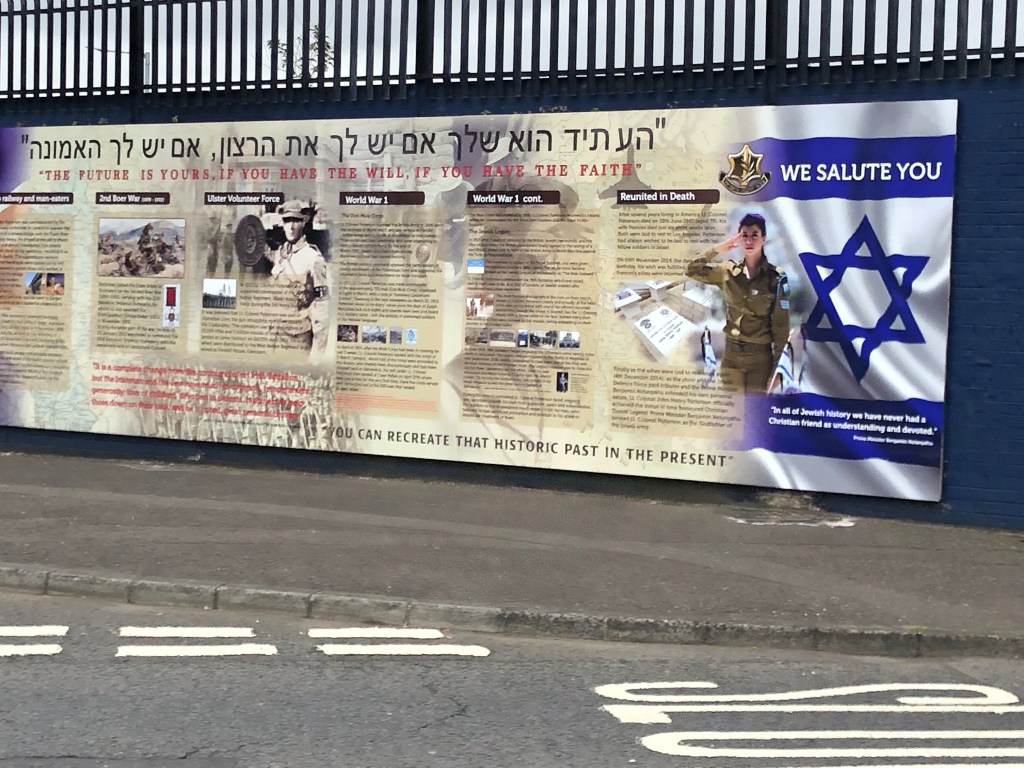
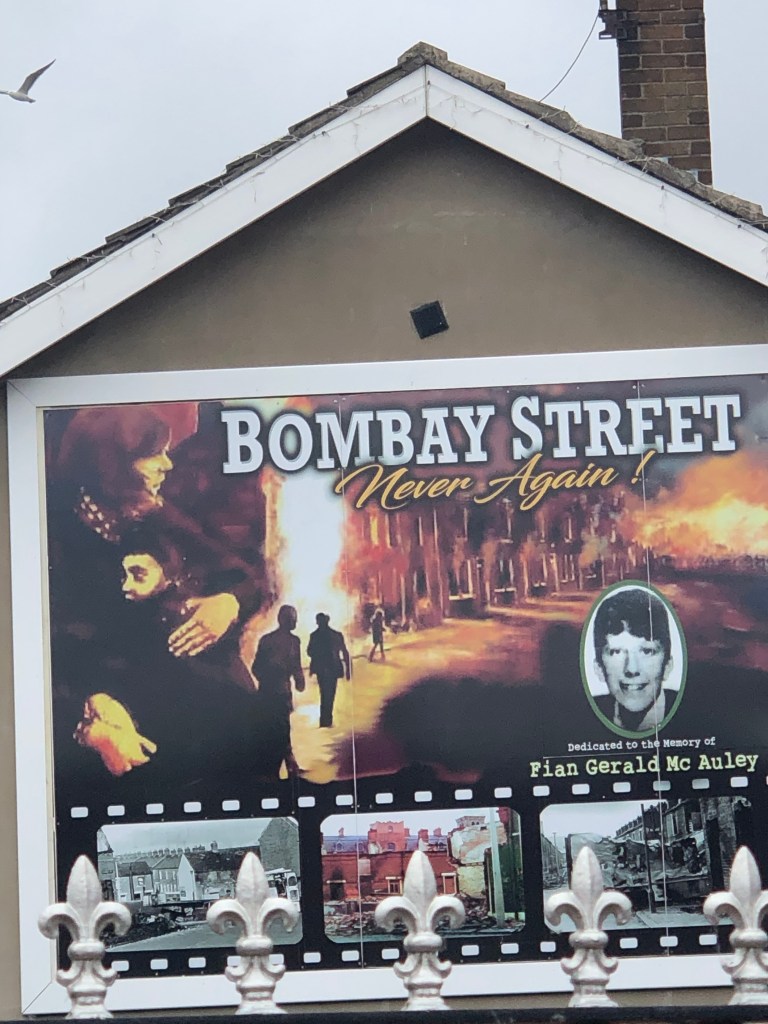
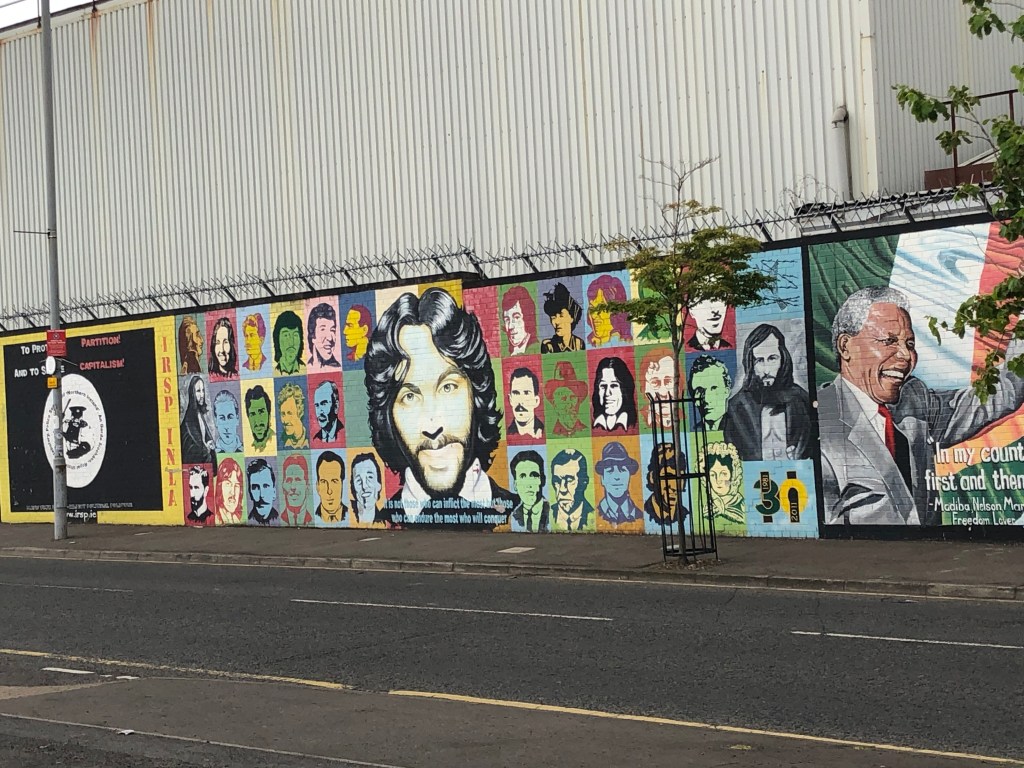
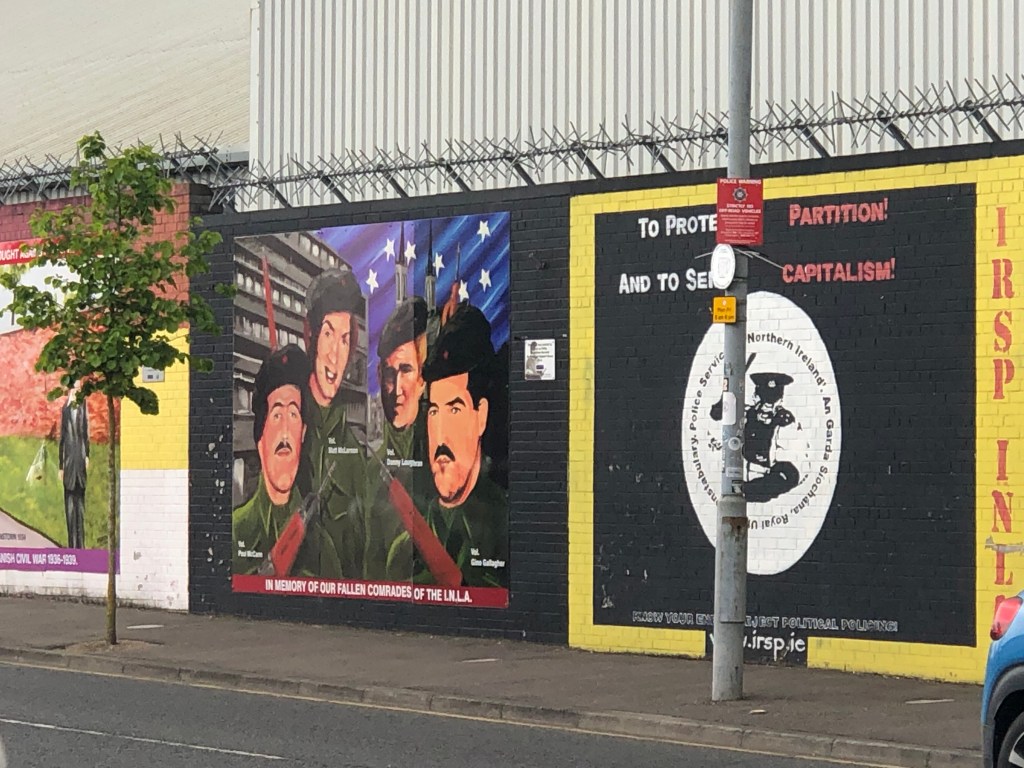
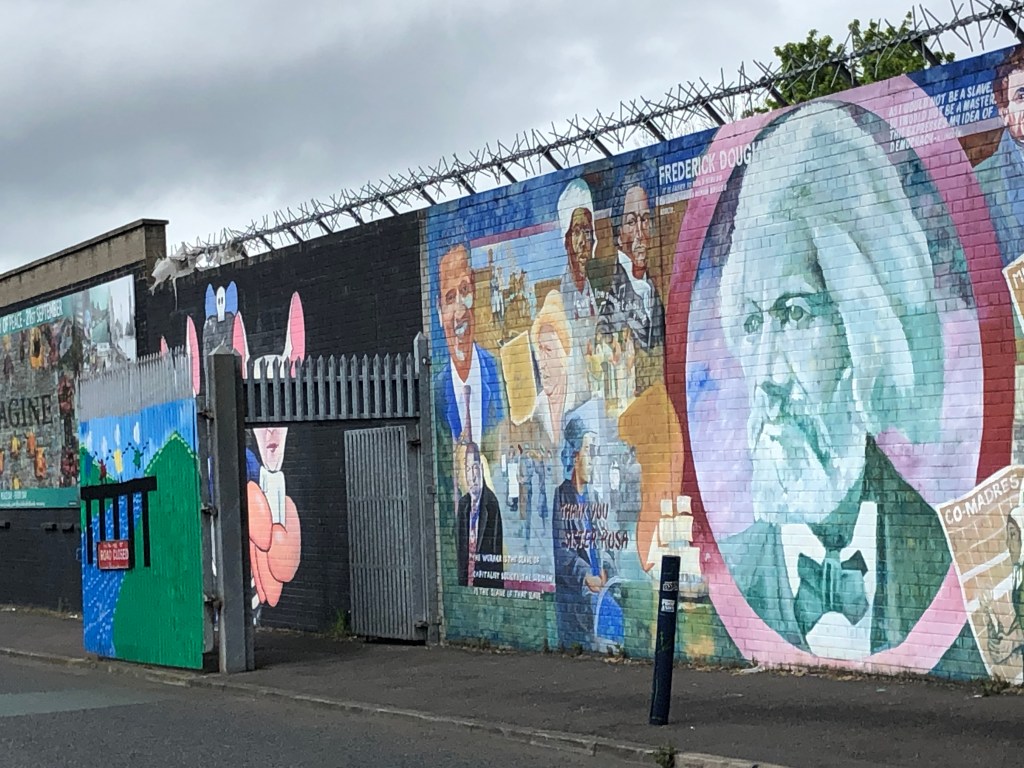
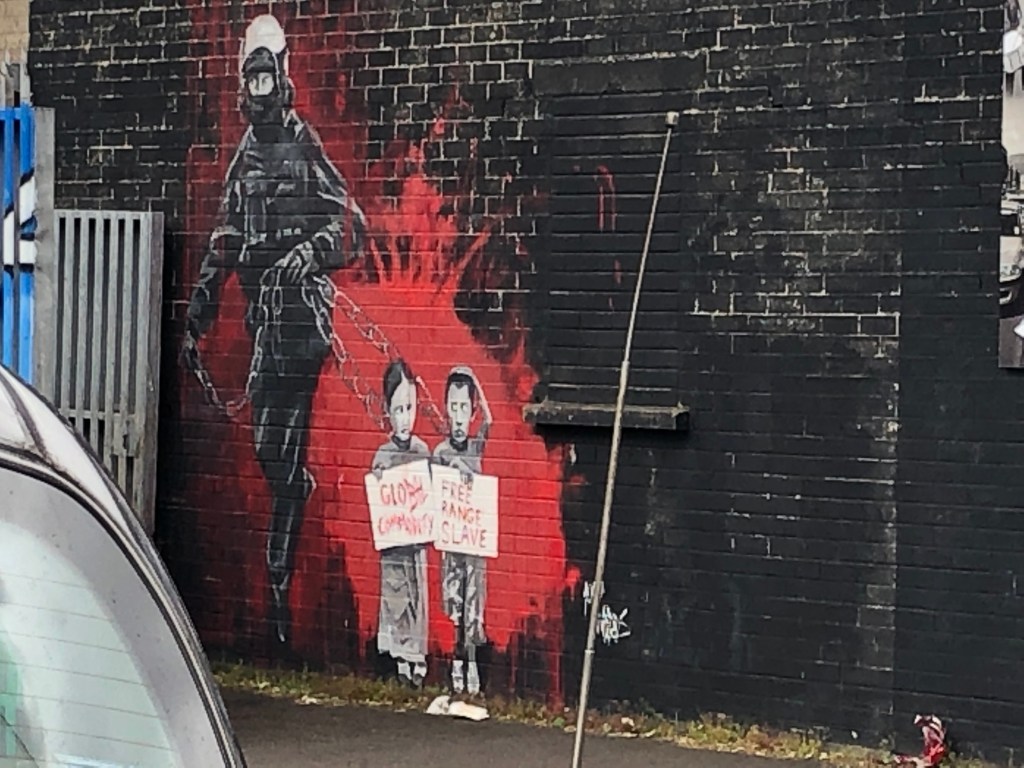
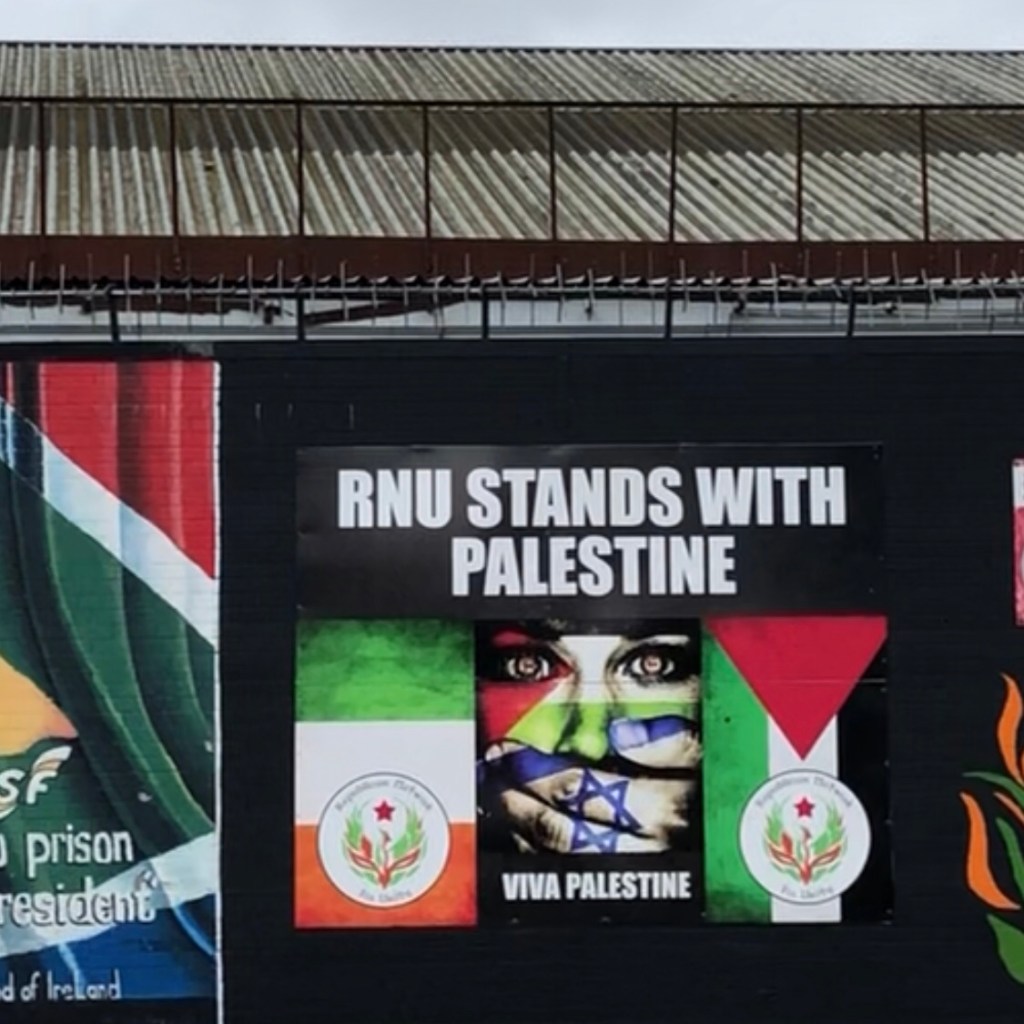
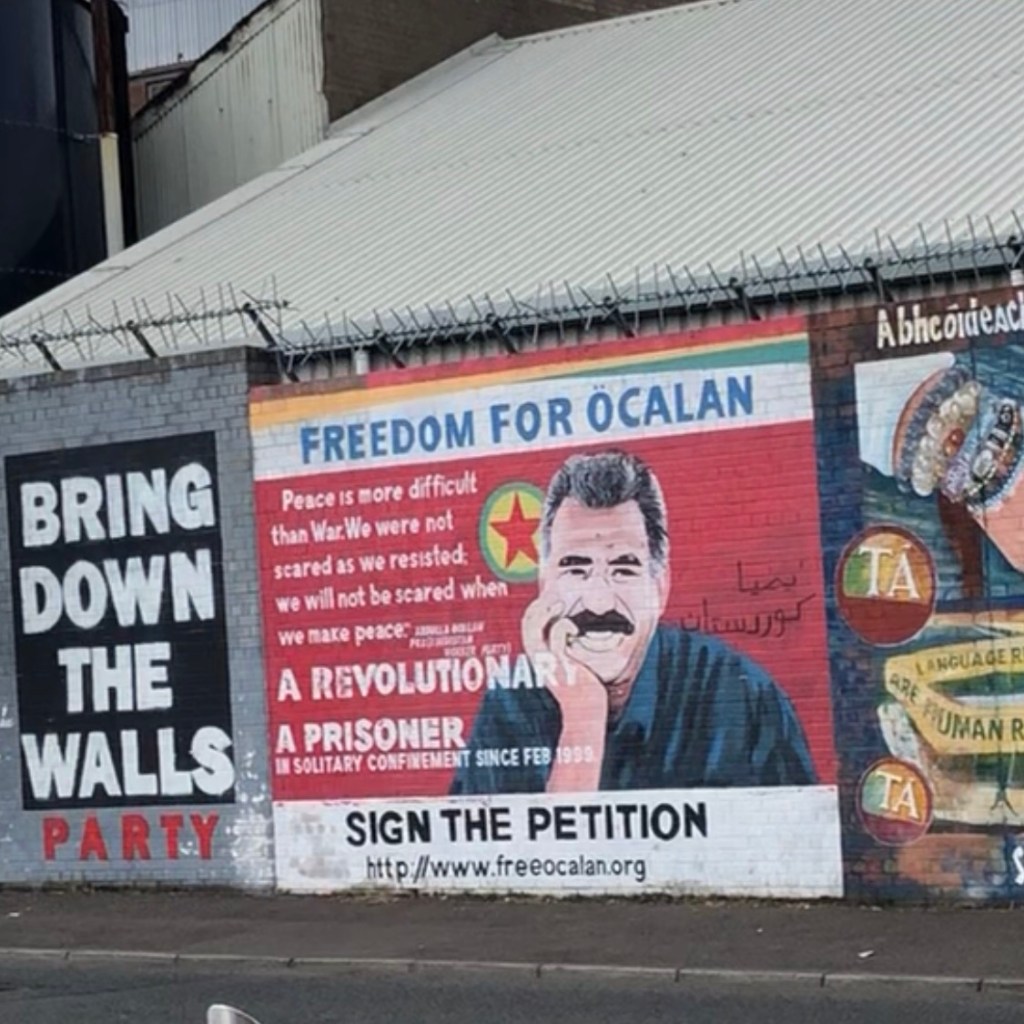
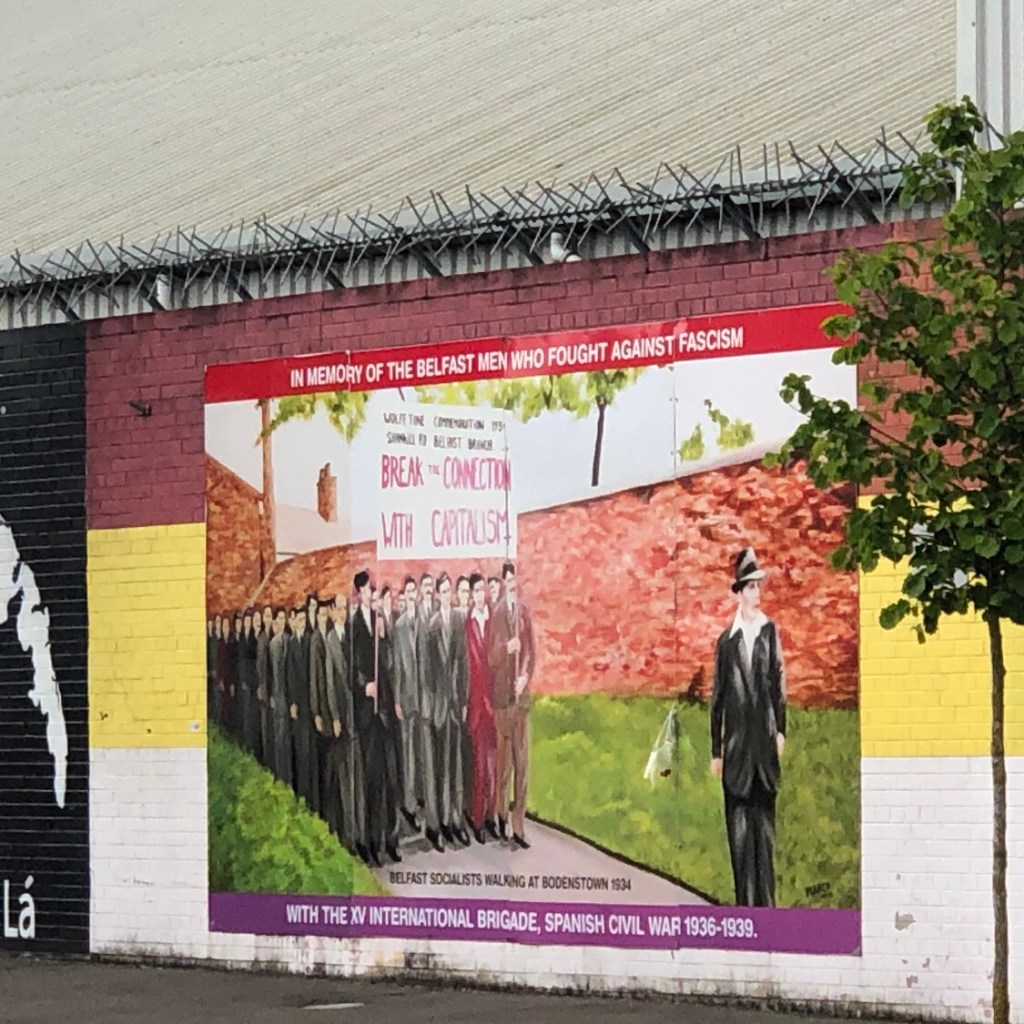
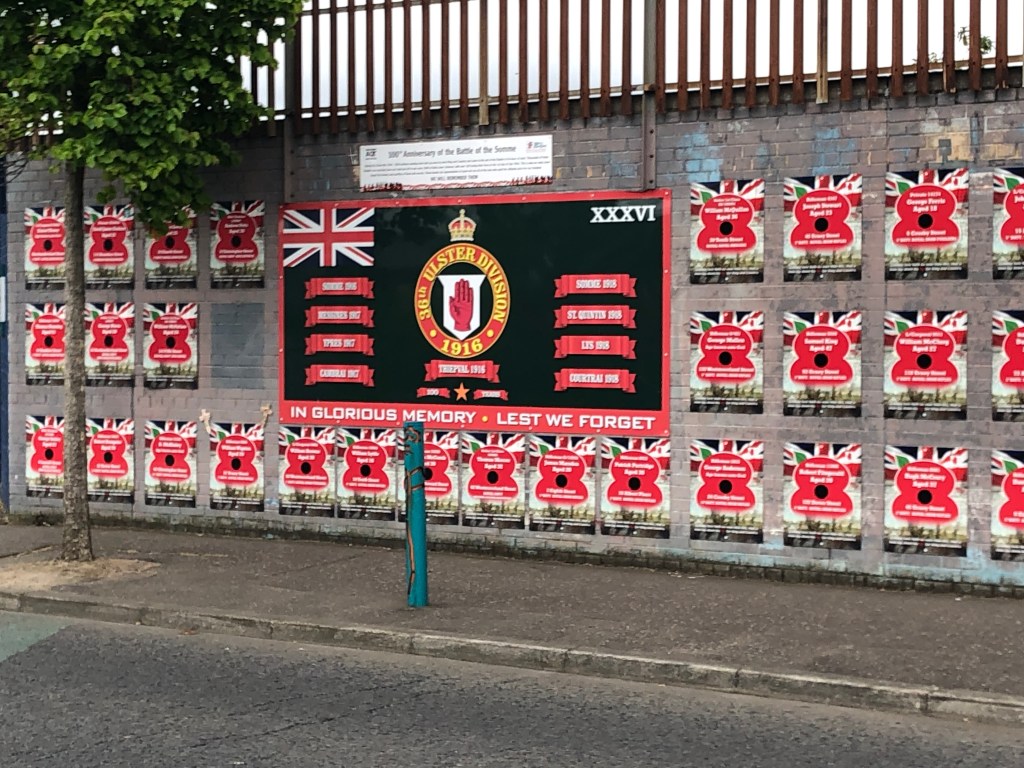
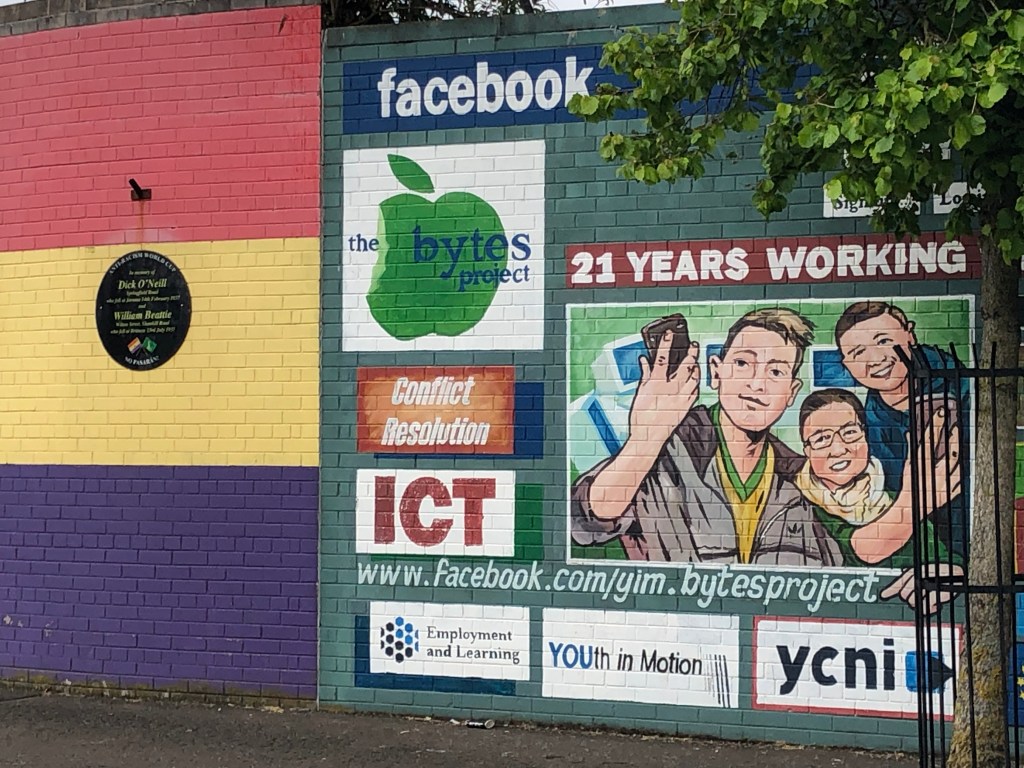
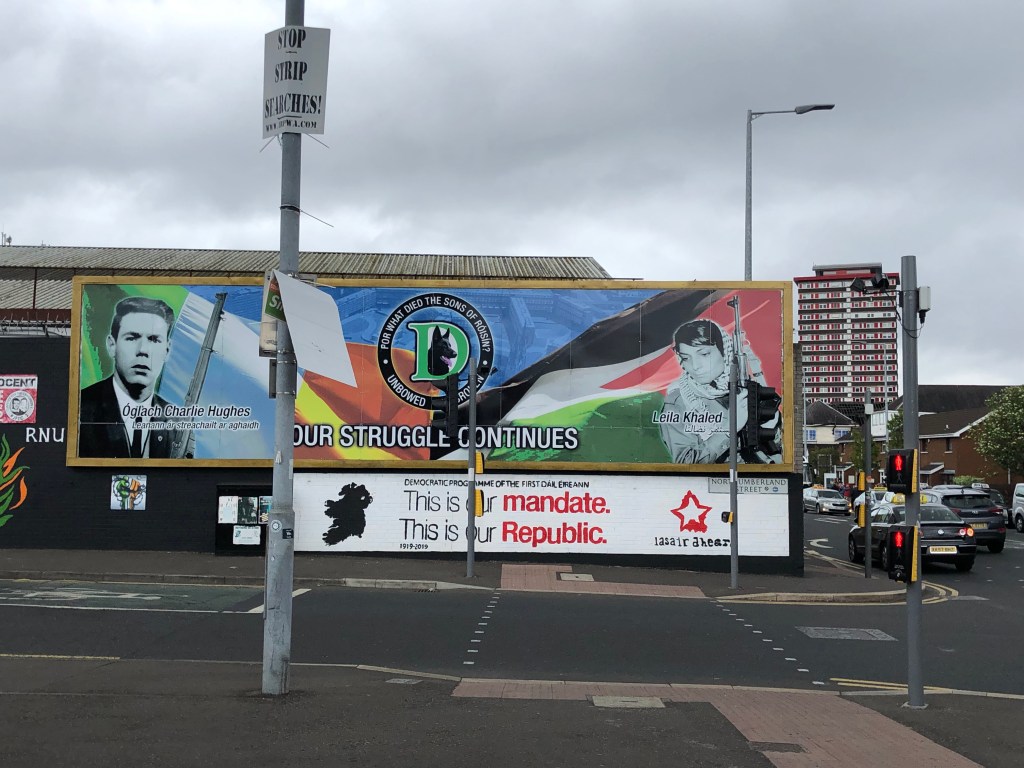
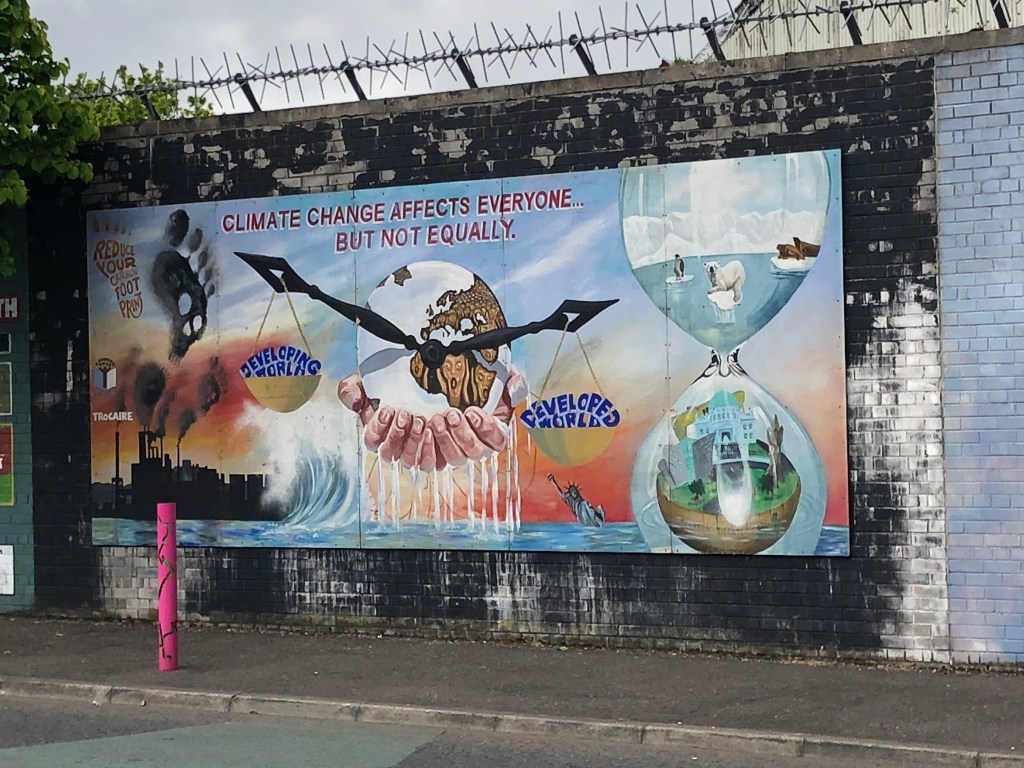
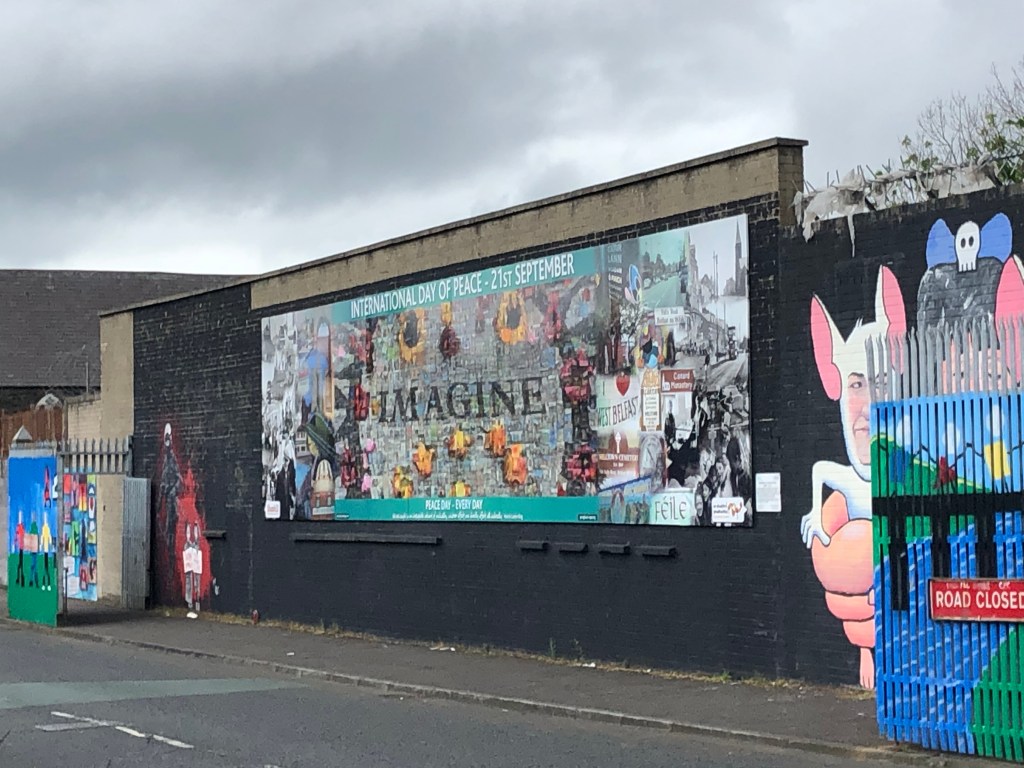
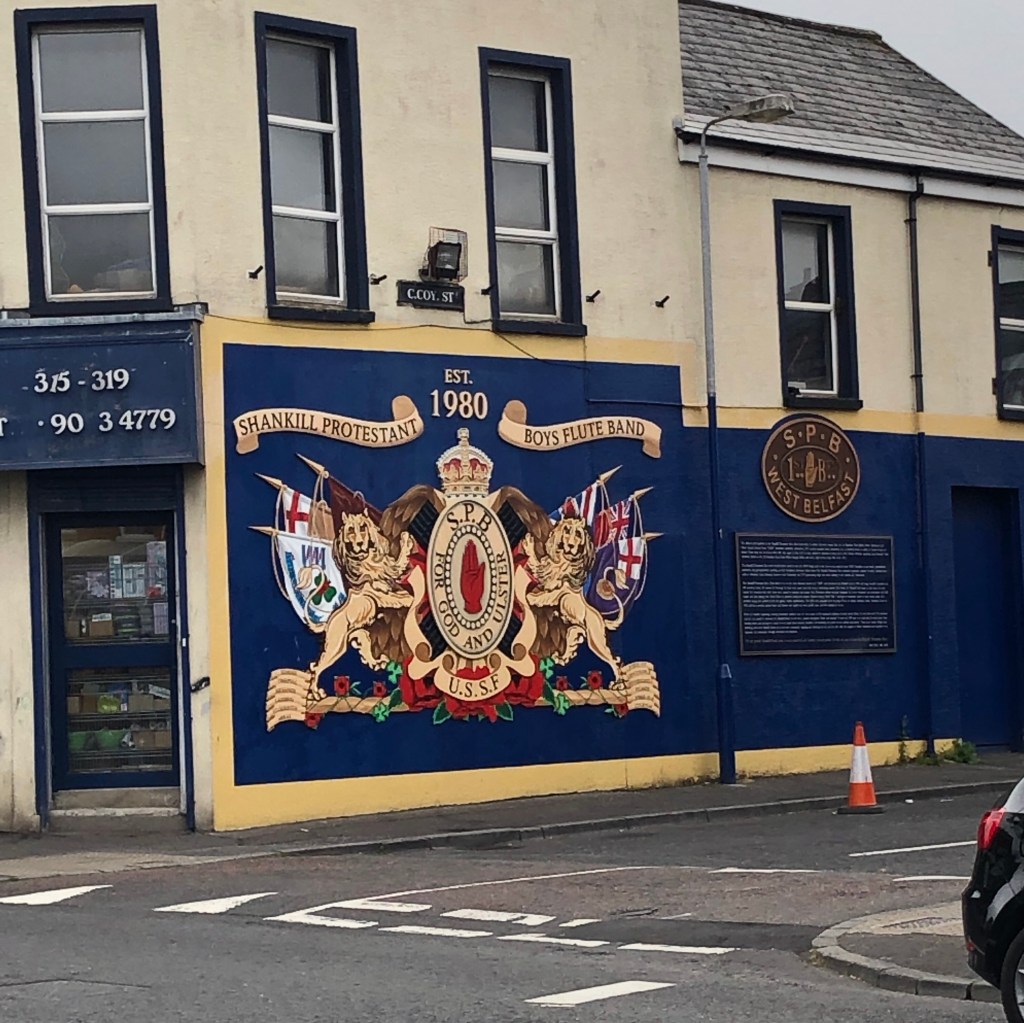
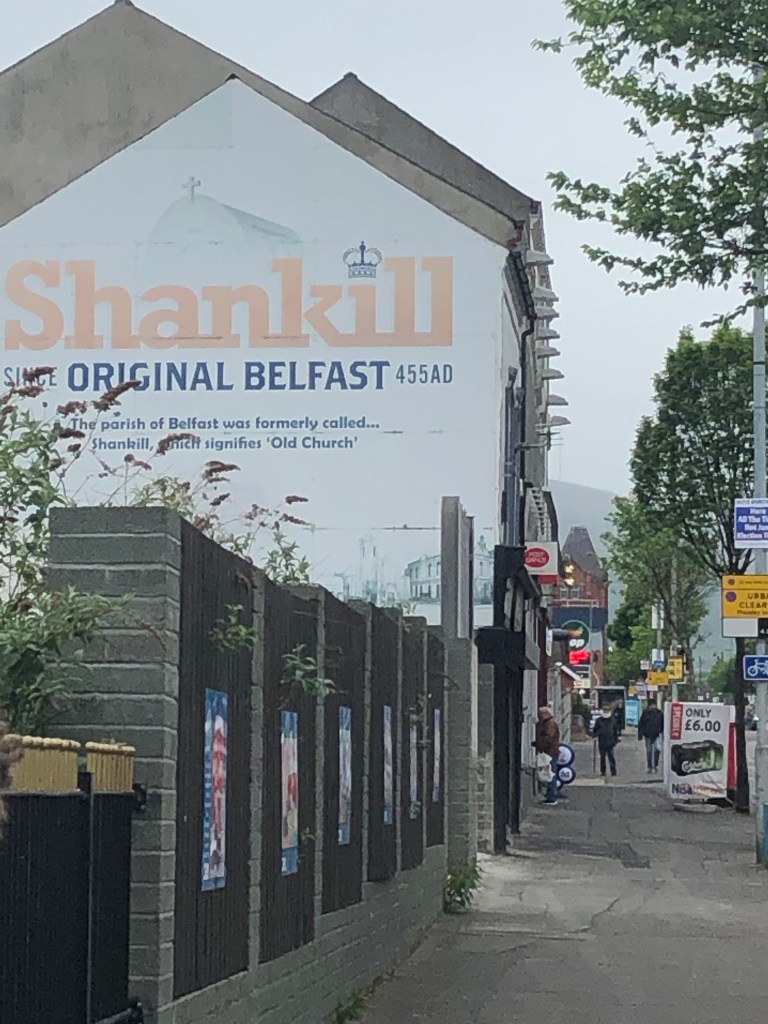
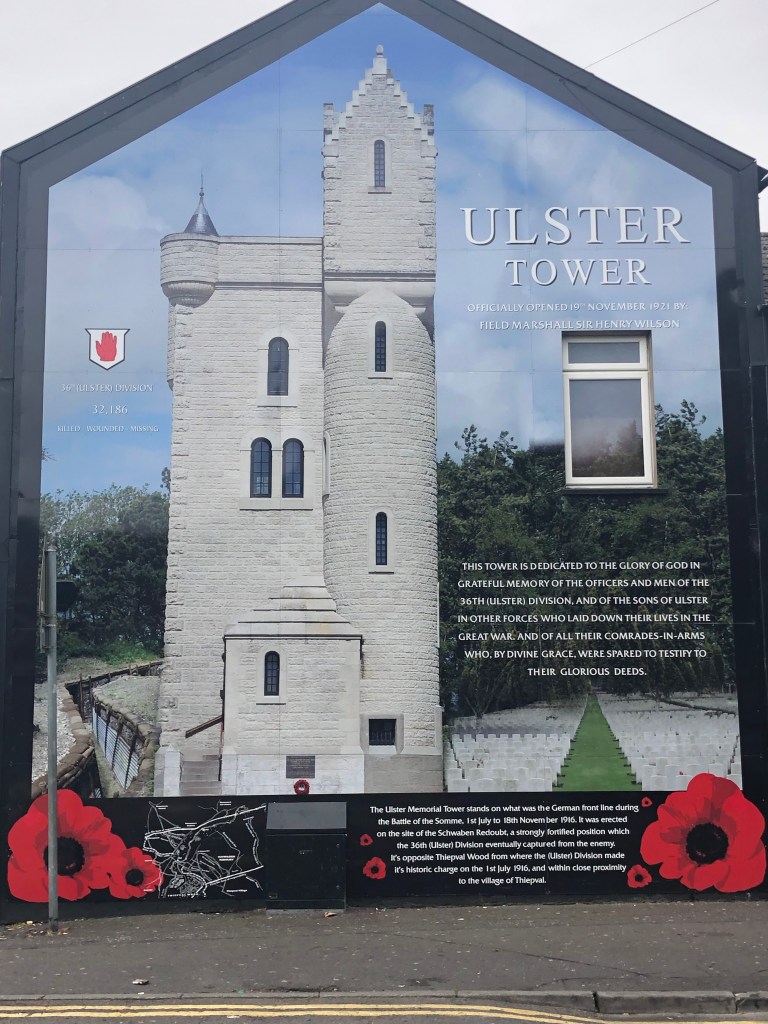
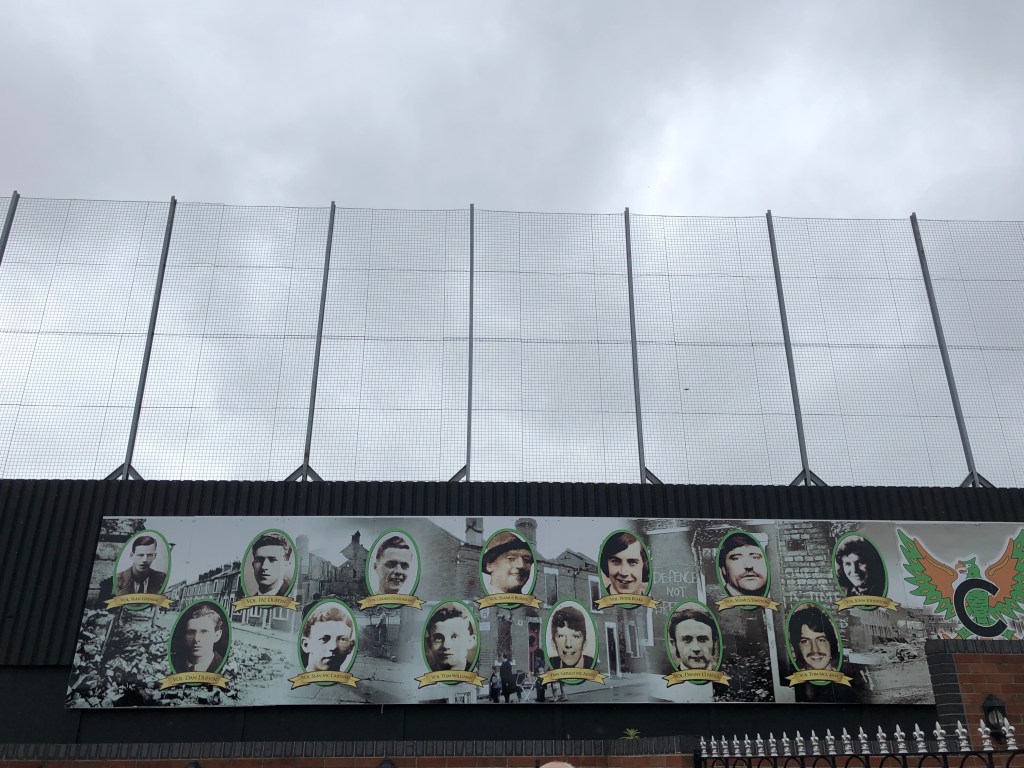
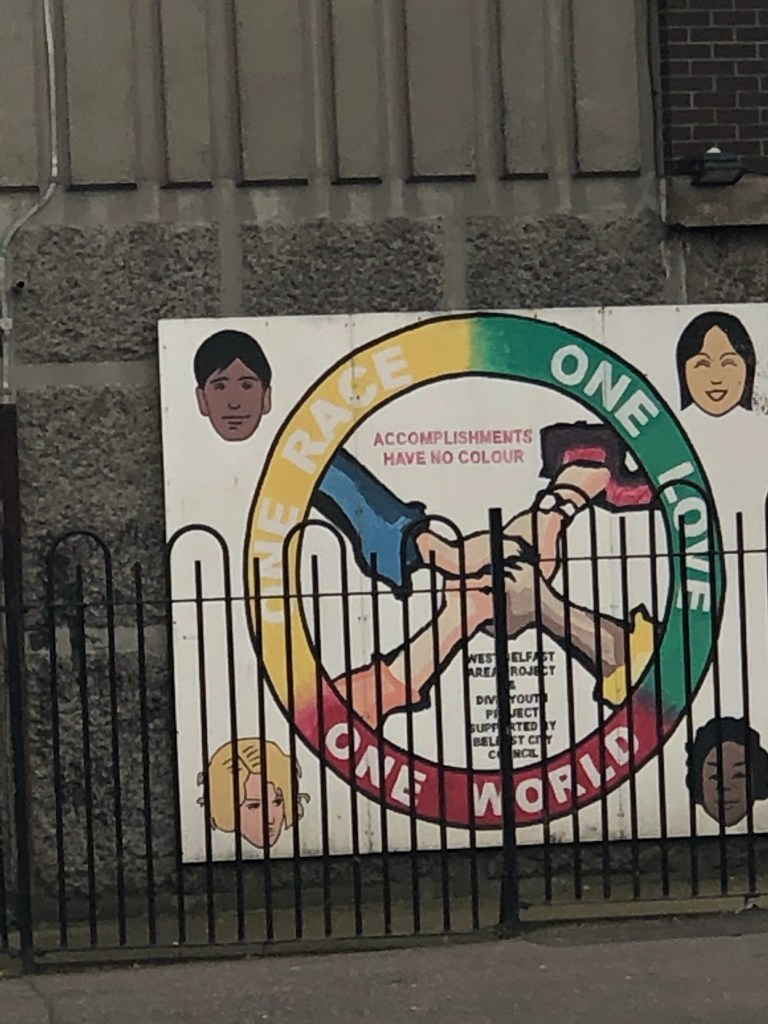
Murals are an integral part of both Northern Irelands history, and its present. The murals in the slideshow above mostly represent the opinions of the two dominant identity groups in Northern Ireland: Protestants and Catholics. The two communities that the murals above belong to are the Shankill Road community and the Falls Road community. Both communities use murals to show their pride, to display their dislike for the other group, and to commemorate the innocent lives lost in the years of sectarian conflict.

Shankill Road: Protestant community

The Shankill Road community is mostly Protestant and thus unionists. This means that they would like Northern Ireland to remain united with the United Kingdom and not become apart of the Republic of Ireland. People who live in this community tend to be descendants of the English and not Irish. If a mural is in this community, it will usually depict some sort of English symbolism such as the crown, poppy flowers or simply royals. Such symbols would not be depicted in a Catholic neighborhood because they are generally not in favor of remaining a part of the United Kingdom.

Mural in Shankill Road
Memorial to some of the deaths that occurred in the Falls Road neighborhood

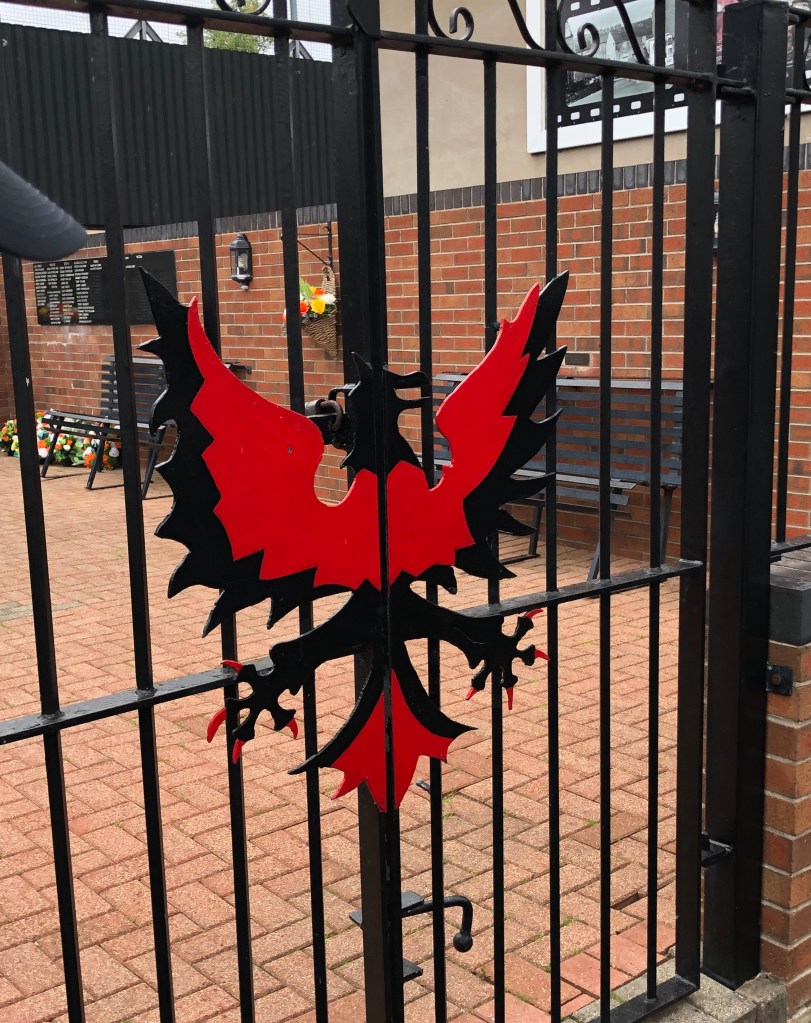
The Falls Road community is predominantly Catholic and thus nationalist. This means that they would like to see Northern Ireland unite with the Republic of Ireland. It also means that they are mostly of Irish descent. Their murals depict their heroes such as Bobby Sands and those who died in the Hunger Strikes in 1981. They also commemorate those who lost their lives to violence, during the years of conflict in Northern Ireland. The symbolism of the Phoenix is another thing that appears often in this community. It is the Irish Republic Army’s (IRA) symbol, and it symbolizes the Irish- Catholics rising from the ashes like the mythical phoenix does. The end it signifies them triumphing over the Protestants.

Phoenix: IRA symbol

Although both communities partake in the tradition of murals, it was actually started by Protestants. Catholics simply adopted it later to show their struggles and dreams. The Shankill Road community, which was previously mentioned, is a predominately Protestant community that interfaces the predominantly Catholic community, known as Falls Road. The two communities have been at odds with each other for years, and I do not simply mean that they merely dislike each other. The communities basically hate each other and stay away from people who live in the other community. The two communities are even separated by what is known as a peace wall. However, they share common issues such as poverty and lack of employment opportunities. But, such similarities are obscured by the labels of Protestant and Catholic.

In the end, murals have been a means for each community to express their hopes, fears, strengths and political leanings.

Featured

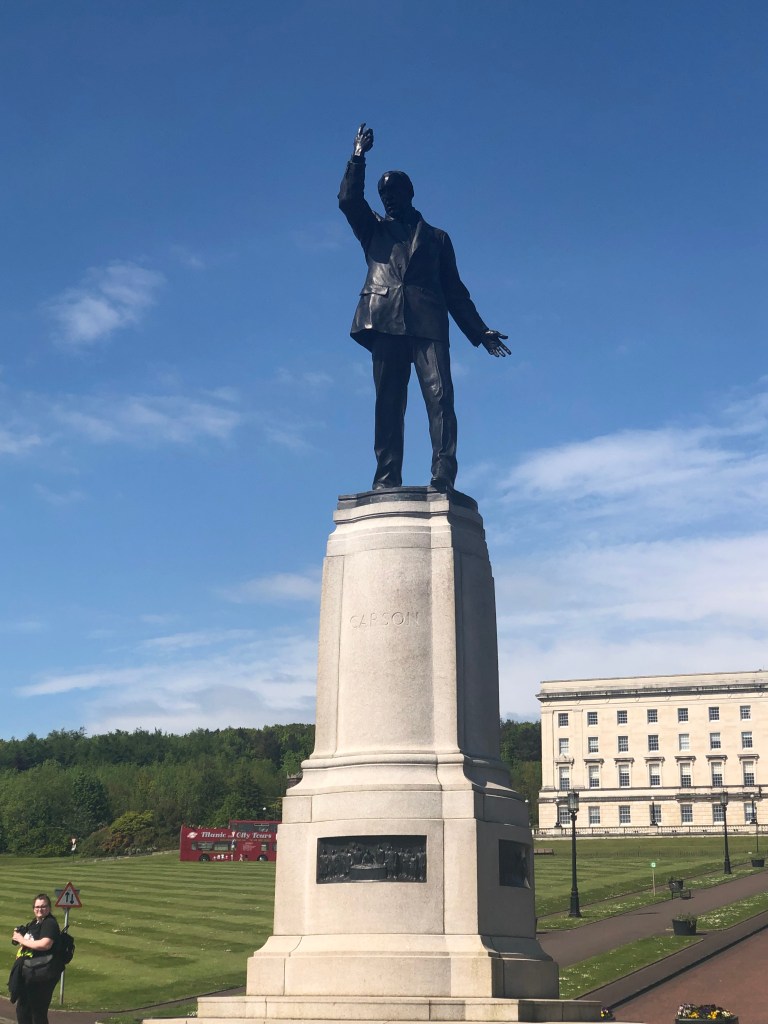
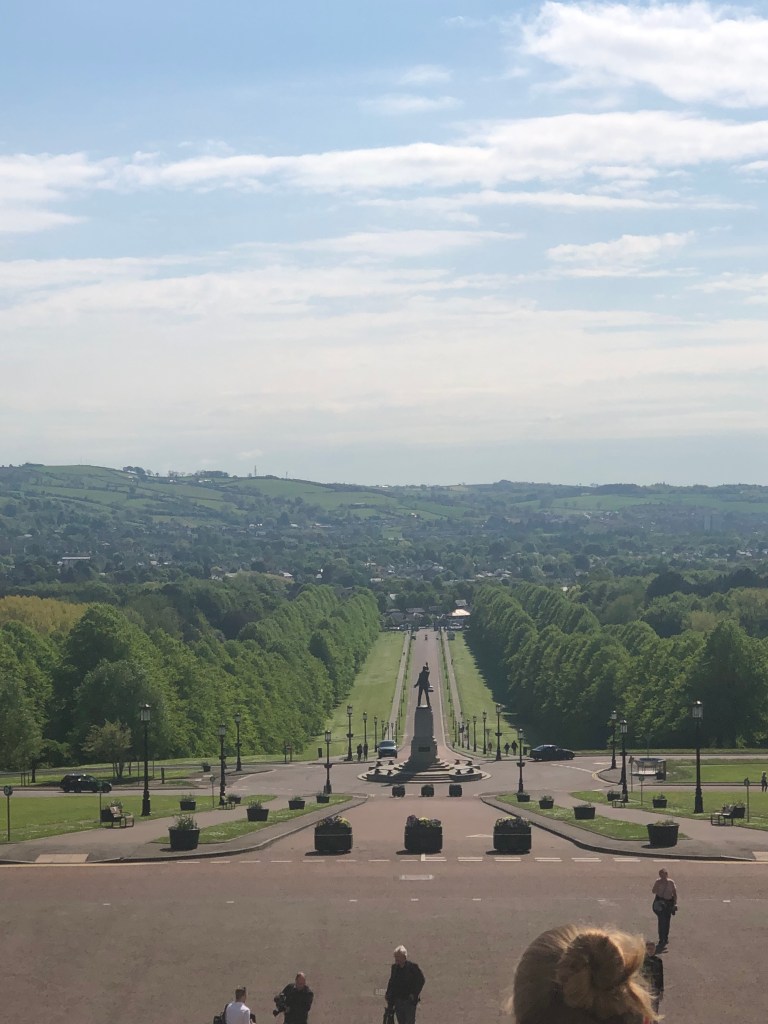
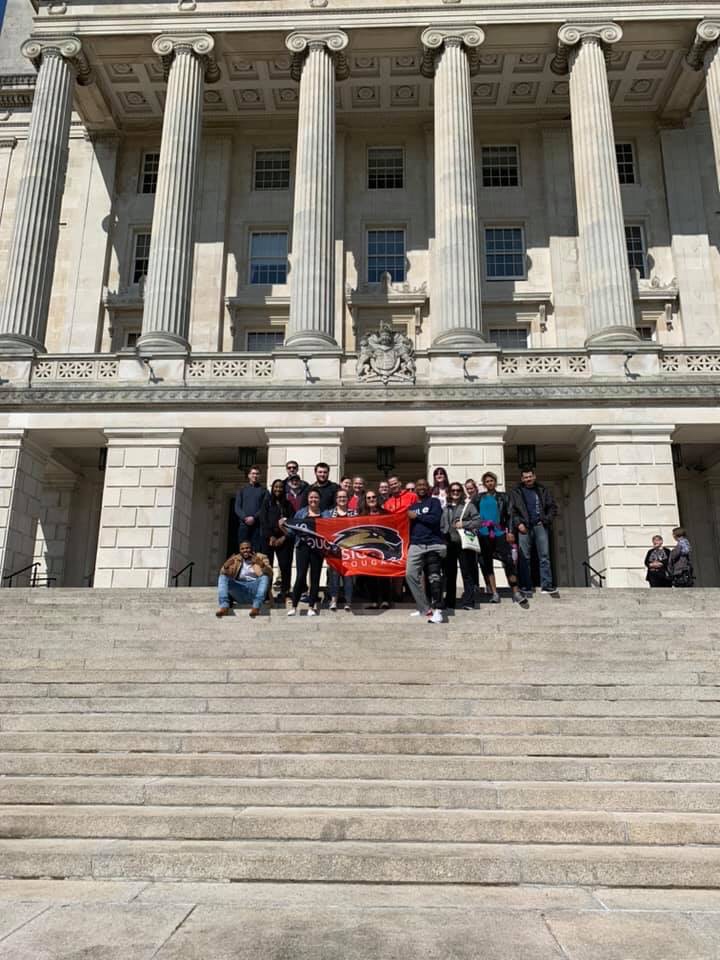
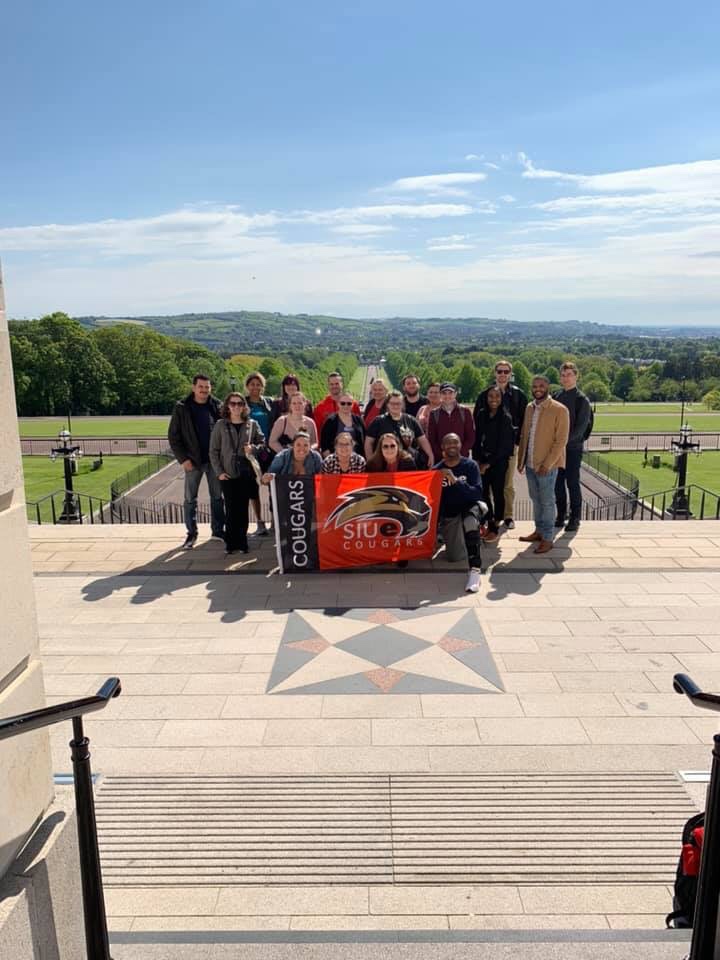
Stormont Building: a Testament to Northern Ireland’s British Identity

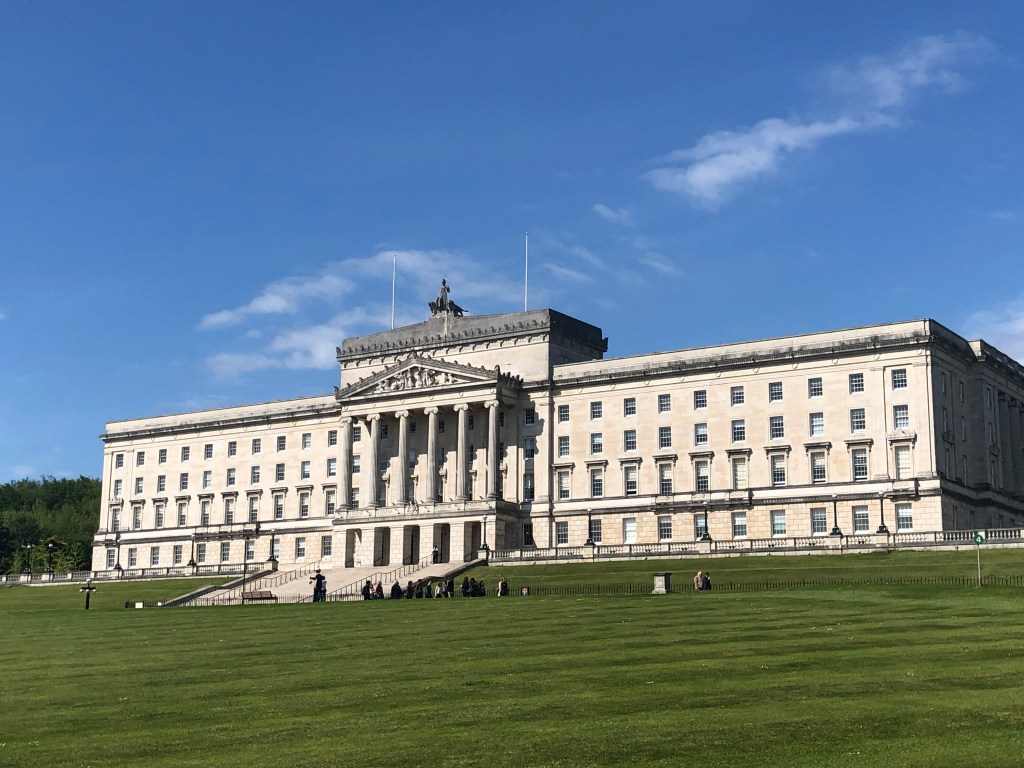
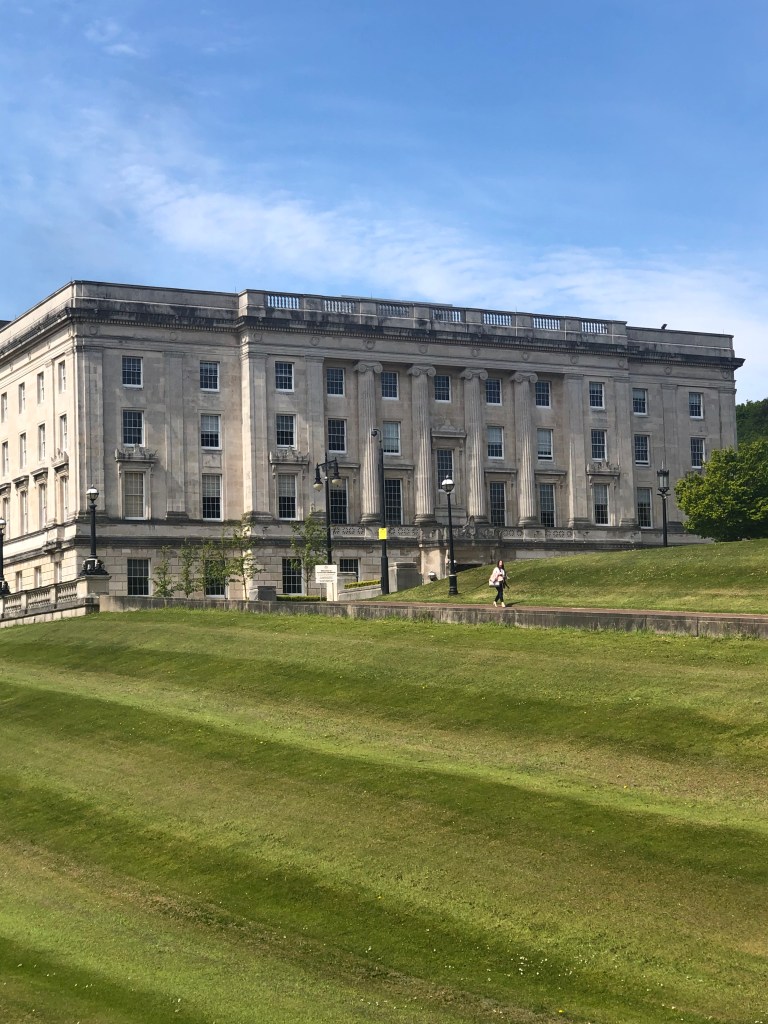
Stormont Building: Northern Ireland Parliament

My trip to Stormont Building was amazing. I fell in love with the building before I even walked in. The stature of the outside surely matched the majesty of the inside. This building is not only beautiful but also fairly important. Stormont is where the members for Northern Ireland’s parliament spend their days debating and perhaps trying to come to some tacit agreement about their affairs. However, their ability to comprise is tied to Northern Irelands divide of Protestant versus Catholic and has resulted in Northern Ireland not having a government for two years. The two leading parties Sinn Fein and the Democratic Unionist Party (DUP) are severely divided and rarely if ever agree with the each other’s views.

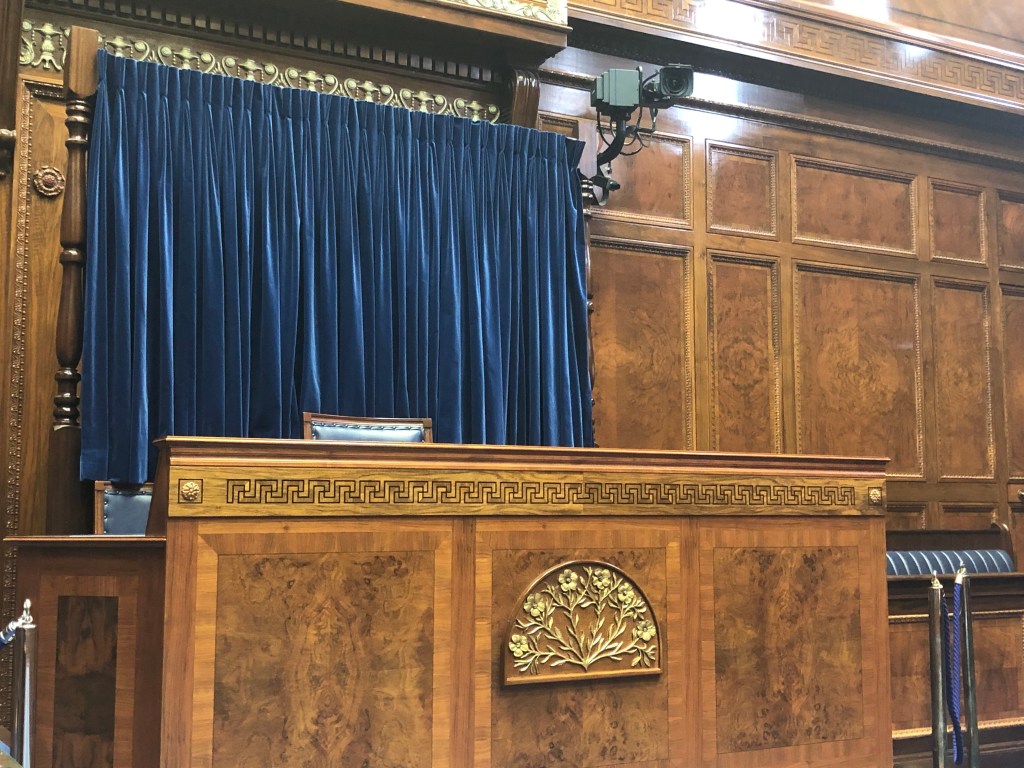
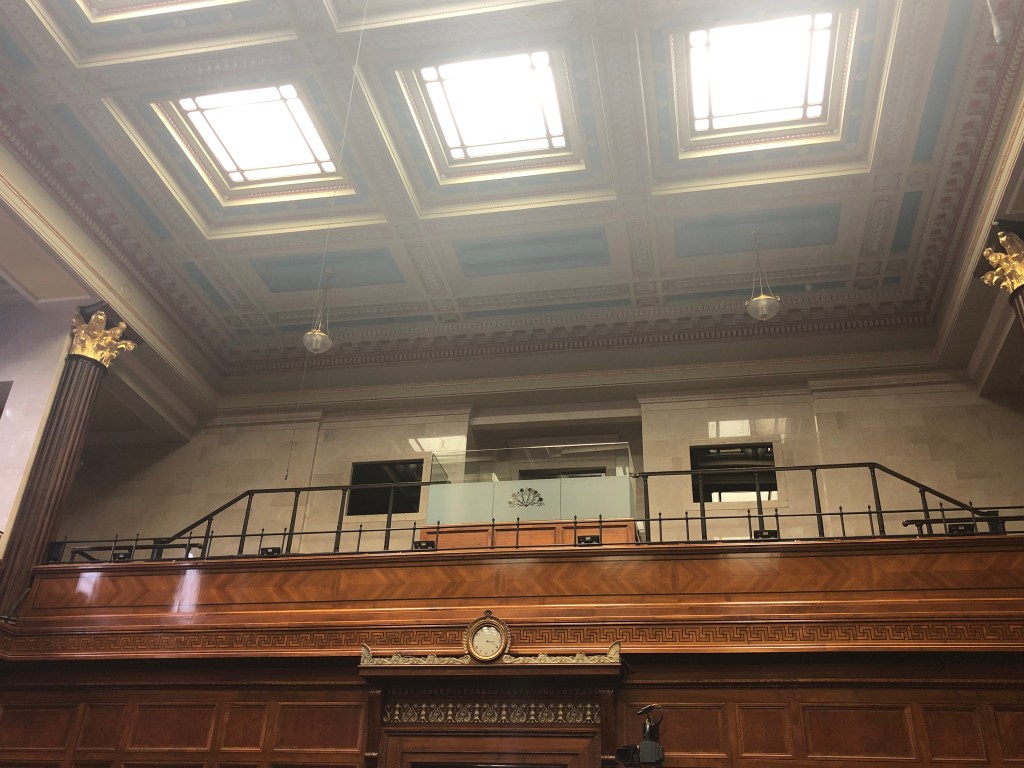
English Oak Paneling

The building holds many significant details, but one of the most interesting, to me, is related to the paneling in the assembly chamber. My tour guide stated that all of the paneling was specifically made with English oak. Even when they ran out of English oak, they imported more because all of the wood paneling had to be made of nothing but English oak. This need for English oak seemed to be in line with the Protestant view of staying apart of the United Kingdom. It may have been a way to assert that Northern Ireland was under British rule and thus belonged to Britain.

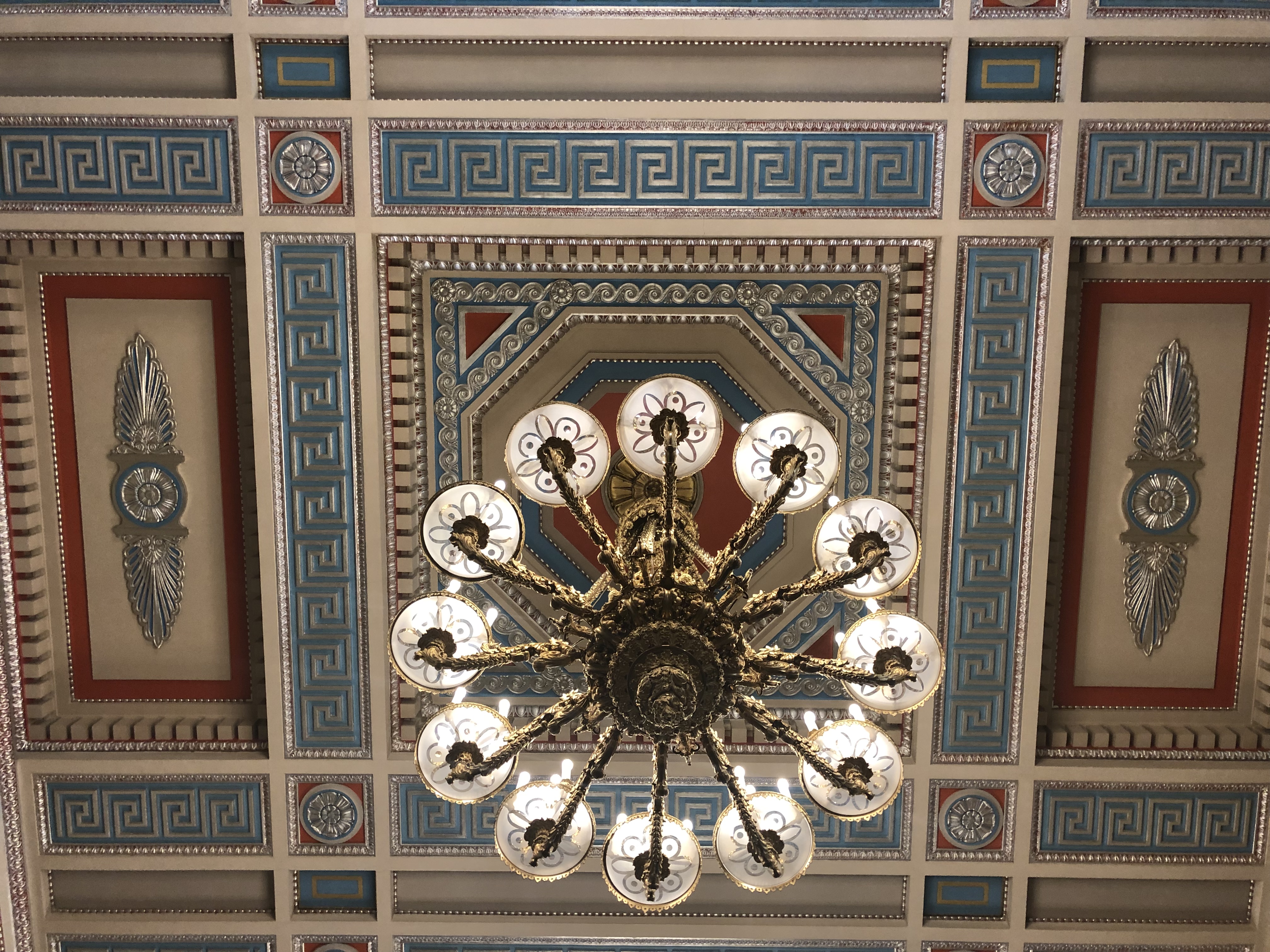
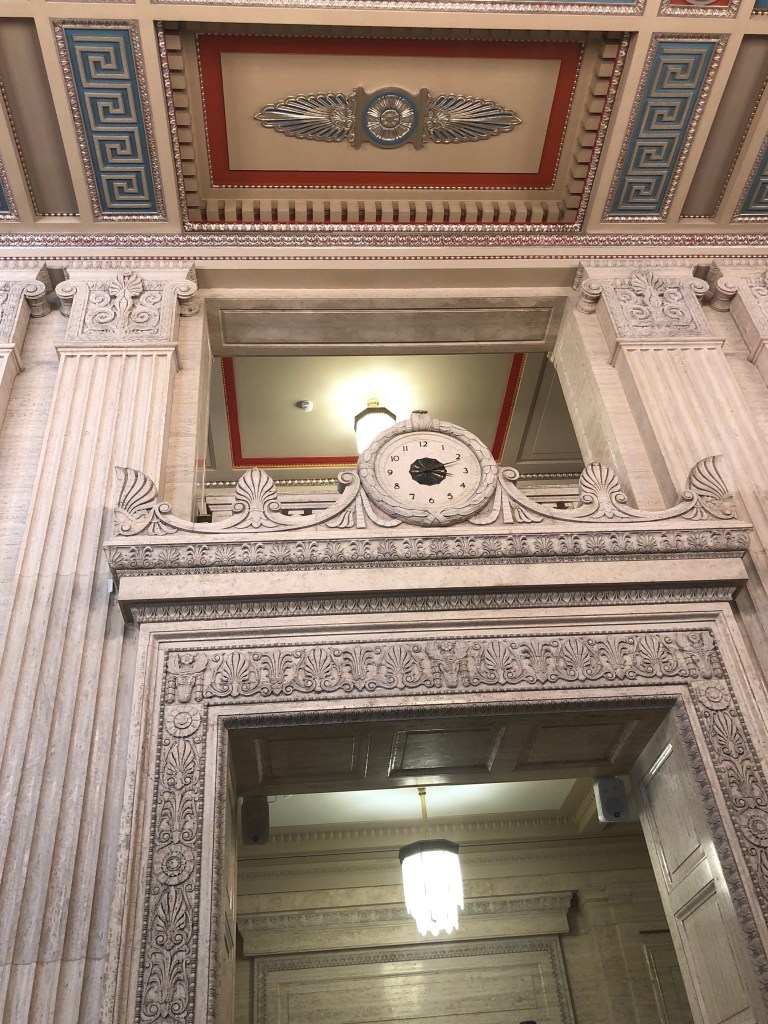
Ceiling in Stormont Building

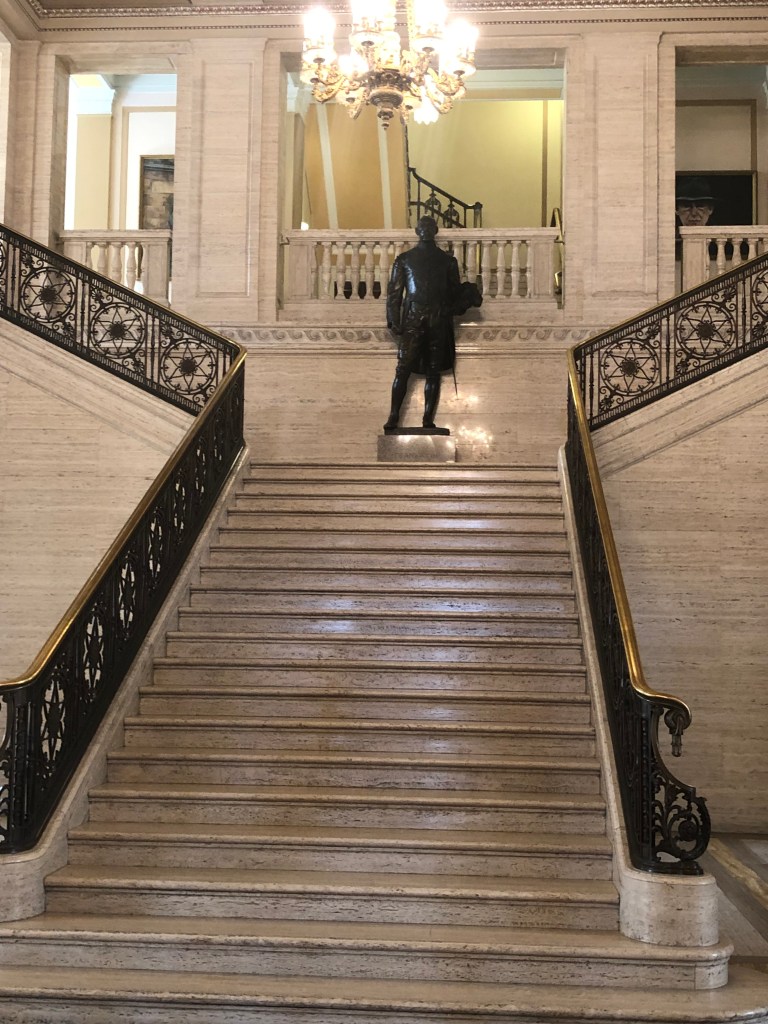
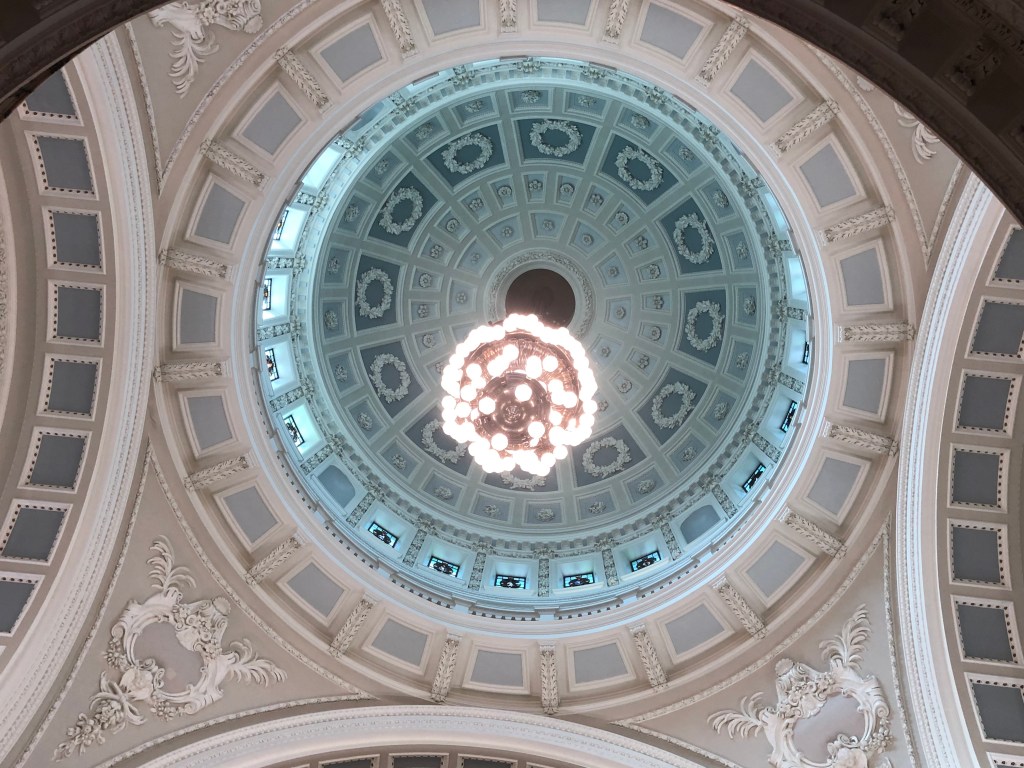
While visiting Stormont, I quickly learned that I had to constantly look up. Even the ceilings in the building had a grand story to tell and were not just ornate for no reason. The picture above portrays an example of a ceiling design in Stormont that is a reminder of Northern Irelands loyalty to British royalty and thus Britain. The colors on the ceiling are not even slightly random. They were chosen because they are the colors of the English prince who came to visit the building. Additionally the chandelier in the picture, once hung from the ceilings of Windsor Castle before it was gifted to Northern Ireland’s Parliament. This is all very important because it symbolically shows Britains presence in Northern Irelands affairs and points out to nationalist that Northern Ireland’s identity is British not Irish.

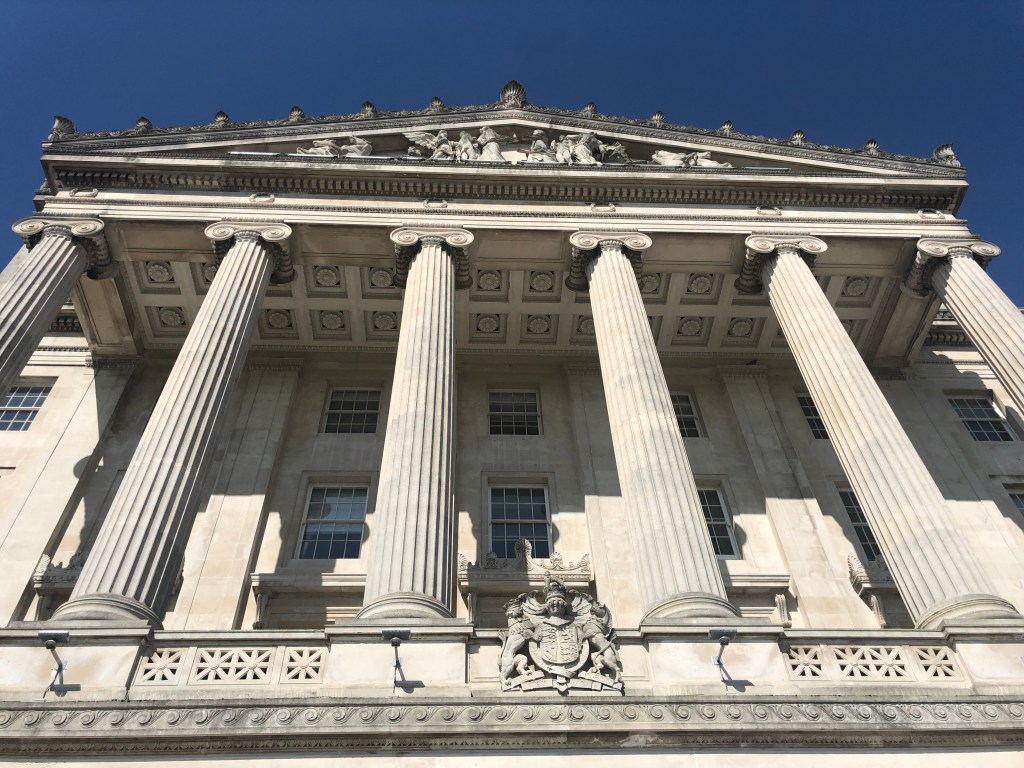
Above are photos that show some of the important aspects of Stormont Building and may even give greater insight into why the nationalist party- Sinn Fein- have a hard time working at a Parliament with so many historical reminders that they do not exactly belong.

Featured

Not Just a Building but a Monument to Belfast’s Beginning

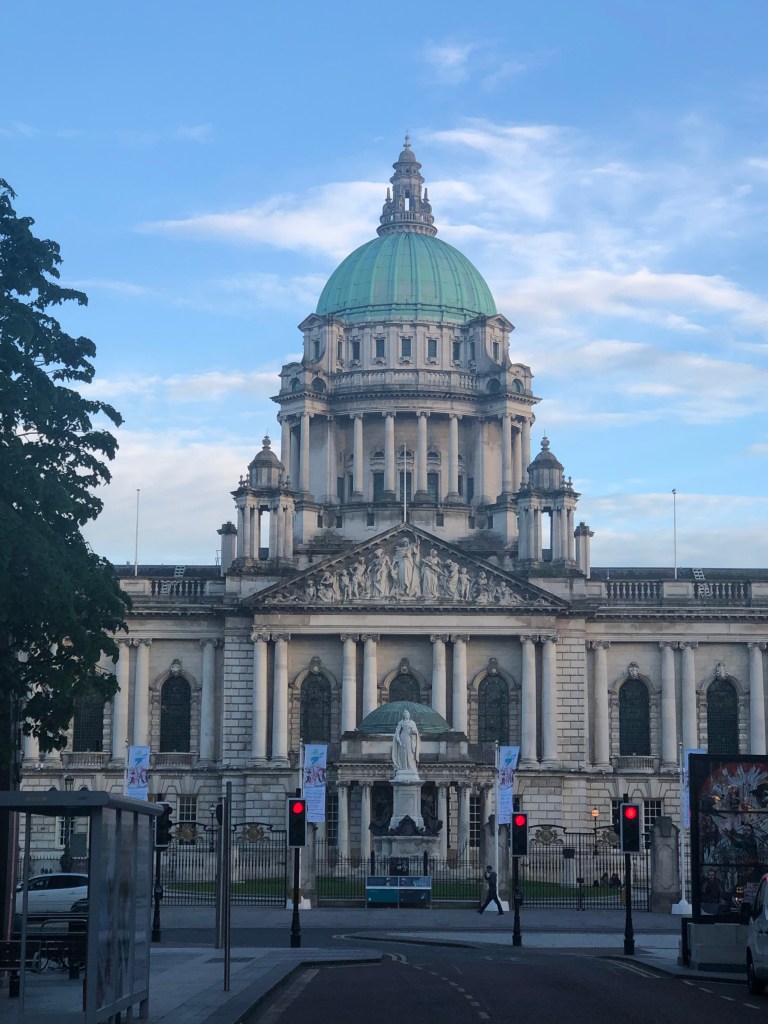
Belfast City Hall- Donegall Square
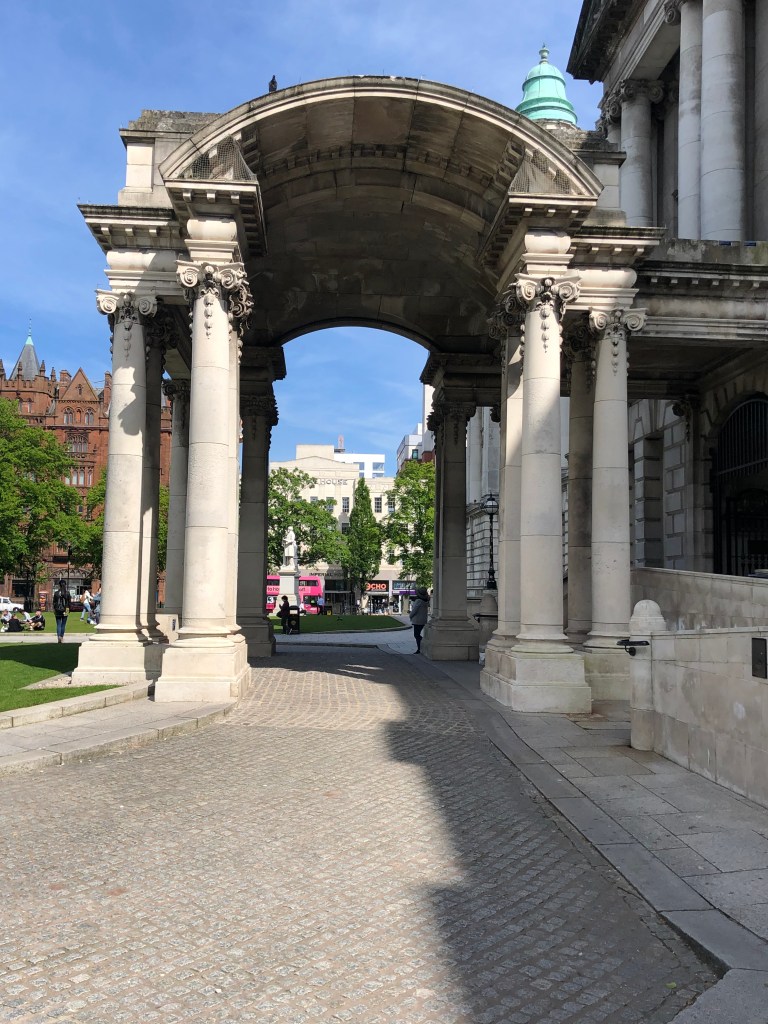
A monument to the city’s charter

On Thursday May 16th, I had the pleasure of visiting the exquisite City Hall of Belfast. The building was built to celebrate Queen Victoria awarding Belfast city status. Interestingly, the building was so important that in order to give it prime real-estate they tore down a linen factory that resided on the very spot!

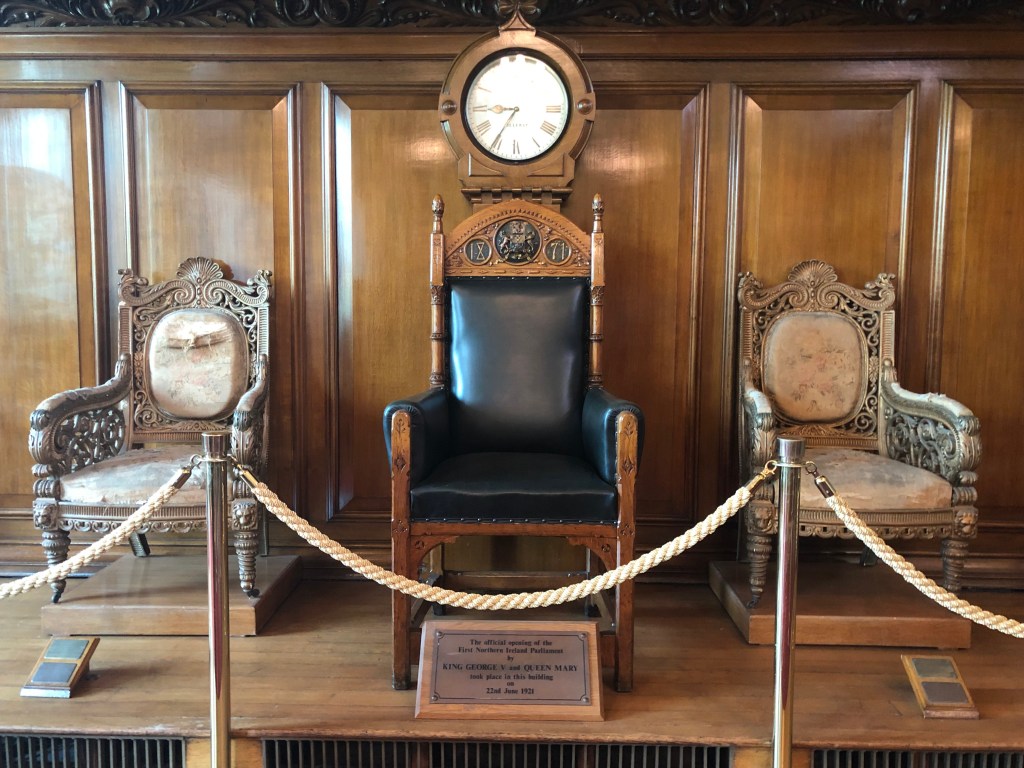
Additionally, the building was the site of the opening of the 1st Northern Ireland Parliament. So, it not only commemorates Belfast receiving city status but serves as a historical site, for the first instance of Northern Ireland taking the reins of its destiny into its own hands.

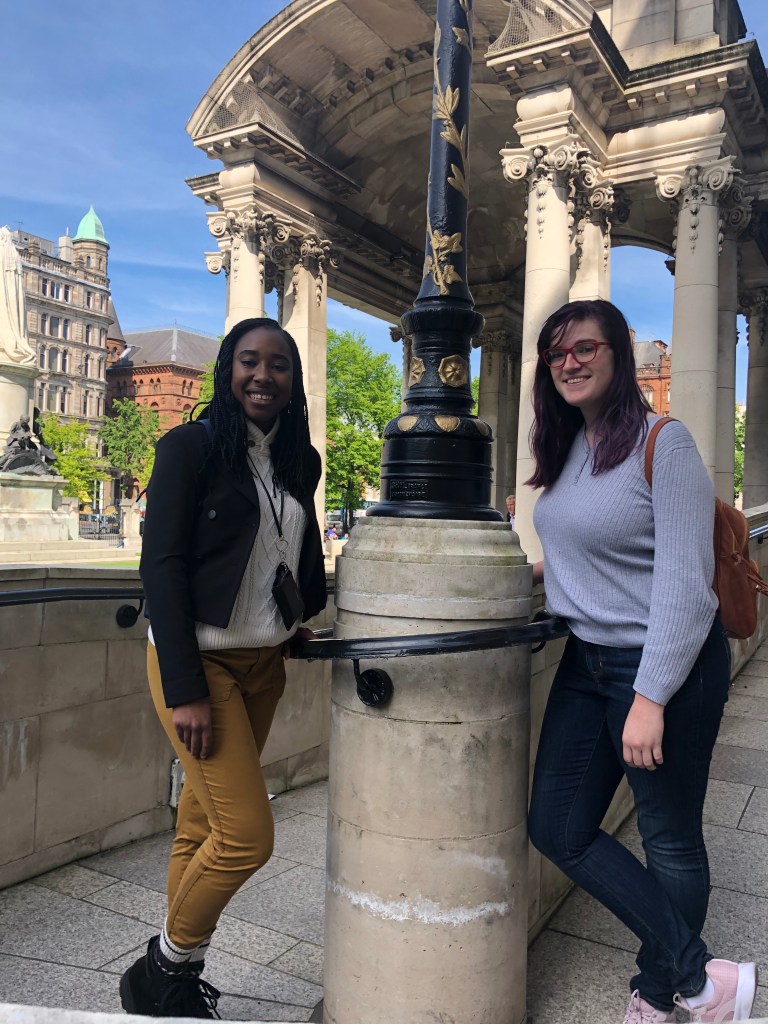
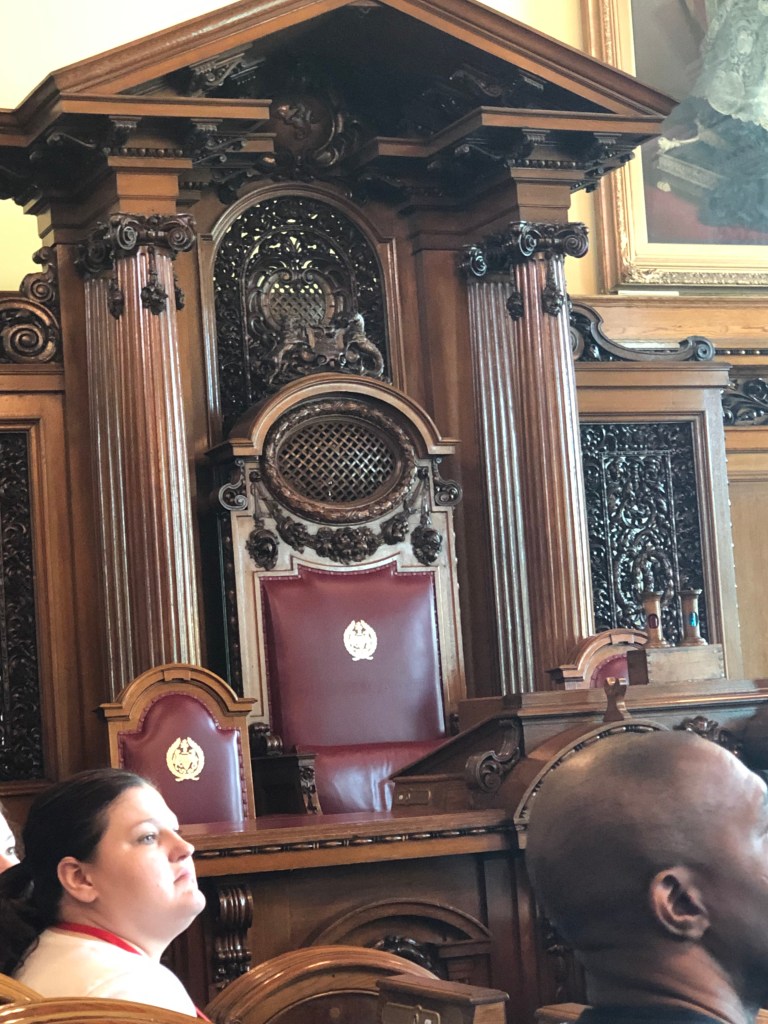
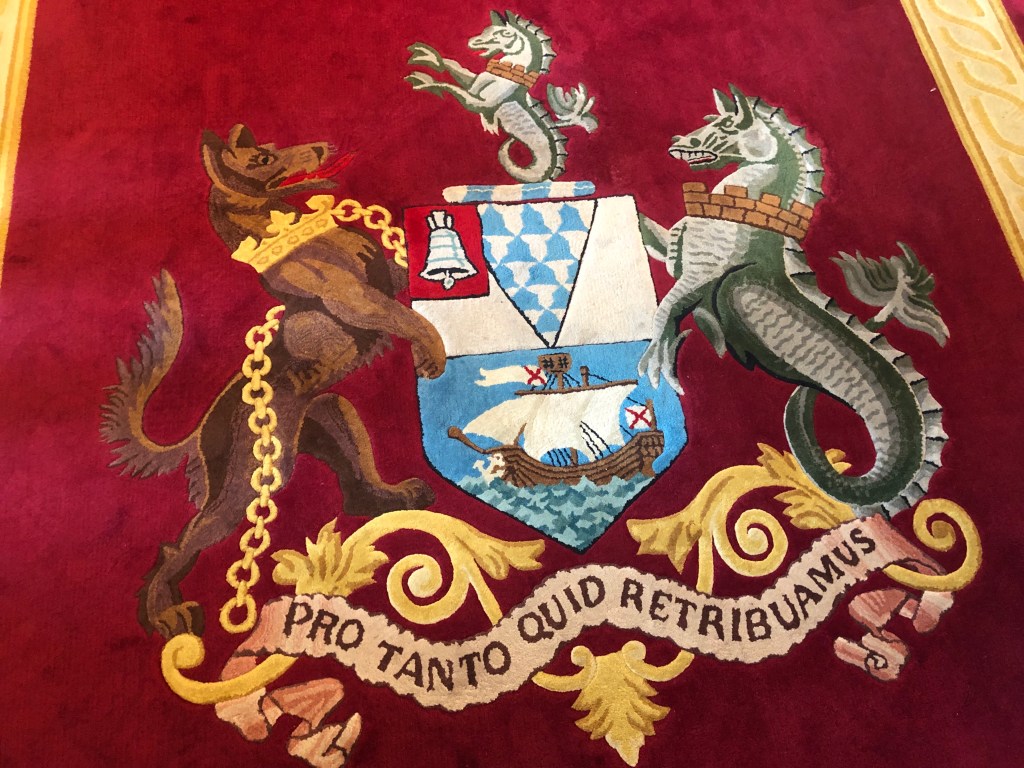
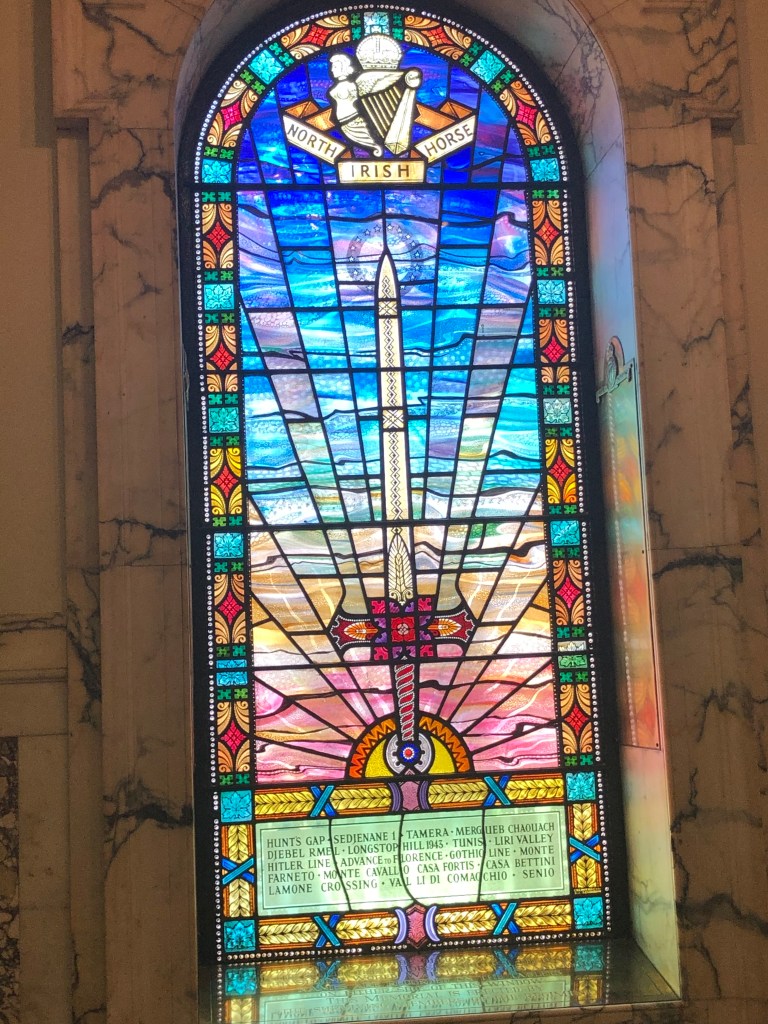
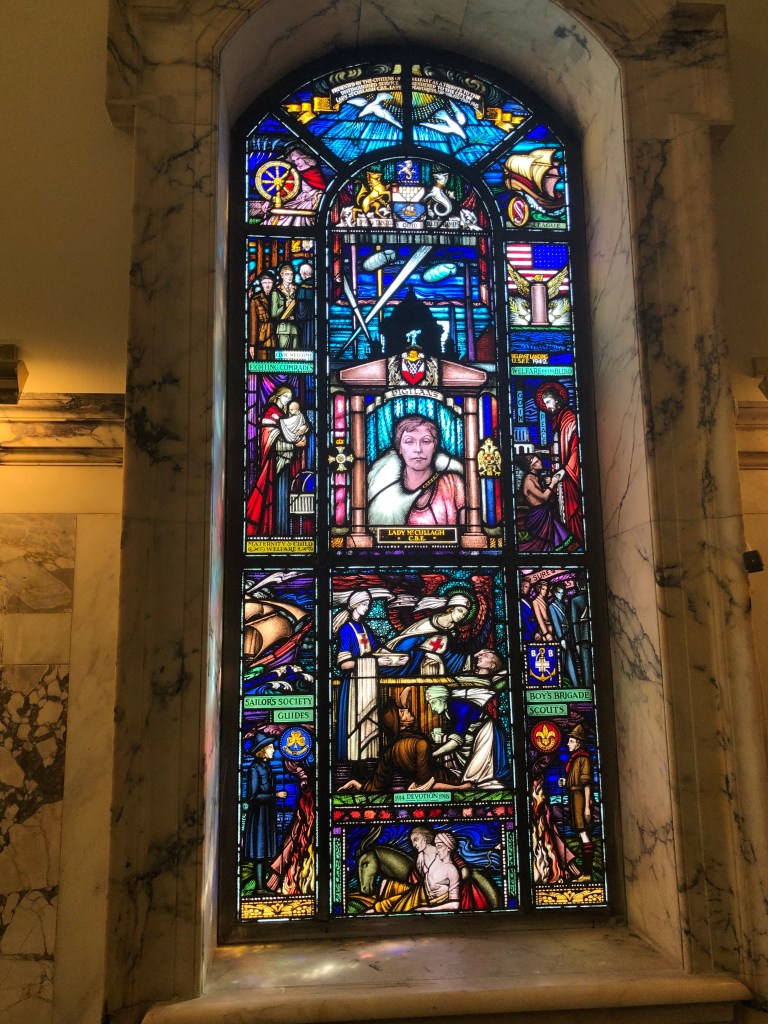
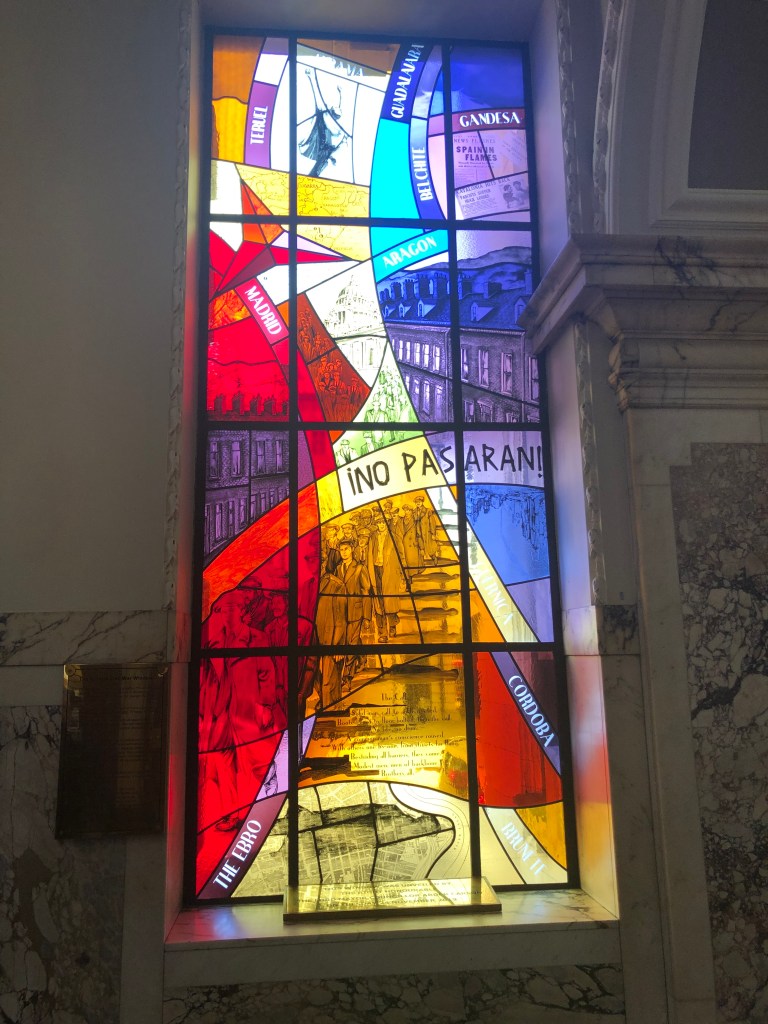
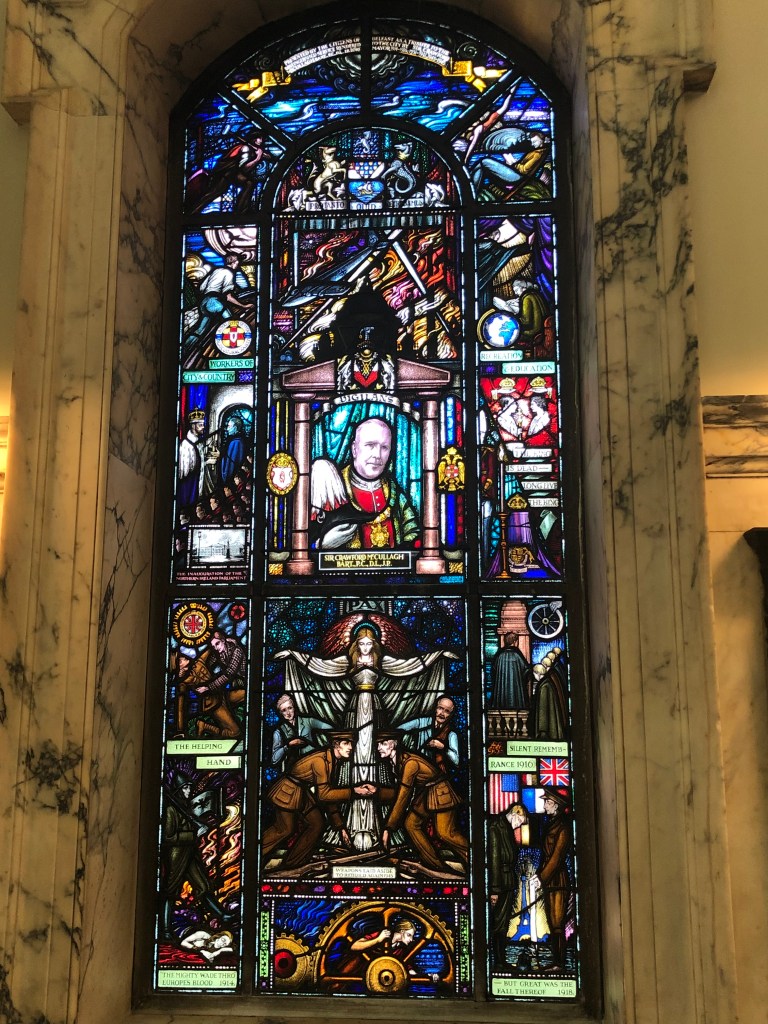
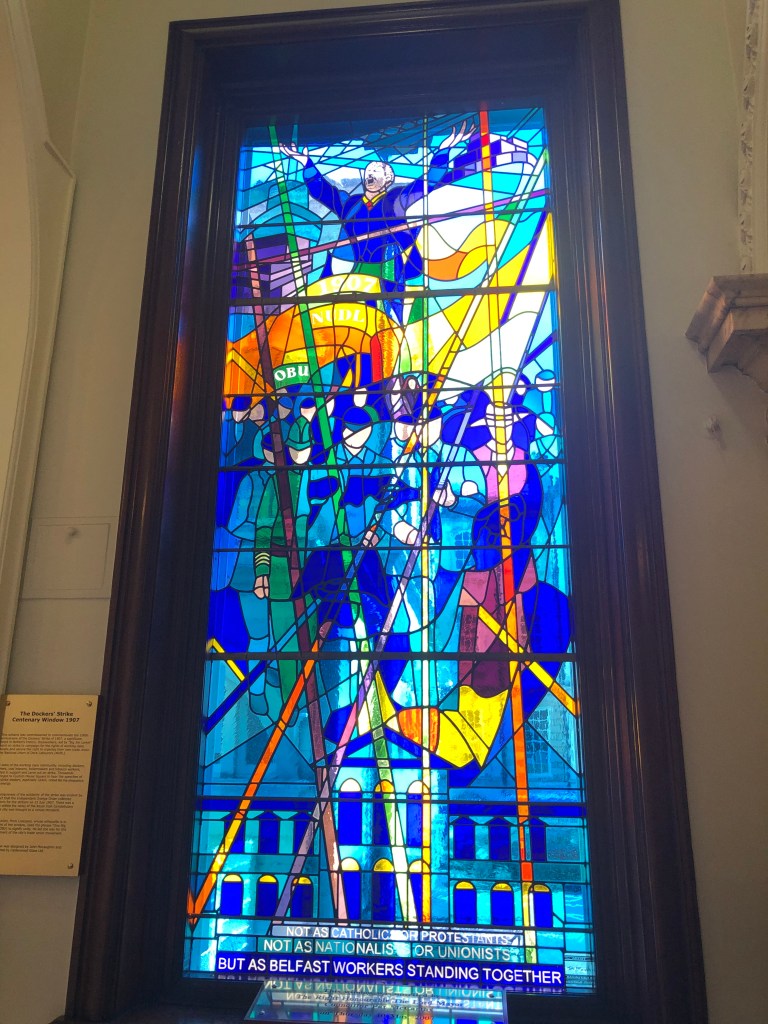
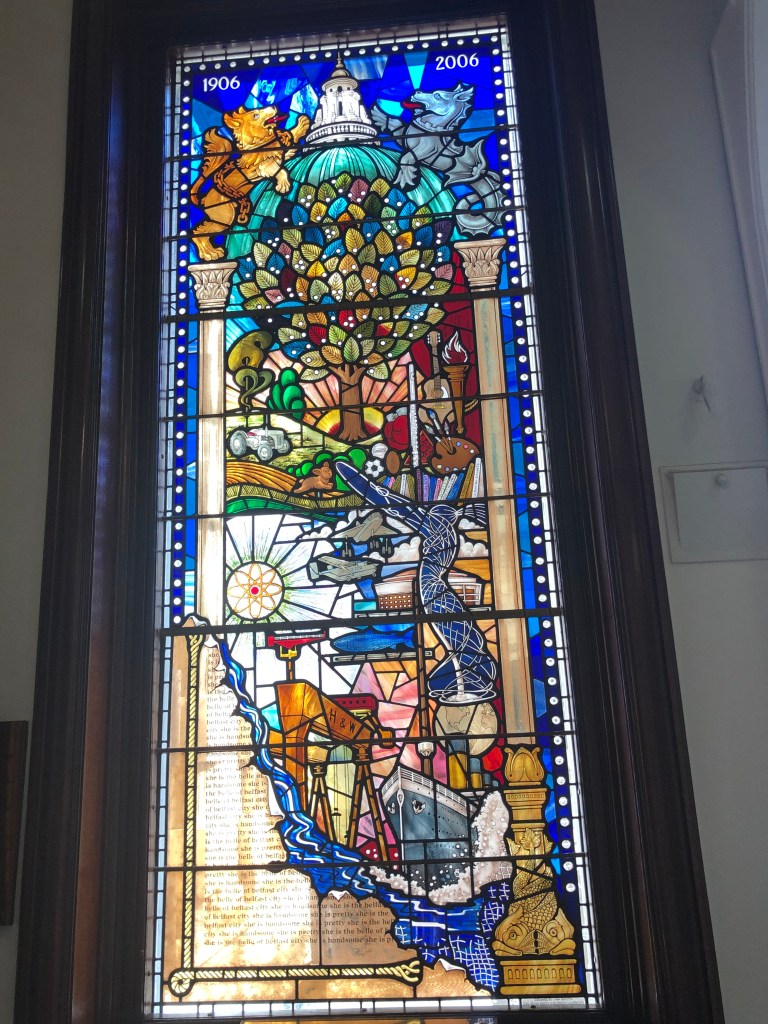
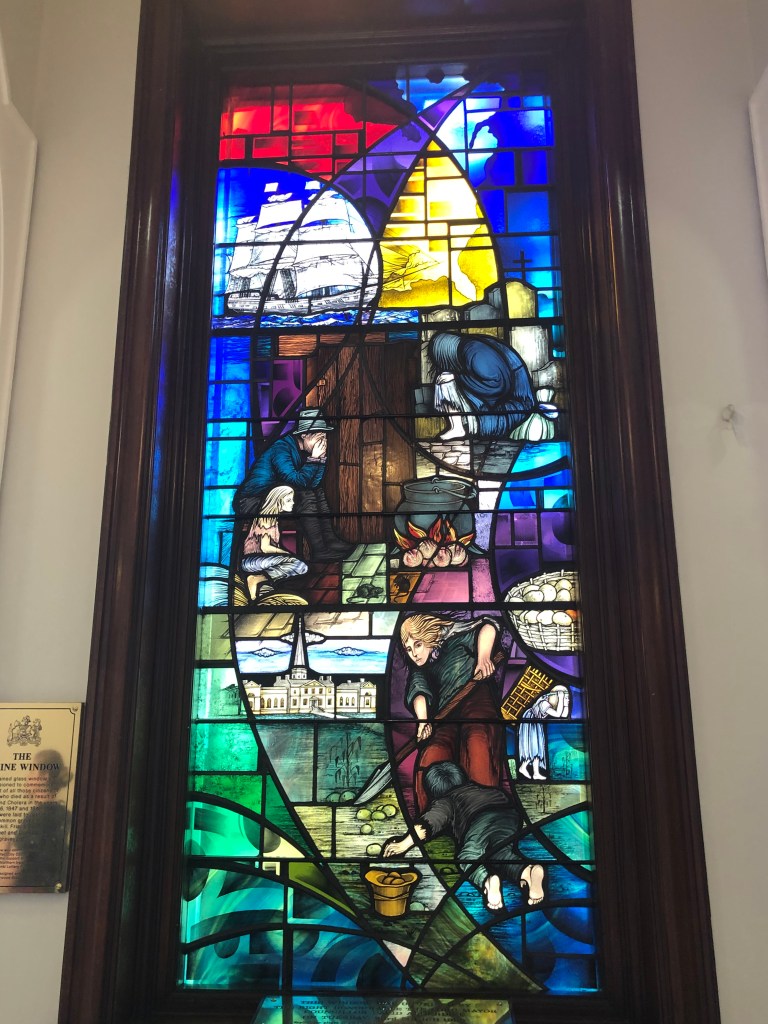
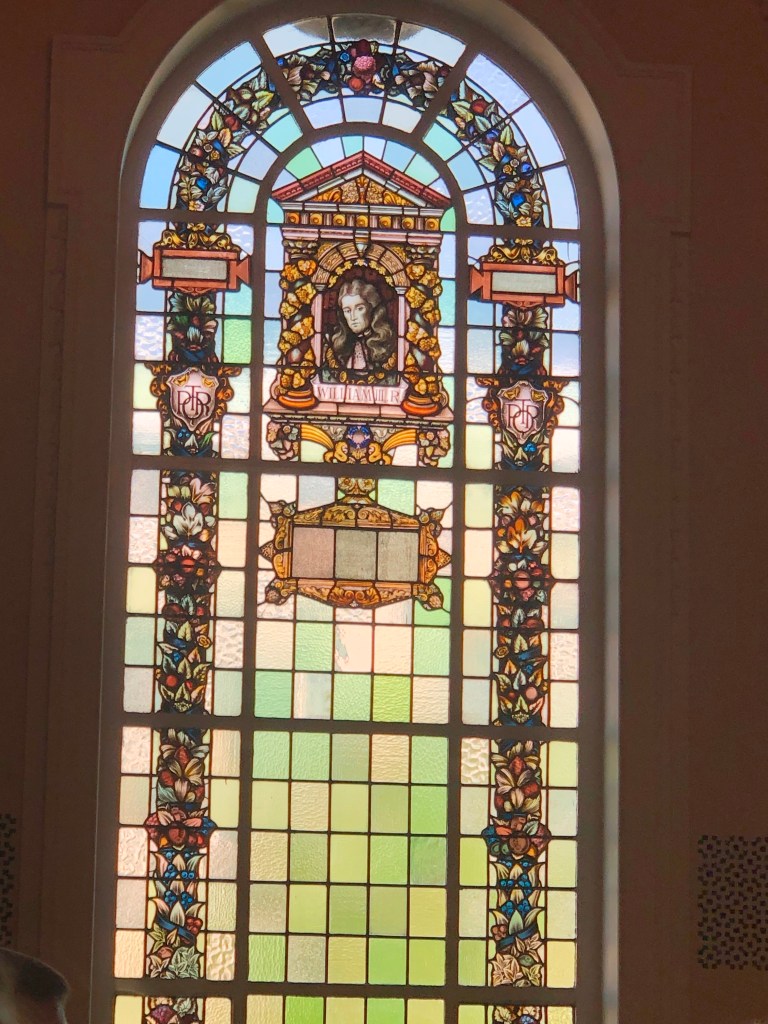
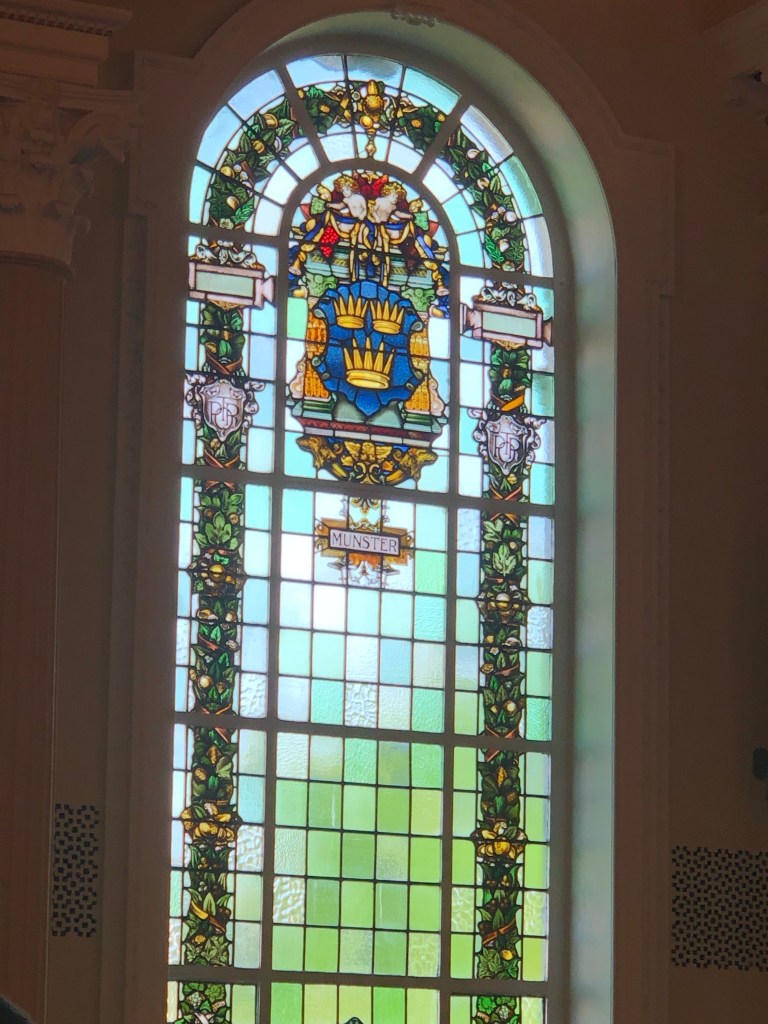
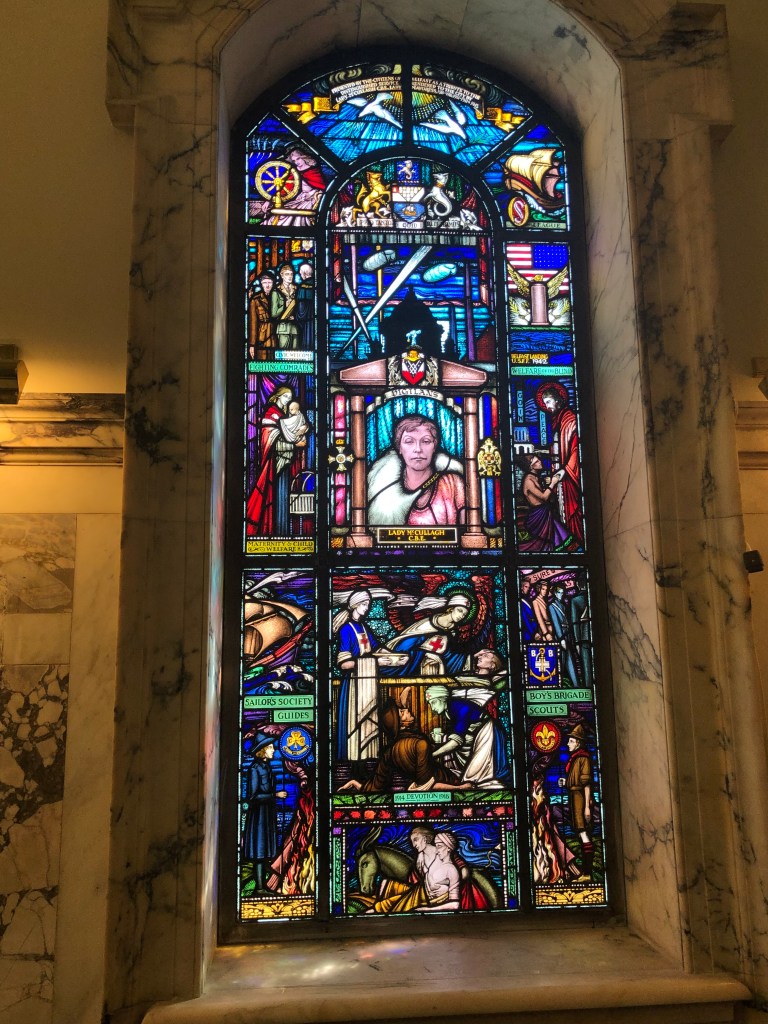
The pictures above provide a little bit of an insider view into Belfast City Hall. If you ever visit Belfast City Hall, be sure to pay close attention to the plethora of stain-glass windows in the building because they contain loads of both Irish and English symbolism that tell the city’s history!