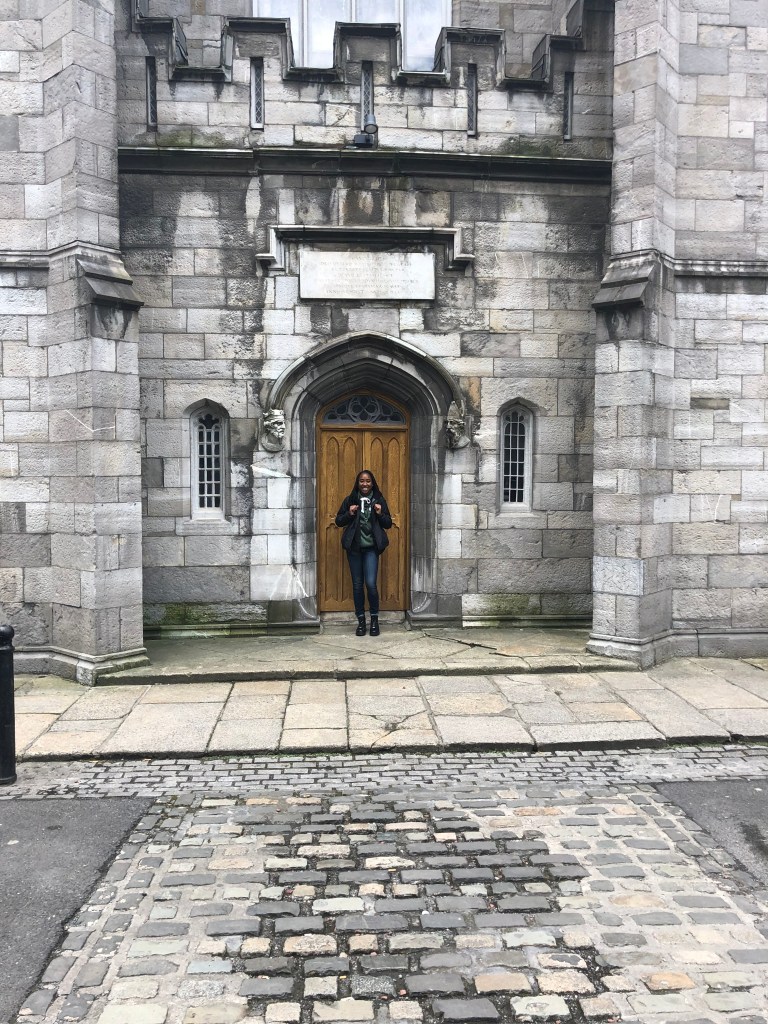
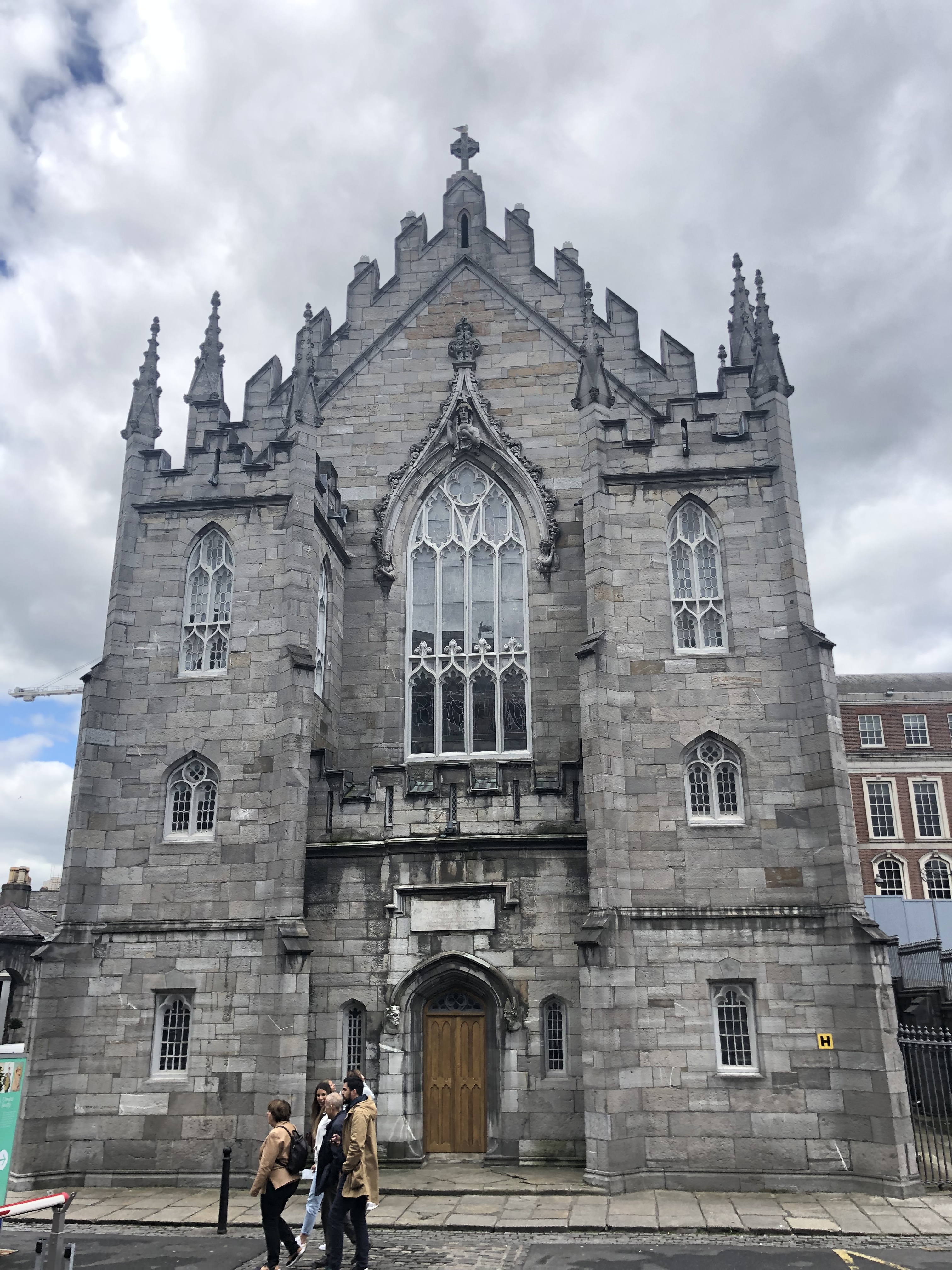
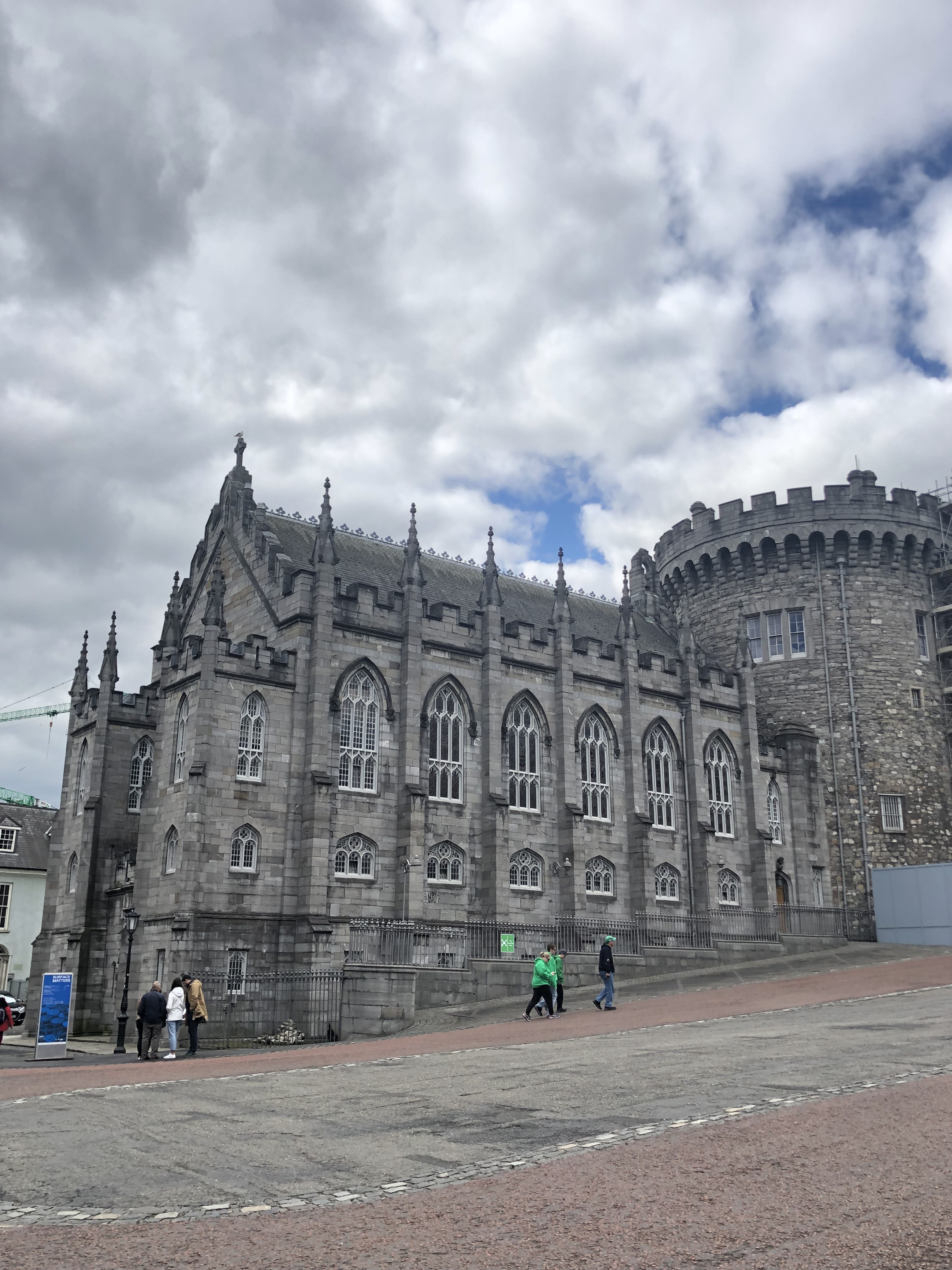
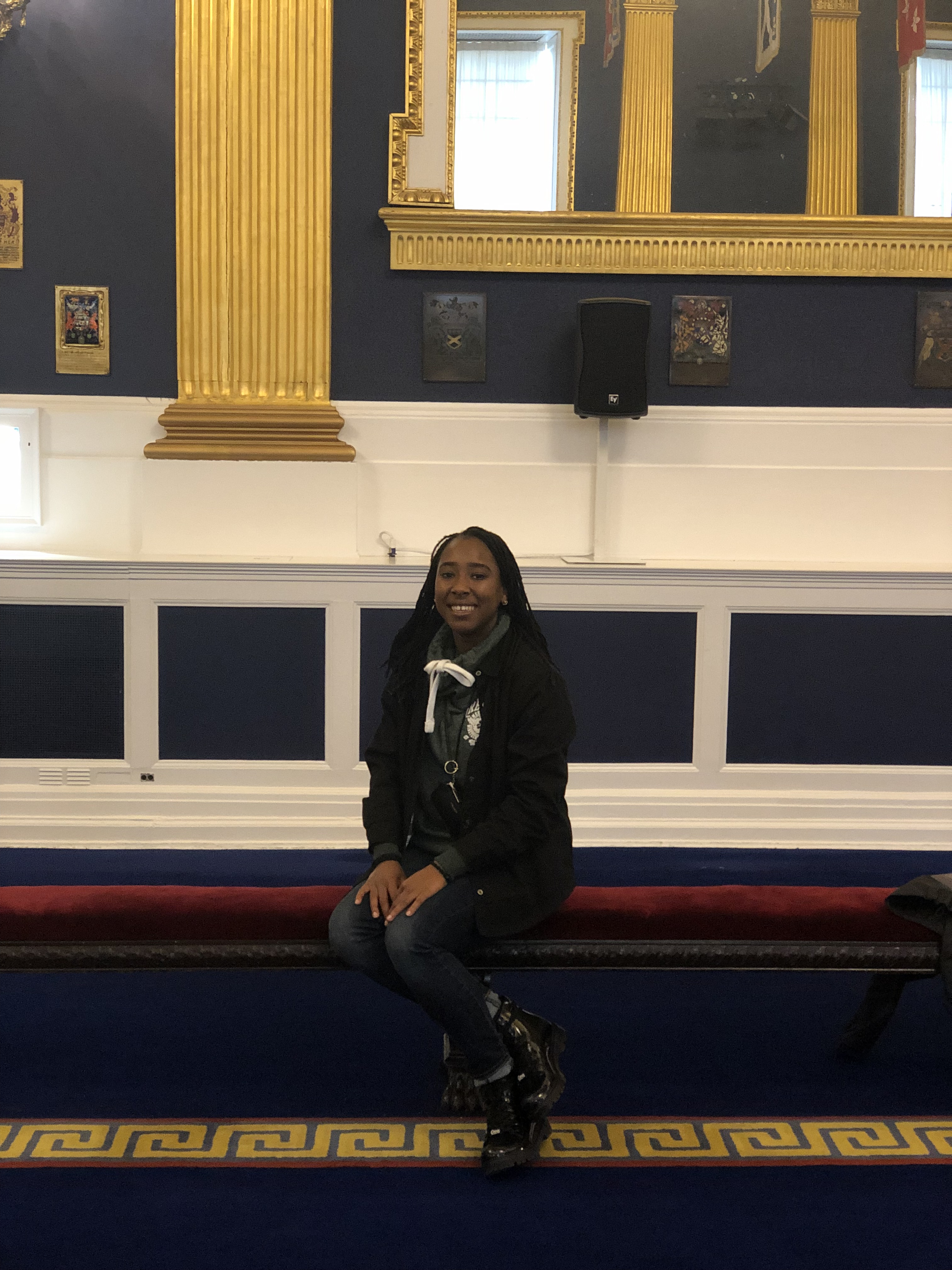
Going on a tour of Dublin Castle was one of the most fascinating things that I did while in Dublin, and I almost didn’t even do it. I have to say that when deciding between whether to experience something for the first time or not while in a foreign country always go with experiencing. This advice is only meant to be applicable to things that would mostly likely be condoned by general society.
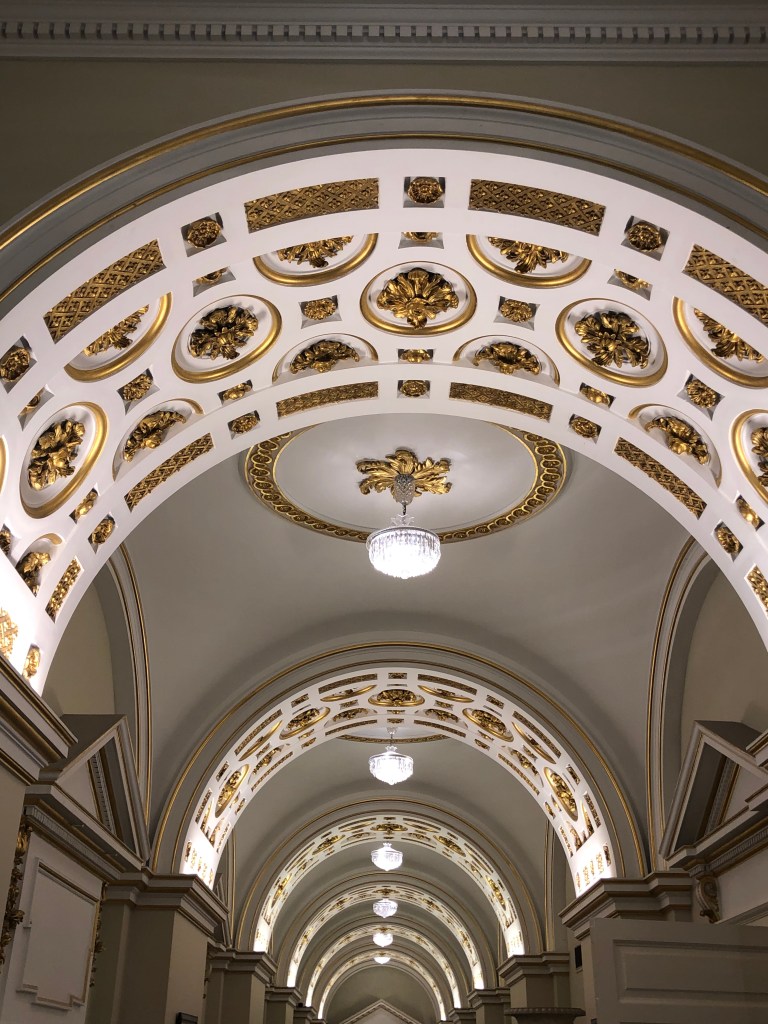
The State Corridor
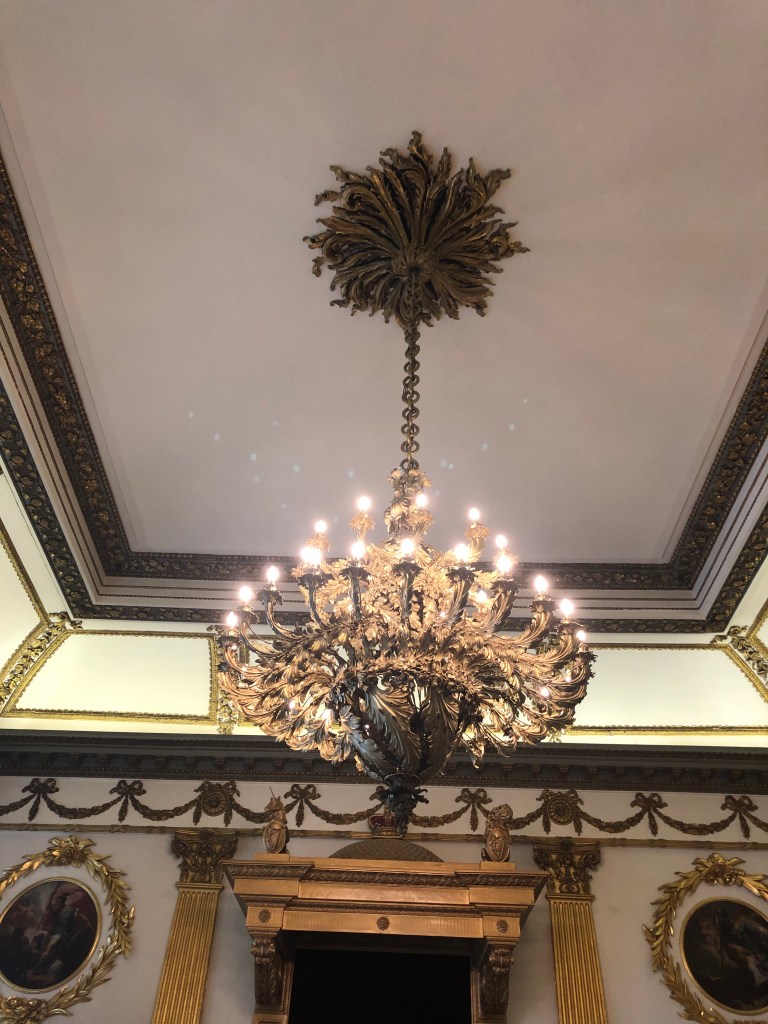
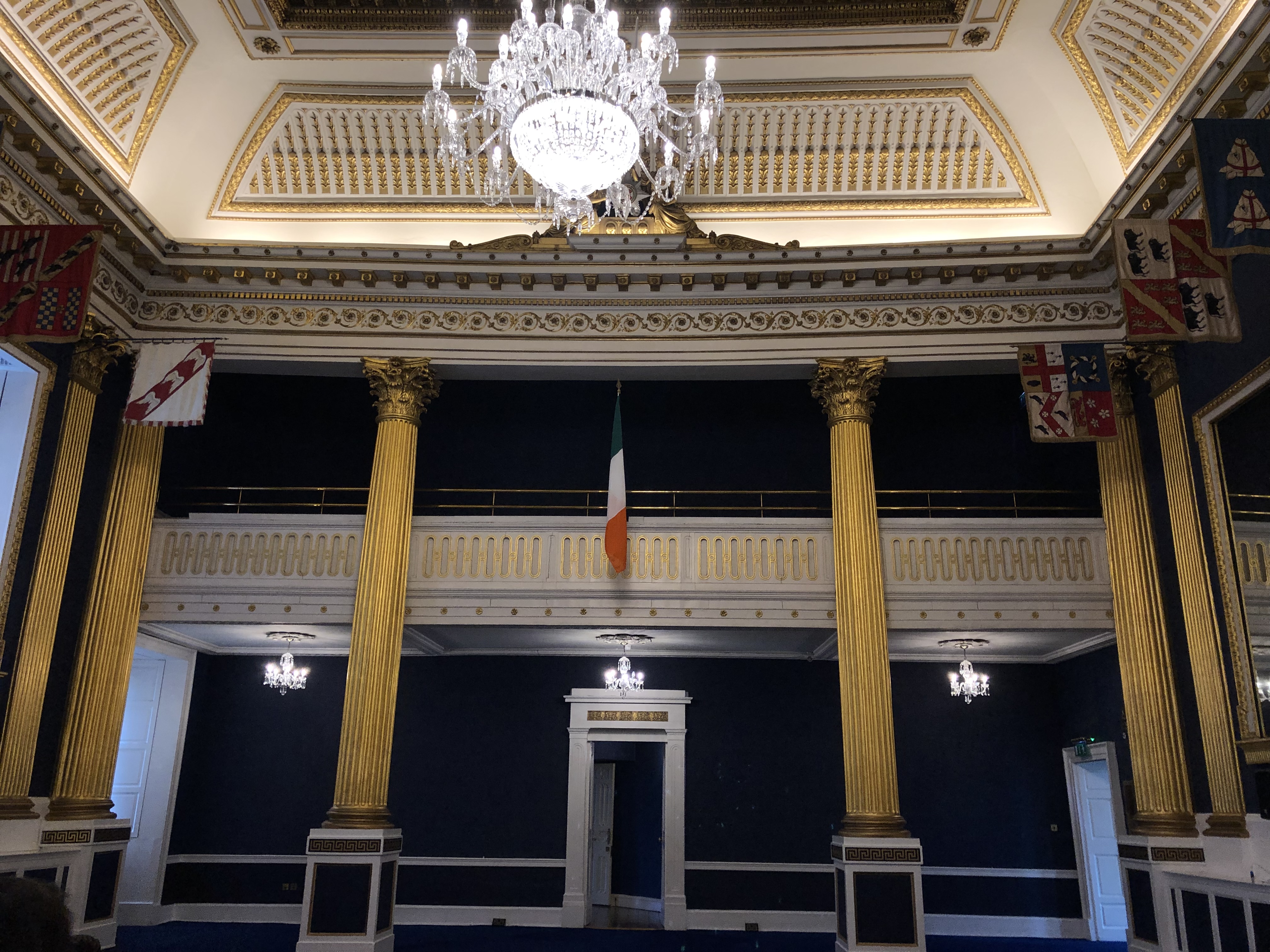
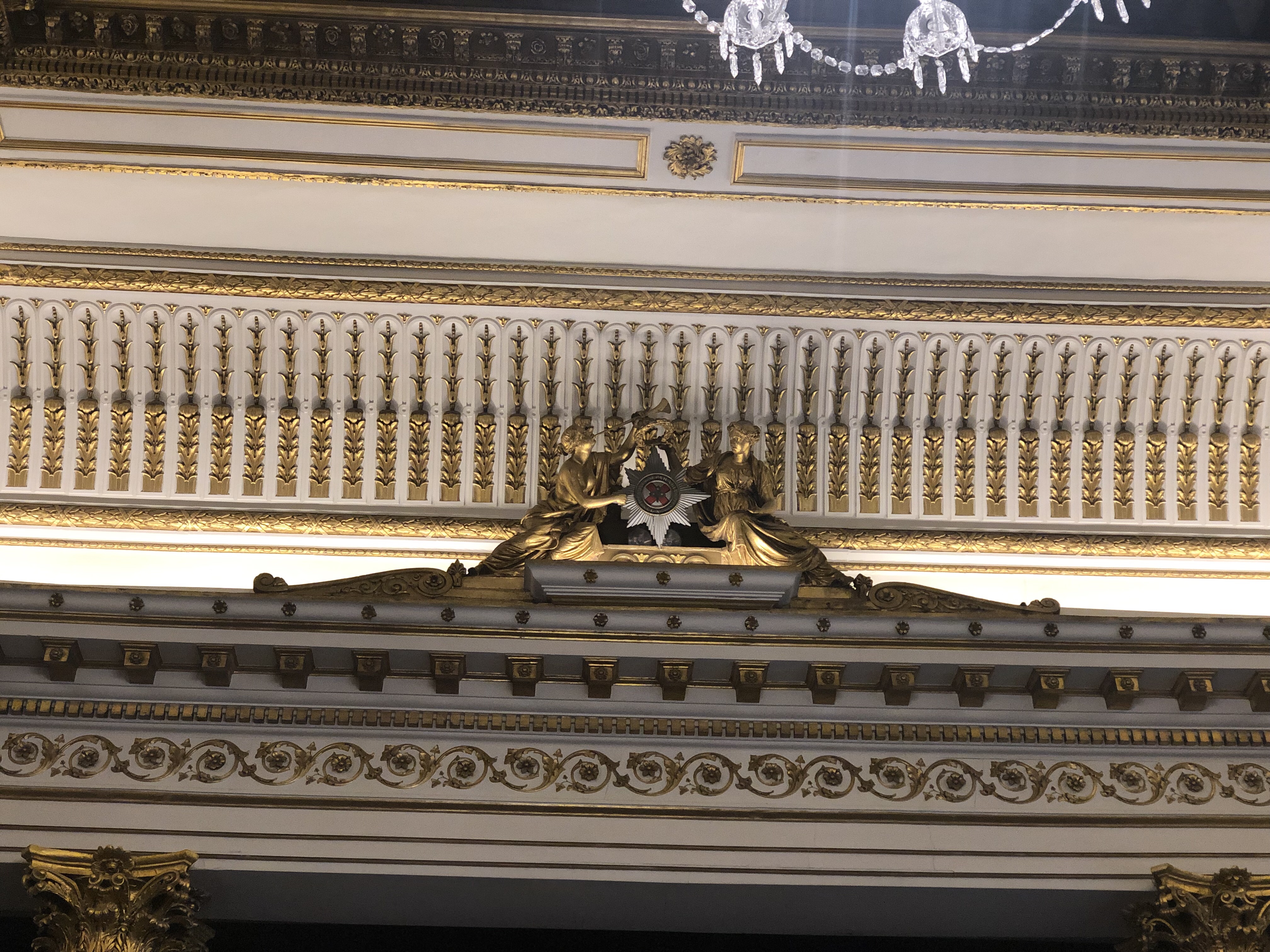
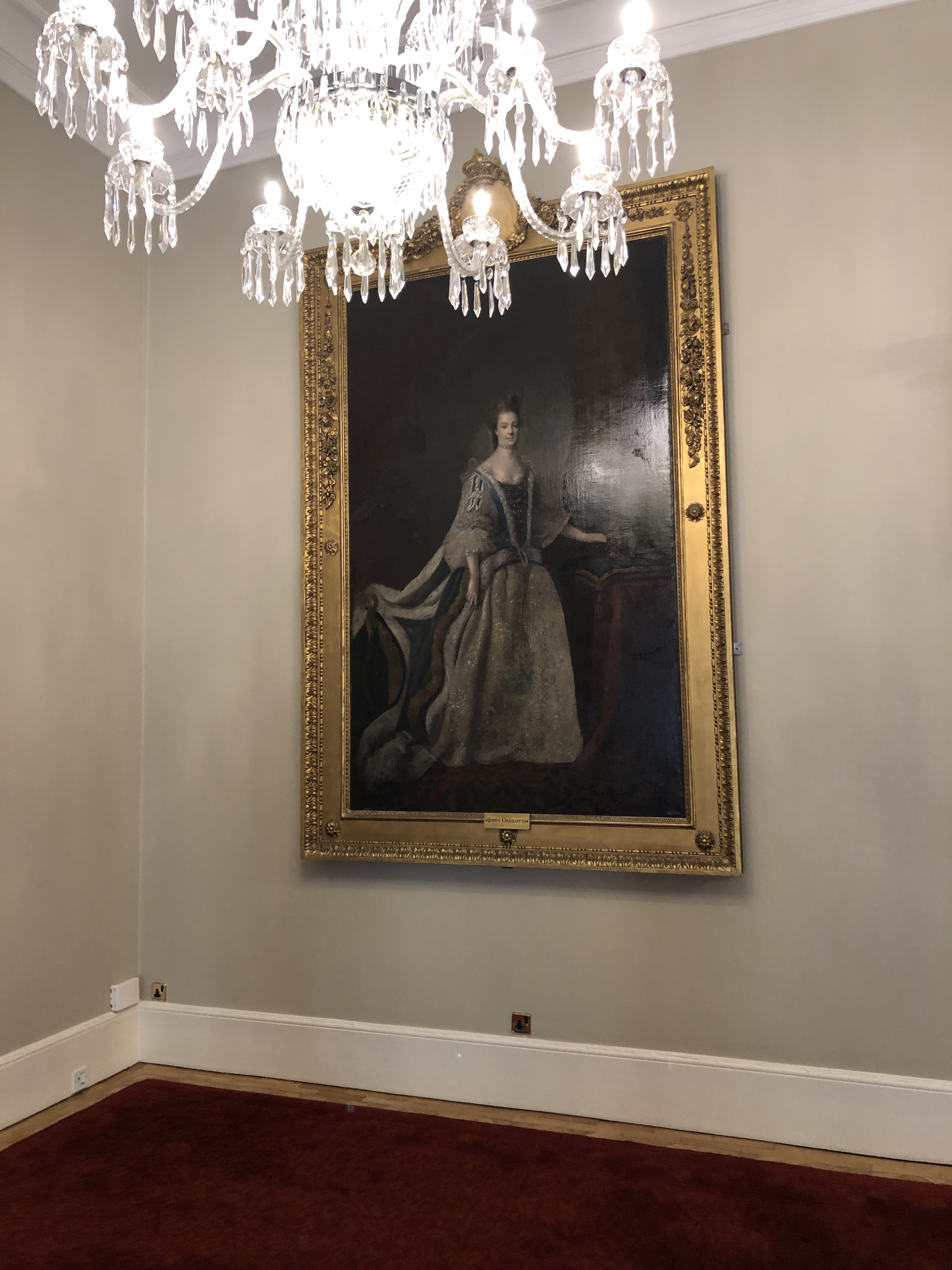
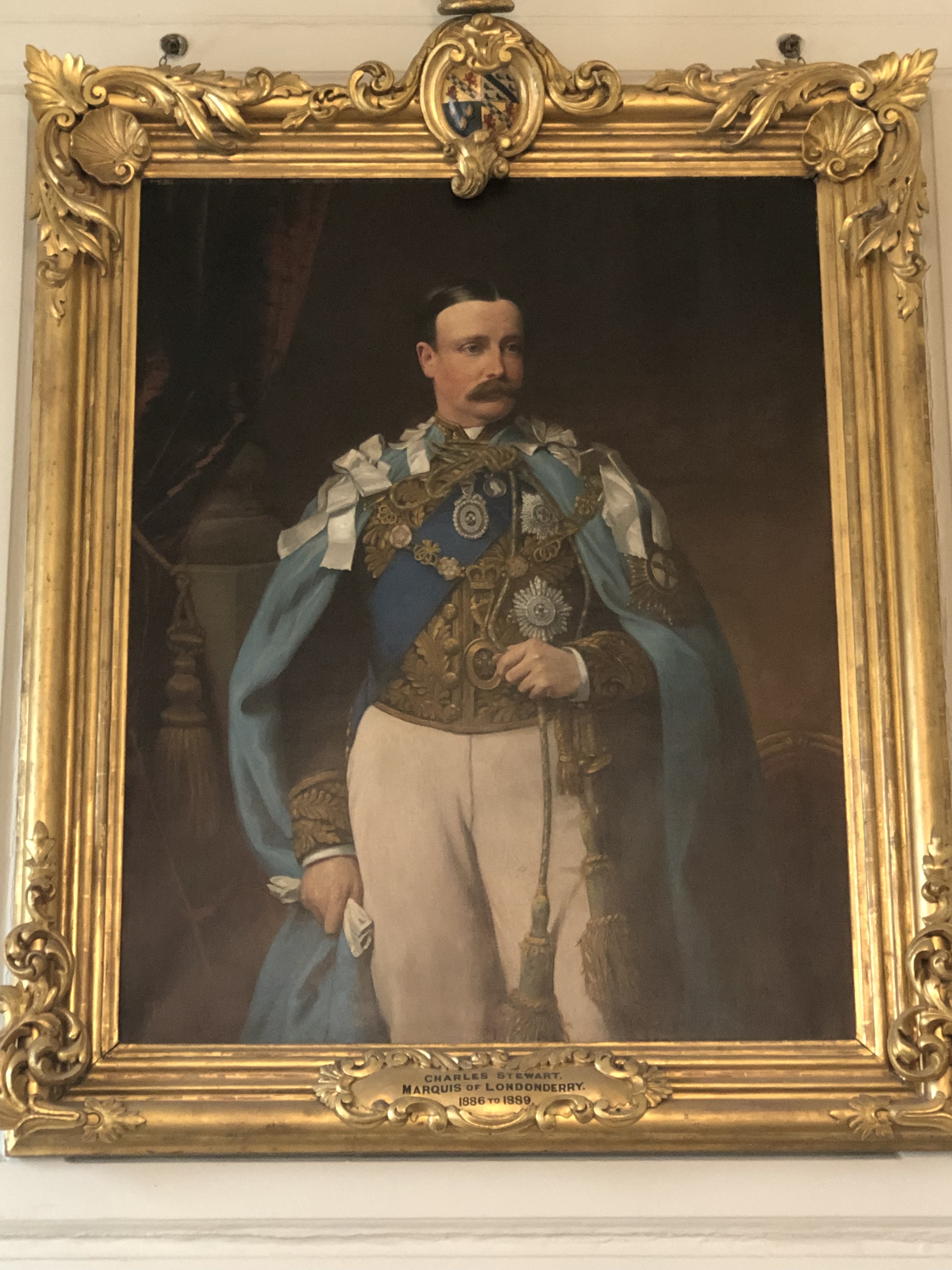
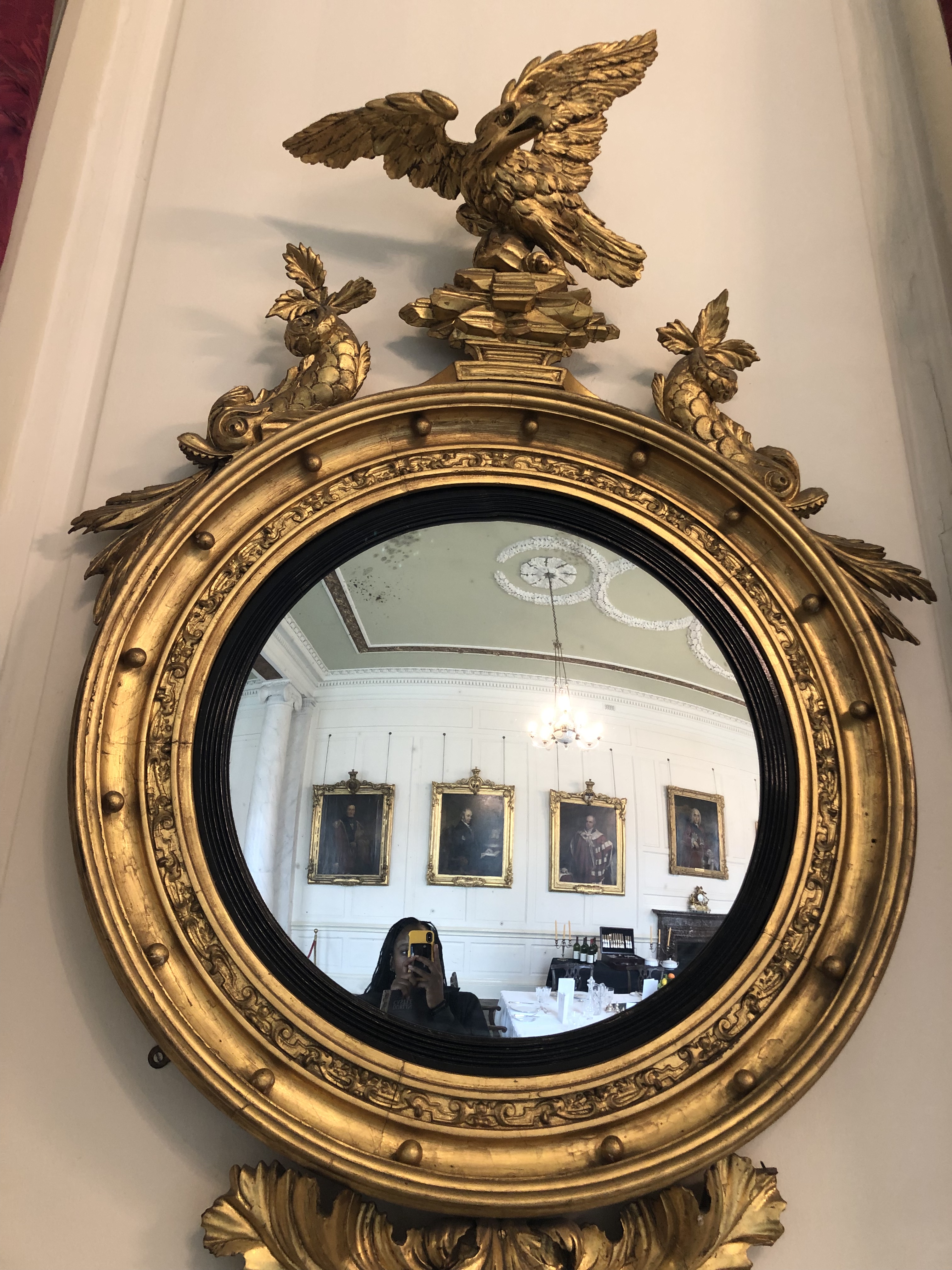
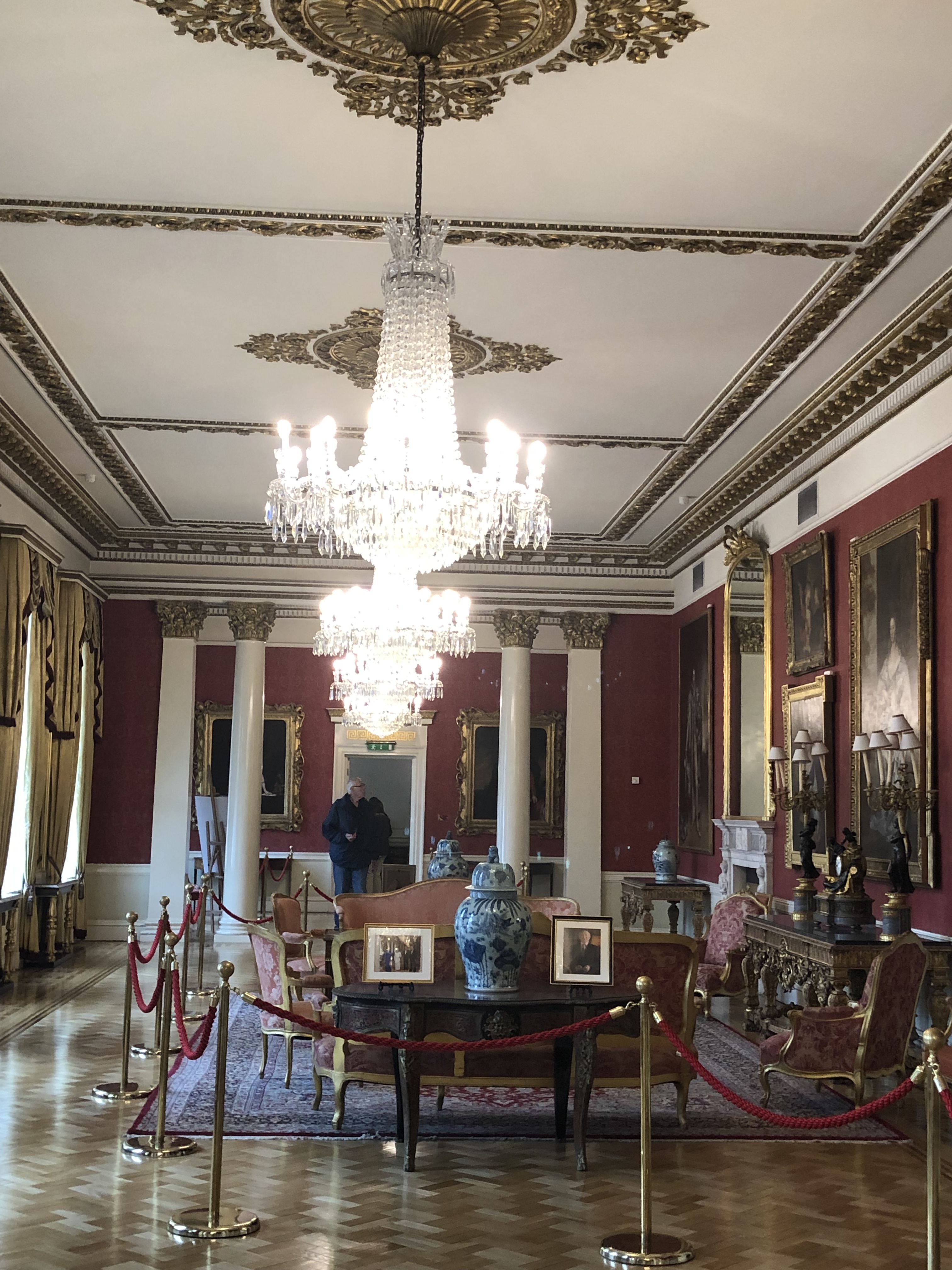
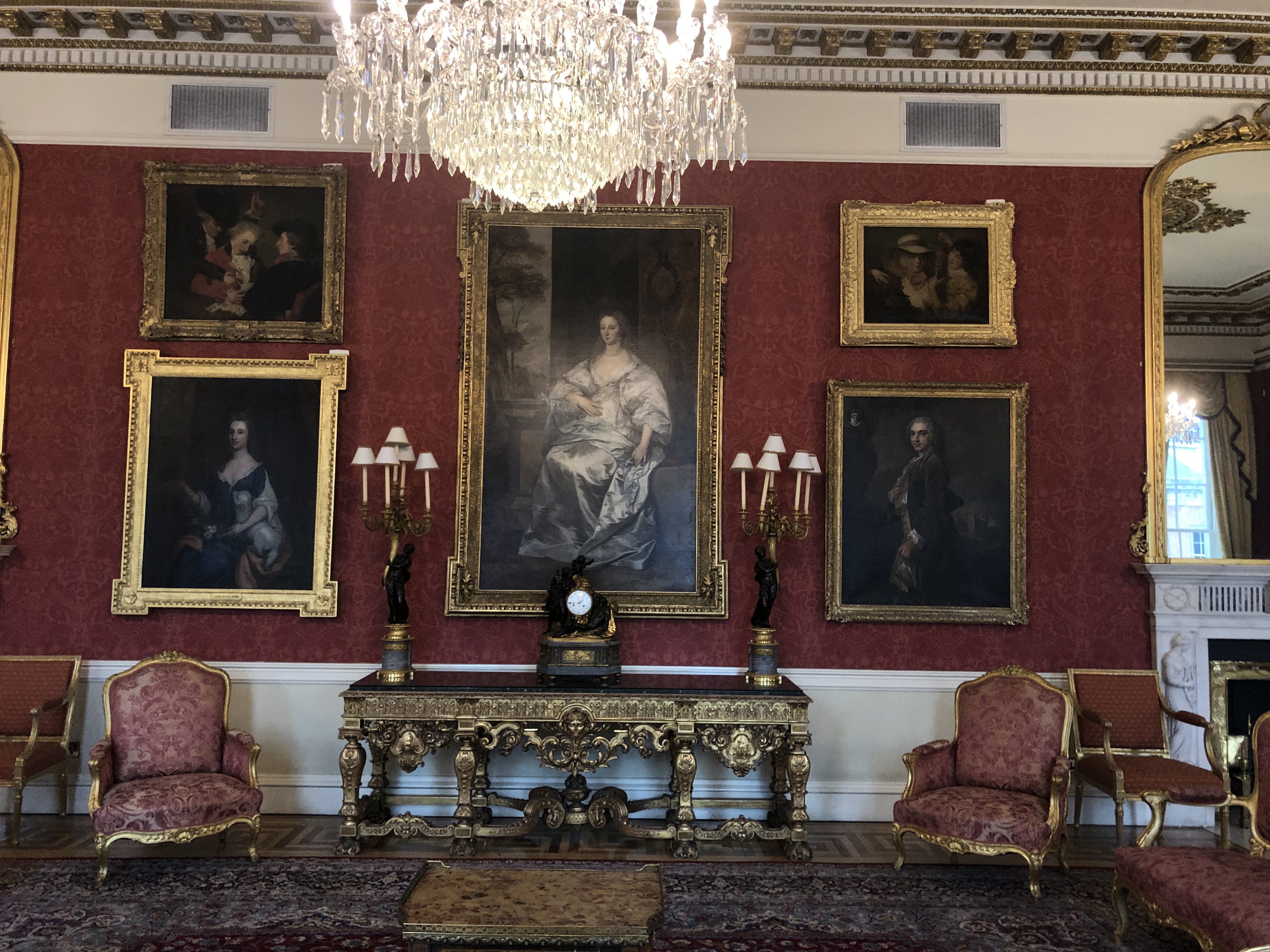
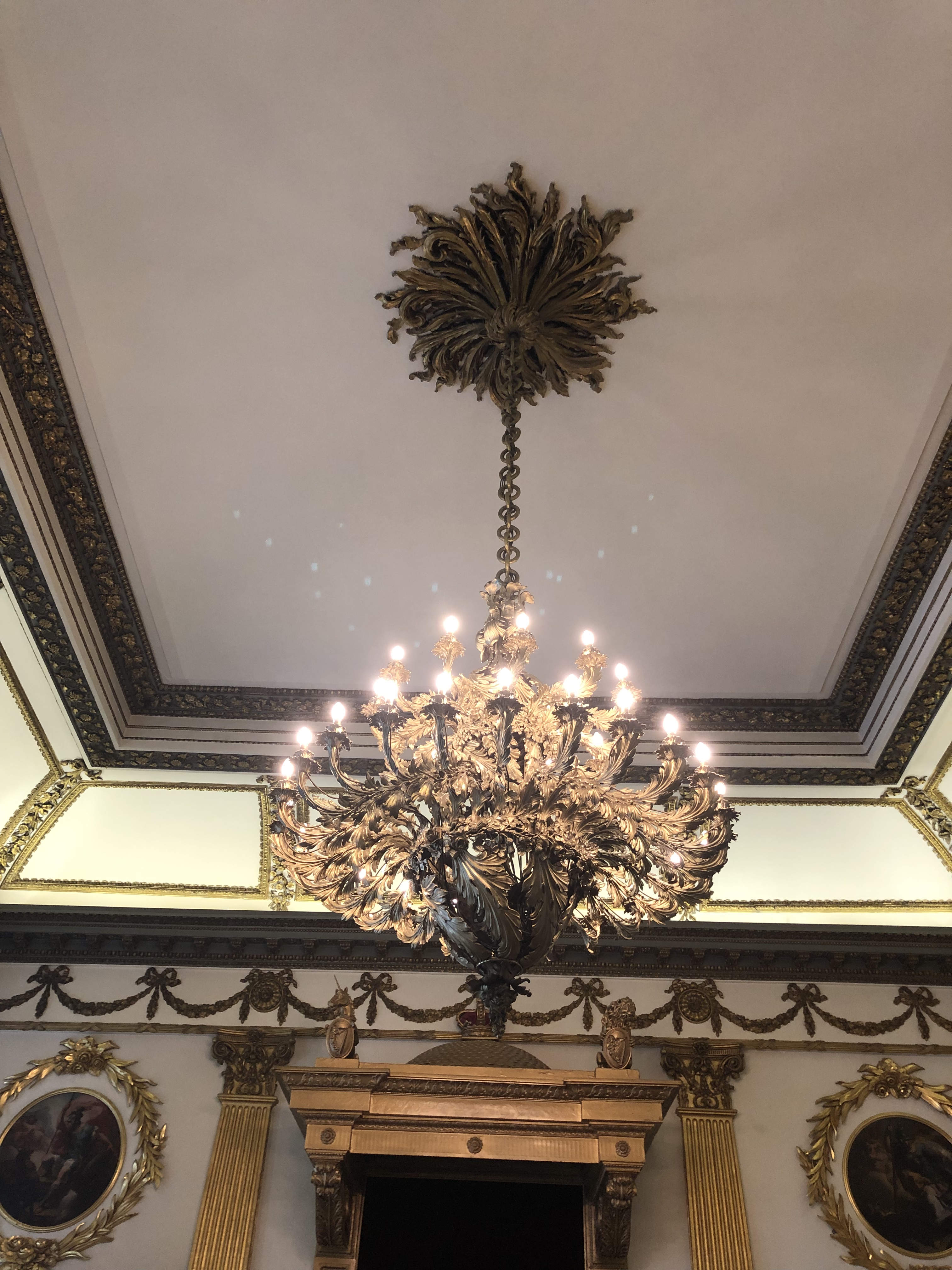
Moving on, the Castle it self was magnificent both on the inside and outside. Let’s begin with the inside. Inside the Castle was ornately decorated just as a castle should be. It had a portrait gallery with pictures of all of the Irish viceroys displayed. The frames were all gold and had intricate carvings around them. However, my favorite part of the castle was its ceilings. I never knew that ceilings could be so beautiful until I stepped into Dublin Castle. If I did not look up, then I would have missed all the glorious splendor of the ceilings in each of the rooms in the Castle.
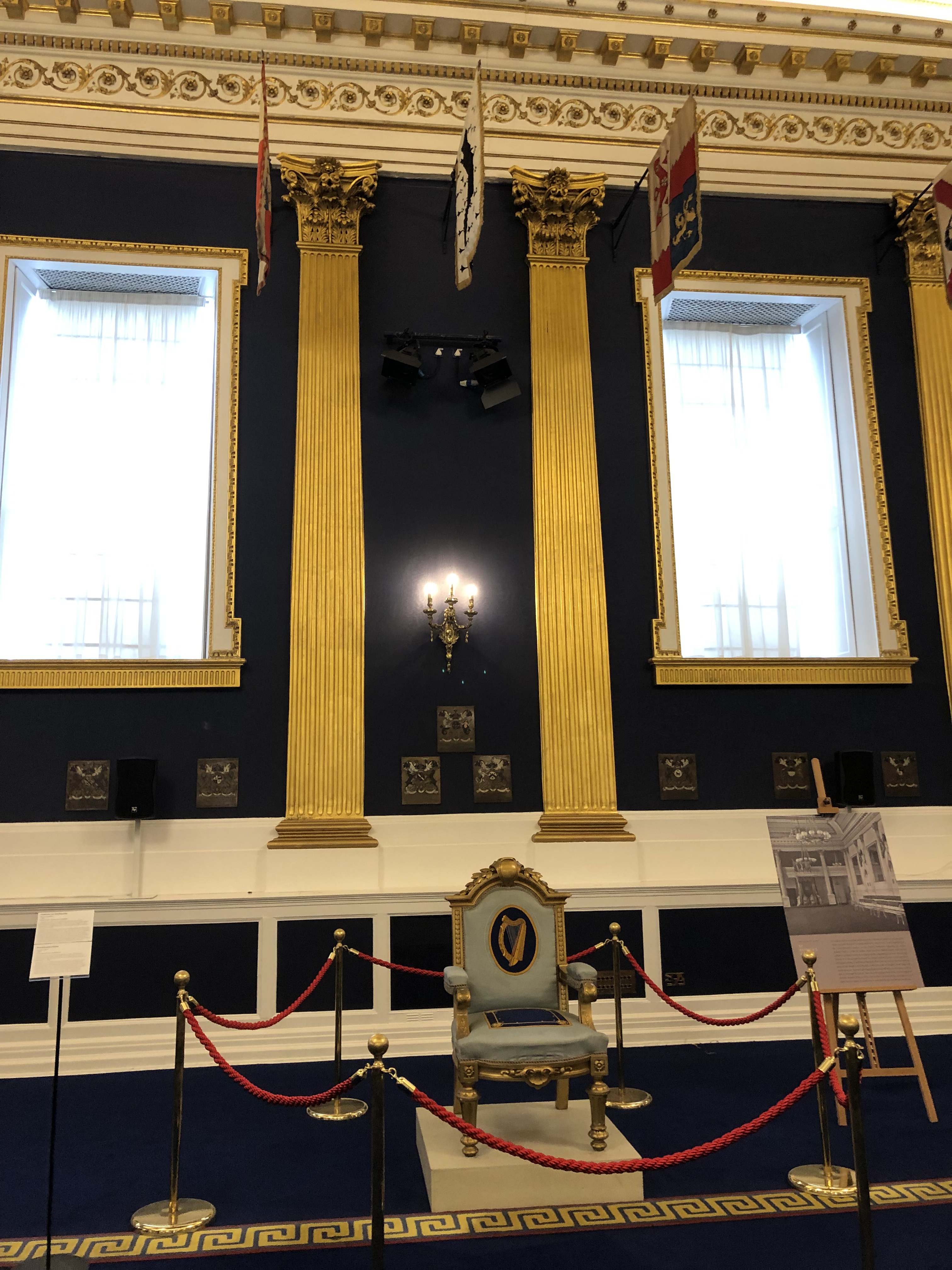
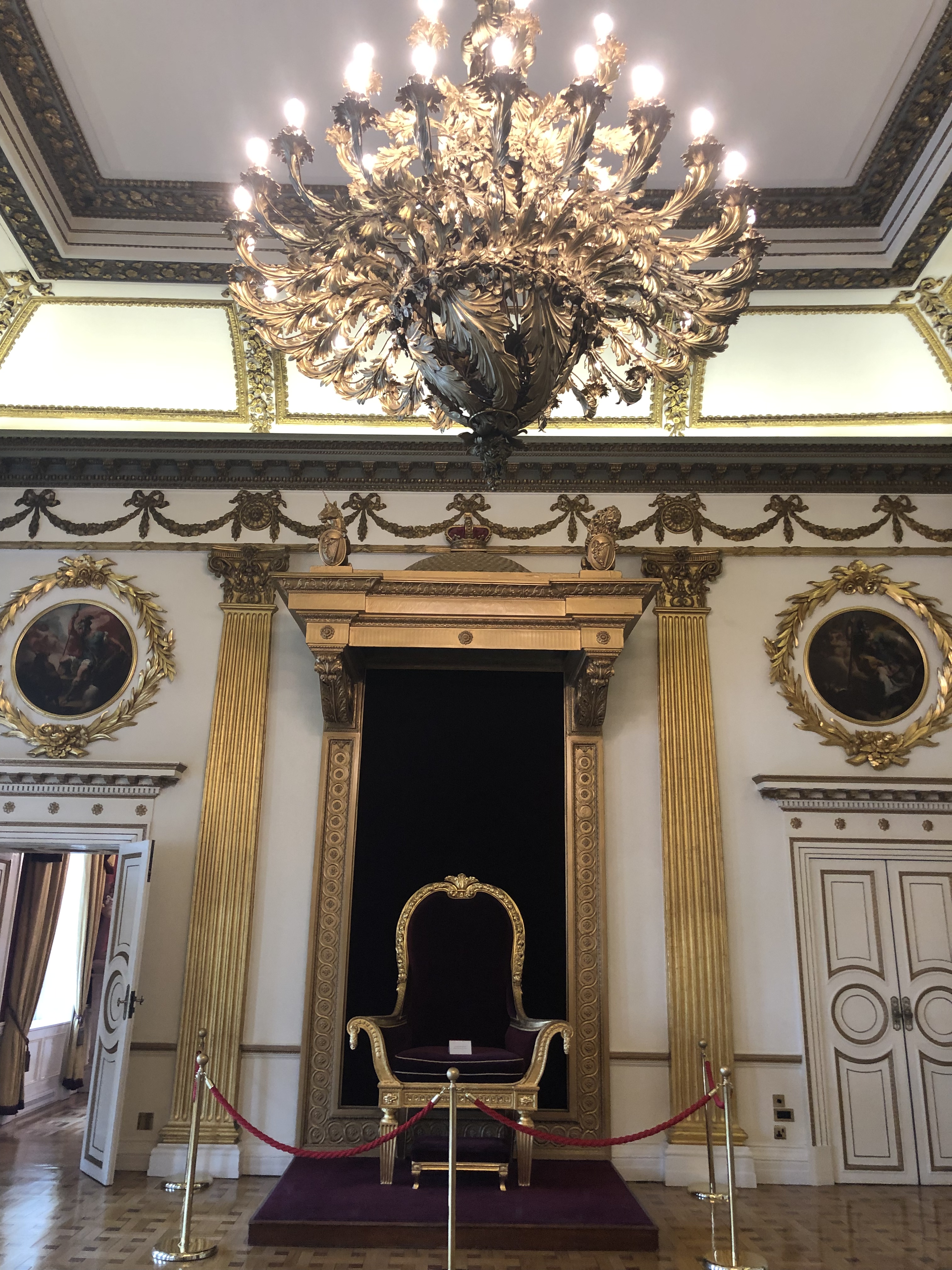
Throne Room
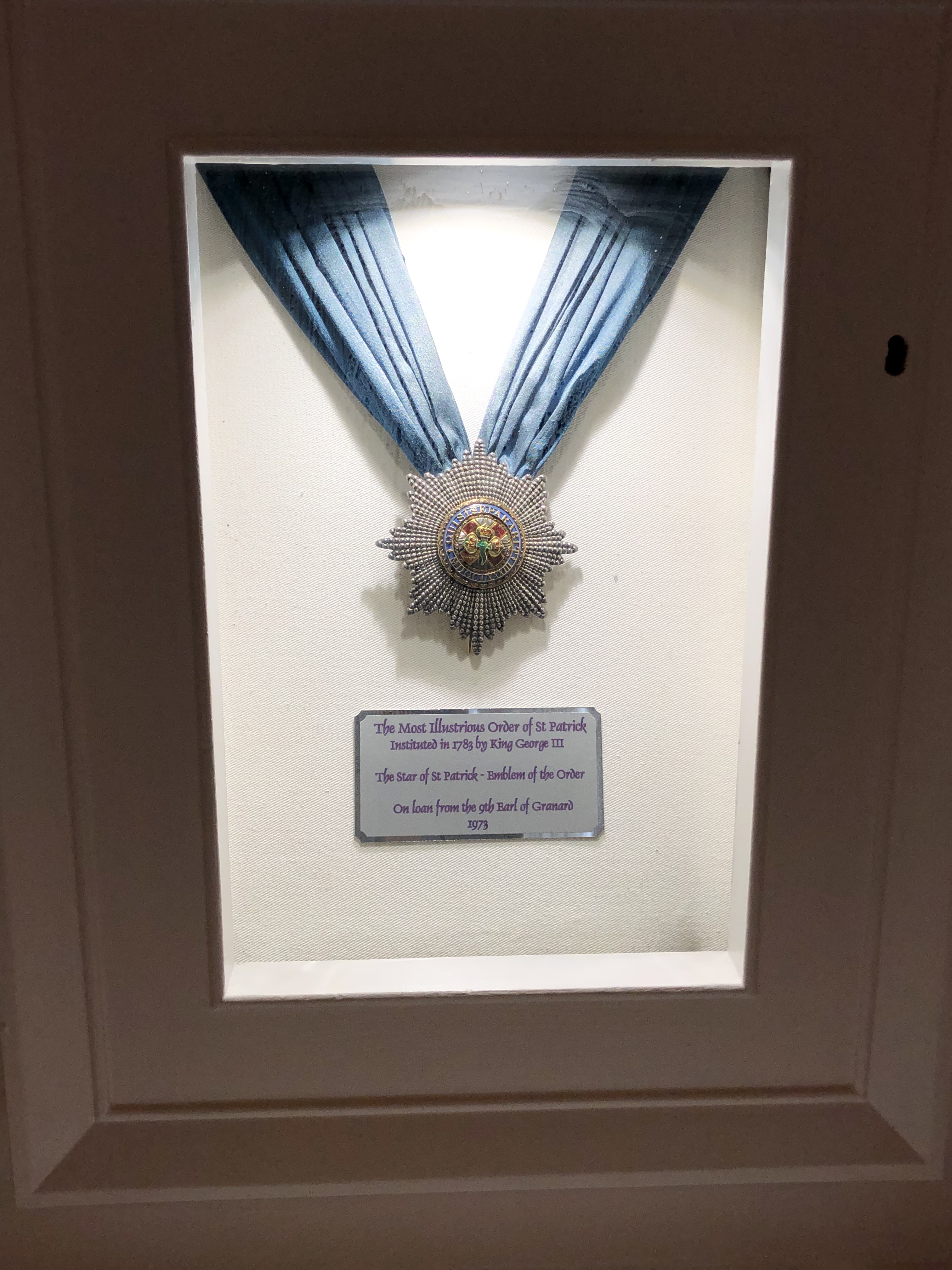
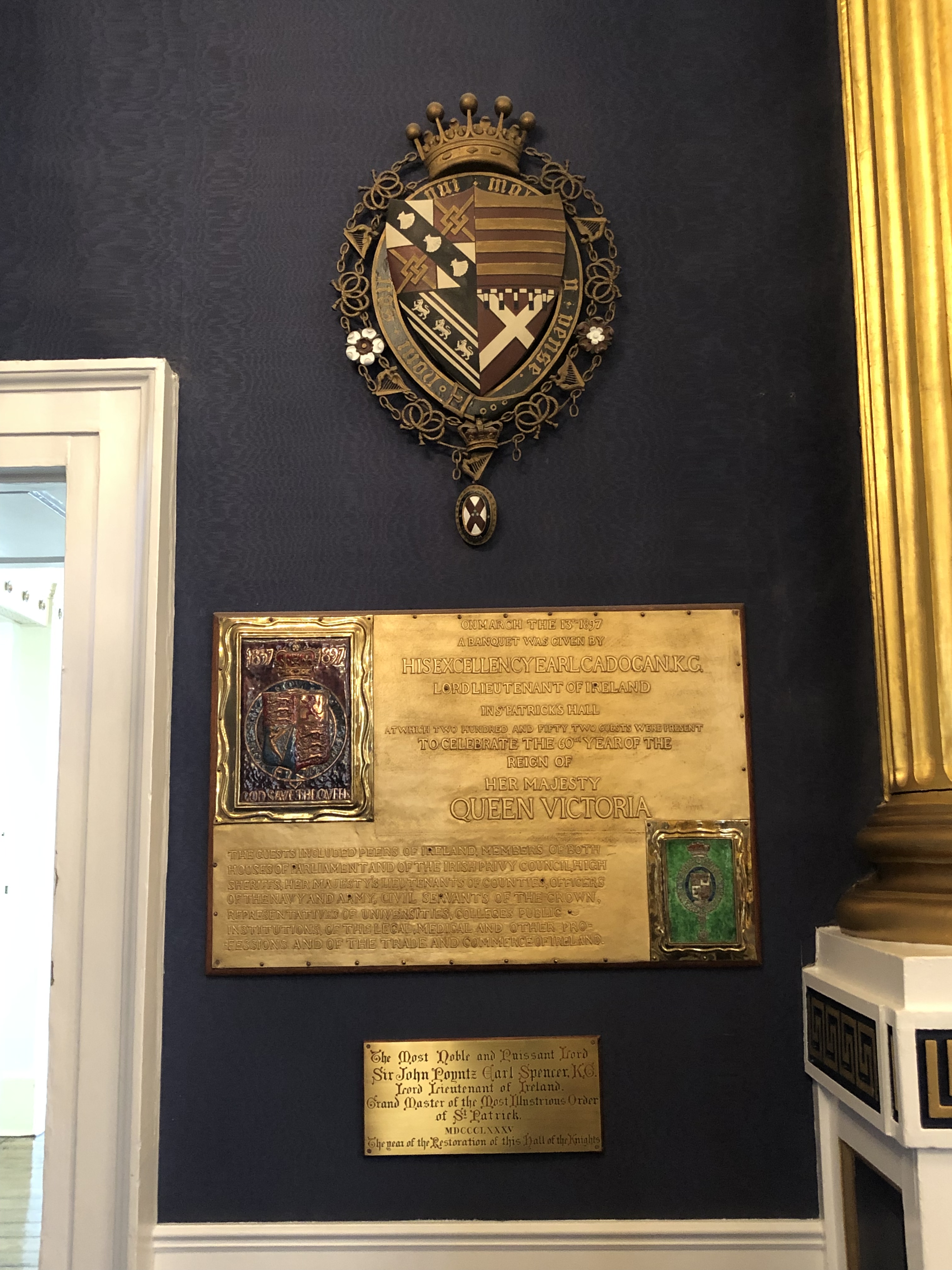
There were eight rooms in the castle that I had the pleasure of touring. They included the James Connolly Room, you may remember him from my previous post on Kilmainham jail, the Apollo Room, the State Drawing Room, the Wedge Room, the Portrait Gallery, the Gothic Room, the Throne Room, and St. Patrick’s Hall.
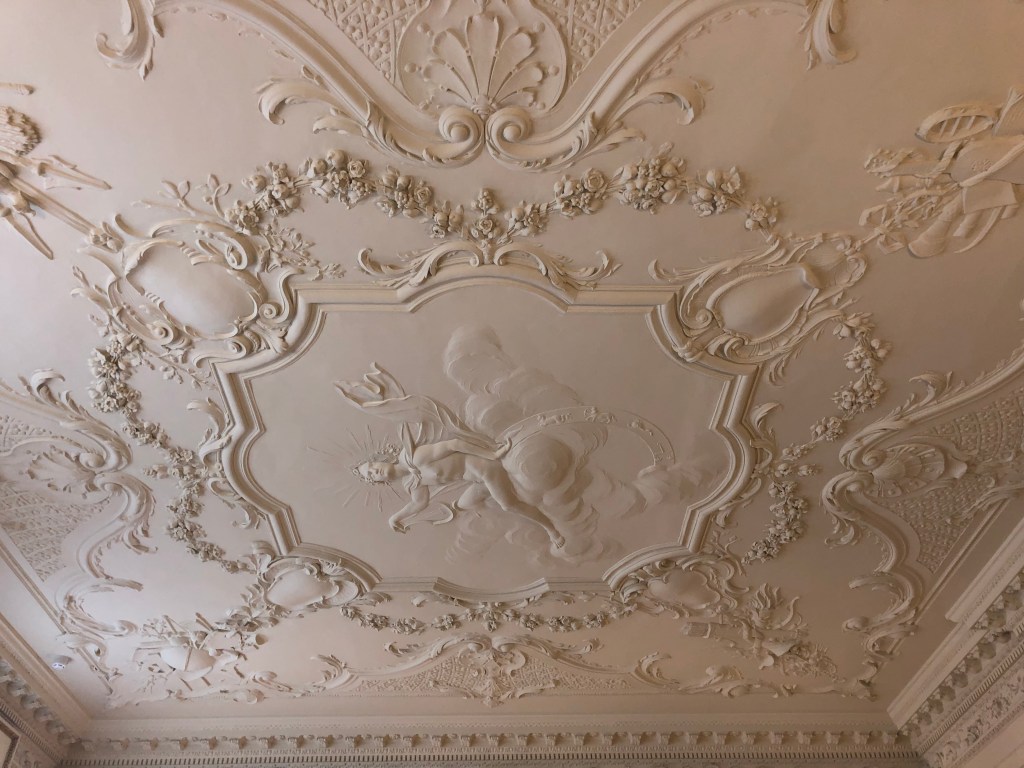
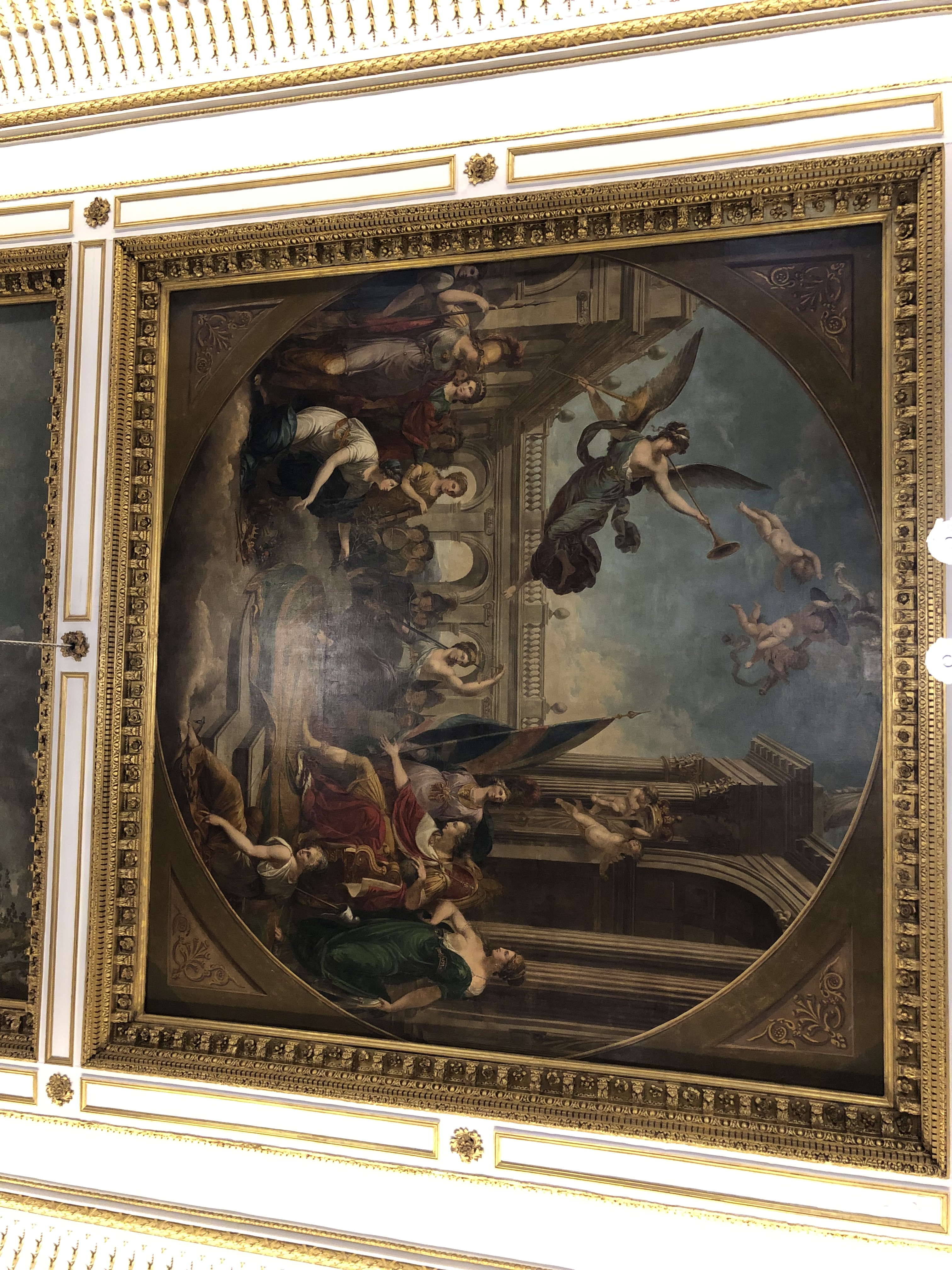
Apollo Room Ceiling
One of the most interesting pieces of history about the castle actually had to do with one of the ceilings. The ceiling pictured above depicts the Greek god Apollo and that is where the room gets its name. It was not the original ceiling; it was a replacement ceiling because the original room in the castle had burned down. The Apollo ceiling was actually brought to the castle from another home and arrived in seven separate pieces. However, one would never be able to guess that it was not always a part of the castle.
Below is gallery of photos of the inside of Dublin Castle
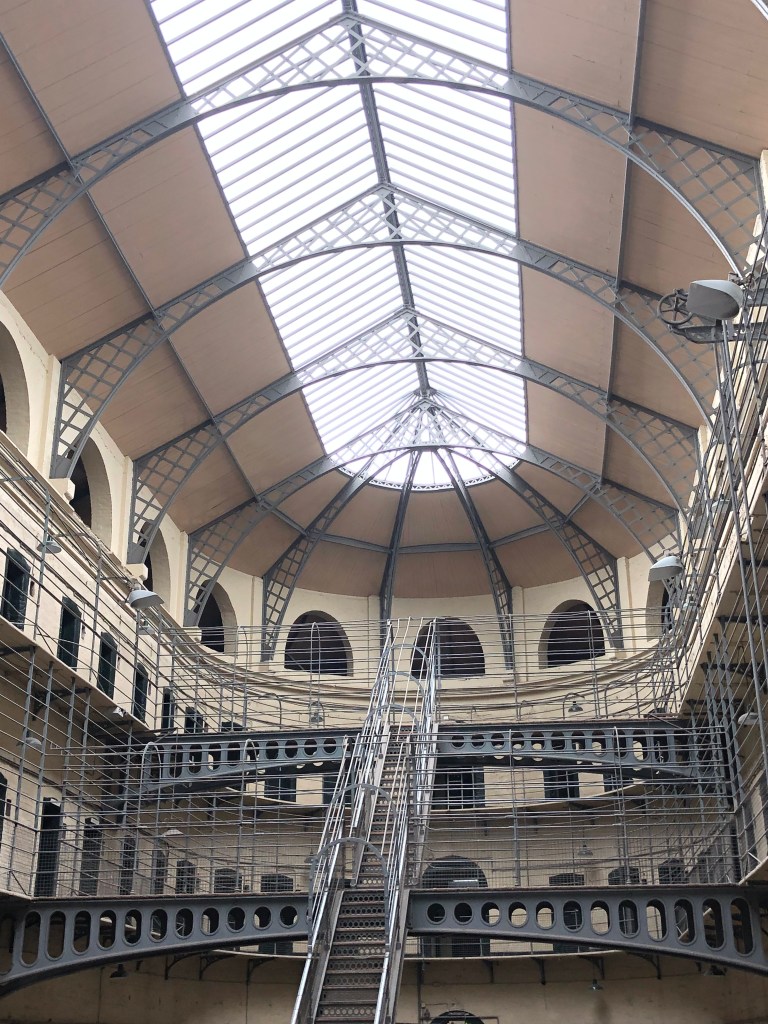
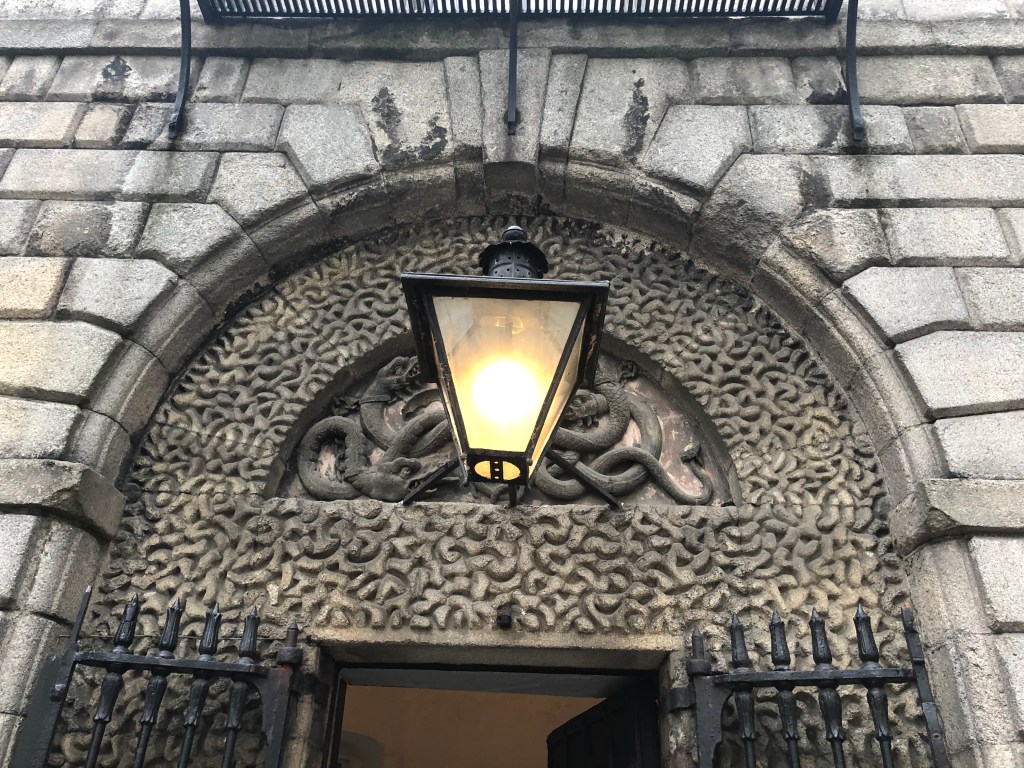
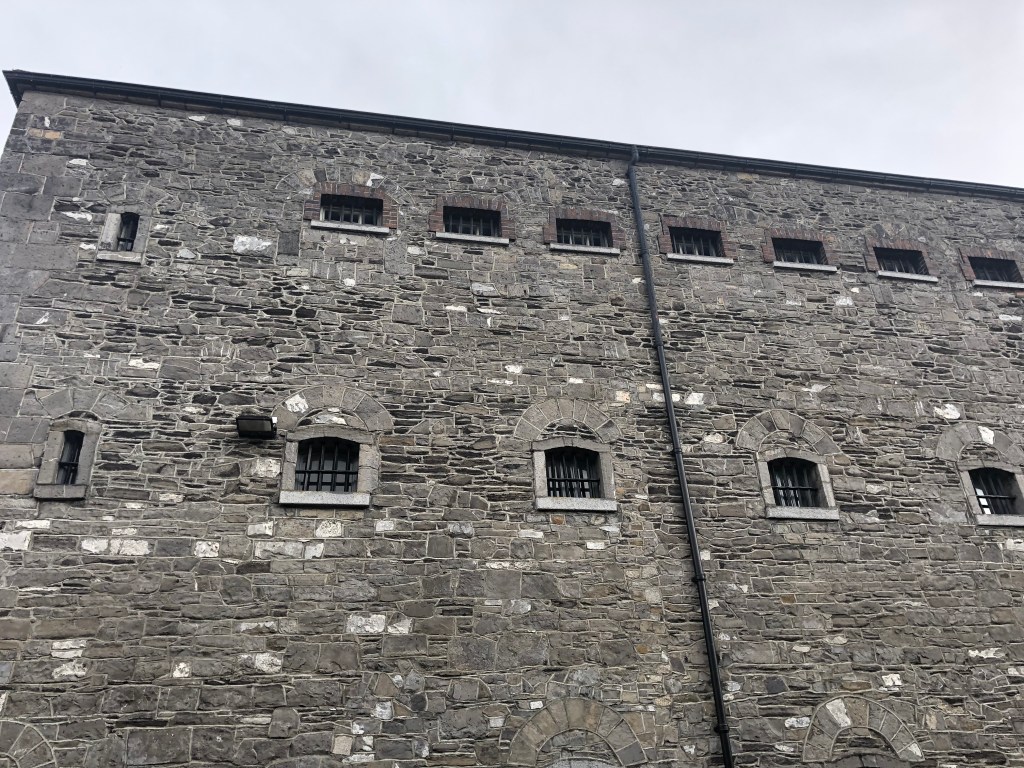
Visiting the Kilmainham jail, in Dublin, was a very sobering experience. In the past, the jail housed women, children, and men altogether. Children, as young as four years of age, were sentenced to prison in Kilmainham jail. The jail was originally constructed to only house 1 person to a cell, but things rarely, if ever, go as planned. When the potato famine occurred, people were clamoring to be convicted of crimes in order to go to prison. I know that wanting to go to jail sounds unbelievable, but I am not joking when I say that people really wanted to get in. At the time, being in jail was better than living outside of the jail because at least in jail one had a place to sleep and meals. On the outside, none of that was guaranteed. Life was officially better in jail during the potato famine than life outside of prison was.
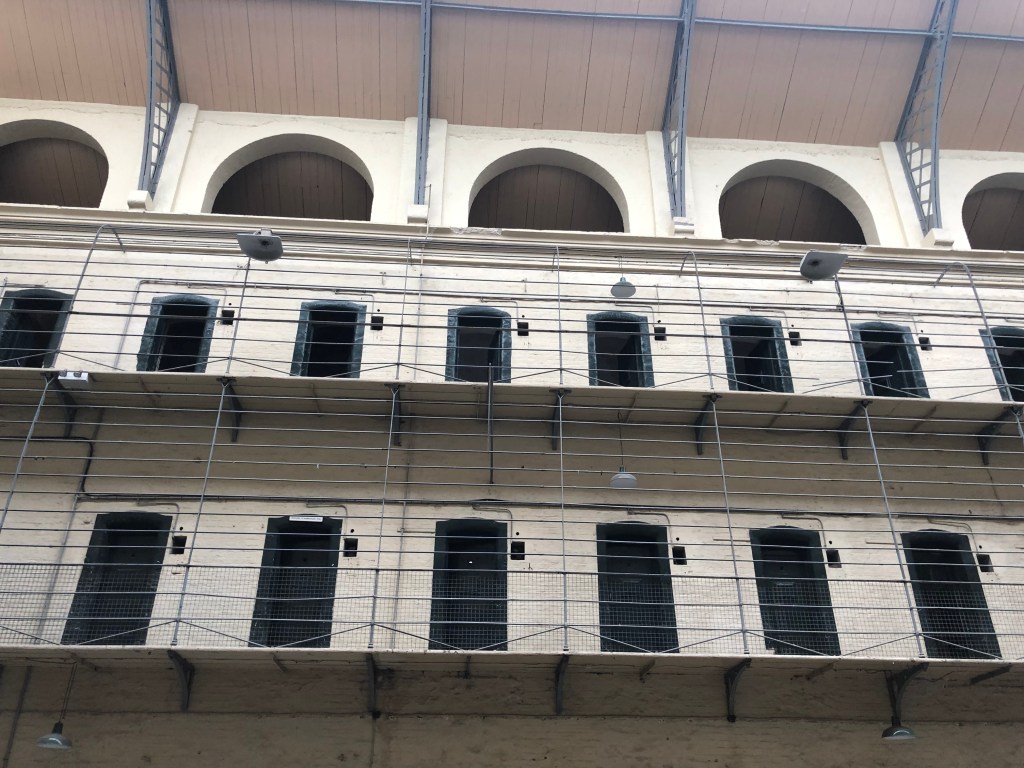
Hall of Kilmainham Jail
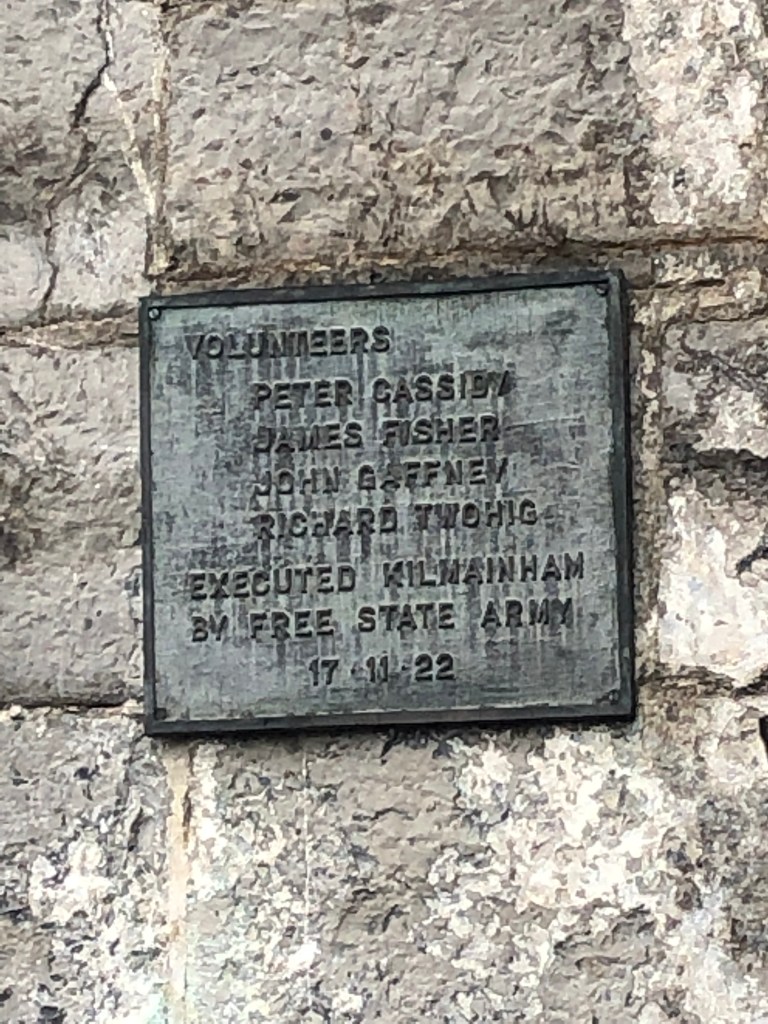
The prison is notable and was actually restored because it held very important political prisoners during the years it was open. It was the holding place for some of the rebels of the 1916 Easter Rising rebellion that took place in Dublin. The main leaders of the rebellion were Thomas Clarke, Joseph Plunkett, Sean McDermott, Patrick Pearse, Eamonn Ceantt, James Connolly, and Thomas MacDonagh. The Easter Rising was a rebellion planned by Irish rebels against the English government in order to achieve Irish independence. It resulted in hundreds of people dying, thousands being wounded, and most of Dublin being destroyed. However, as you must have guessed because they were held in jail the rebellion failed.
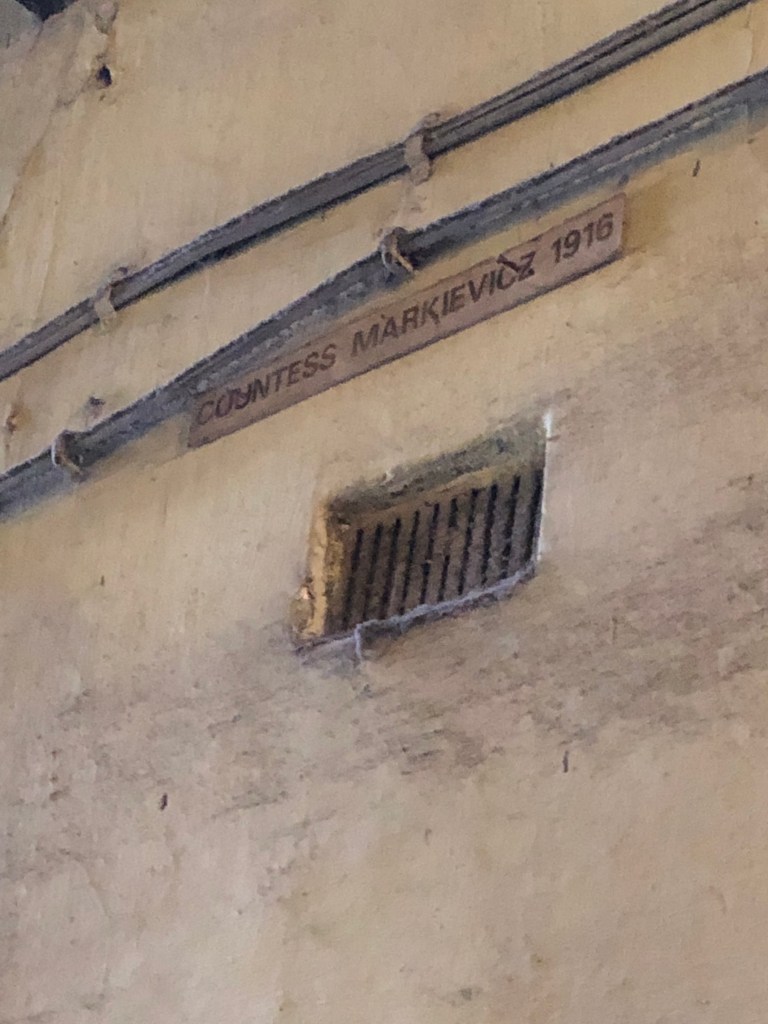
Countess Markievicz was not executed because she was woman
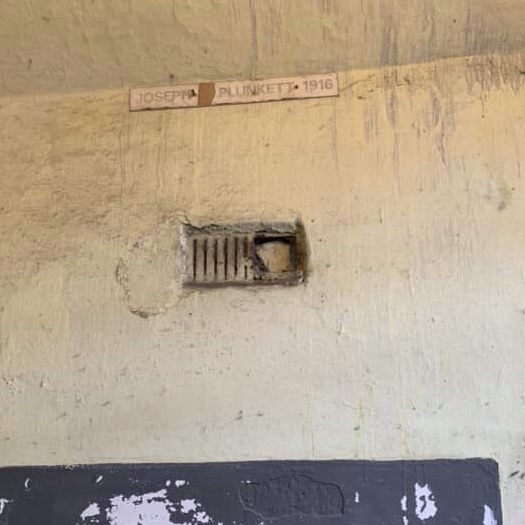
Joseph Plunkett Cell
The men and main woman who planned the rebellion were all held in separate cells in the jail, where they awaited their execution by firing squad. Their names were hung outside of their cells, and they were kept in a separate area from the regular criminals. The rebellion had failed, but the deaths of the 15 rebels ignited a fire like never before for Irish independence. Many of the wives of the leaders of the rebellion would follow in their husbands footsteps and land themselves in Kilmainham jail later on.
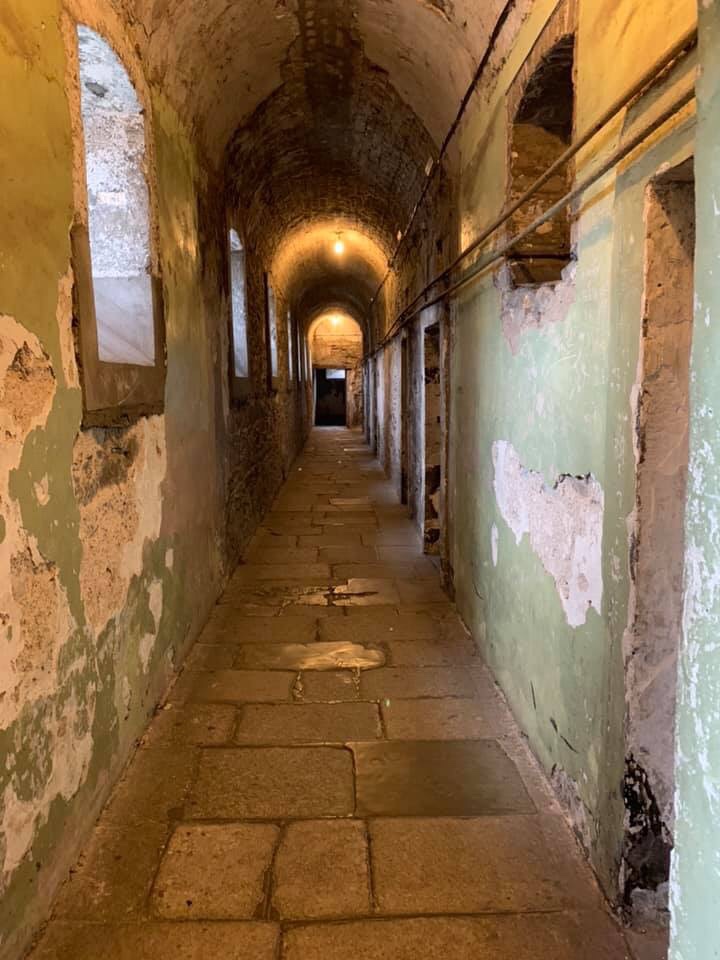
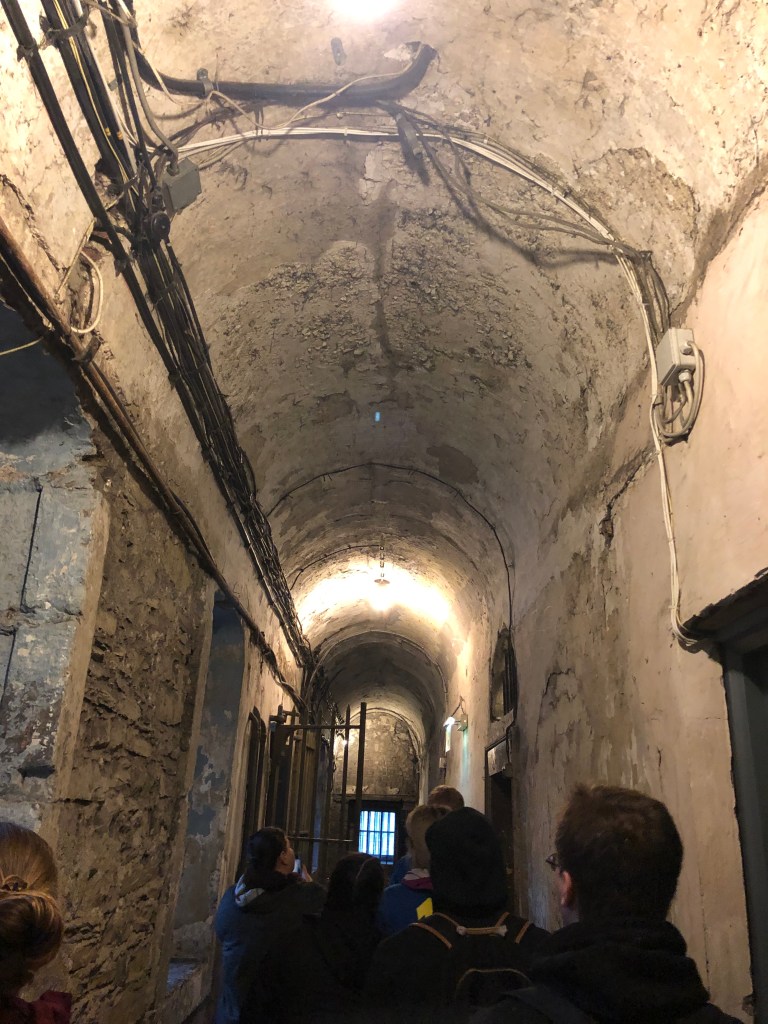
Hallway
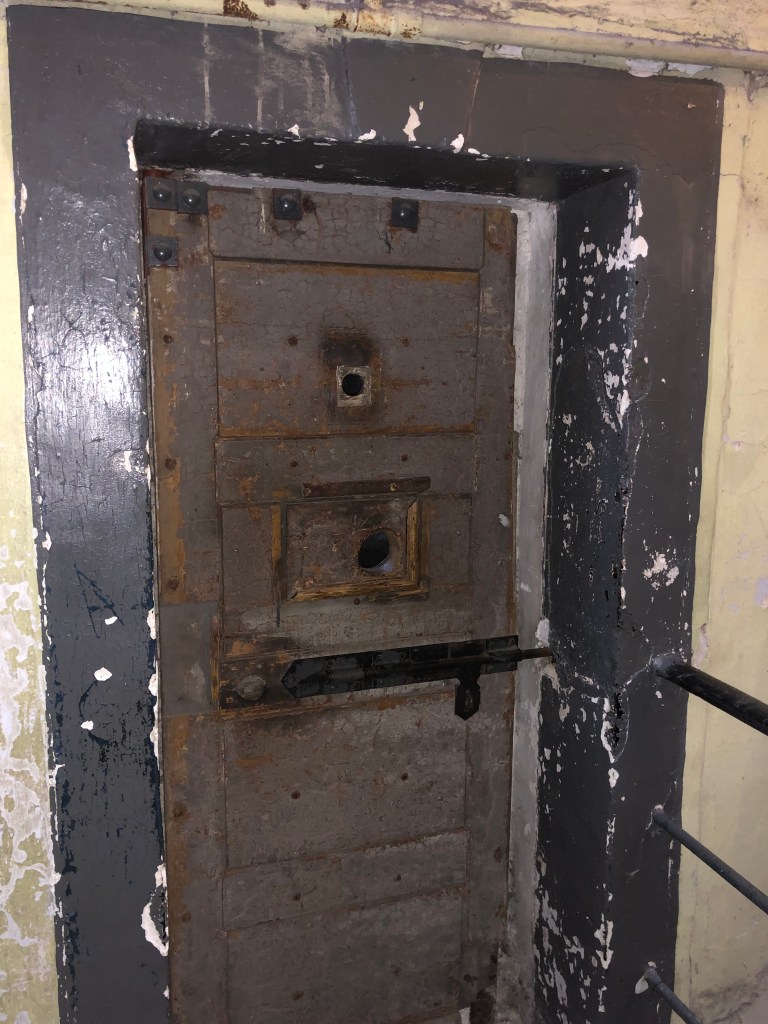
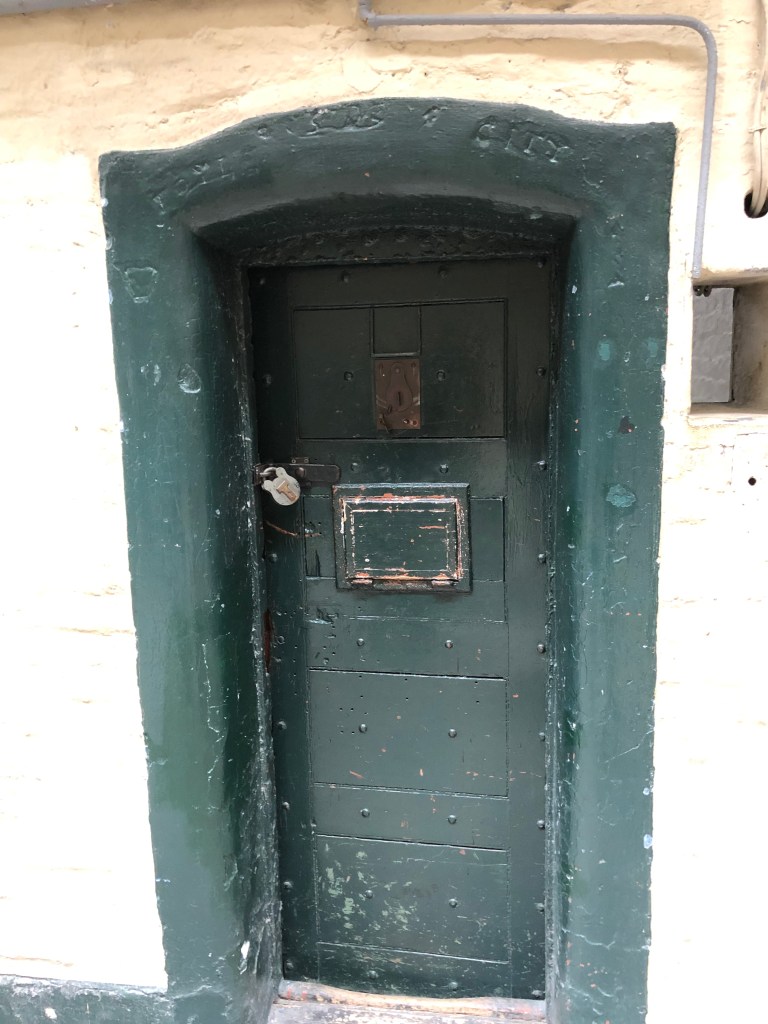
Cell door
Walking through the jail was an interesting experience. It was very cold and dreary. According to the tour guide, back in the day, they believed that the cold stopped the prisoners from getting diseases. So, they would have preferred them die of coldness than of some sickness caused by the heat. The cell doors in the prison were also very short. I had to duck in order to get into most of them, and this made me ponder about the average size of an irishmen back in the 20th century. I think they must have been fairly short or crouched a lot.
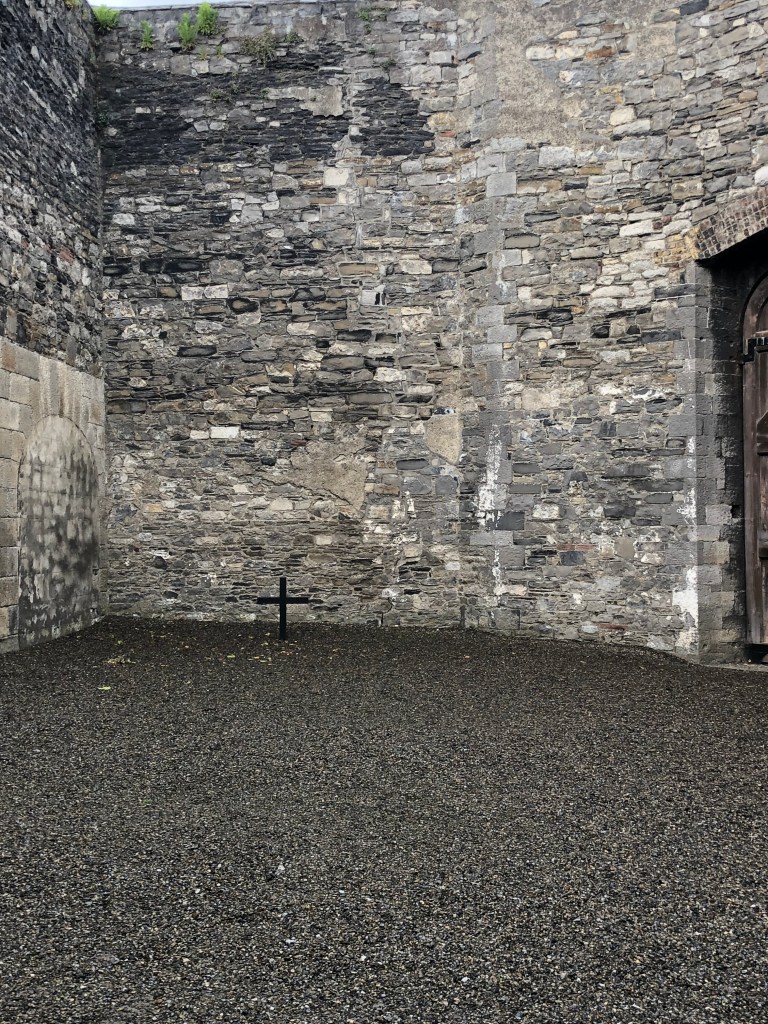
Courtyard Where Execution by Firing Squad Took Place
Being inside Kilmainham jail was one thing, but stepping onto the soil where some of the rebels of the Easter Rising where killed was a whole other experience. To stand feet away from where men where shot to death and have crosses mark the spots where they died was a horrific experience. When I visited the jail, it was raining. So I stood, in the pouring rain, in a courtyard where I could swear that I felt the weight of death bearing down on me. By entering the courtyard, I felt as though I was some how defiling a sacred space, where men had been led to their deaths. The experience is one I am sure to never forget, but I am not sure that I would ever repeat.
Cells
Cell door
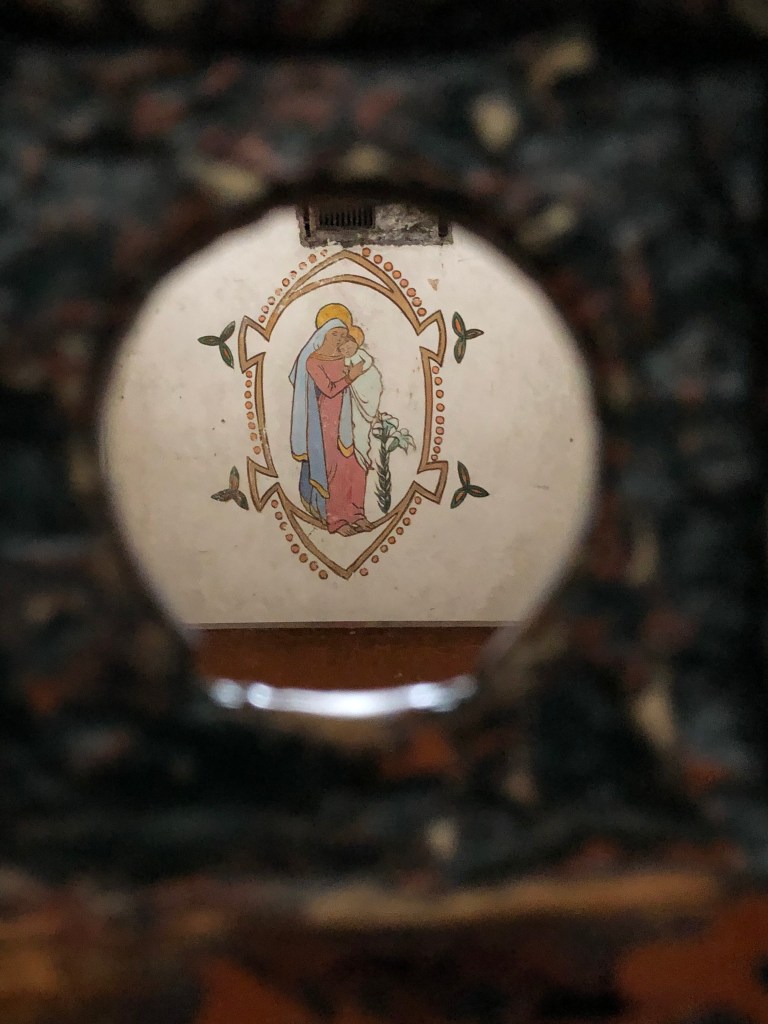
Painting done by Grace Gifford – Plunkett: Joseph Plunkett’s wife
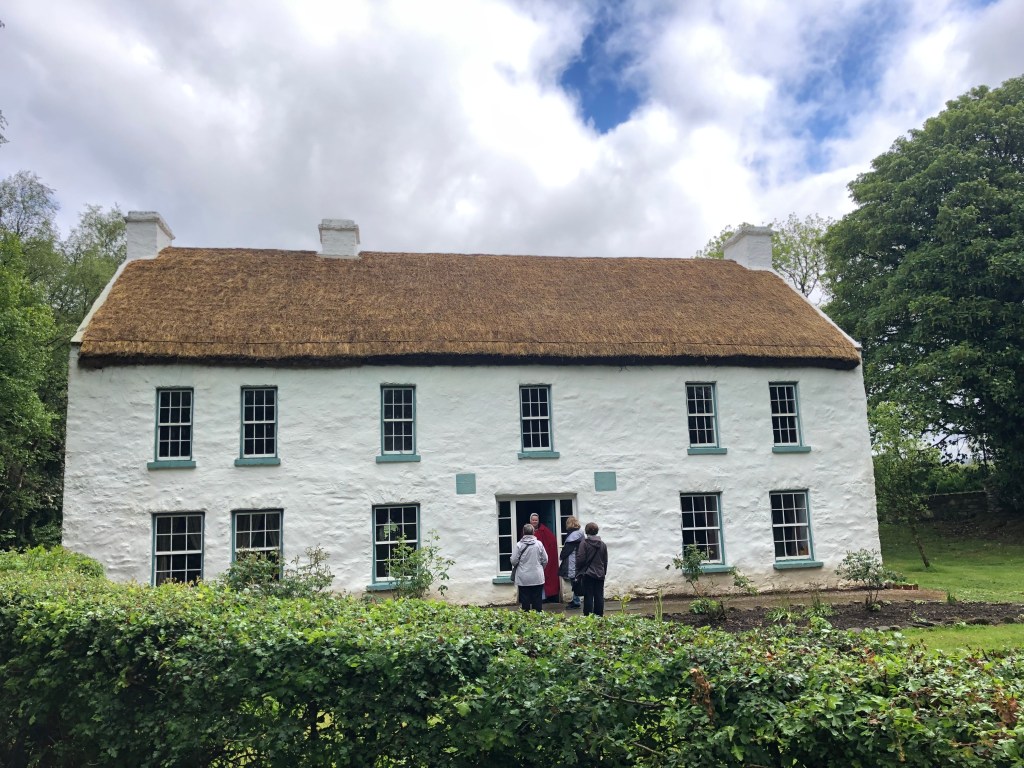
The Ulster Folk Museum is one that replicates the lives of Irish people during the potato famine in Ireland and their live in America. It is separated into two parts. The first part being the old world, which is Ireland during the potato famine. The second part is the new world. The new world, in this case, is America. The two parts of the museum are separated by a replica of the type of ship that would have carried the Irish to America.
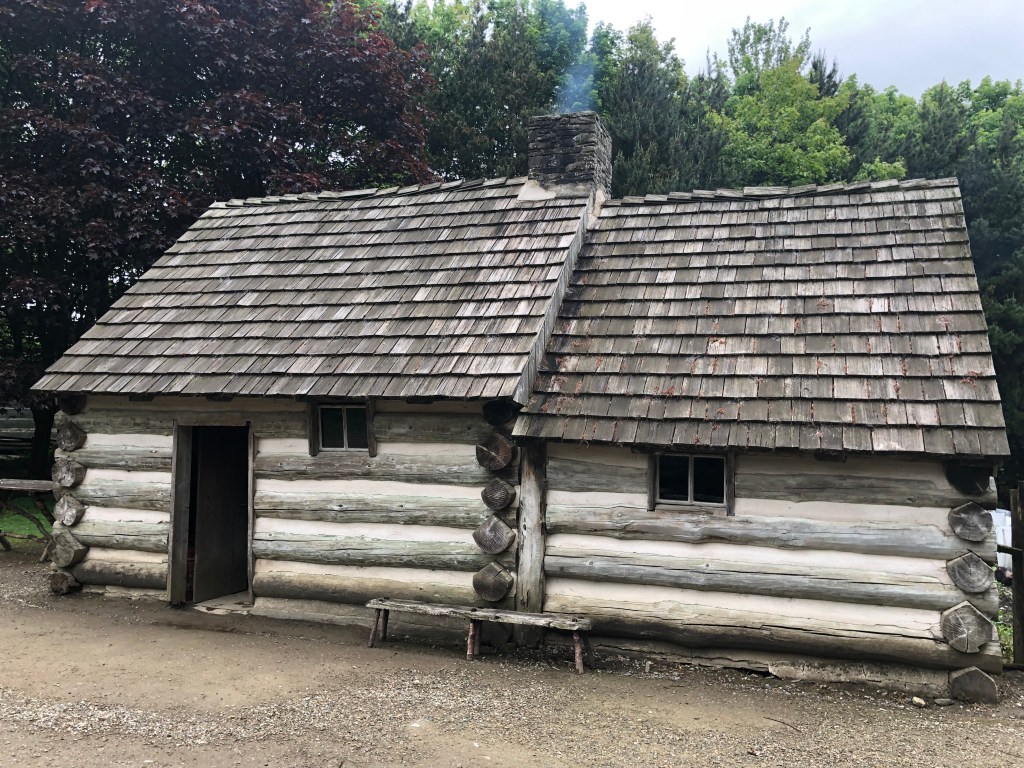
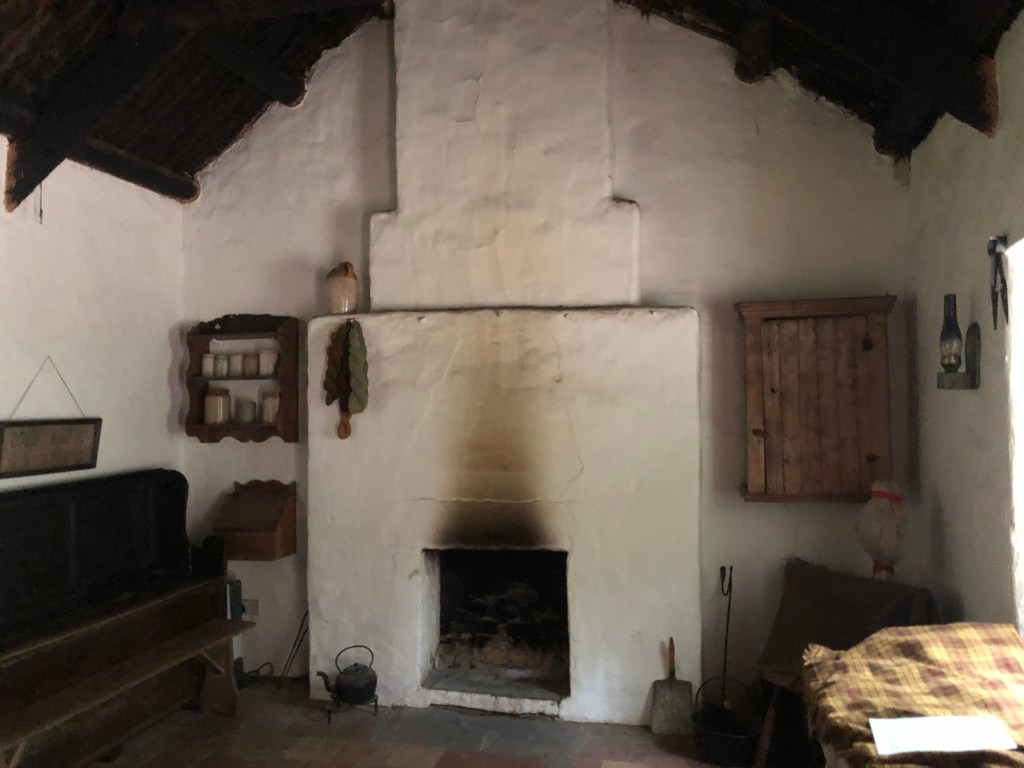
The first part of the museum takes one through the development of Irish life in the country. It shows the different types of houses that they lived in and has actors in most of the buildings that tell the story of the different types of people who would have occupied the dwellings. The first stop, on my walk through the outdoor museum, was a single room cabin. This cabin would have housed a large family in Ireland. They would have all slept in the one room that had the single heat source of a fire place. The family would live in the cabin, and work the fields of a wealthy landowner. They would drink water and eat potatoes, skin and all, for every meal because it was the only thing that they grew on the small plot of land they had. Life was hard for the average Irishman and infant mortality was very high because of the awful conditions that they lived in.
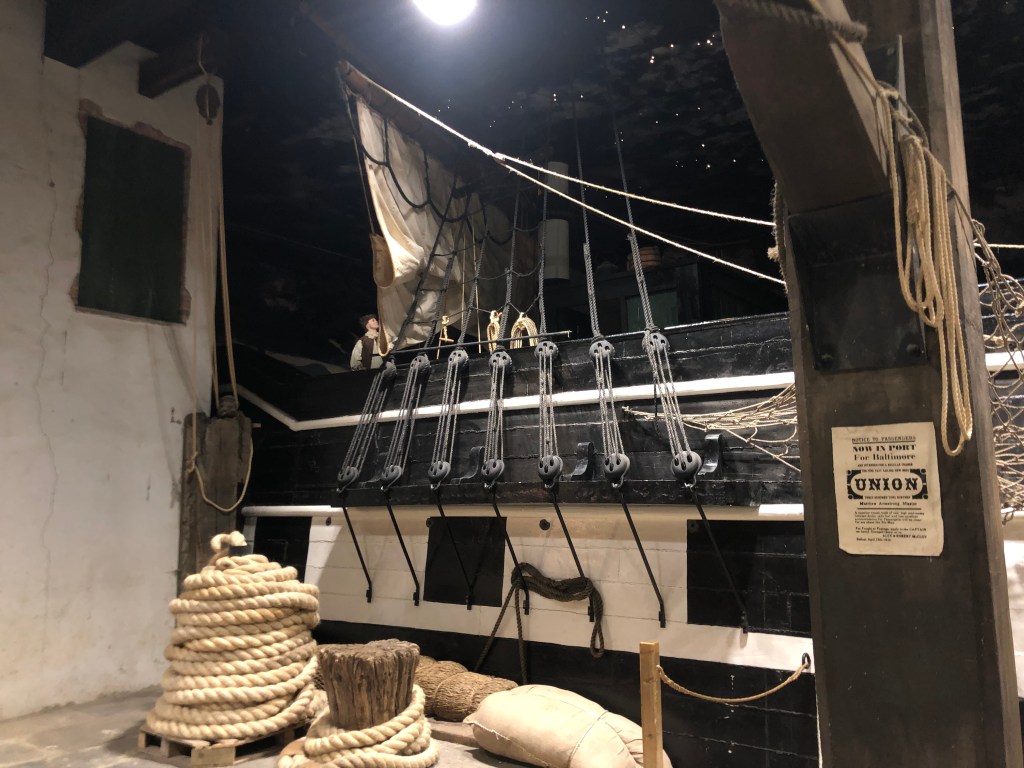
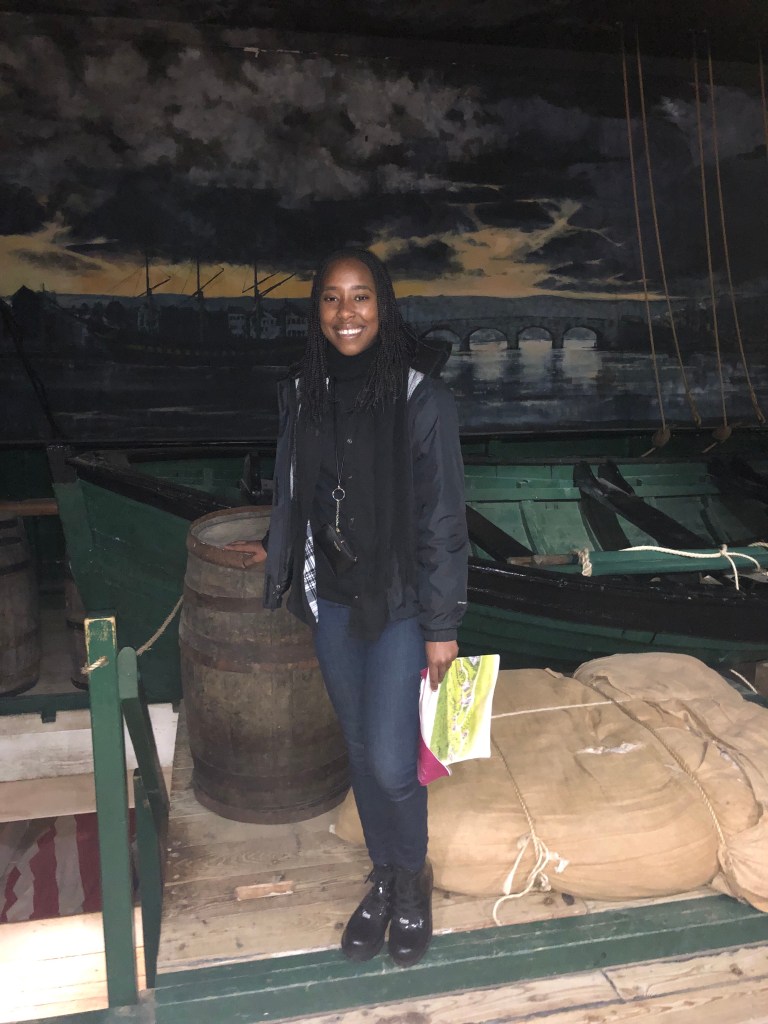
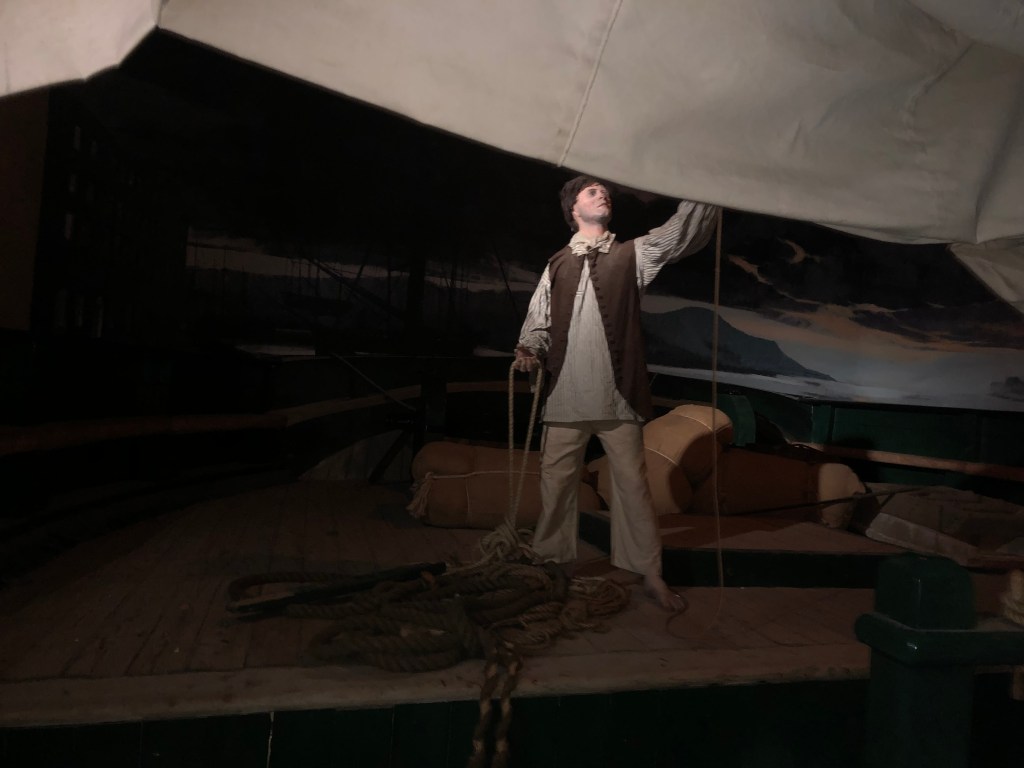
Ship to America
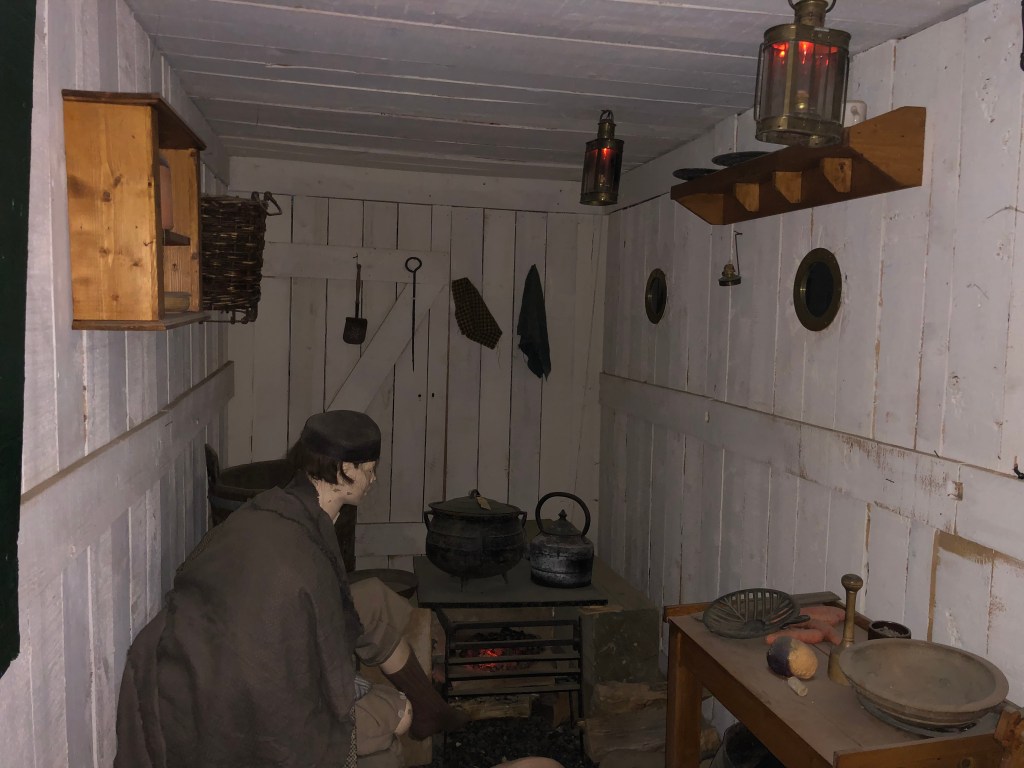
Since the living conditions in Northern Ireland were so abysmal, many irishmen immigrated to America, with the hope of finding a better life. They went on a three month journey from Northern Ireland to America on the ship featured above. The conditions that they had to endure on the ship were unimaginable. Four people had to share one bed during the three month trip, and everyone was confined to the bottom of the ship. They were not allowed to go on deck for fresh air. One can only imagine how uncomfortable and stinky the living area of the ship would have become during the tree month trip. One would have had to endure the sickness and feces of everyone that was on the trip, all on the slim chance that one would be able to make a better life in America. I never would have imagined how dangerous and hard the lives of those emigrating from Ireland was. Going into a replica of the ship and seeing the conditions for myself allowed me to really understand the gravity of the situation that they faced.
Small log cabin in America
Once one arrived in America, everything did not just fall into place. Those who emigrated from Ireland faced immense challenges when they arrived. They had a hard time finding jobs and places to live. During my tour of the indoor part of the museum, I learned that, in New York, many Irishmen had to live in terrible conditions. They sometimes had to share damp, cold, tiny apartments with at least ten other individuals. They immigrated to America because they believed that land was in abundance and that they would be able to become self sufficient. However, the places they arrived at, such as Boston and New York, were full and not much empty land was around for the taking. They would have to travel to places like Pennsylvania and contend with Native Americans for the land there.
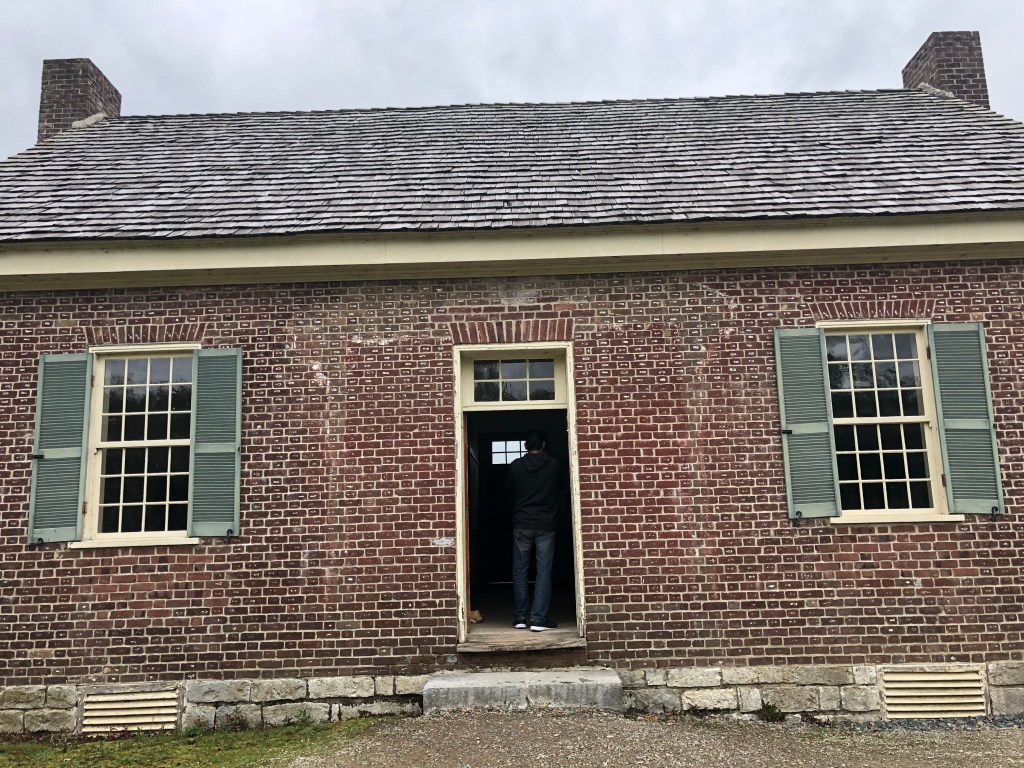
Irish Brick House in America
Even though life in America wasn’t exactly as easy as some Irishmen believed it would be, many of them succeeded. The Melon family opened a bank and did very well for themselves. Ulysses S. Grant the general for the union army, during the American Civil War, and President Andrew Jackson were both Ulster- scots and thus from Northern Ireland. America is full of Irishmen because of their emigration from Ireland. In fact, a fun fact that I learned, that may surprise most, is that more Irish people live in American now than in Ireland!
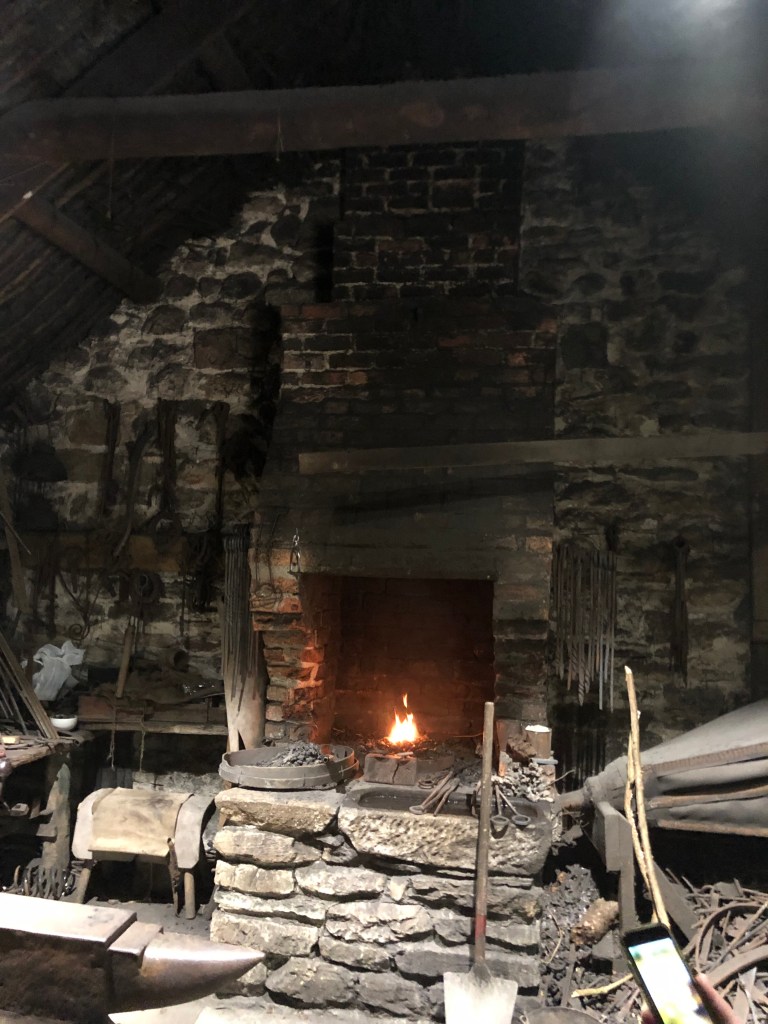
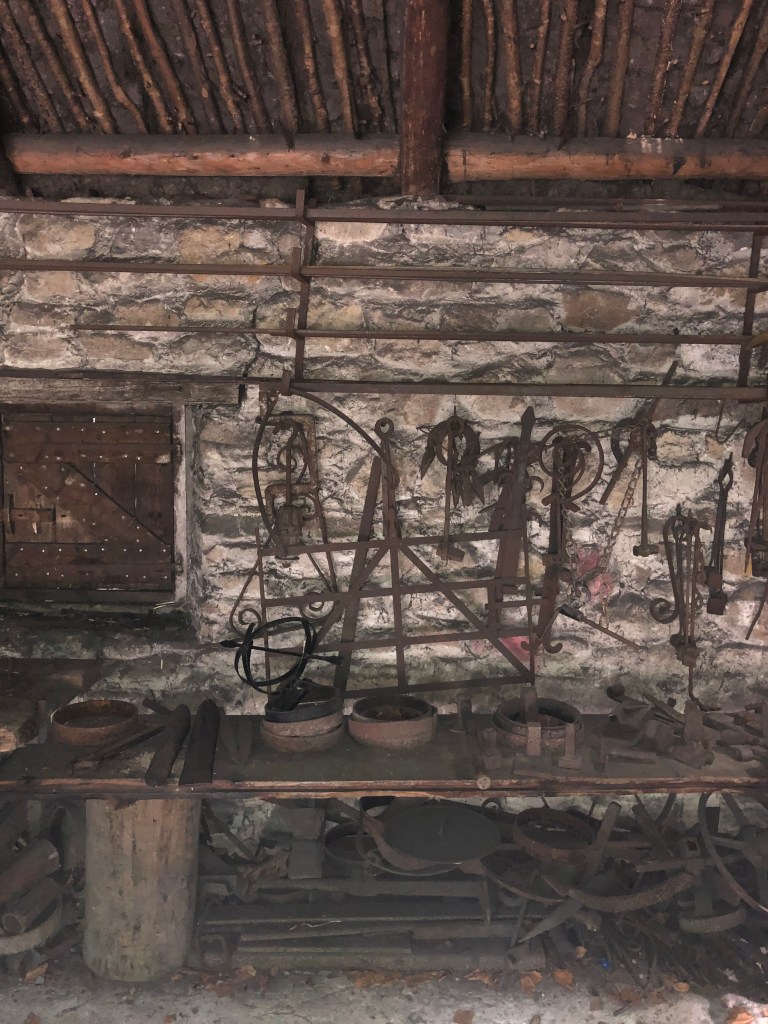
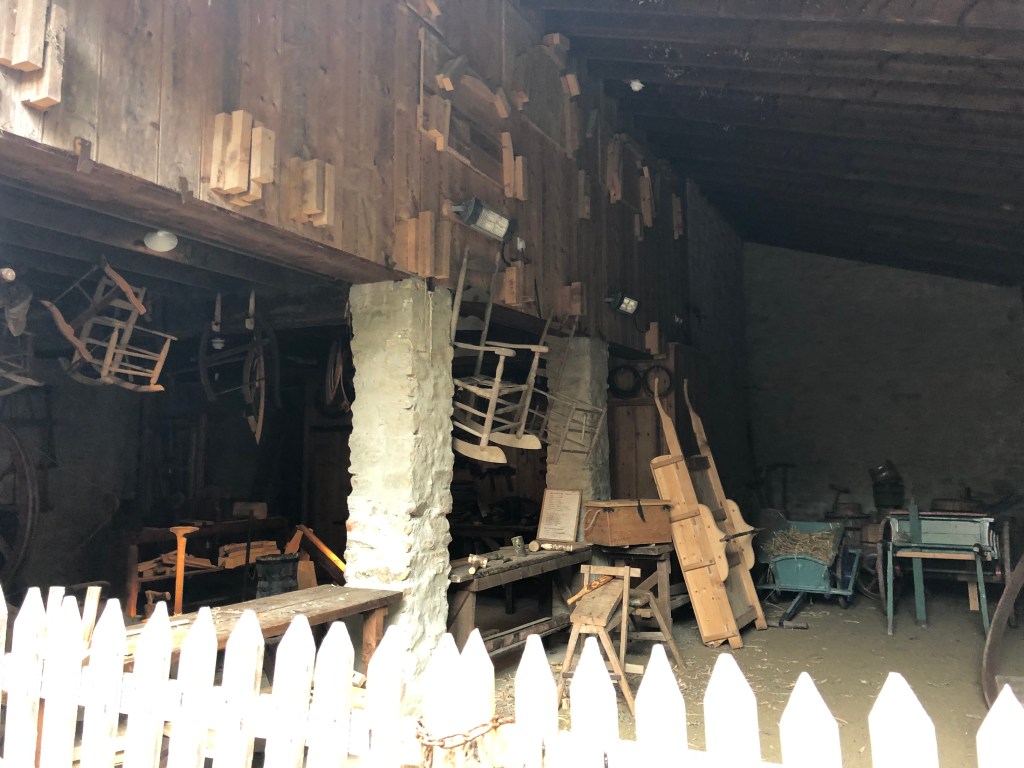
Blacksmith Workshop
Blacksmith Workshop
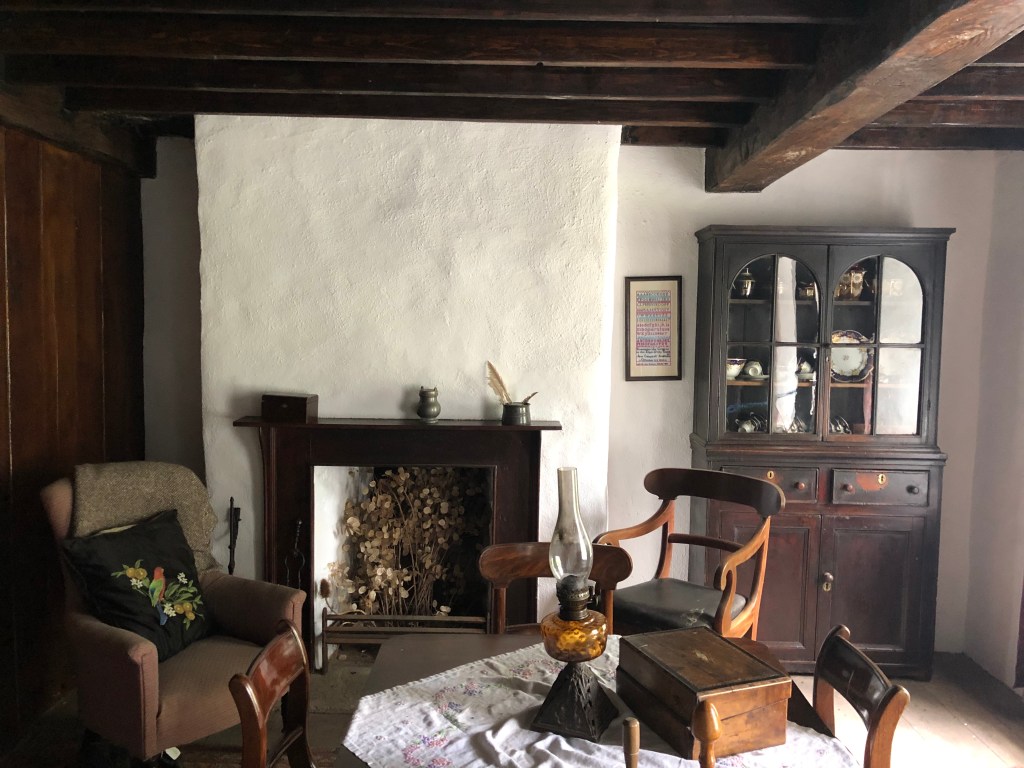
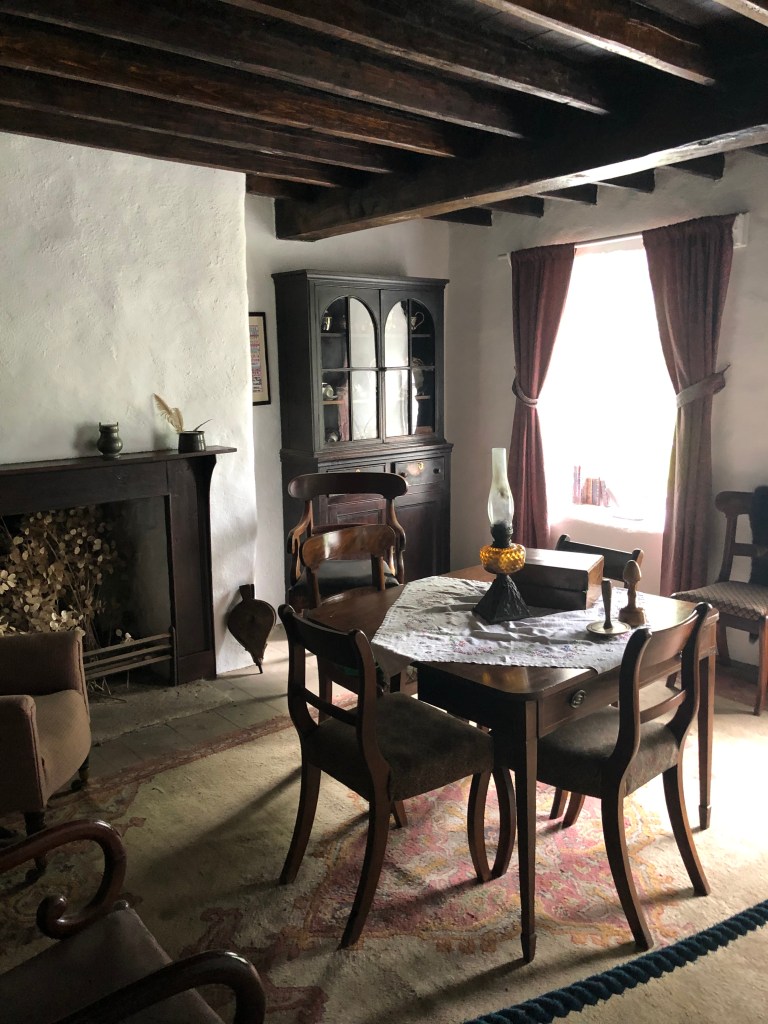
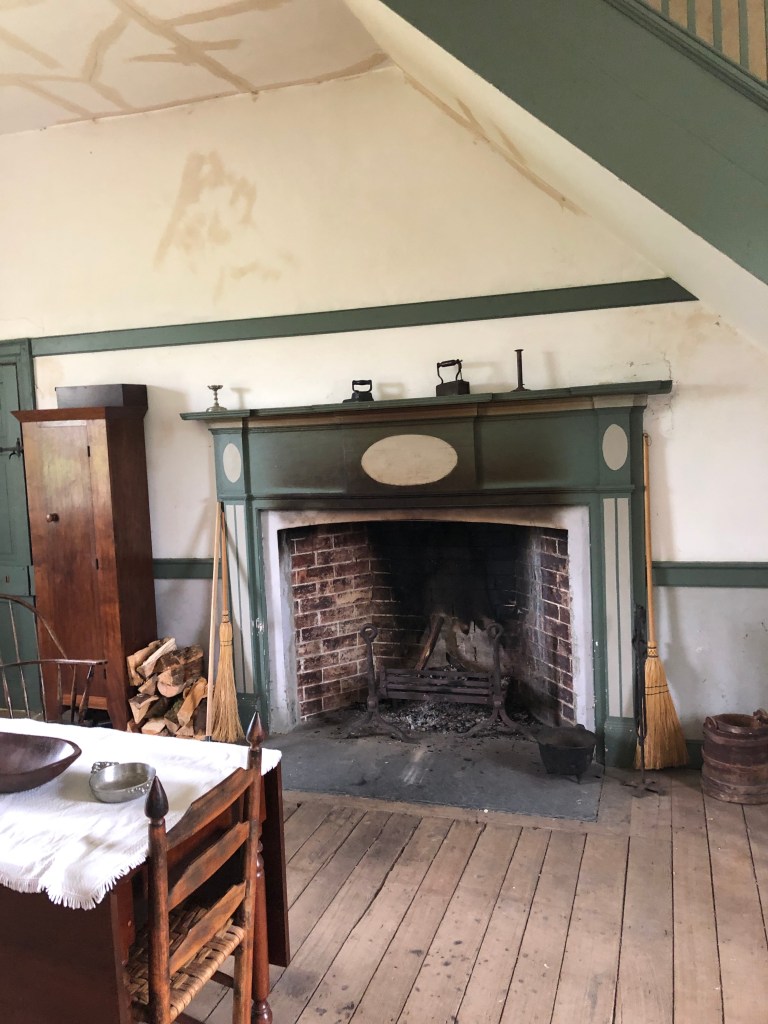
Living Room
Dinning Table
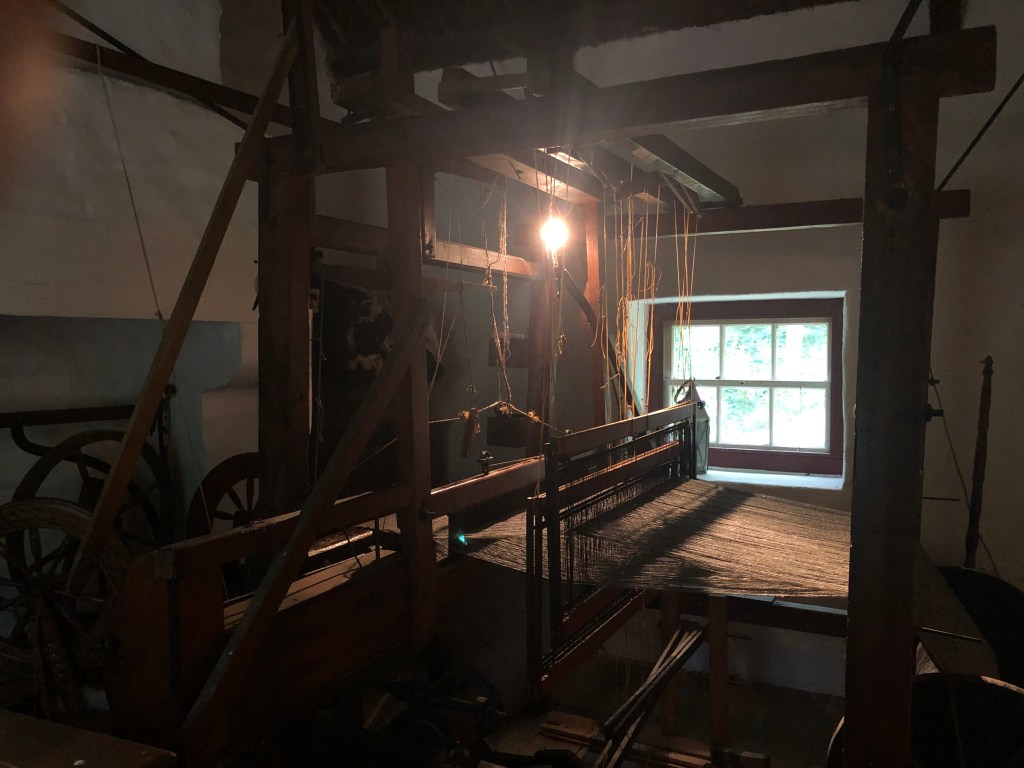
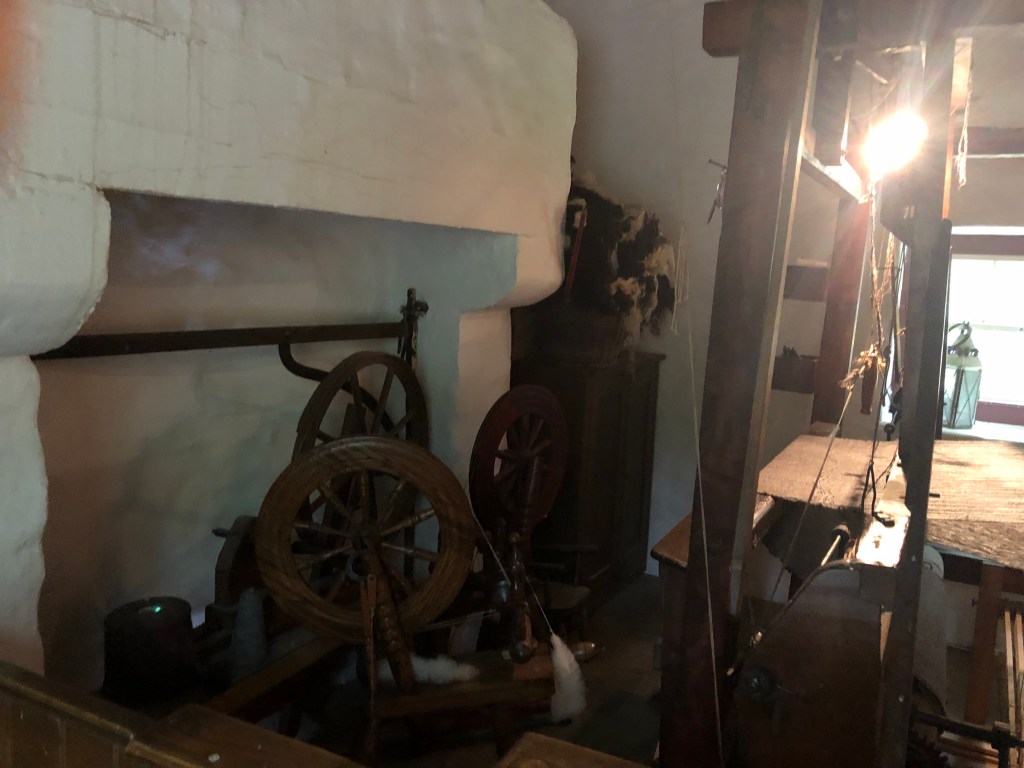
Loom
Loom wheel
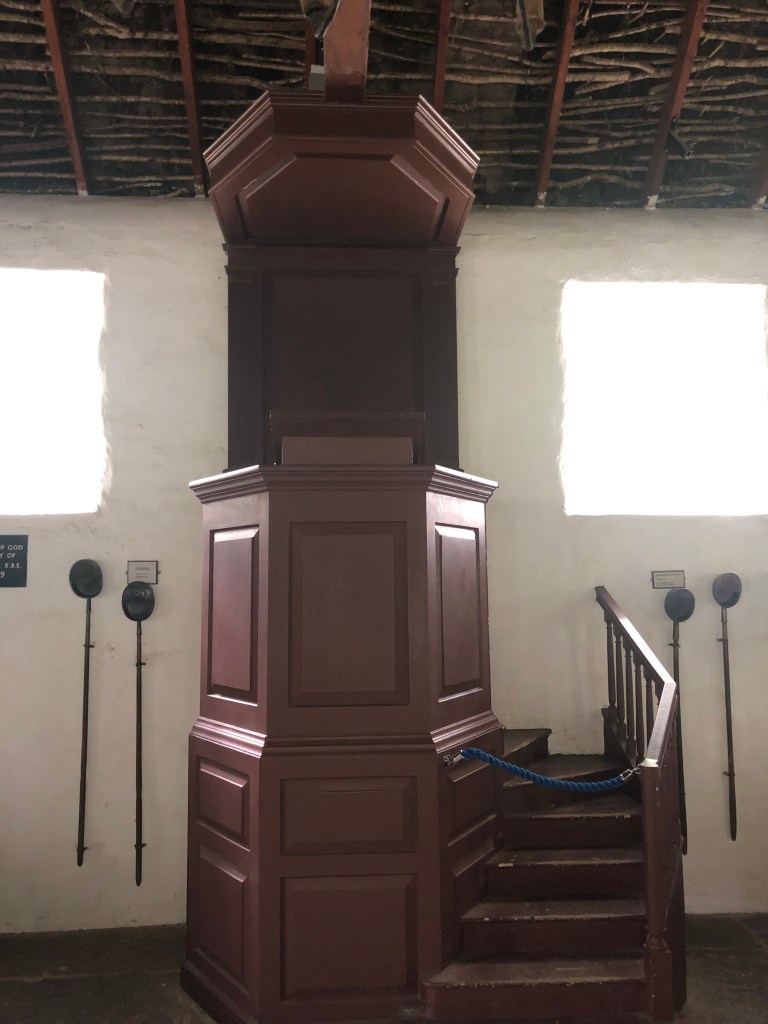
Vestry: where presbyterians worshipped and community meetings where held
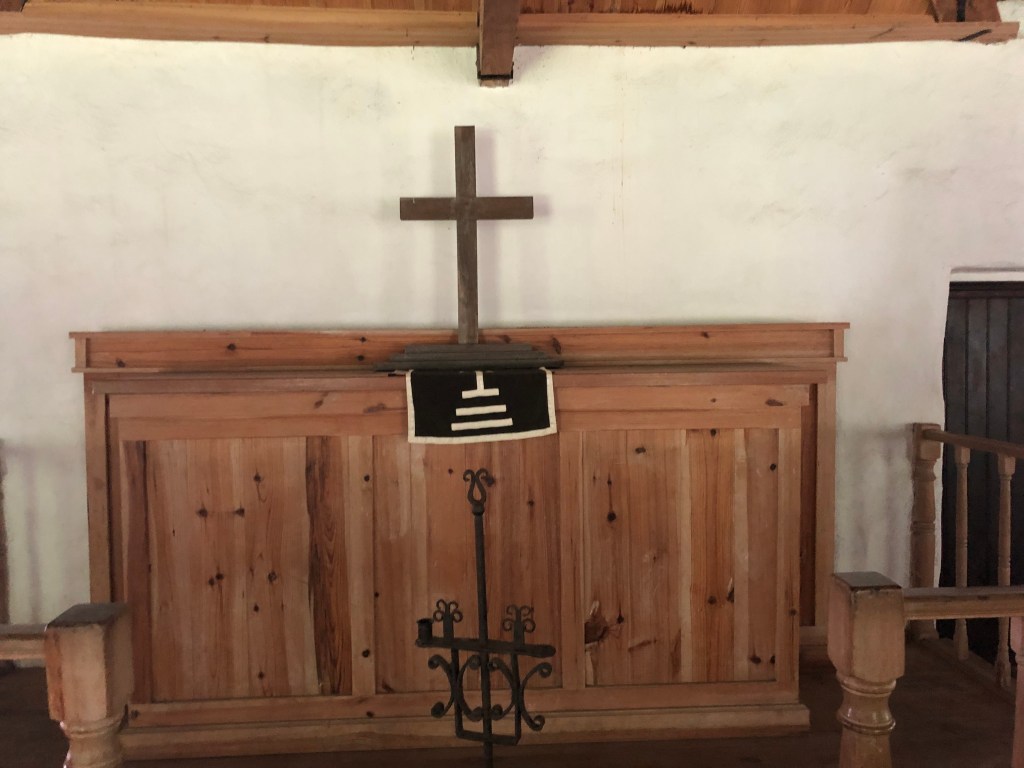
Catholic Church
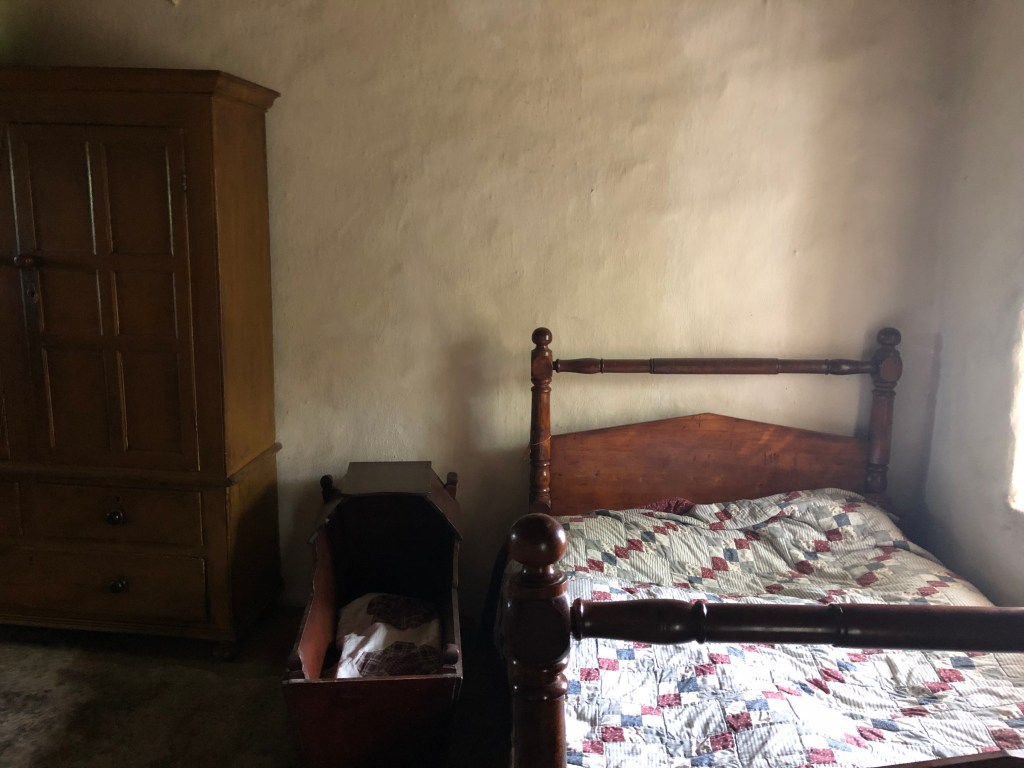
Bedroom in Northern Ireland
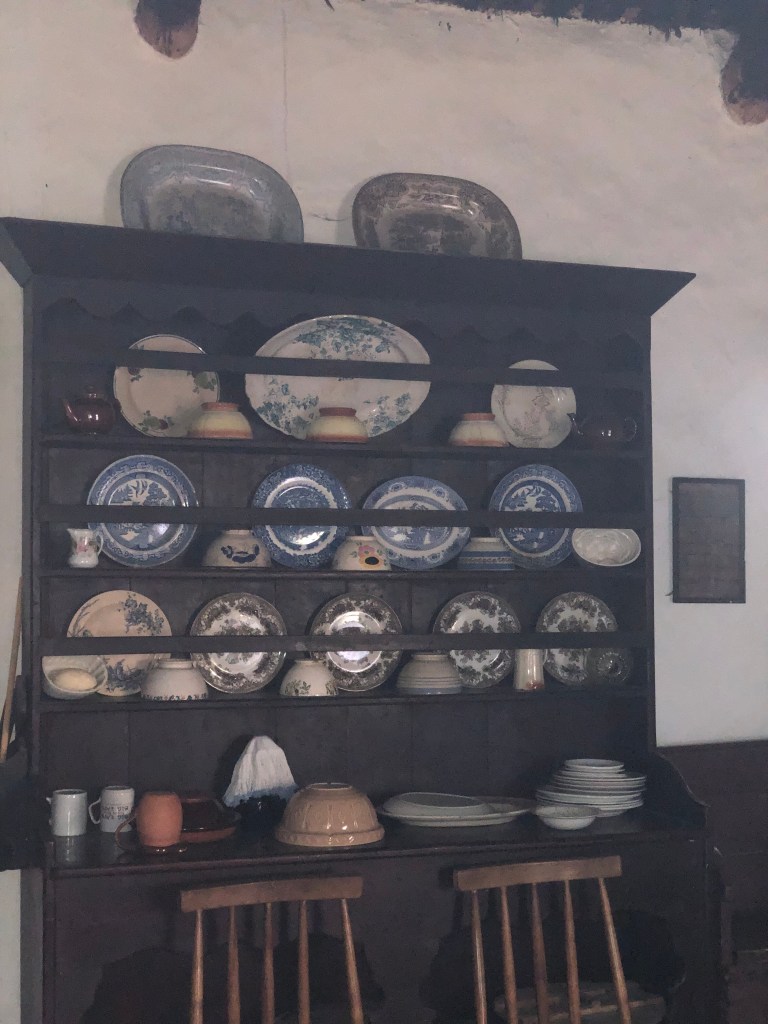
China
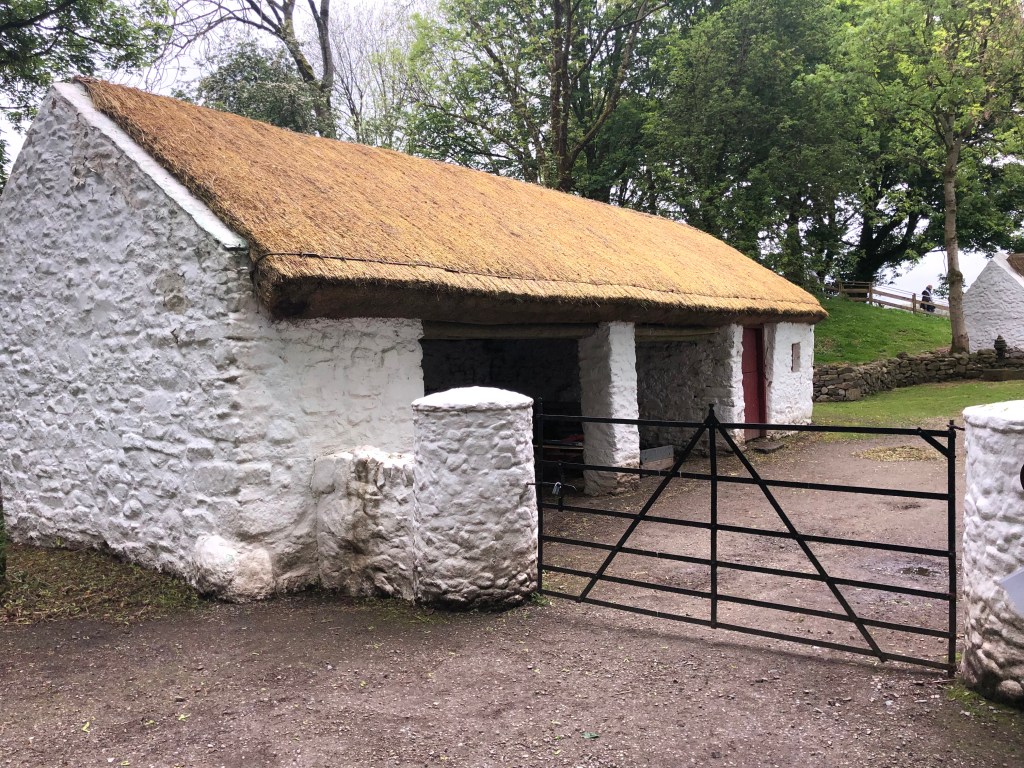
Storage House in Northern Ireland
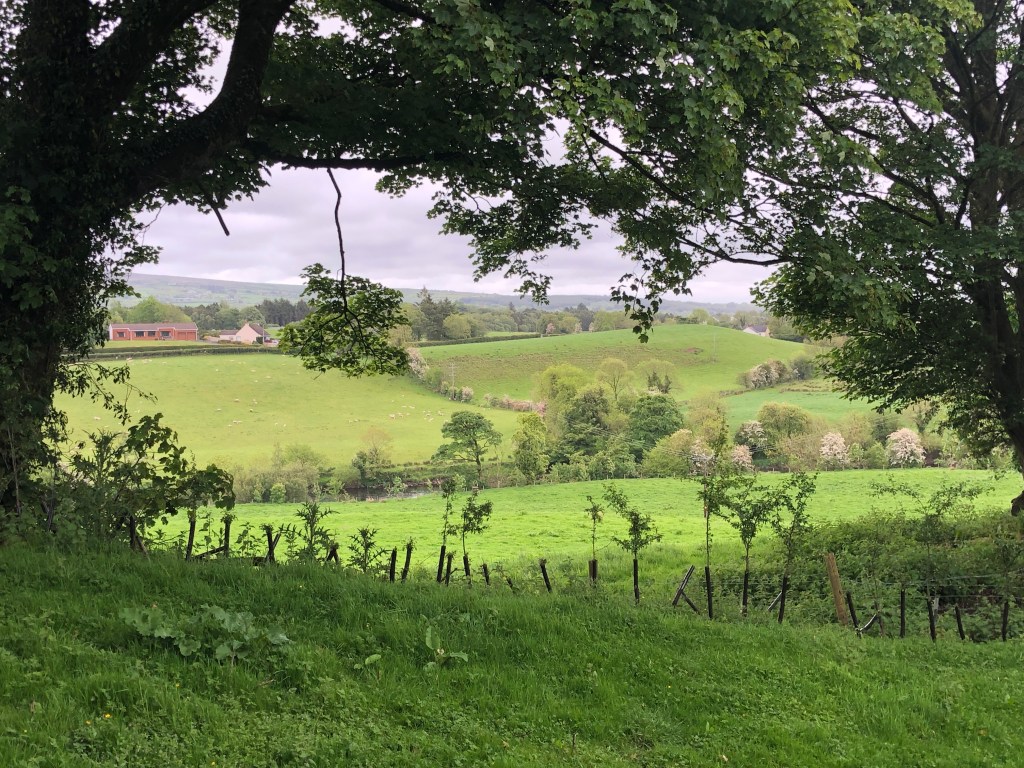
Pastures in Northern Ireland
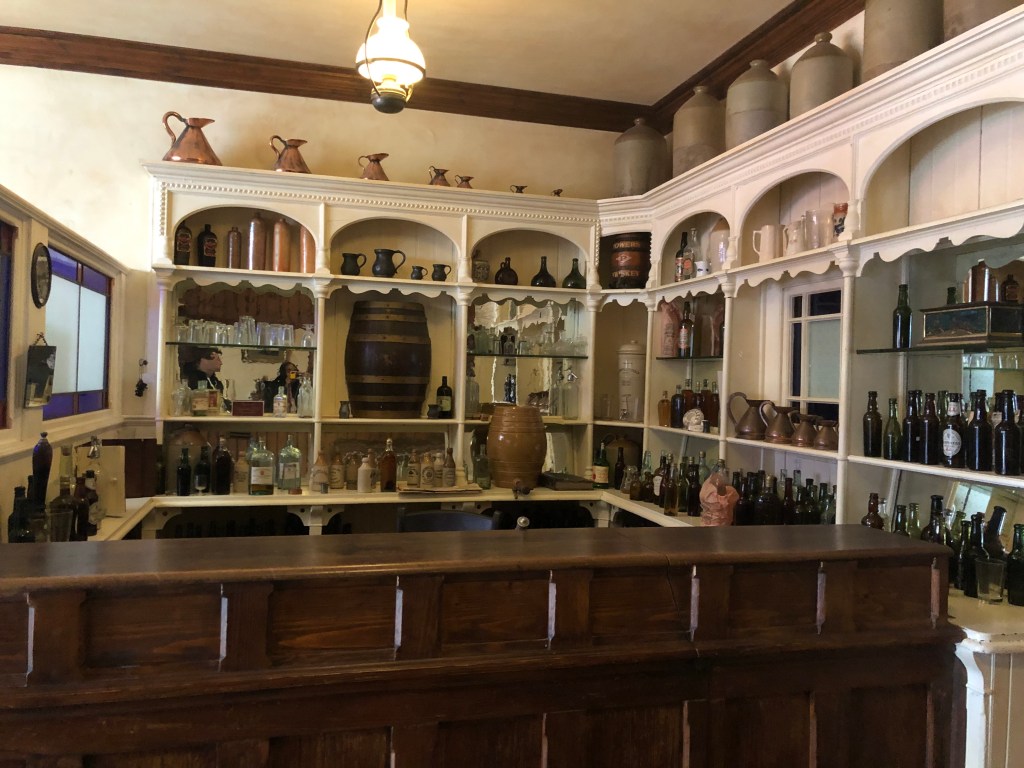
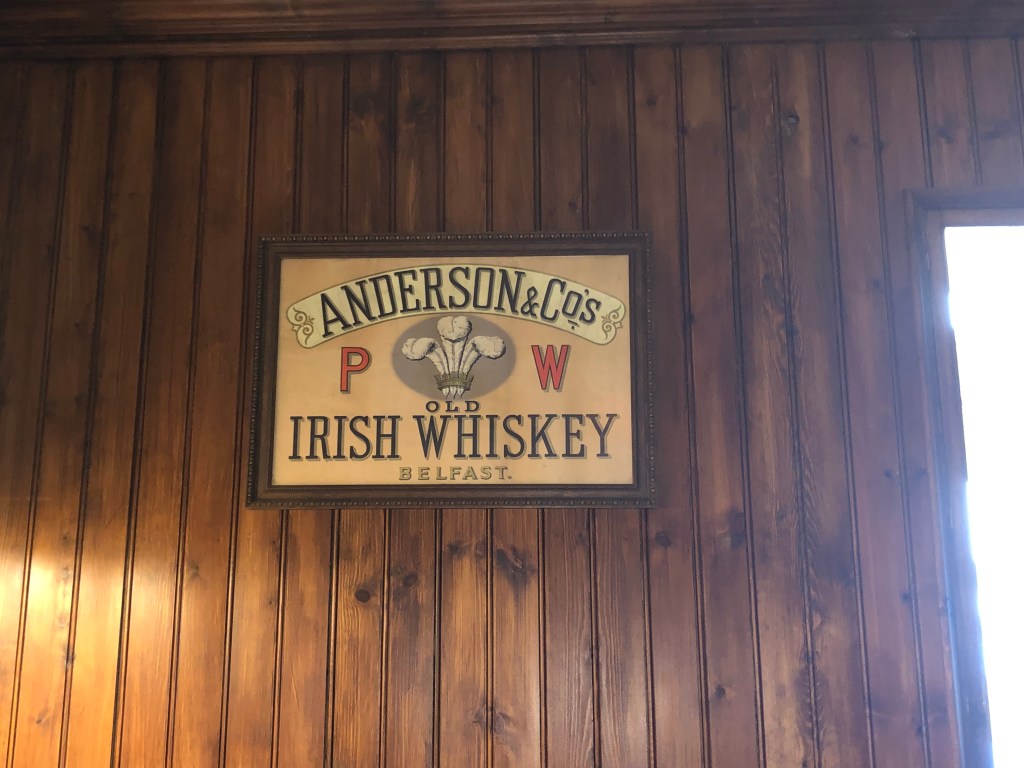
Whiskey shop
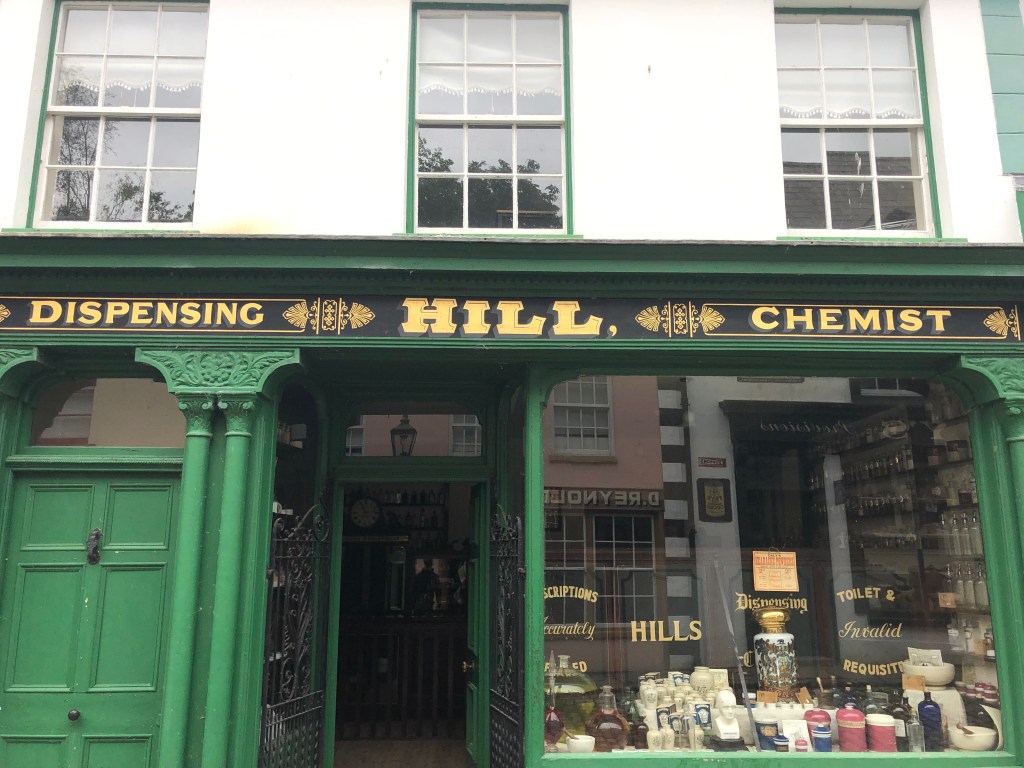
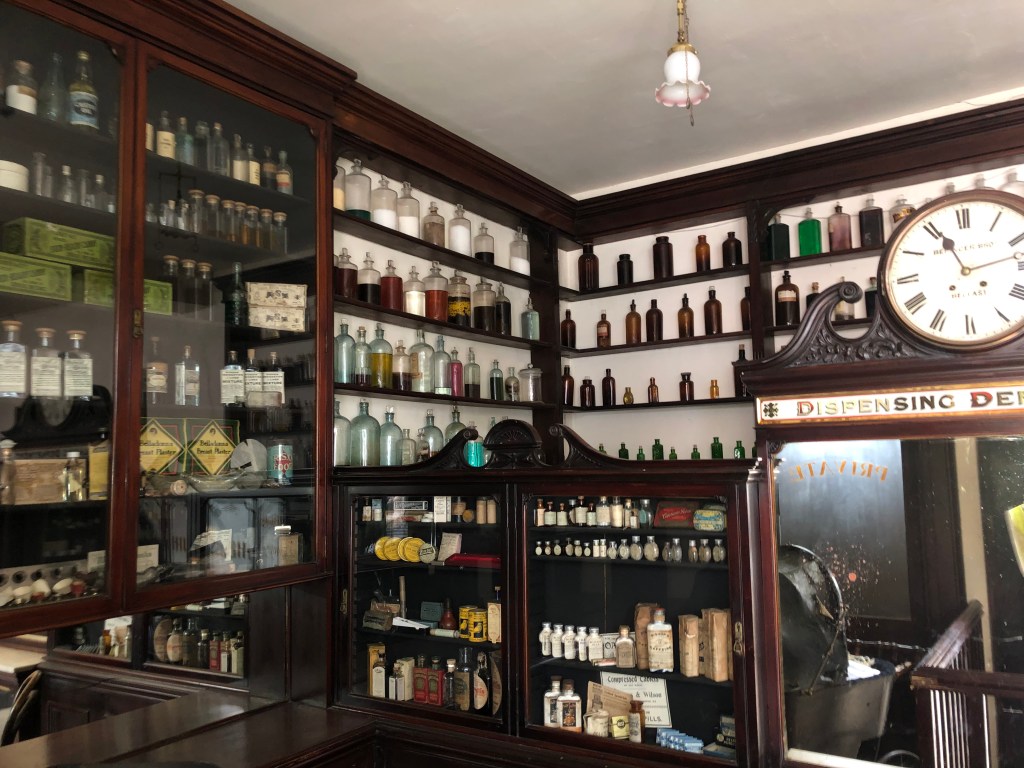
pharmacy
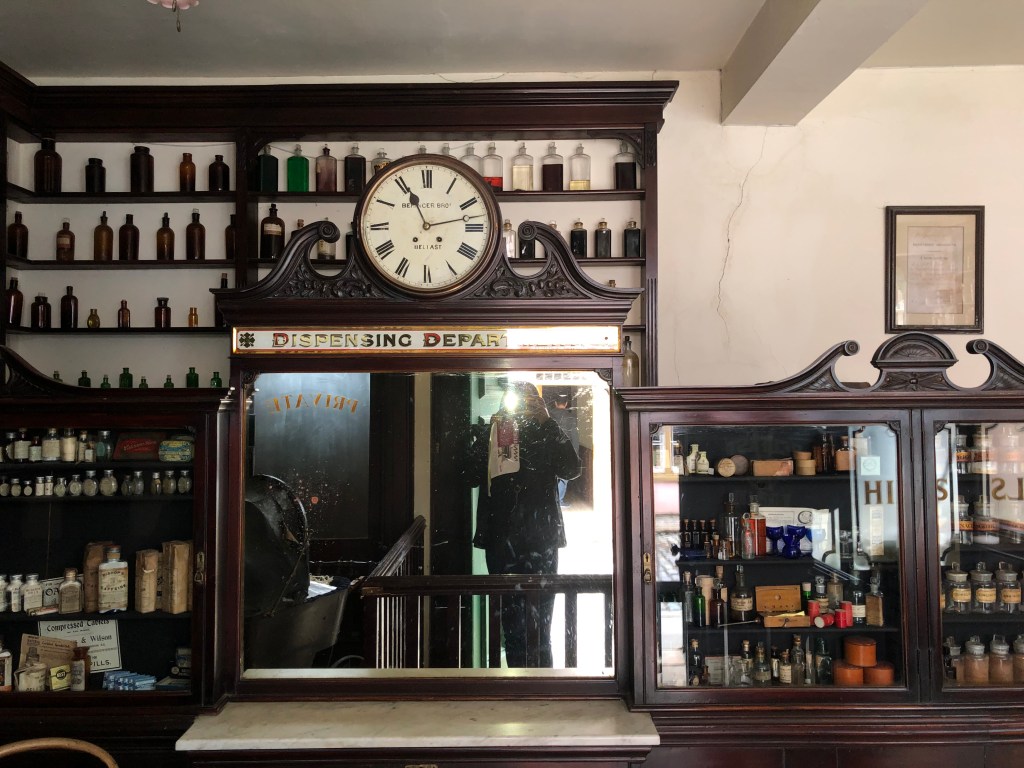
pharmacy
pharmacy
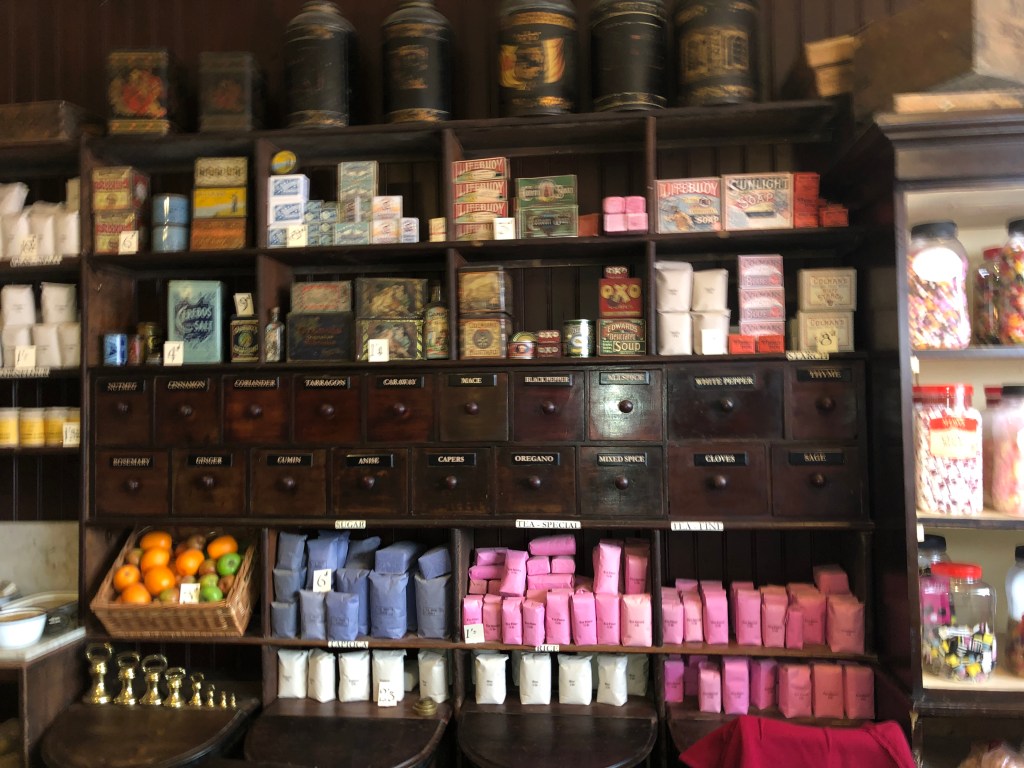
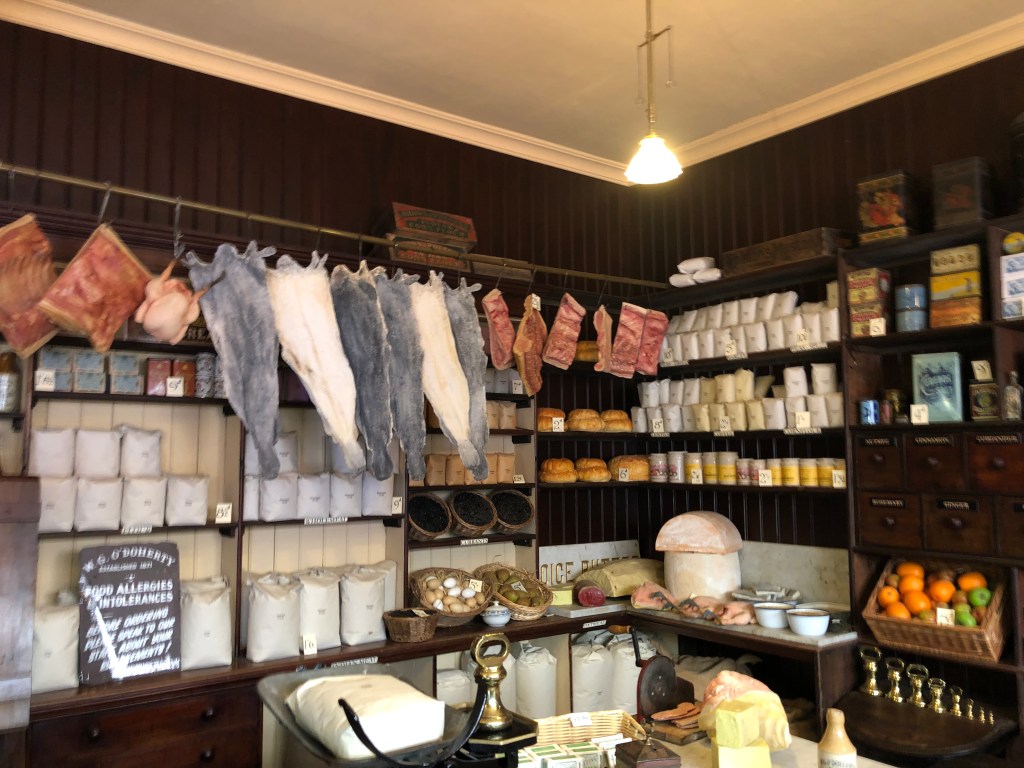
General Store in Ireland
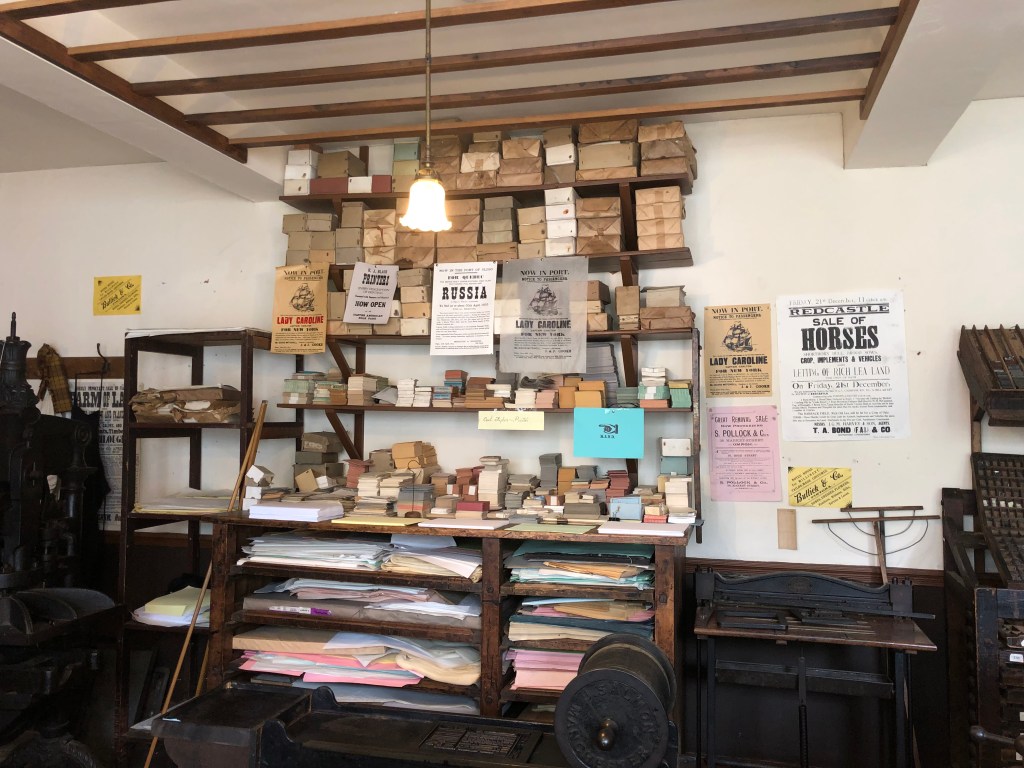
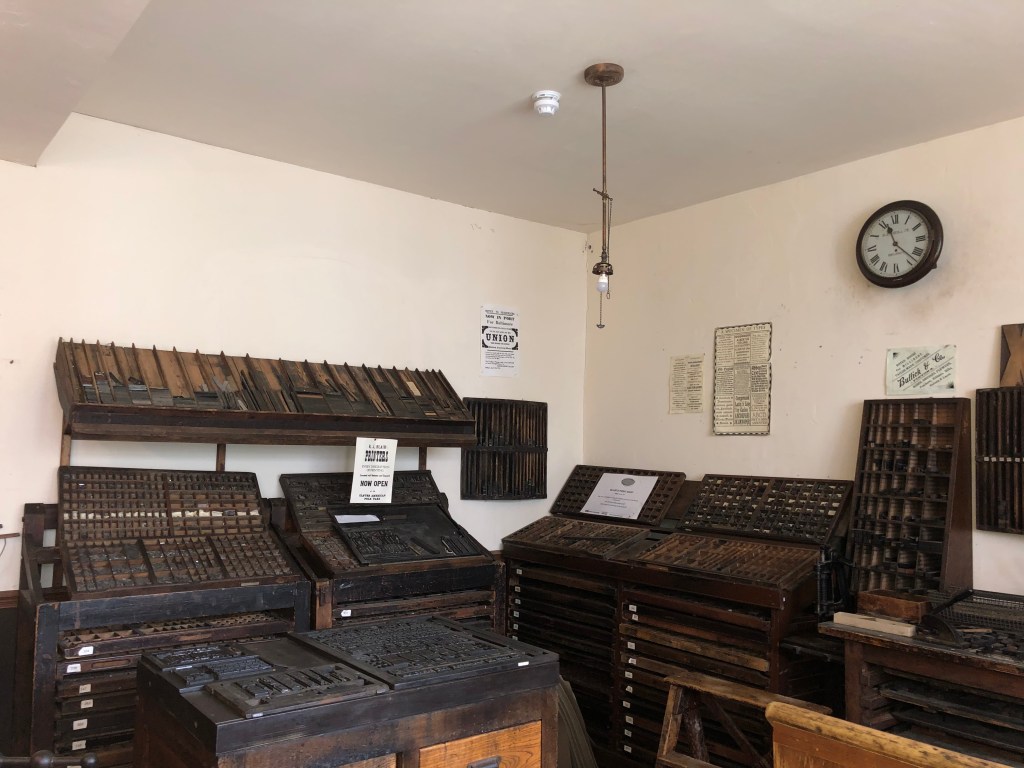
Printing press
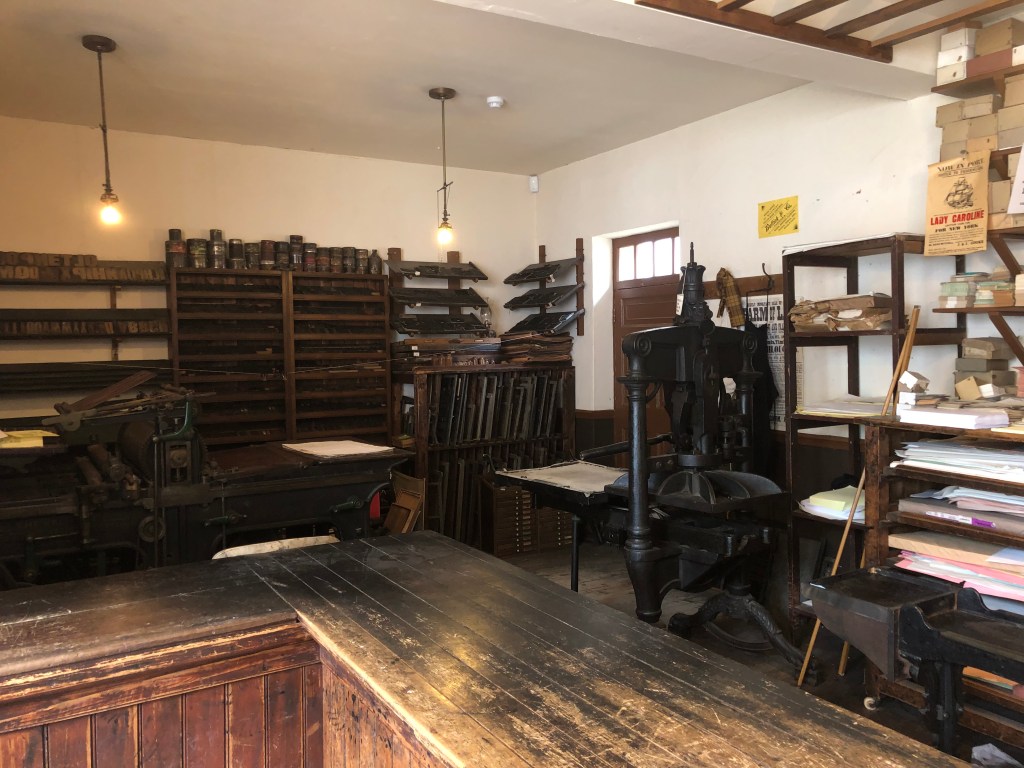
Printing Press
Printing press
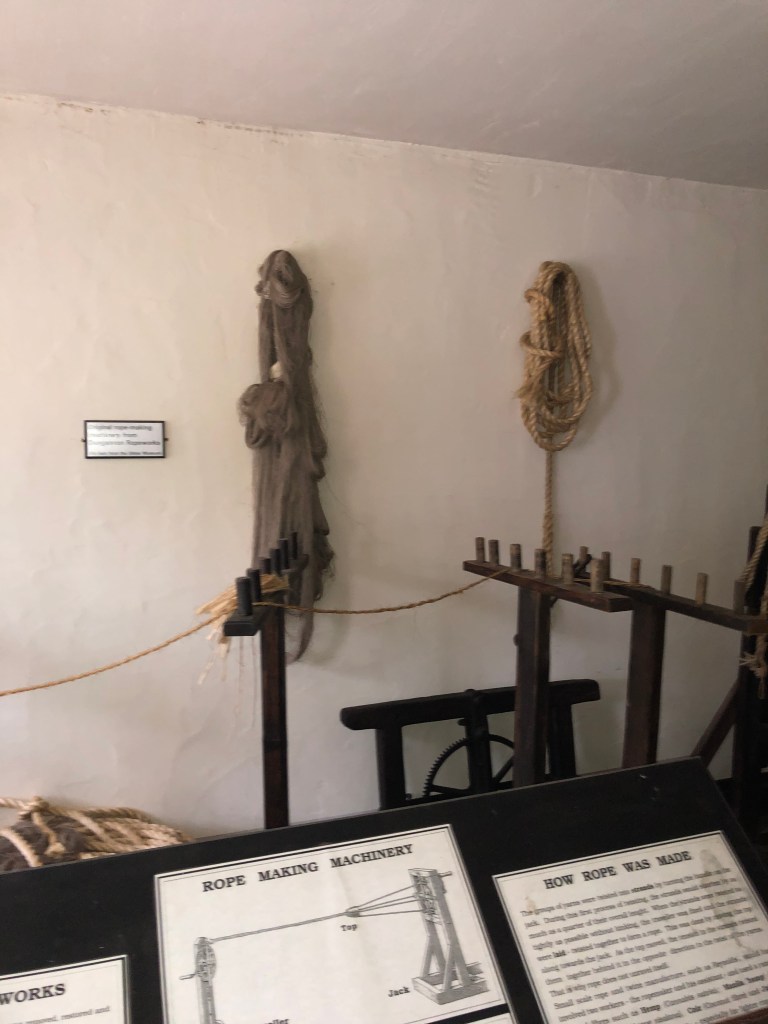
Rope Making shop
On deck of the ship that the Irish traveled to America in
This post will be a little more emotionally triggering than the previous ones. Please read with caution. It contains some graphic information.
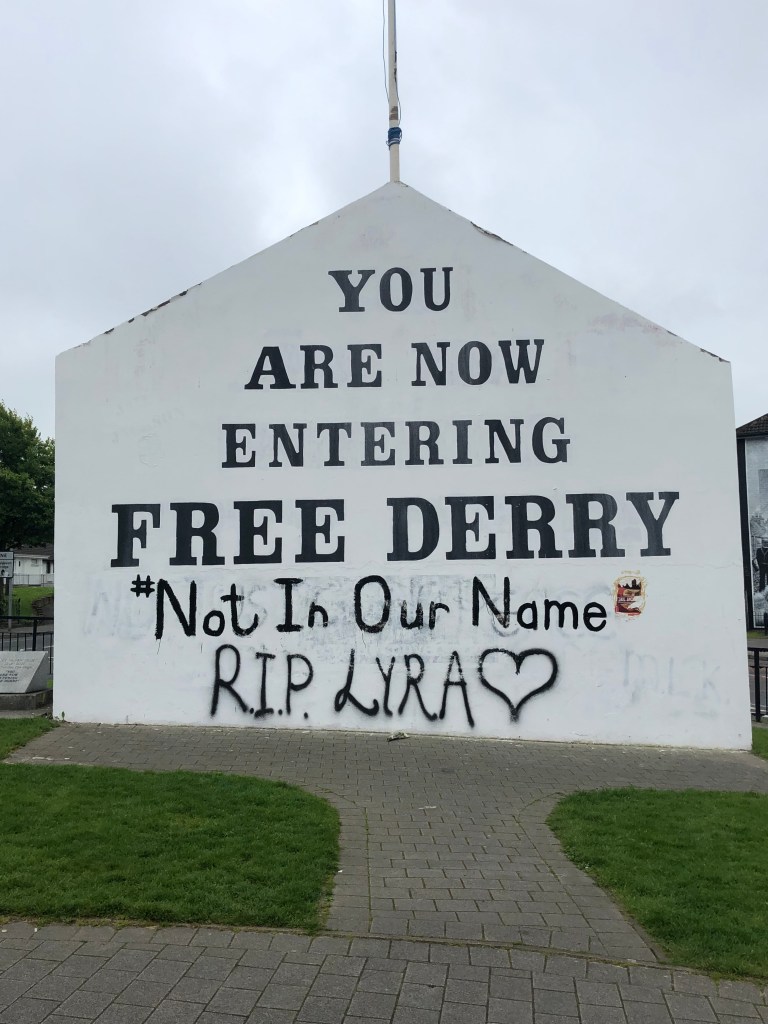
Londonderry or Derry, depending on whether one is Protestant or Catholic, is a city that has endured immense hardship because of the violence in Northern Ireland. During my visit to Derry, I had the opportunity to visit the Free Derry Museum and do a walk of the area, in Derry, known as the Bogside. The visit was one of the most emotional parts of my trip to Northern Ireland.
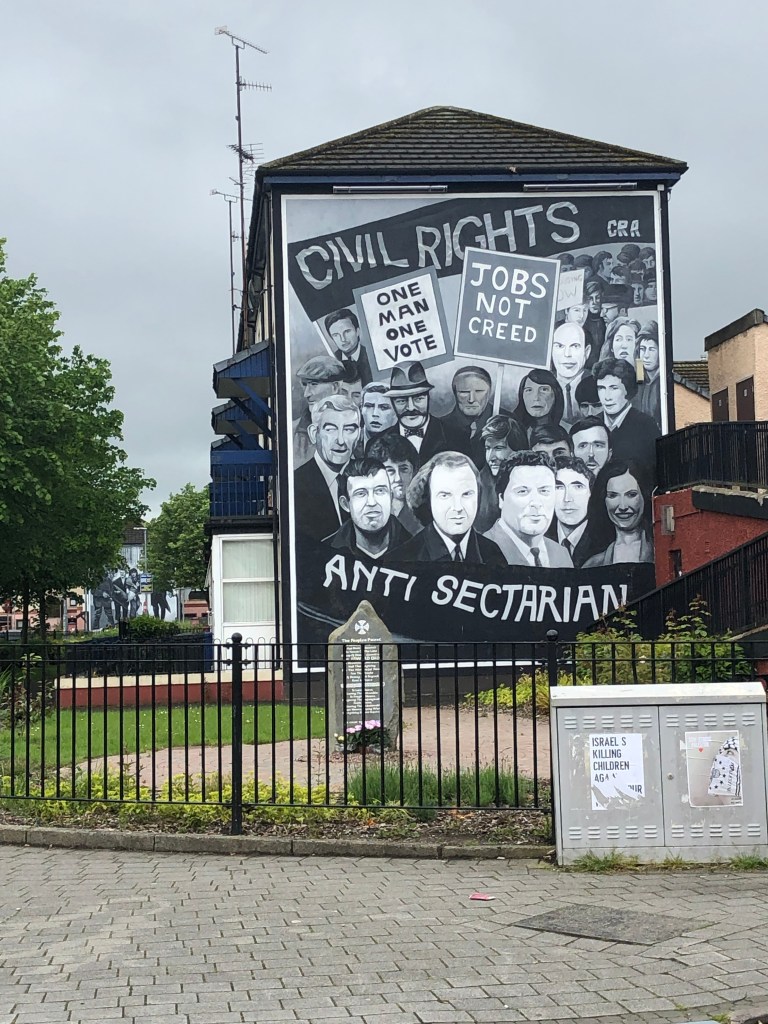
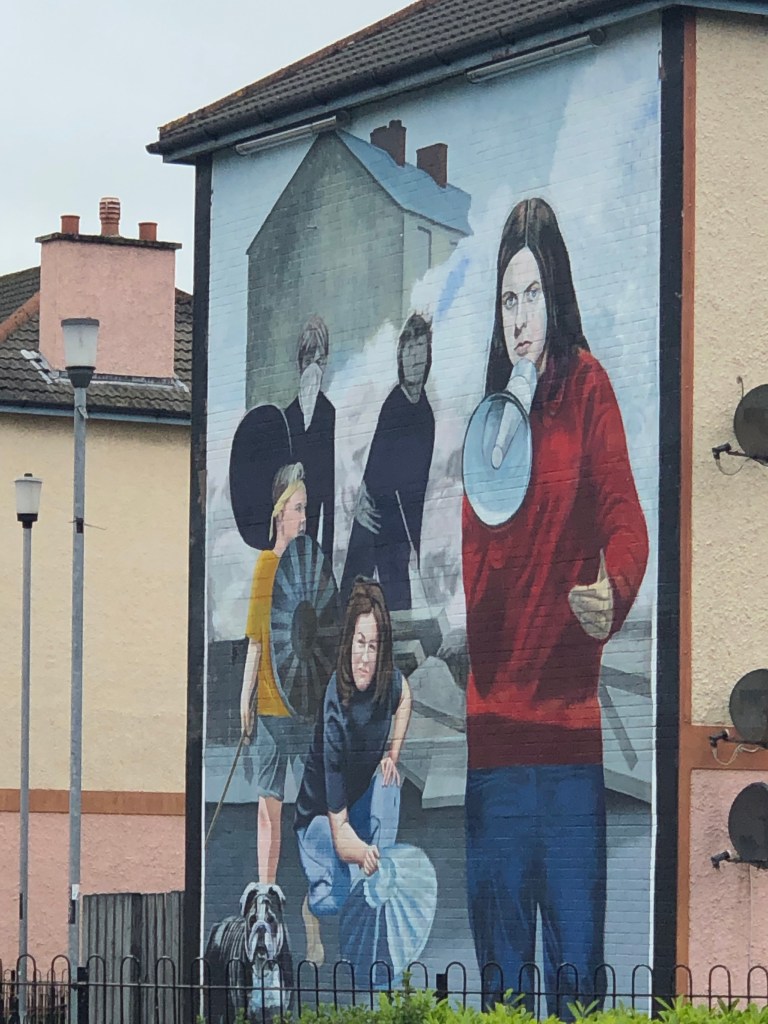
Civil Rights Mural in the Bogside
Inside the museum of Free Derry, I could feel the pain of a people who had been fighting for equality in their home city. The museum portrays Derry as an integral part of Northern Ireland’s Civil Rights Movement and therefore a key player in the period called the ‘Troubles’. This period was to begin after the Civil Right’s March in 1968 that took place in the Bogside. Derry’s Catholic citizens were fighting for equal housing opportunities, voting rights, fair treatment in employment, and the end of gerrymandering. Catholics had long been a minority in Northern Ireland when they were actually the majority on the island. Because of this the Protestant majority, in Northern Ireland, oppressed the Catholic minority for years.
Sign for the Beginning of the tour through the Bogside
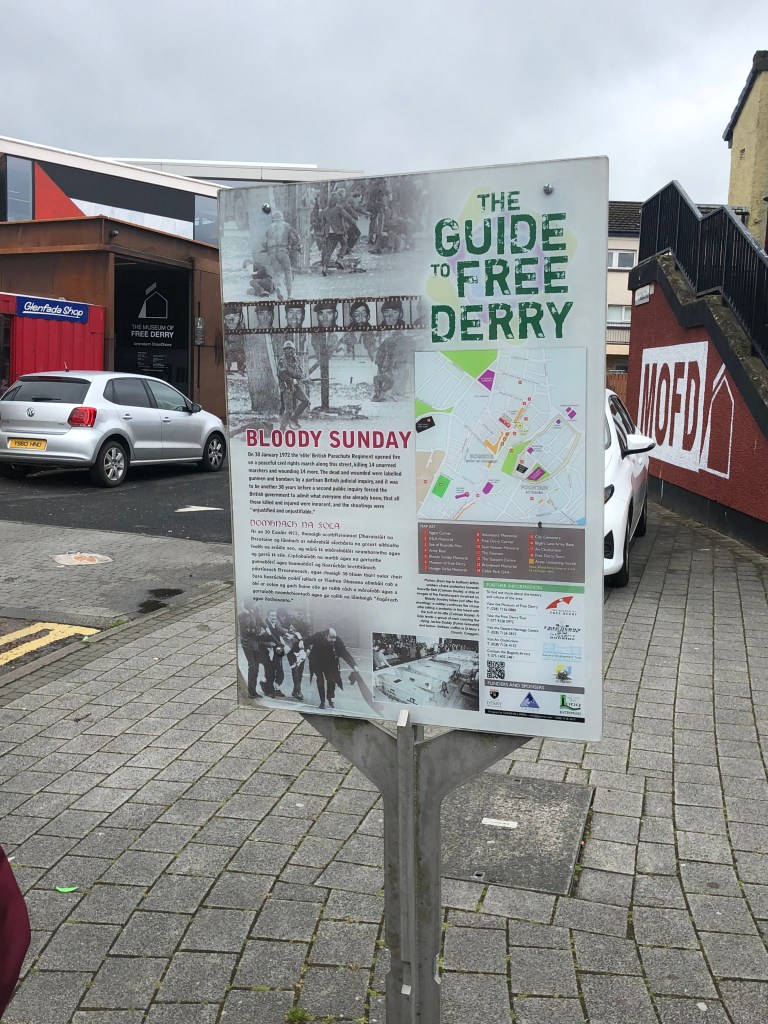
Sign telling about Bloody Sunday
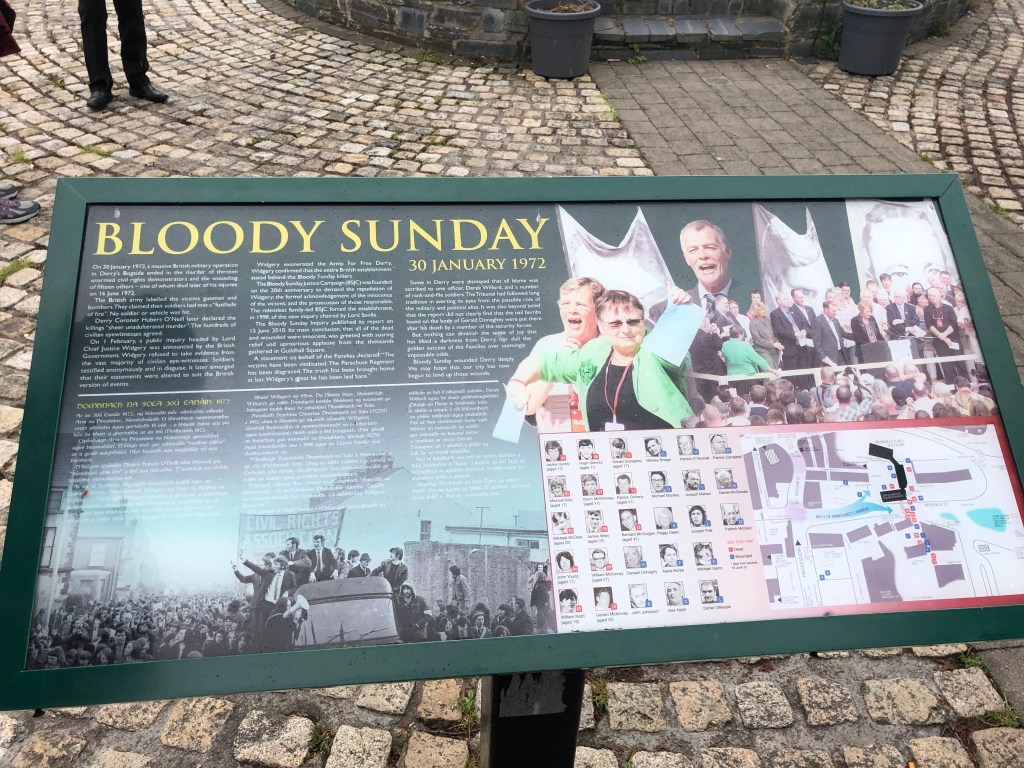
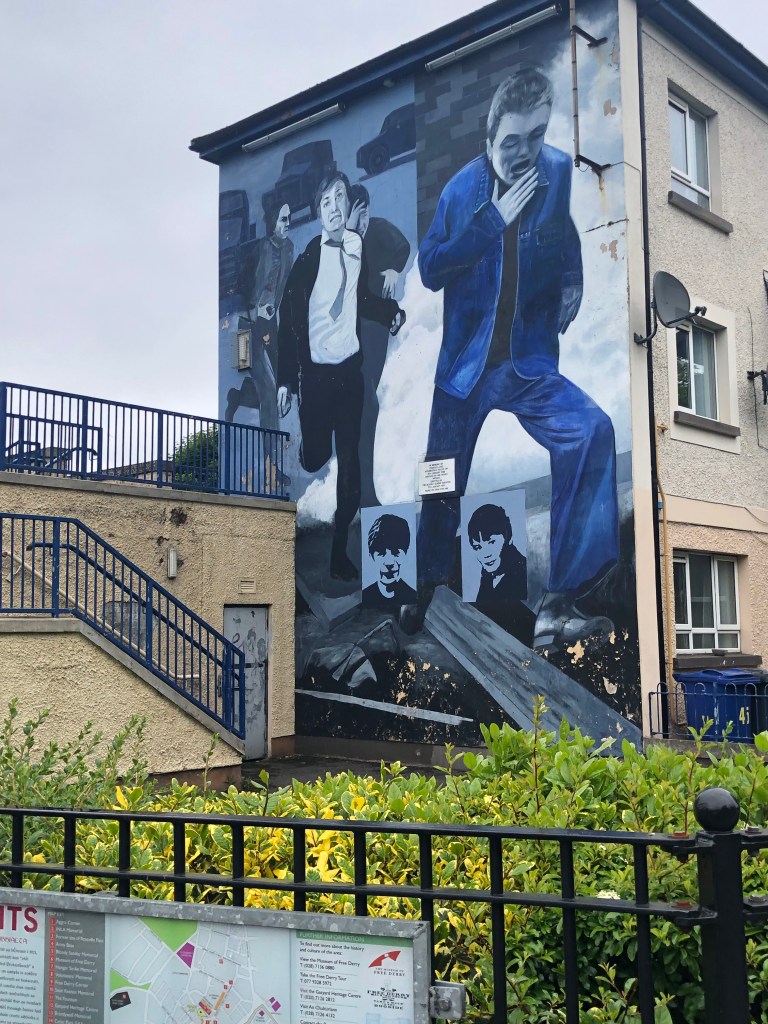
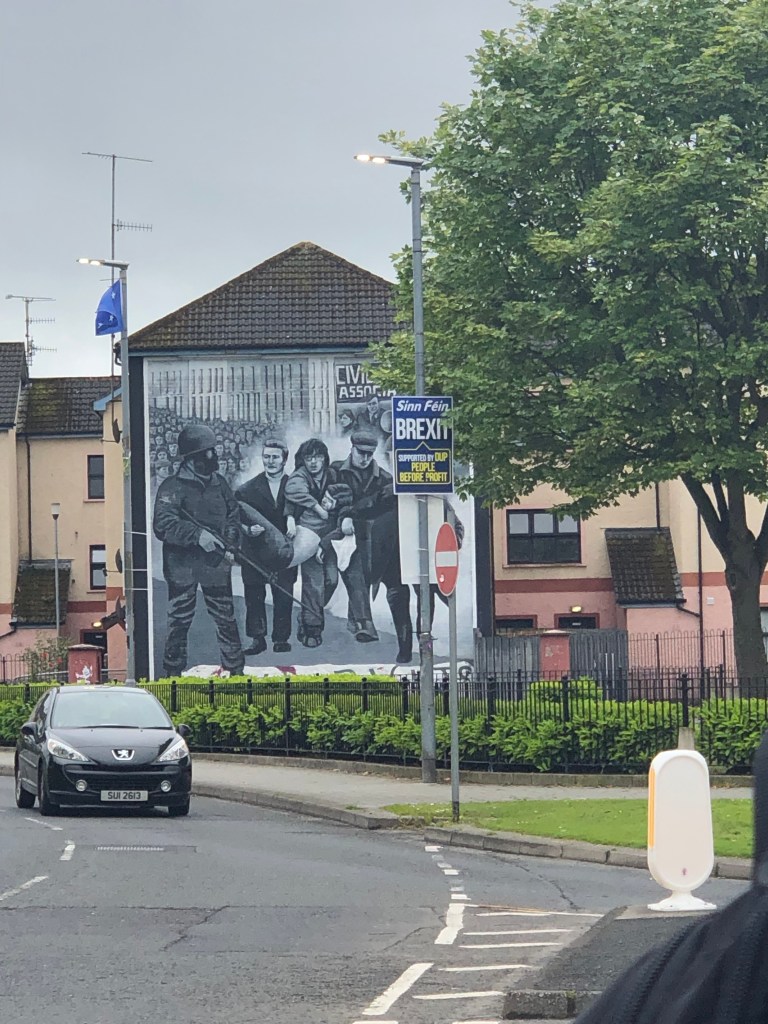
The museum also takes one through the emotionally crippling story of Bloody Sunday, that took place on the street directly outside of the museum. Bloody Sunday took place on January 30th 1972. It began with Catholics, in the Bogside, marching for the end of internment and thus civil rights. However, it escalated when British troops were called in. The troops tried to contain them to their own community and not allow them to march throughout the city. The troops set up blockades to box them in, and this made the protesters very upset. In fact, they were so upset that they threw rocks and such at the troops. When this occurred, the military commander of the troops ordered the troops to fire into the unarmed crowd. This caused the crowd to scatter and run. However, this did not stop the troops. They pursued the protesters, who were fleeing, and continued to kill them. The troops actions resulted in 14 people dying.
Entrance to the Free Derry Museum
Inside the building, artifacts from the dreadful day of Bloody Sunday are on display. Victims bloody shirts, and pants are all incased in glass, to show the horror of the tragedy that occurred in the community. The Museum goes into terrifying detail about the way in which each of the 14 people were killed, by British troops. It explains how some of the victims were stalked and shot multiple times to make sure that they were dead. It also takes the time to tell the life stories of the people who were killed. The one story that stuck with me was of one of the victims waving a white handkerchief in surrender, as he went back to help someone who had been shot. He was still shot, and his white handkerchief, stained with blood, is on display in the museum to commemorate his death.
Where the protesters tried to hide from British troops on Bloody Sunday
The tour guide, from the museum, even recreated the scene of Bloody Sunday. It was horrifying to stand on the spot where people had been gunned down. The tour guide himself was a victim, in a way. His brother was one of the 14 people who had been killed by British troops. The tour guide pointed to where the protesters congregated and to the spots where they tried to hide from the bullets of the British troops.
Head of the British Army General Mike Jackson
With all the tragedy that occurred during Bloody Sunday, the British government still swept the horror if it under the rug for years. The Widgery Tribunal report, which was an investigation into the troops actions, declared that the people killed had been gunmen and bombers. It denied that the 14 people murdered were victims, and this ignited the rage of the members of the Bogside community. From that day on, they have been against staying a part of the UK. They violently tried to liberate themselves from British rule because they felt as if the British government did not respect or even, so much as, value the lives of catholic nationalists.
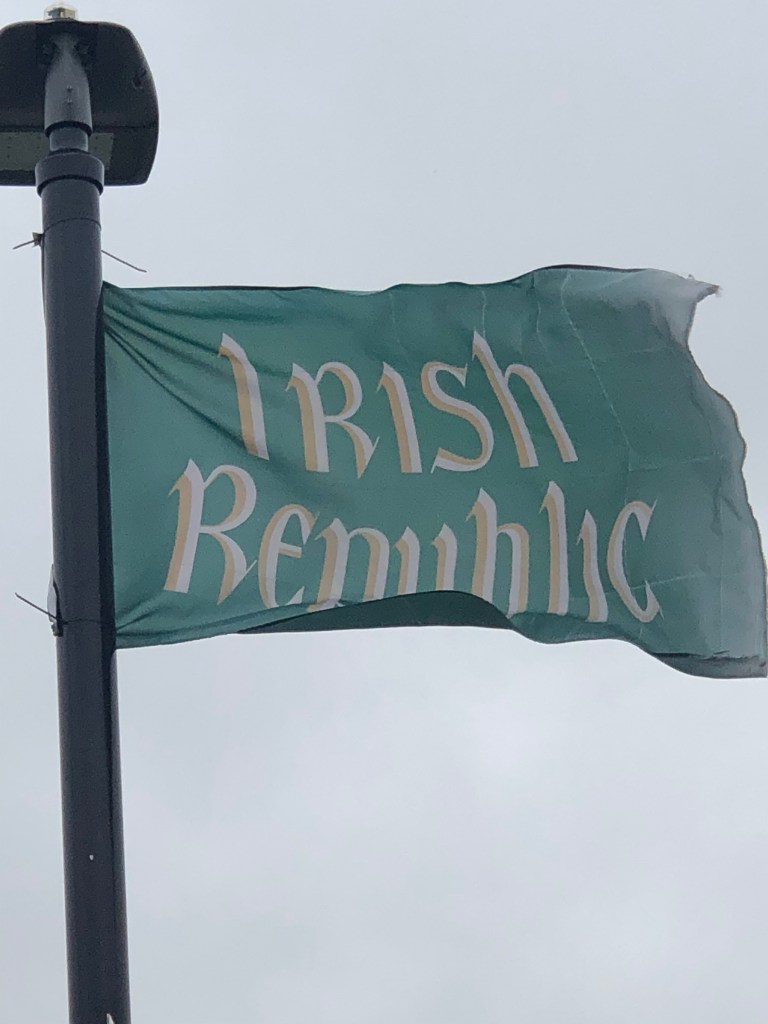
A flag that symbolizes Derry being united with the Republic of Ireland
It was not until the Saville report in 2010 that the British government denounced the actions of its soldiers during Bloody Sunday and recognized that the people killed were victims. However, none of the soldiers have faced any consequences for their actions, of the killing 14 people on that fateful day.
The events of Bloody Sunday have stayed with the Bogside community. The memory of that day has continued to cause a cycle of hatred for the British government. Because of Bloody Sunday members of the Bogside were more accepting and supportive of the Irish Republican Army (IRA), and its efforts. They felt that the IRA was the only one who had their backs because the British government essentially murdered their loved one’s and then lied to the world about it.
Mural of protesters running on Bloody Sunday
Bloody Sunday Mural
Memorial to the Hunger Strikes of 1981
Booby Sands leader of the IRA and hunger stirker
IRA recruitment mural
Still to this day, I could hear the anger in the voice of my tour guide toward the British government’s role in covering up Bloody Sunday. Being so powerful, the British government had the power to crush the Irish people in Derry, and they did. The troops meant to protect them and be neutral became the bringers of death, and I don’t think that the people of Derry will soon forget this.
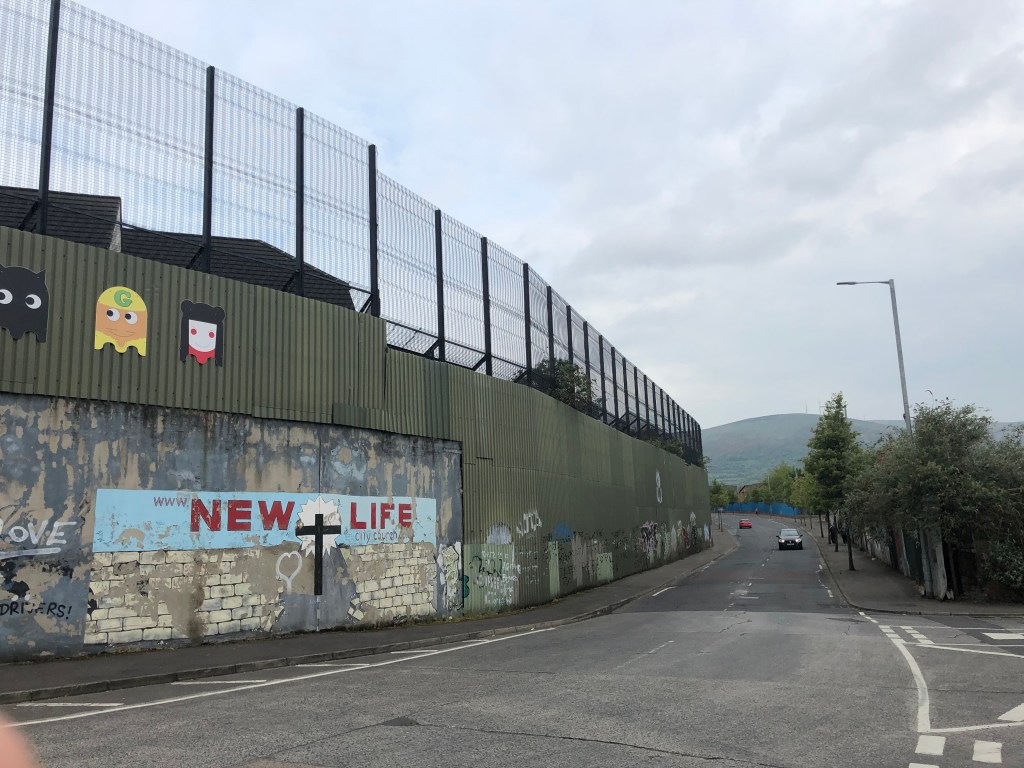
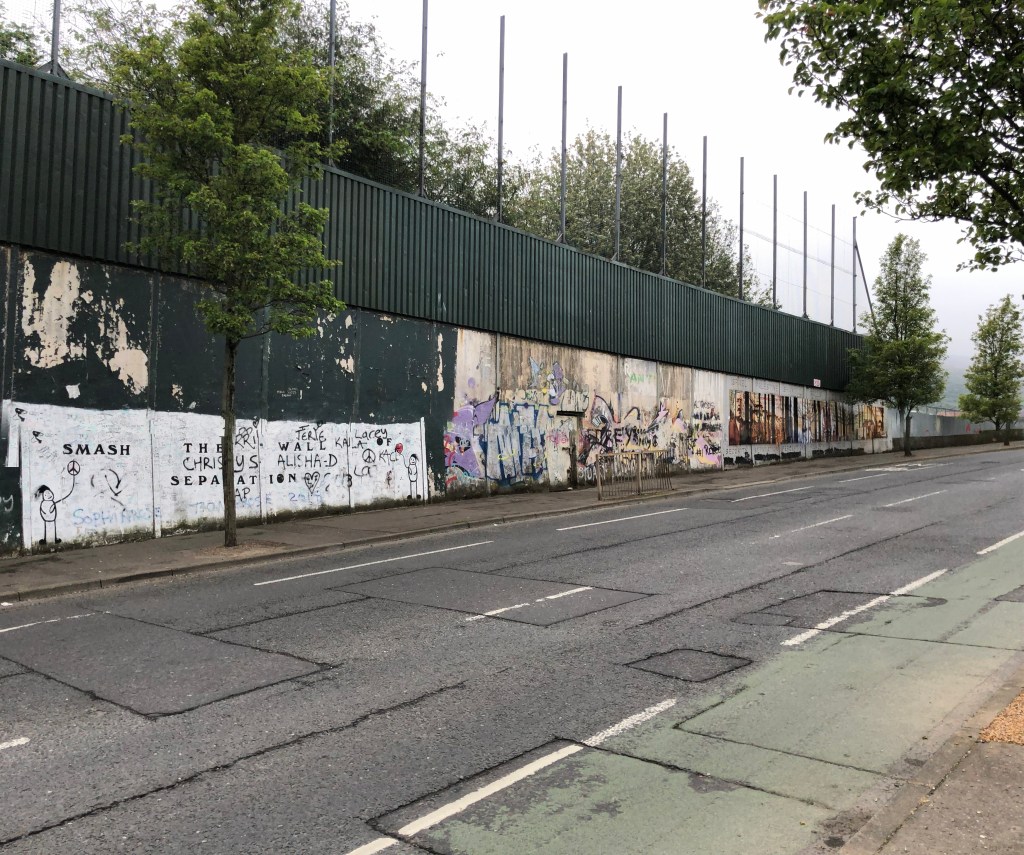
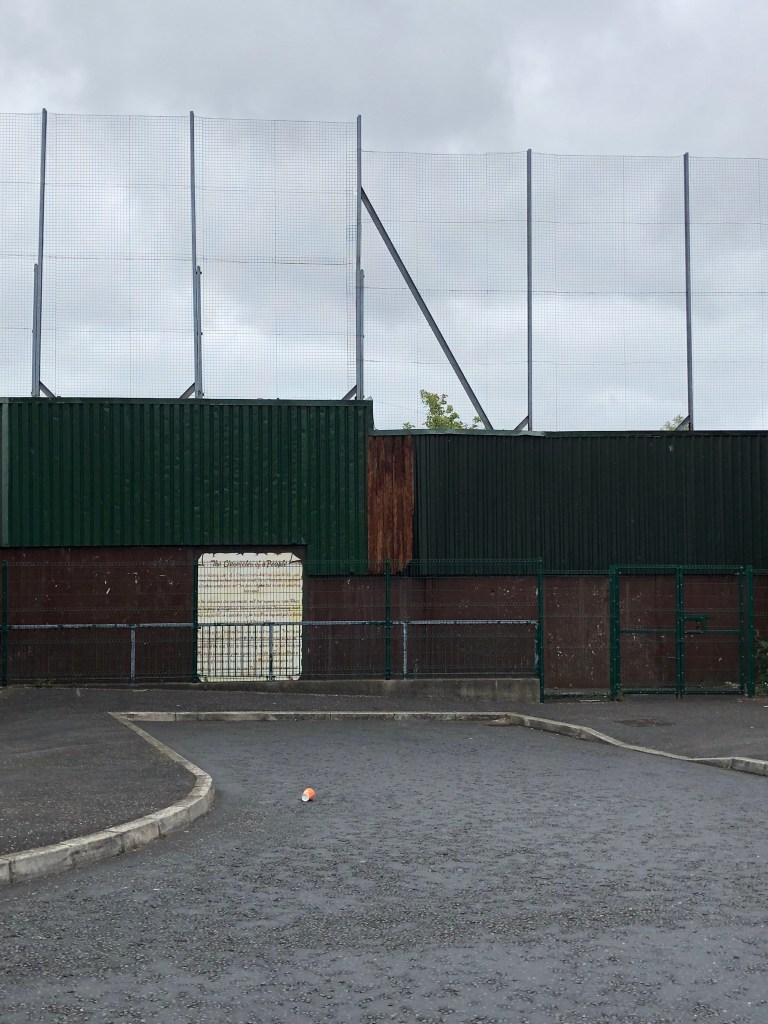
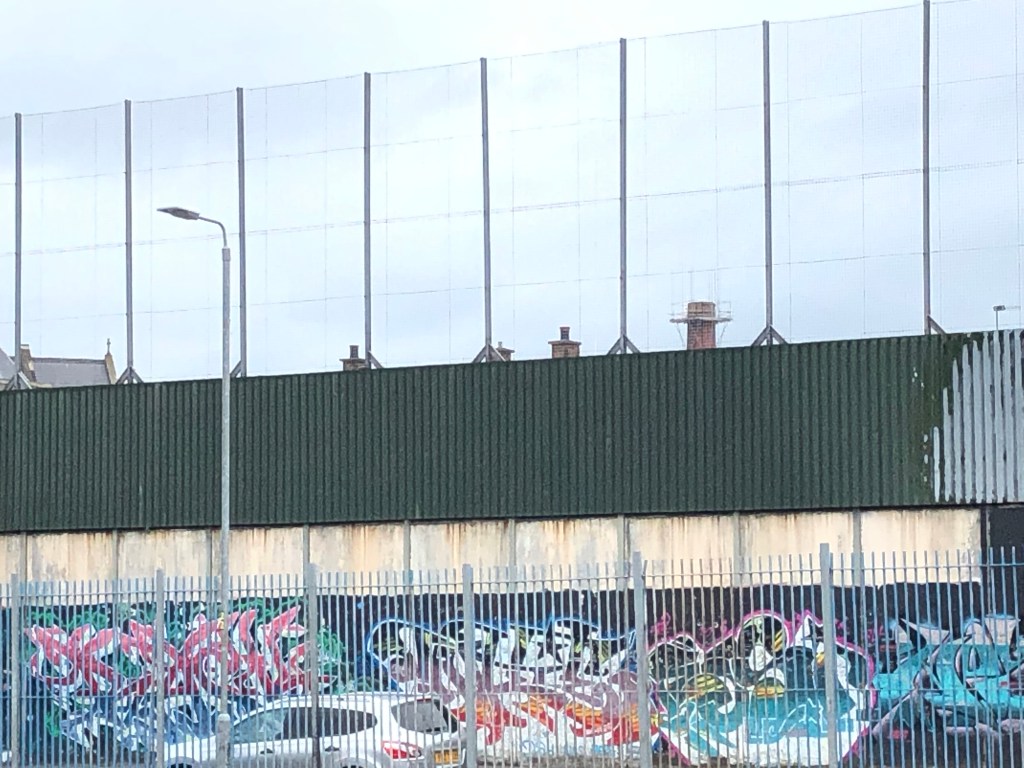
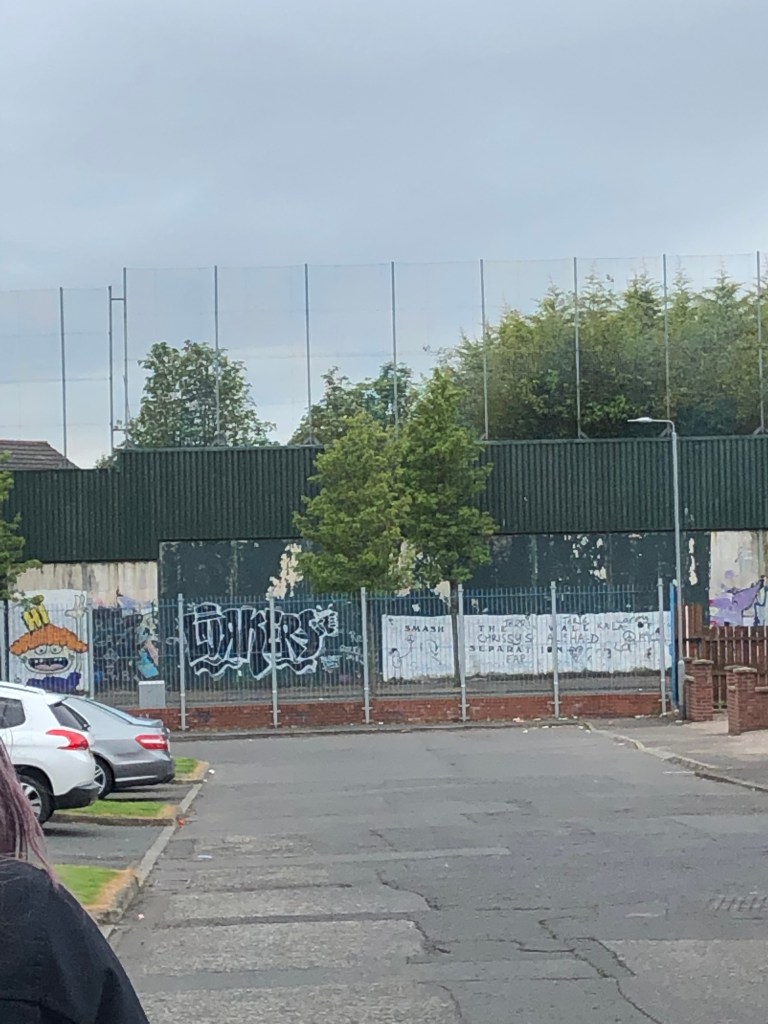
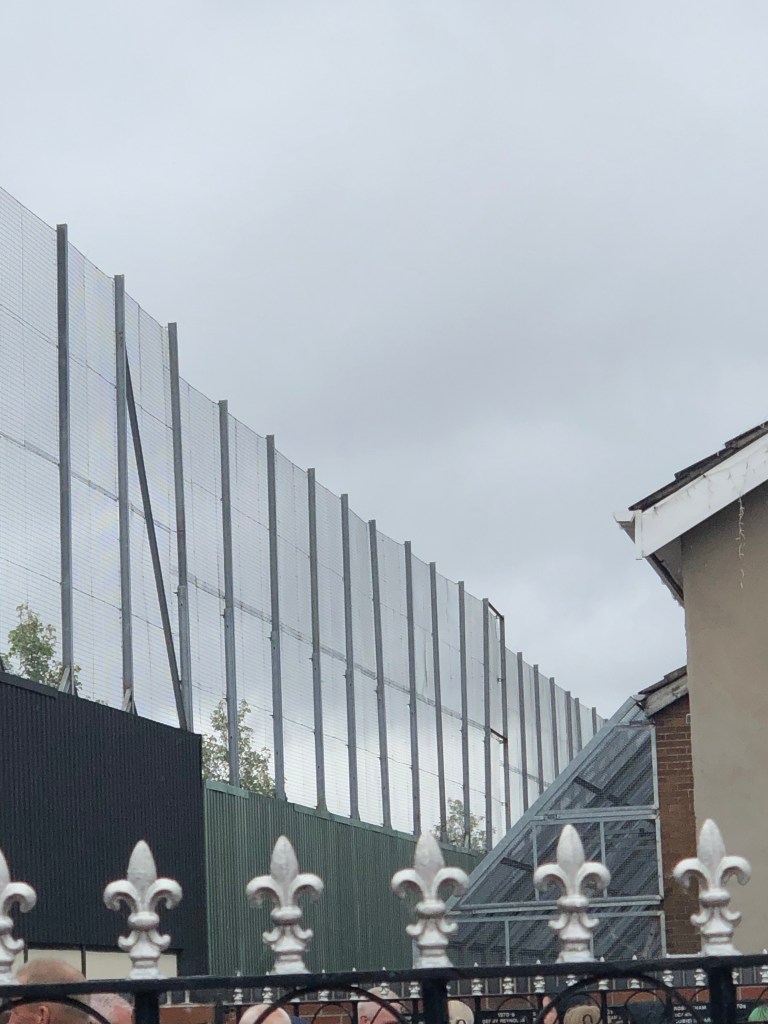
Peace Wall between Shankill Road and Falls Road community
Northern Ireland has been the victim of a tremendous amount of horrible violence, in its long history. Protestant- unionists- and Catholic- nationalist- tend to not get along very well, and the peace wall that was necessary between the two communities speaks to the extent of mistrust between them. The peace wall was put in place in order to stop the violent conflicts that regularly occurred between the Protestant and Catholic communities of Shankill Road and Falls Road. The wall itself runs 2,624.6 meters.
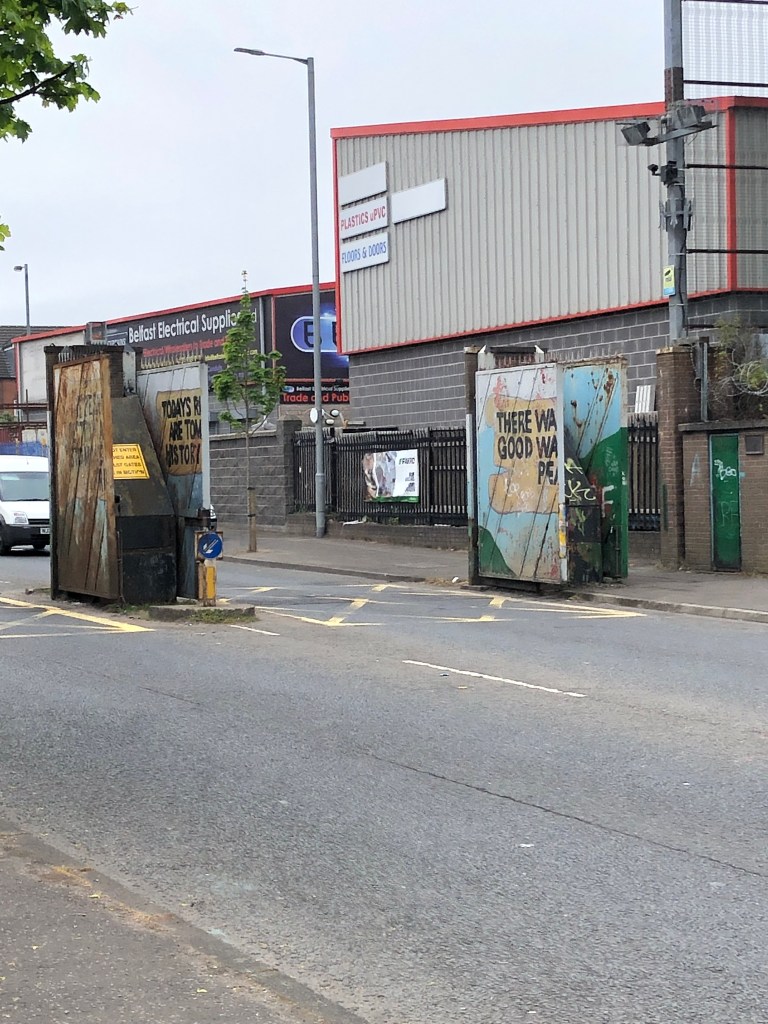
Gates that separate the 2 communities
The communities of Shankill Road and Falls Road also have a gate that accompanies the wall that separates them. This gate is heavily monitored by the Police Service of Northern Ireland (PSNI). They keep track of the goings and comings of those who cross back and forth through the communities through meticulous surveillance. On a walking tour of the communities, I was informed that the gates have been closing at 8 pm every night. in order to keep the two communities separate and stop troublemakers from getting in to each community. The presence of a gate that locks Protestants out of the Catholic community and vice versa shows that the conflict between the two communities is not simply what one would deem a petty squabble. It is dangerous and can escalate at a moments notice.
Slide show of the wall that separate Catholics and Protestants in the respective communities of Falls Road and Shankill Road.
To those who are not aware of the years of conflict between the two opposing sects in Ireland, the wall may seem imposing and over the top, but it is an integral component in maintaining peace between the Catholic and Protestant communities. While on the walking tour of the wall in the Shankill Road community (Protestant), my tour guide, an ex- combatant, stated that the wall was simply a barrier that stopped the two communities from finding common ground and getting to know each other. He said that he believed that the wall would be down in 2023, so that the new generation would be able to learn to work and live together. His belief is that the wall is a part of the problem and that it is why the two communities continued to be so segregated.
Grated gate protecting someone’s backyard from bombings
In contrast, my second tour guide, a Catholic ex – combatant, stated that he did not see the walls coming down anytime soon. To him, the walls are still a form of protection for the Catholic community and not simply a barrier to the integration of the two communities. In the photo above, if one looks closely, one can see that there is a fence like structure covering up the backyard of a person’s house. This photo was taken in the Falls Road Catholic community. People in the Catholic community who live close to the wall often had bombs and such thrown over into their backyards, and this was the solution to the problem. So for lots of Catholics, the walls are simply more than a means to an end; they are a blanket of safety.
In this way, the wall comes to be seen in the two communities as two different things. It is either a savior or a hinderer. But, I think that such a dichotomy may be too simple. The Peace Wall is complicated and perhaps is a combination of both savior and hinderer to progress. What I do think, though, is that until both communities come to understand how the other views the wall, the wall will remain in place.
I know the title may be a little, okay maybe a lot, cliche, but it is certainly an accurate saying when it comes to Northern Ireland.
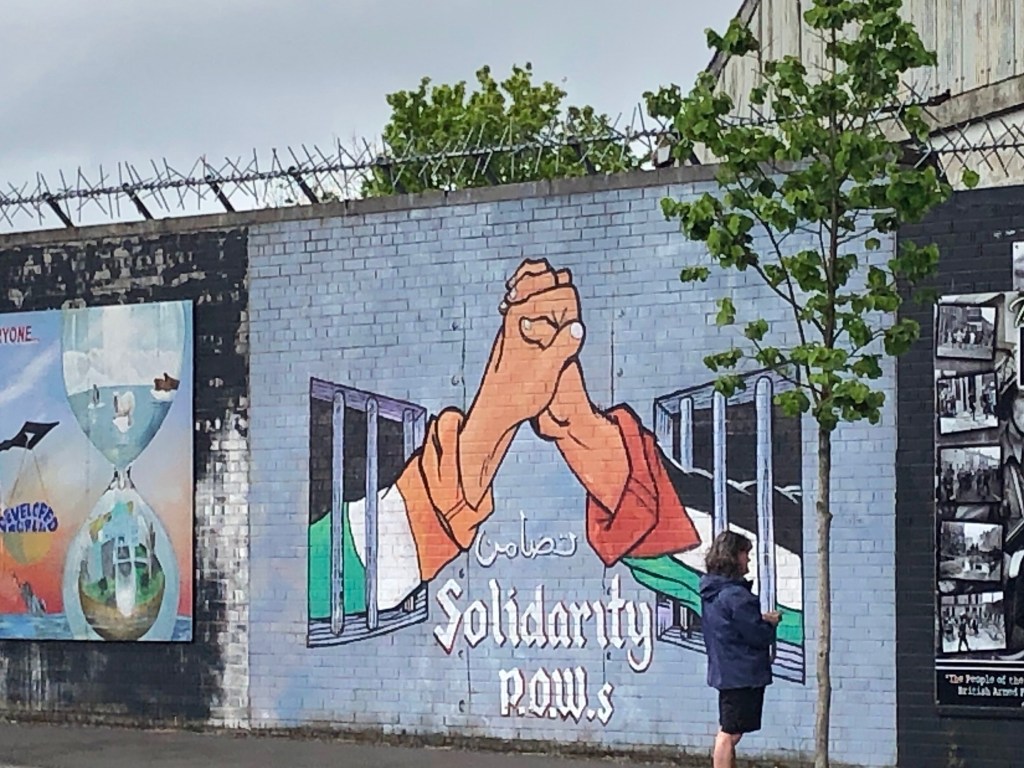
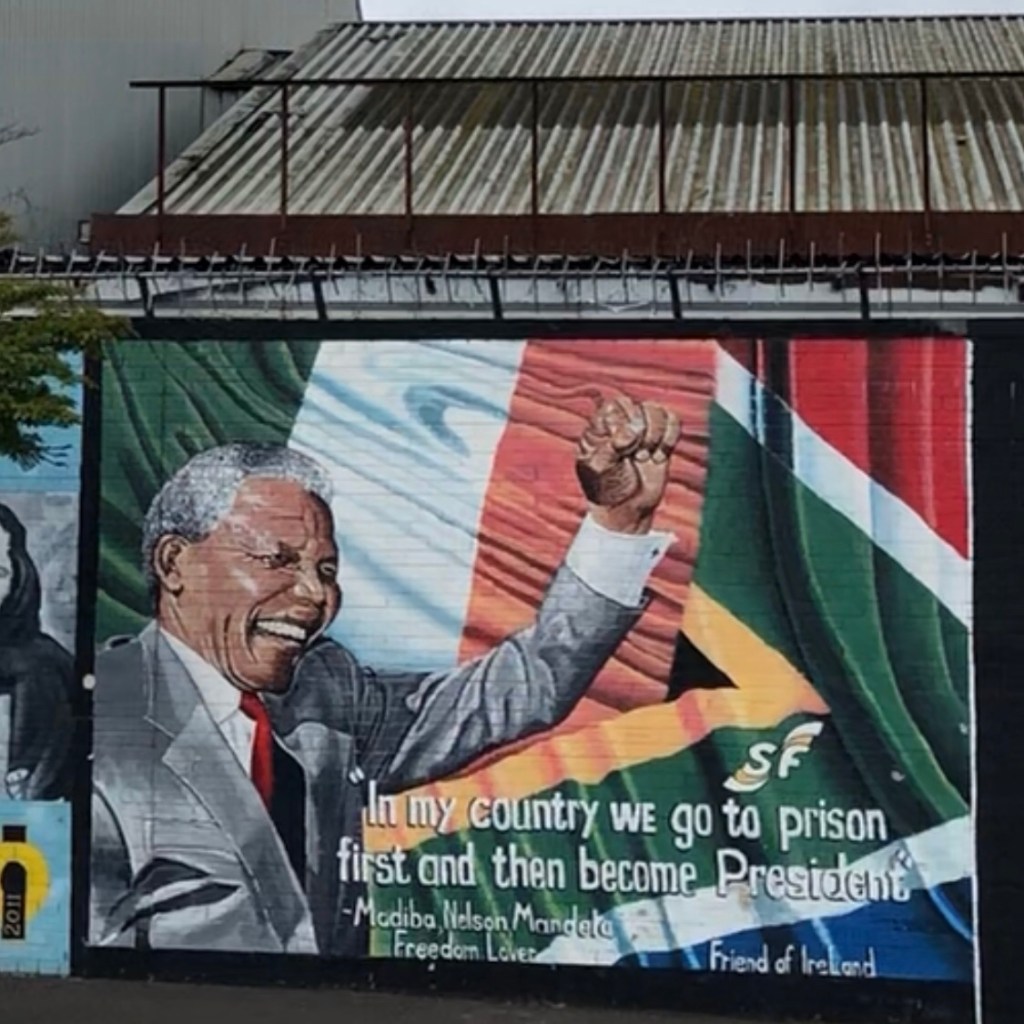
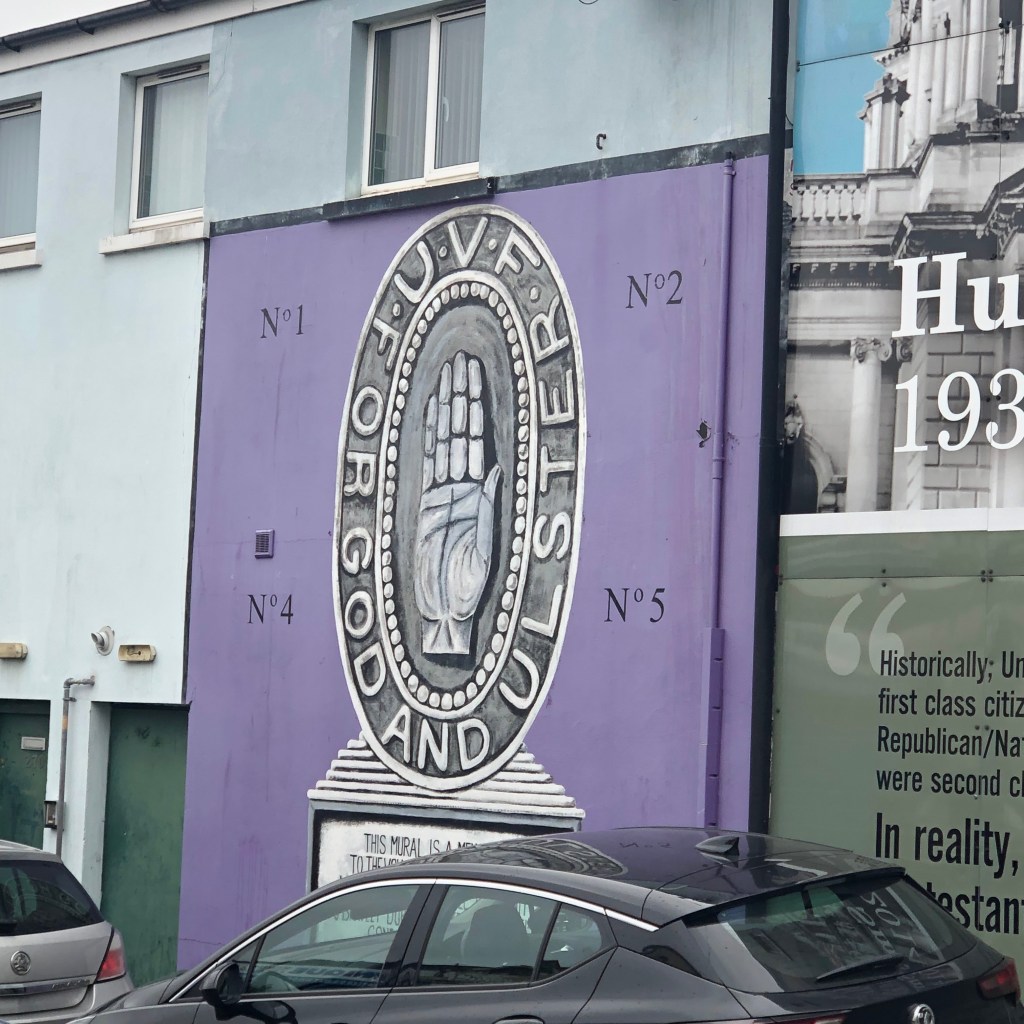
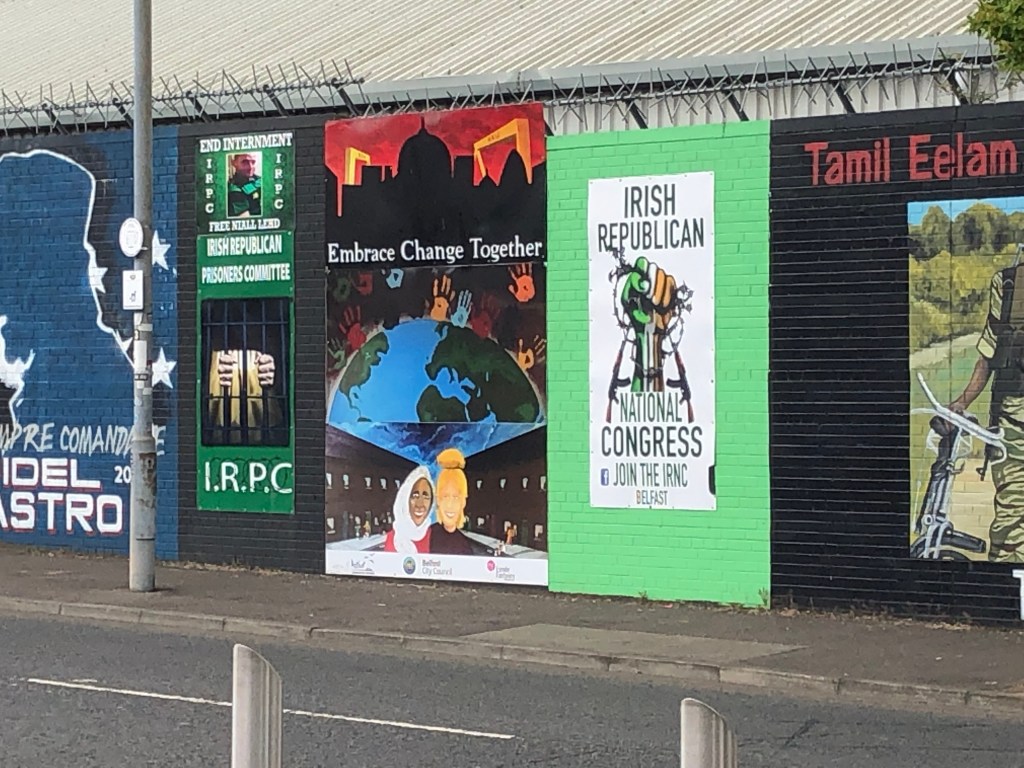
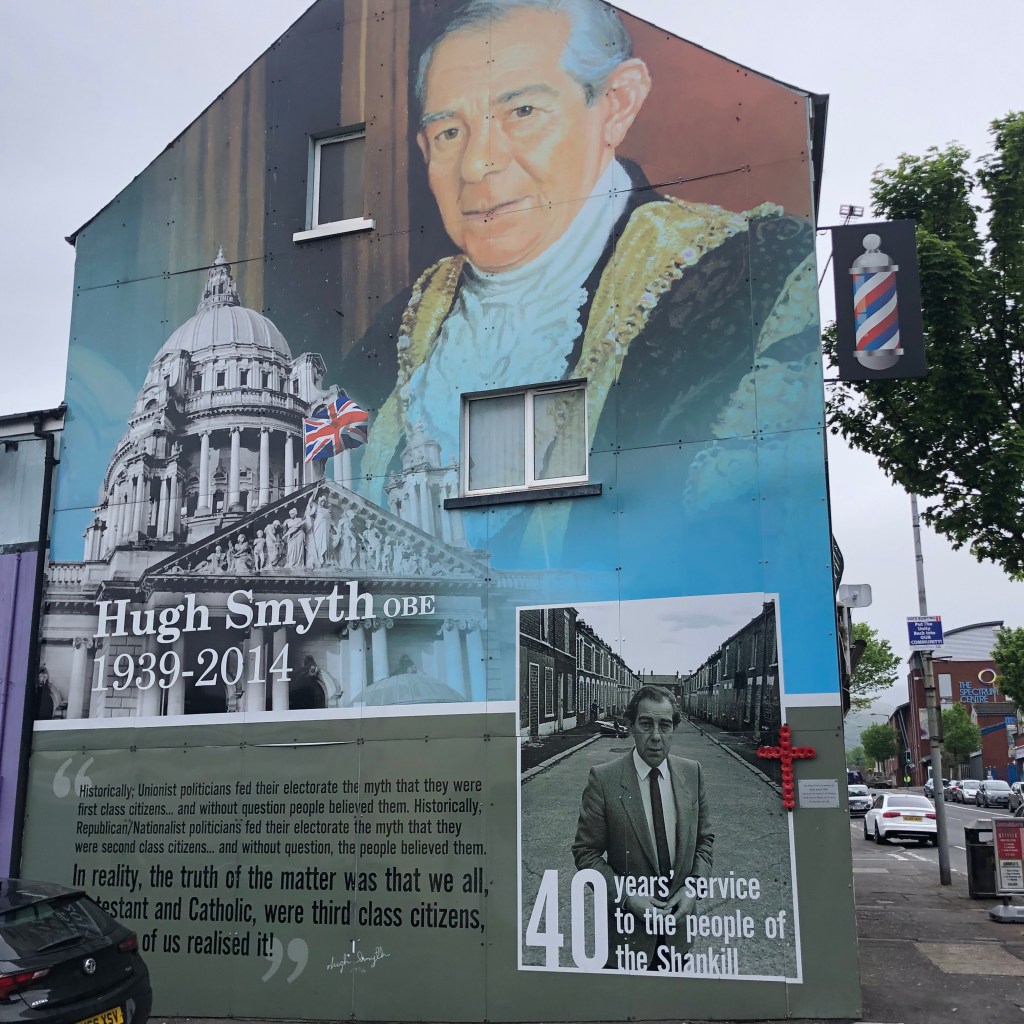
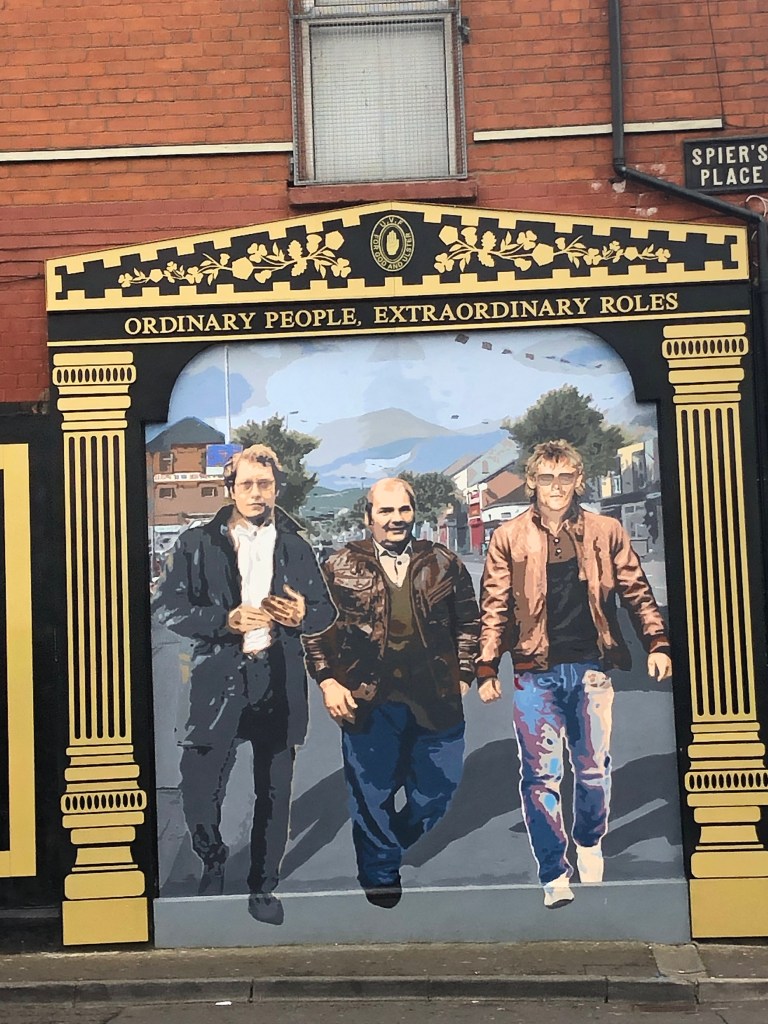
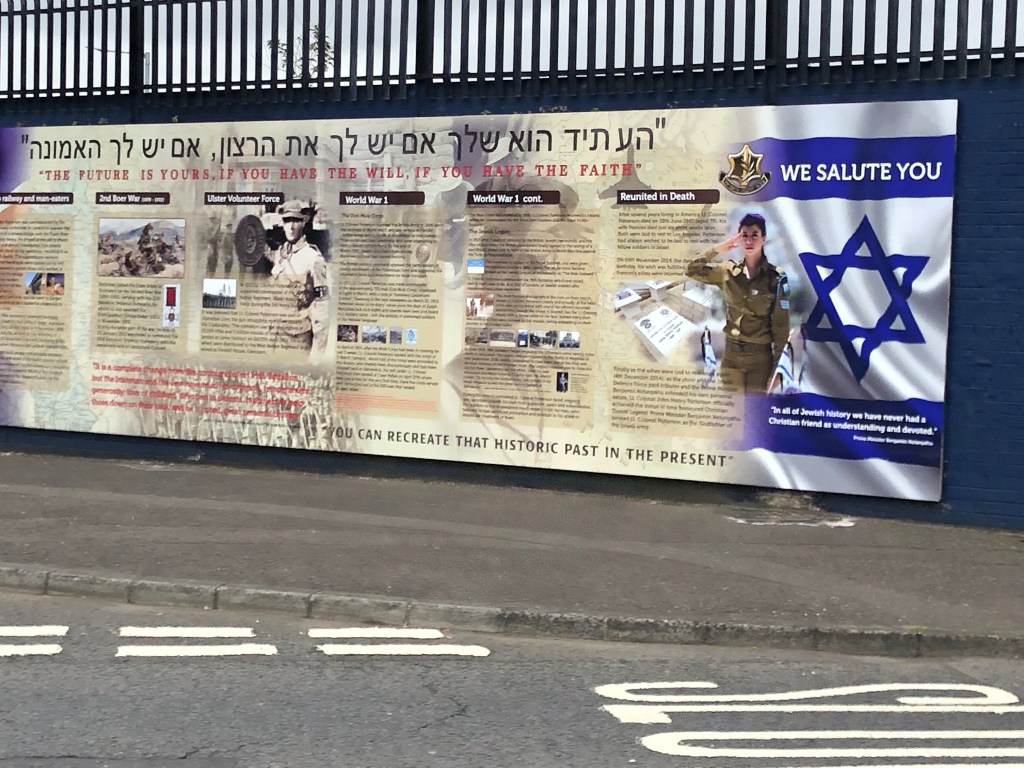
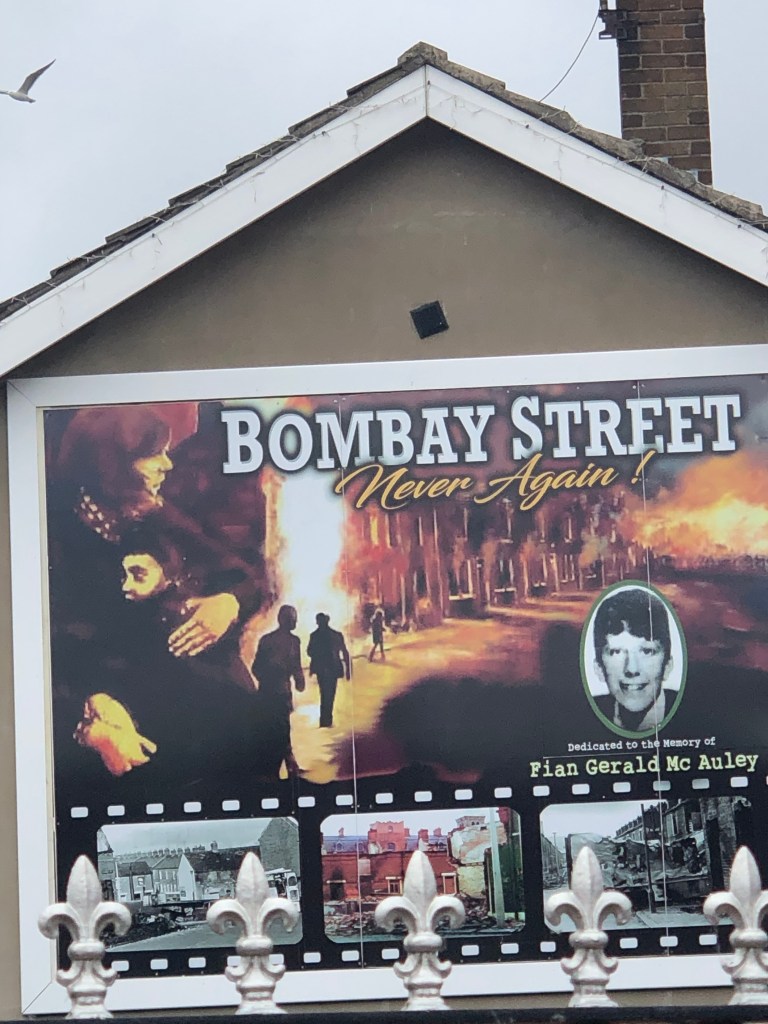
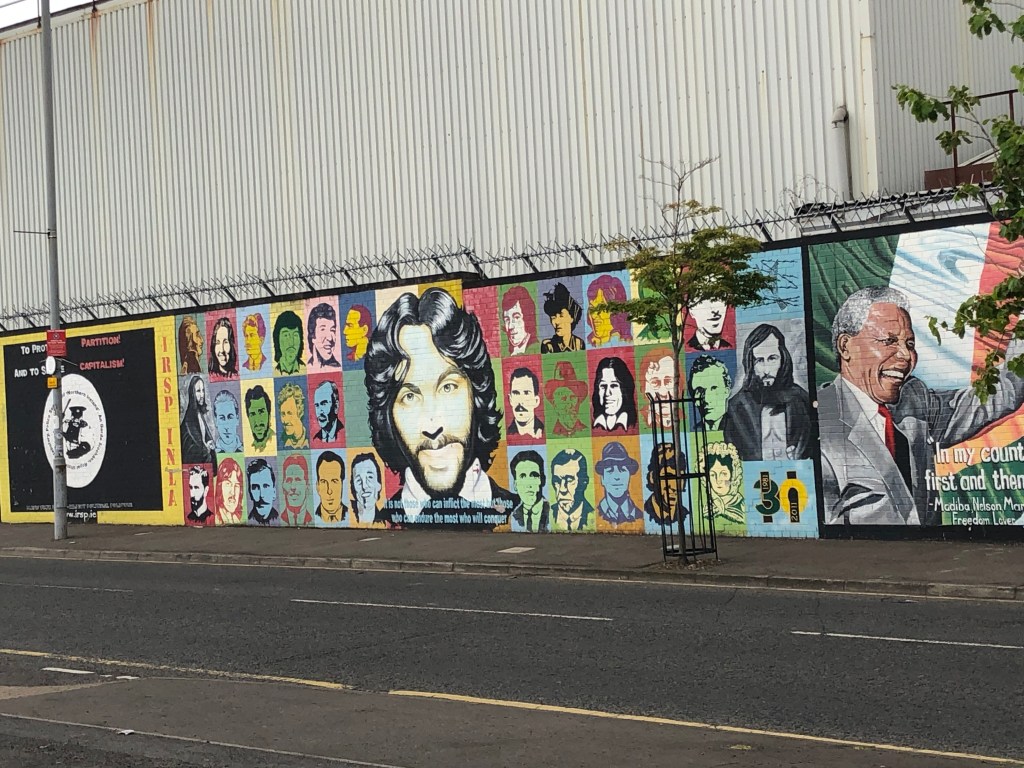
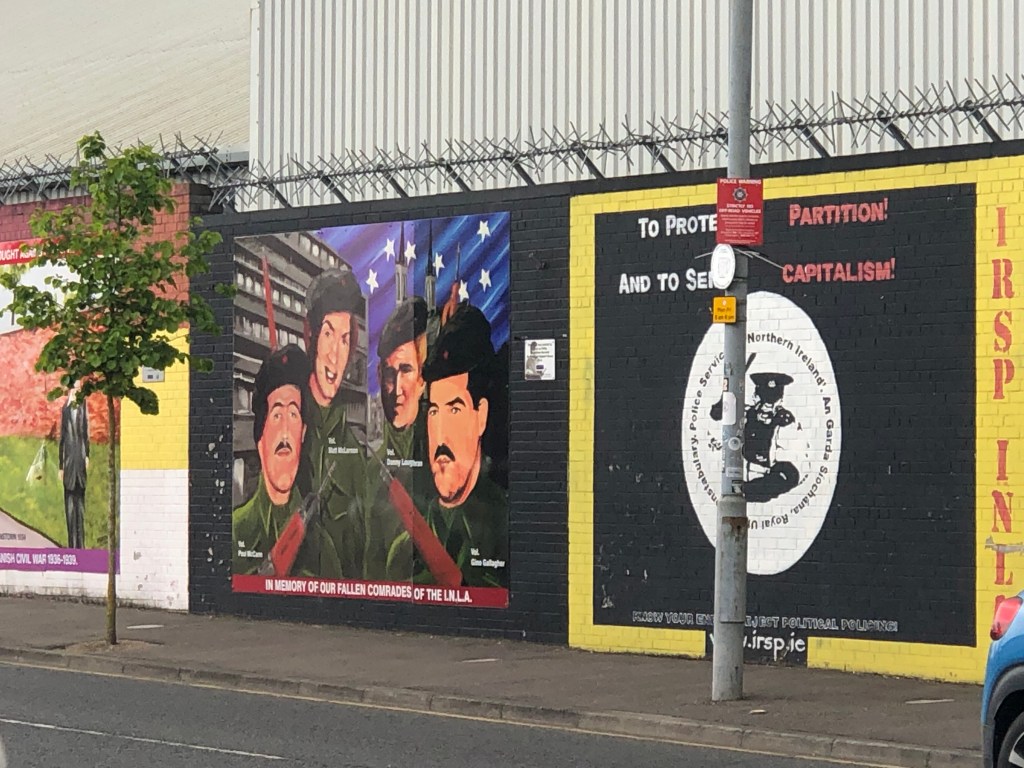
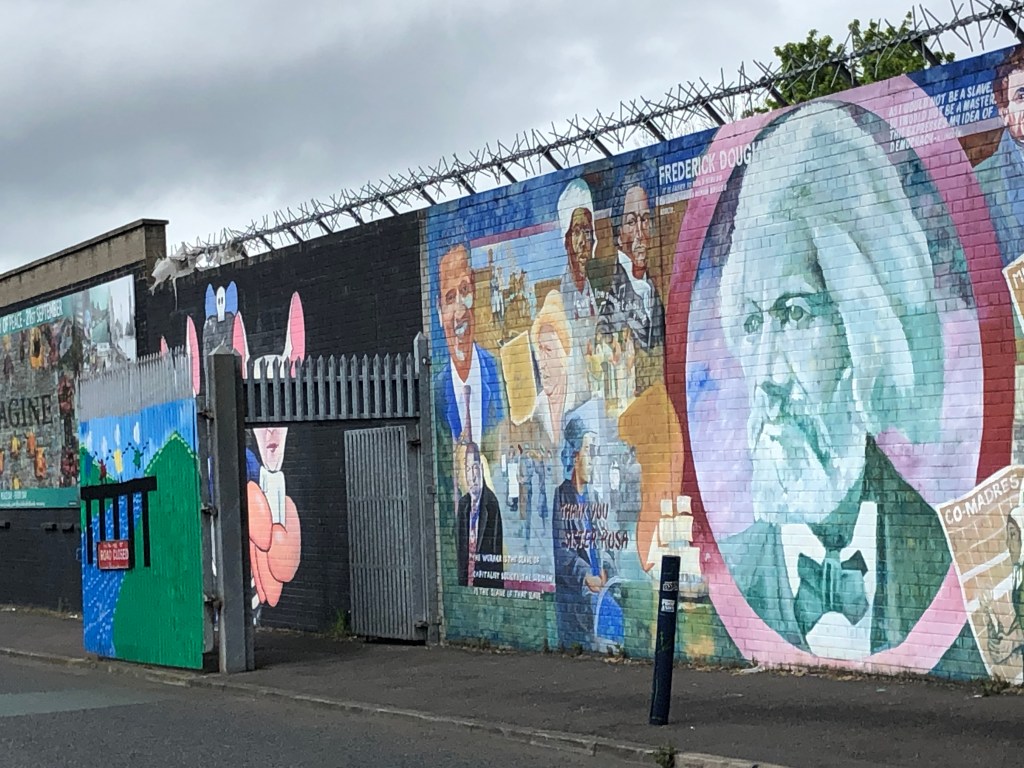
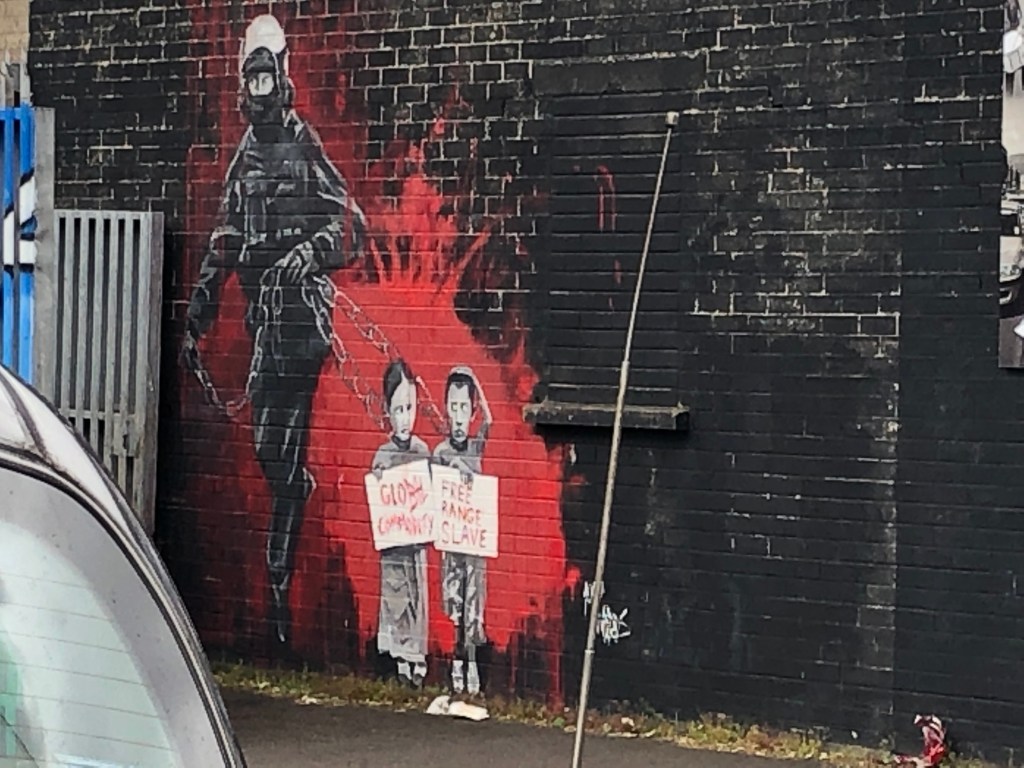
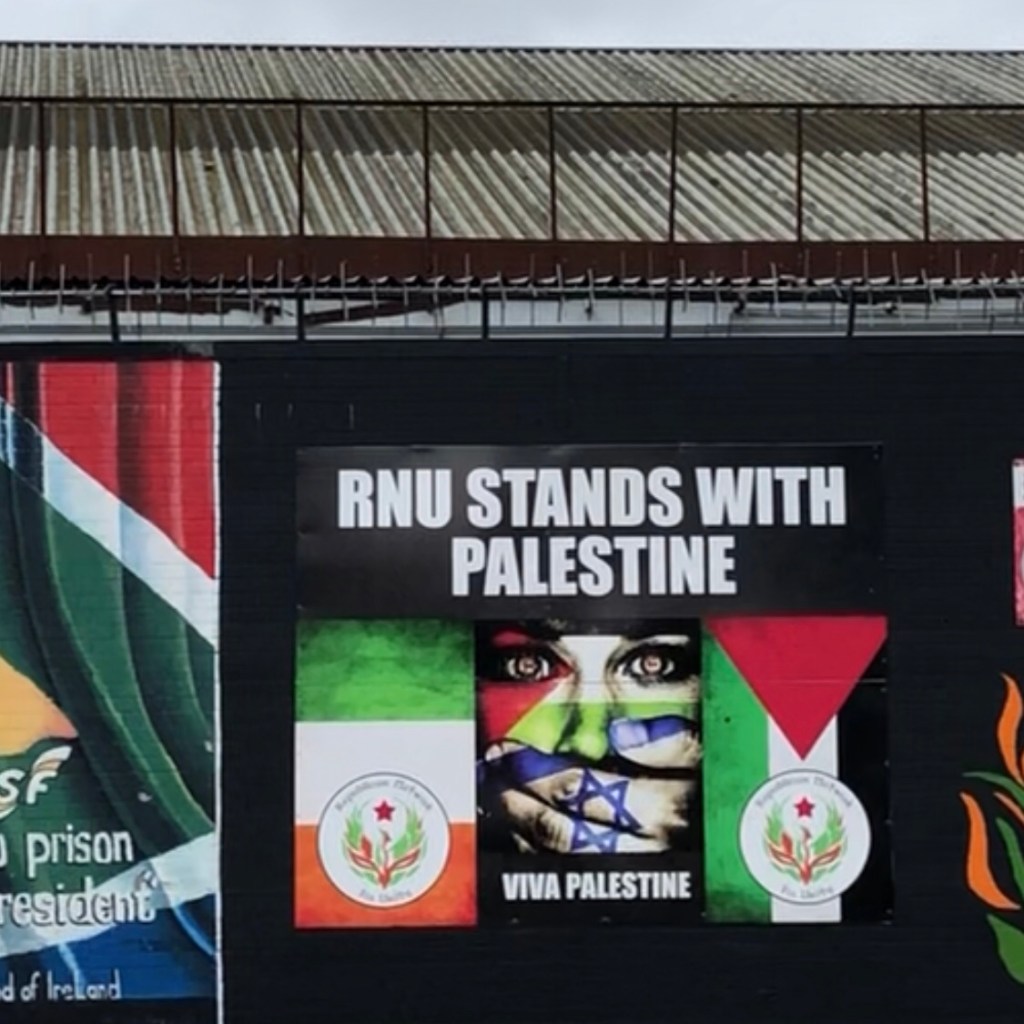
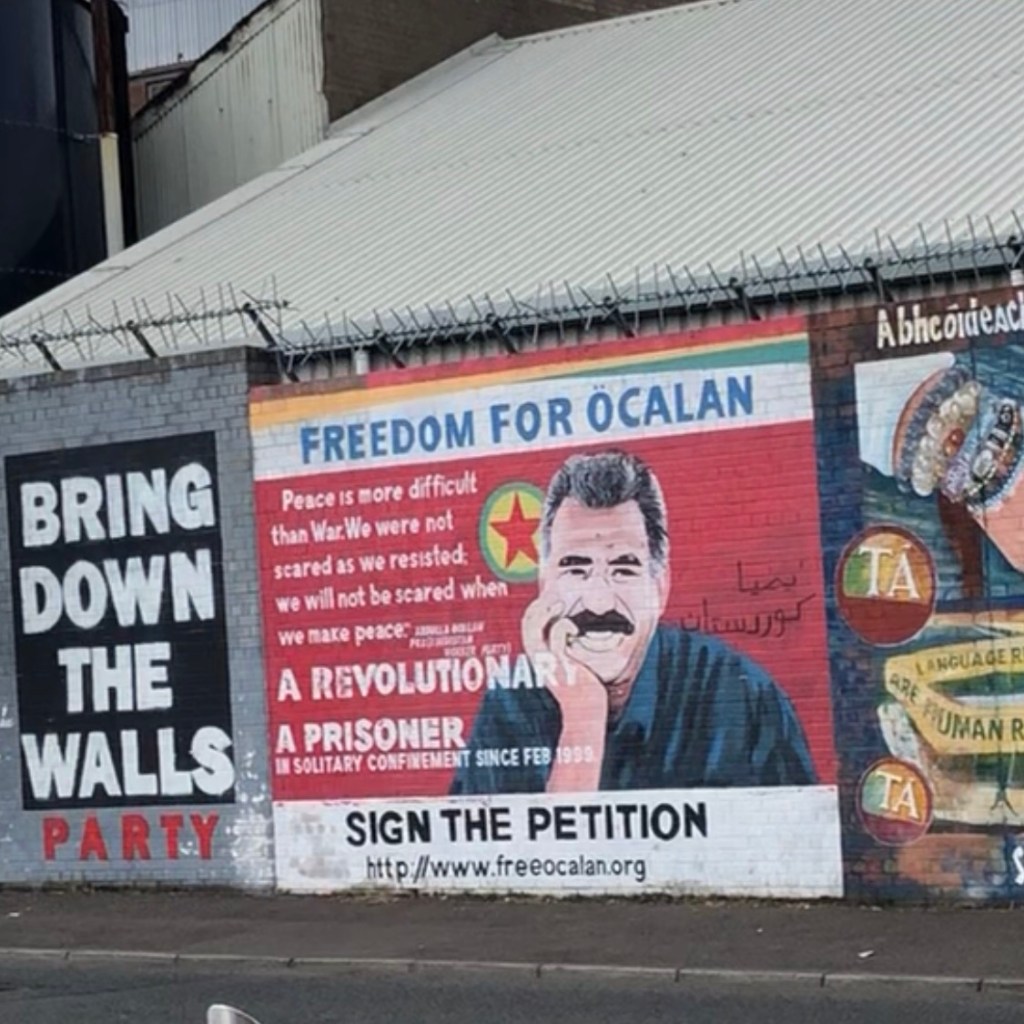
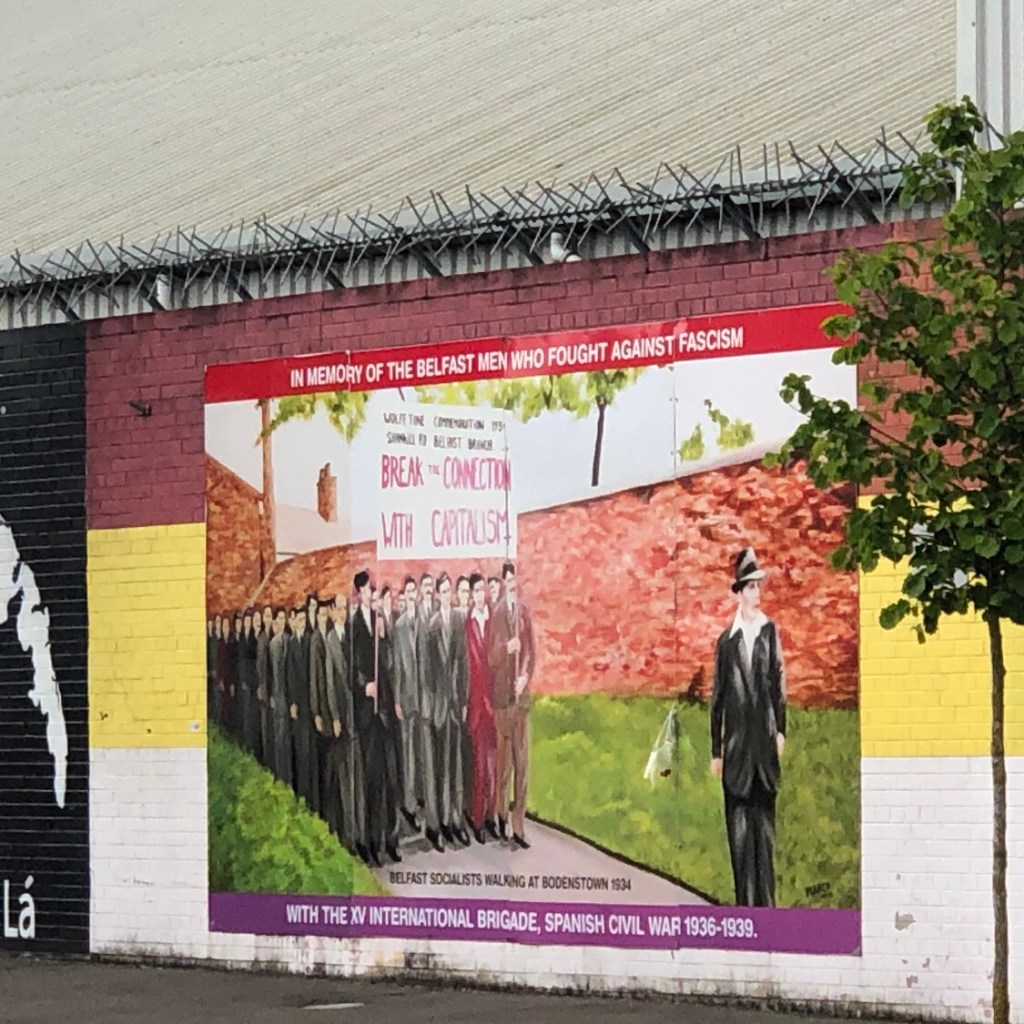
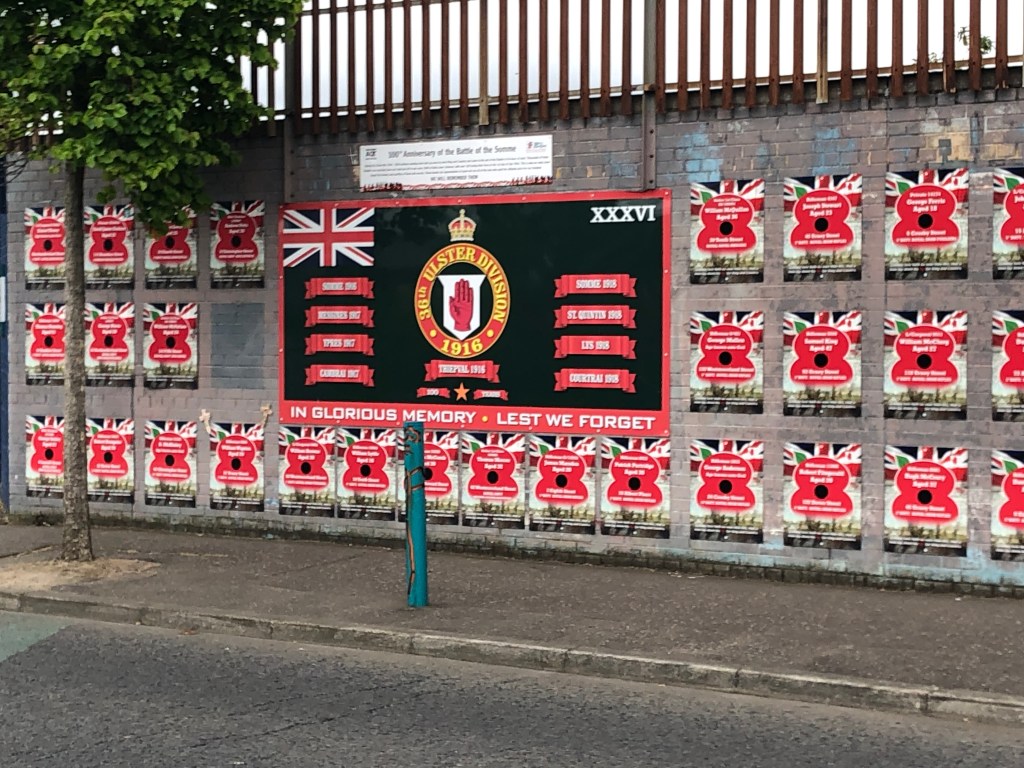
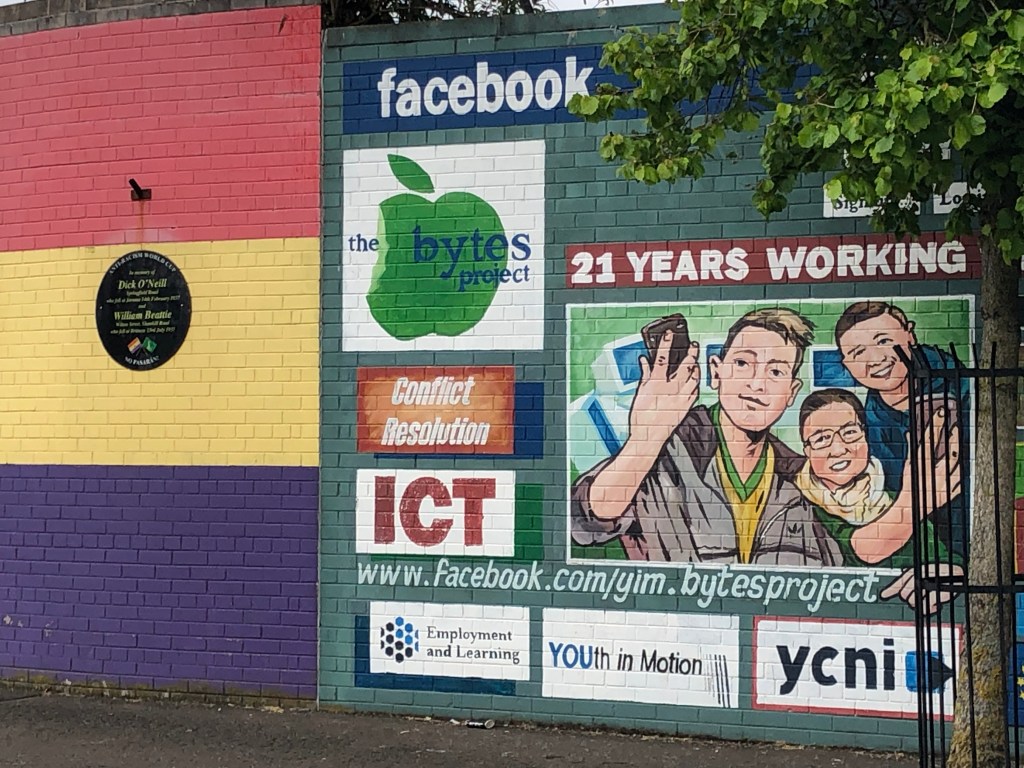
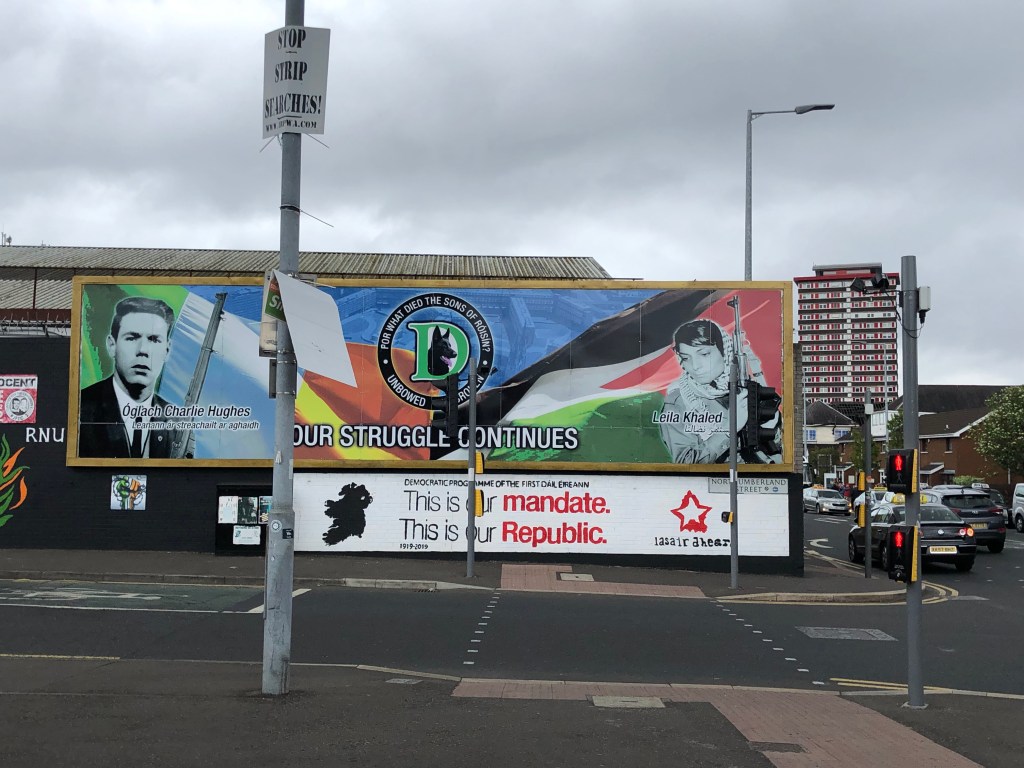
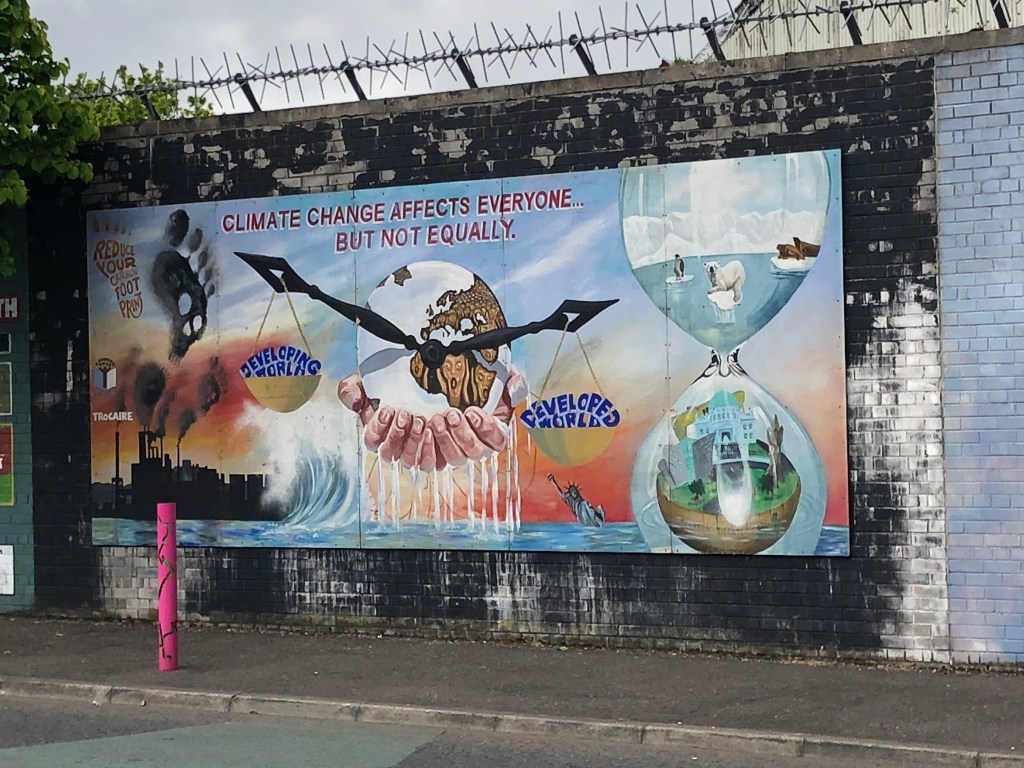
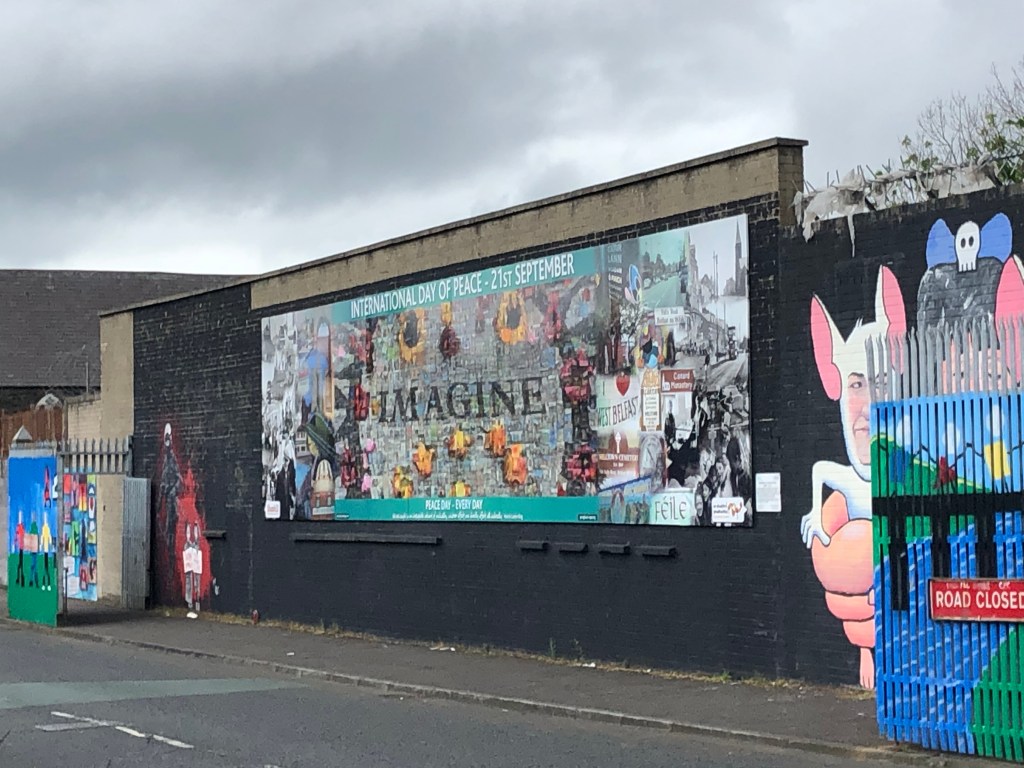
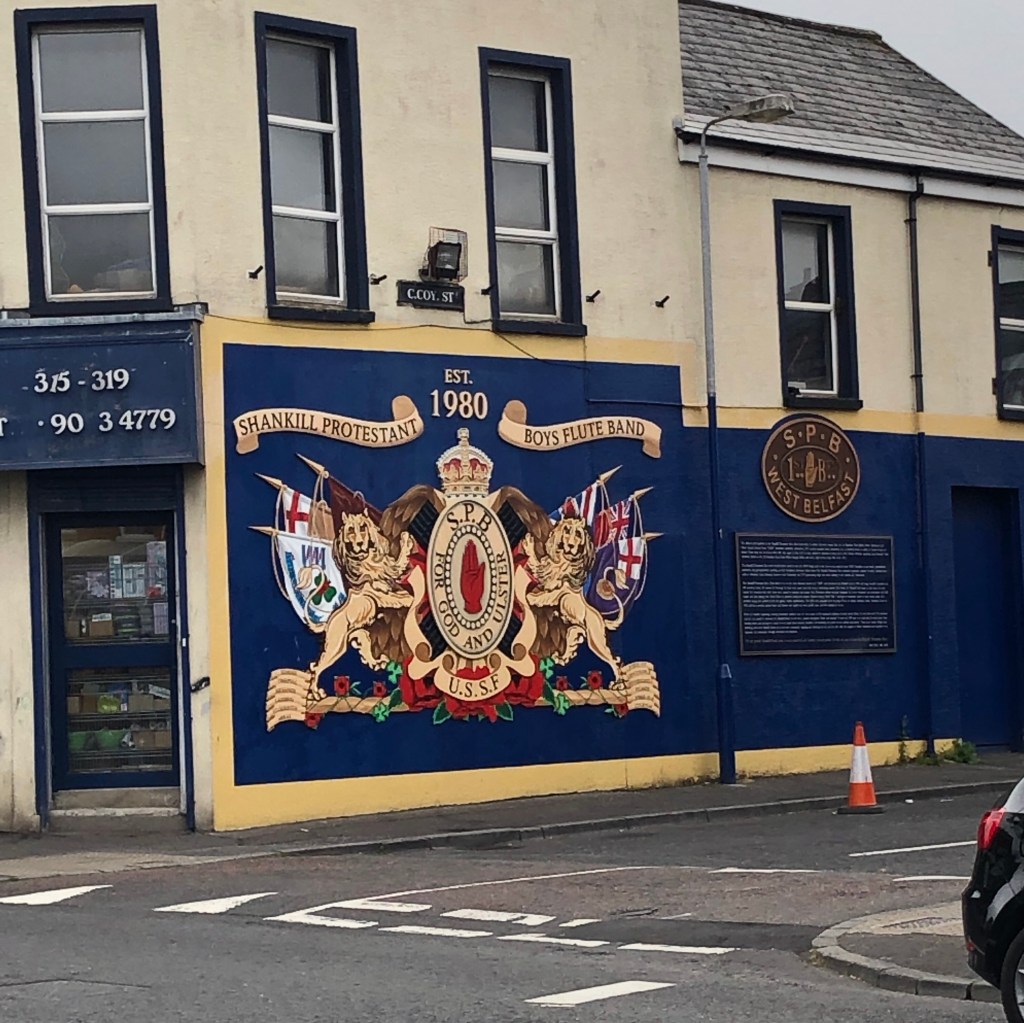
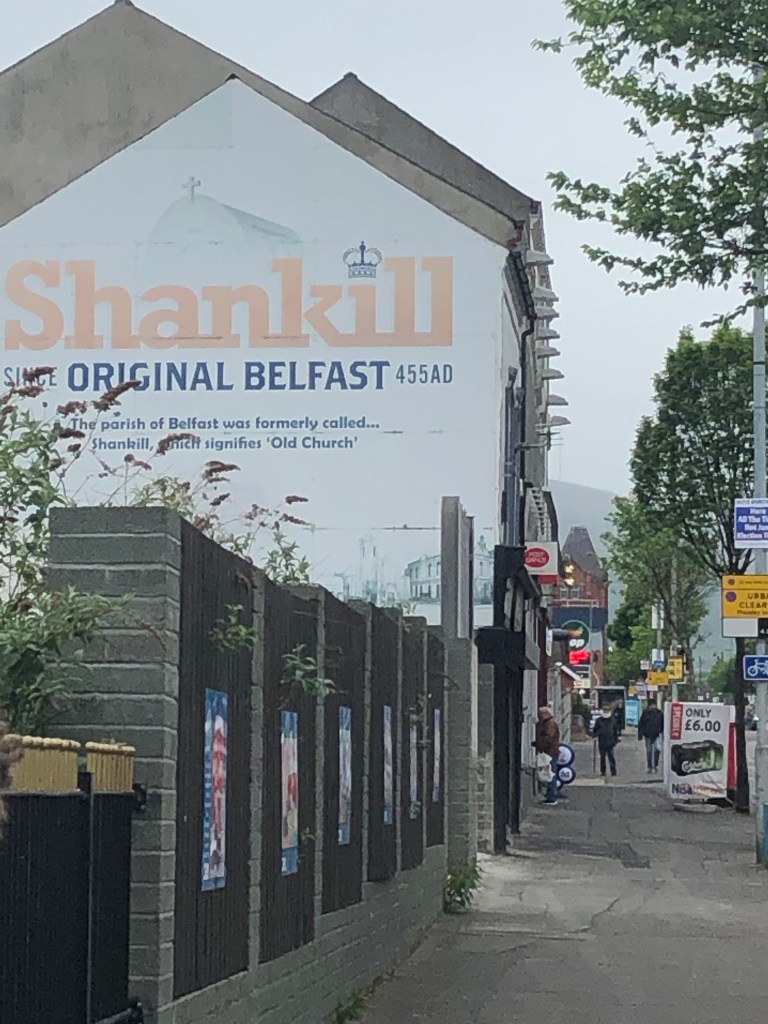
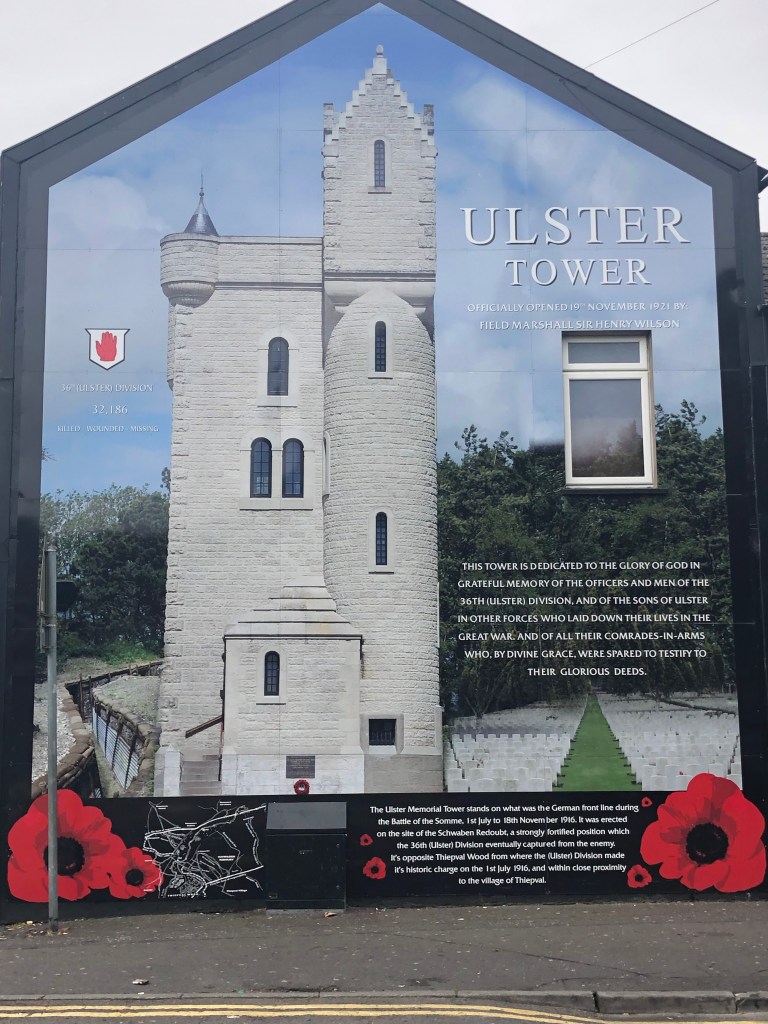
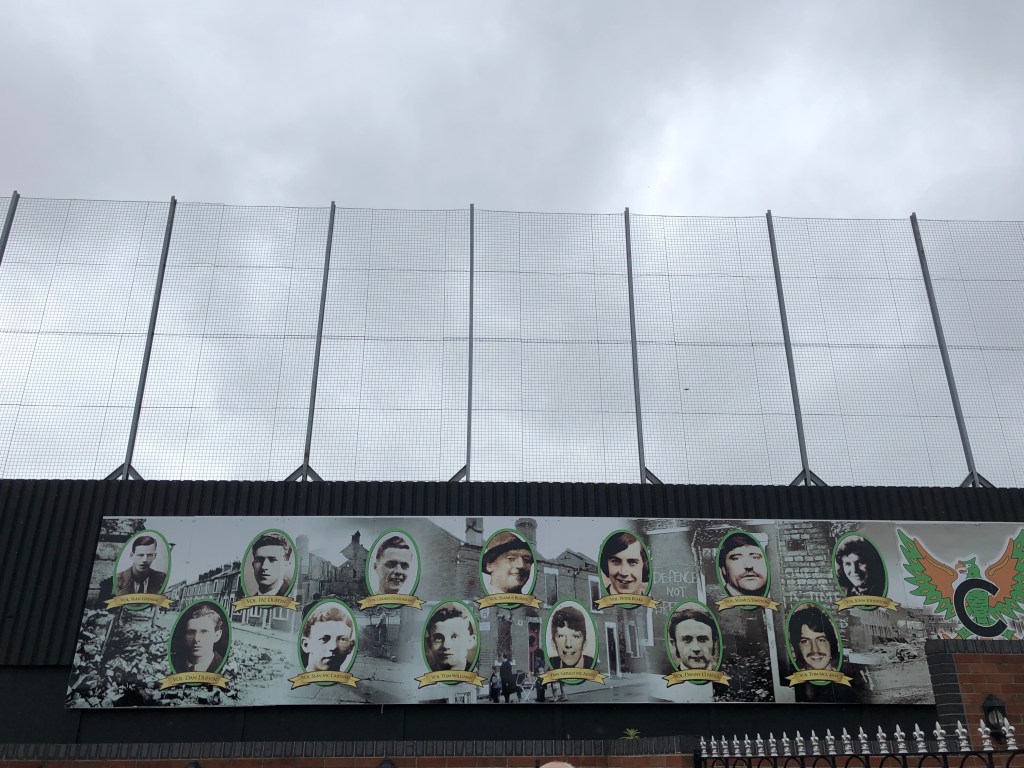
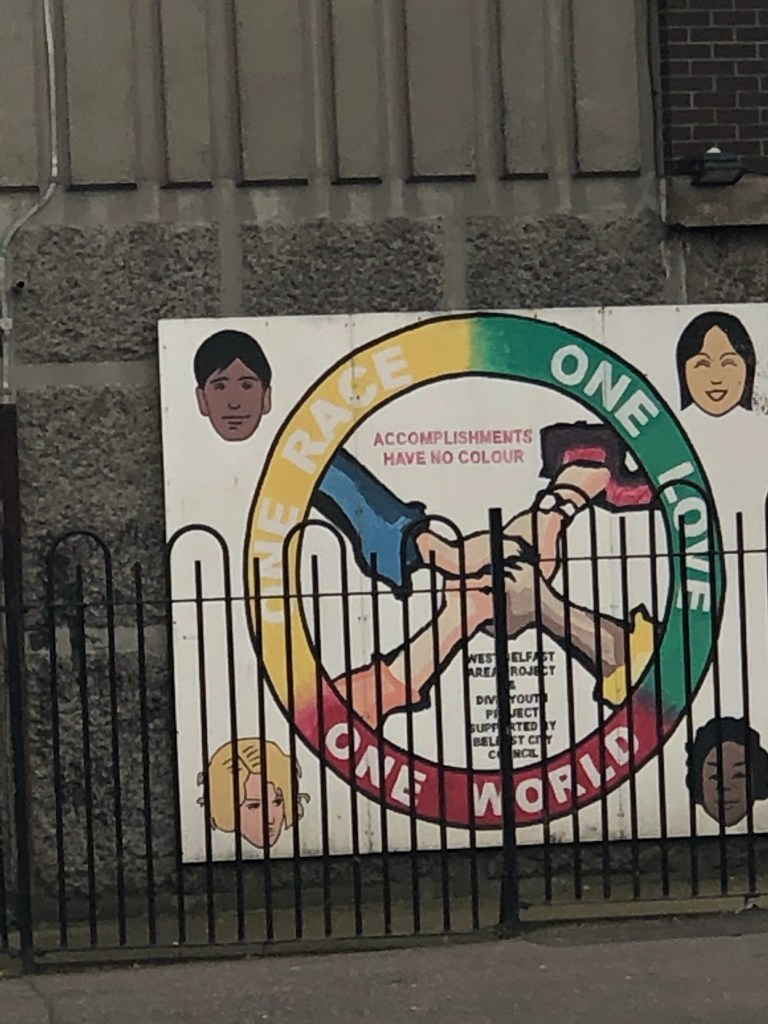
Murals are an integral part of both Northern Irelands history, and its present. The murals in the slideshow above mostly represent the opinions of the two dominant identity groups in Northern Ireland: Protestants and Catholics. The two communities that the murals above belong to are the Shankill Road community and the Falls Road community. Both communities use murals to show their pride, to display their dislike for the other group, and to commemorate the innocent lives lost in the years of sectarian conflict.
Shankill Road: Protestant community
The Shankill Road community is mostly Protestant and thus unionists. This means that they would like Northern Ireland to remain united with the United Kingdom and not become apart of the Republic of Ireland. People who live in this community tend to be descendants of the English and not Irish. If a mural is in this community, it will usually depict some sort of English symbolism such as the crown, poppy flowers or simply royals. Such symbols would not be depicted in a Catholic neighborhood because they are generally not in favor of remaining a part of the United Kingdom.
Mural in Shankill Road
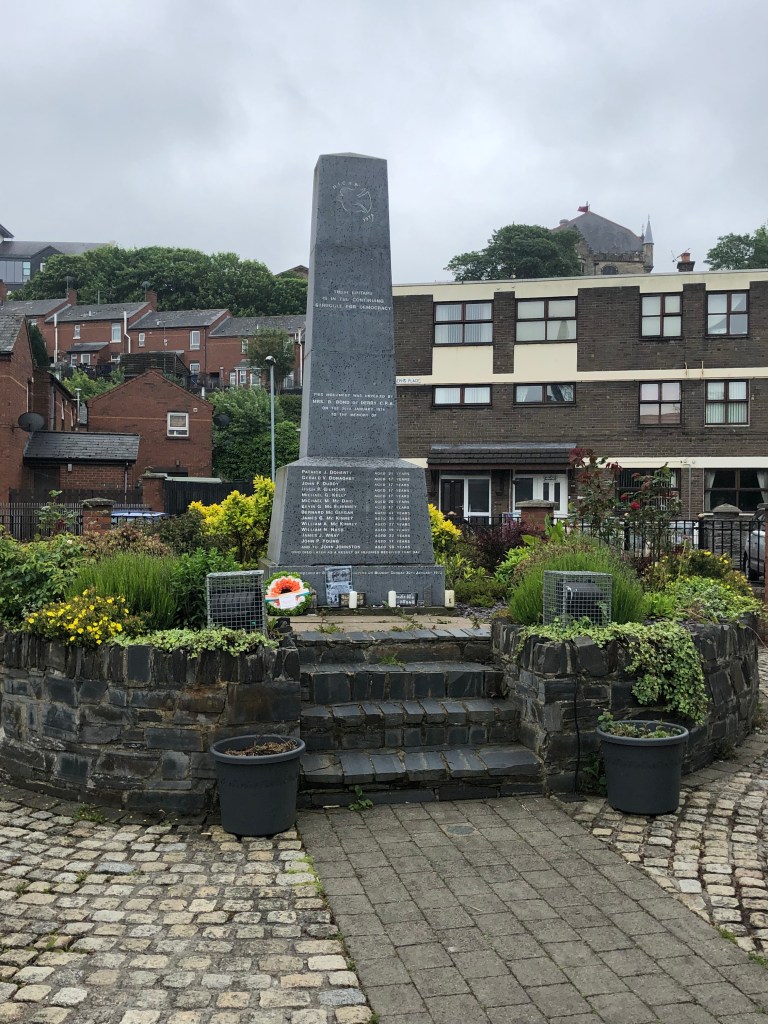
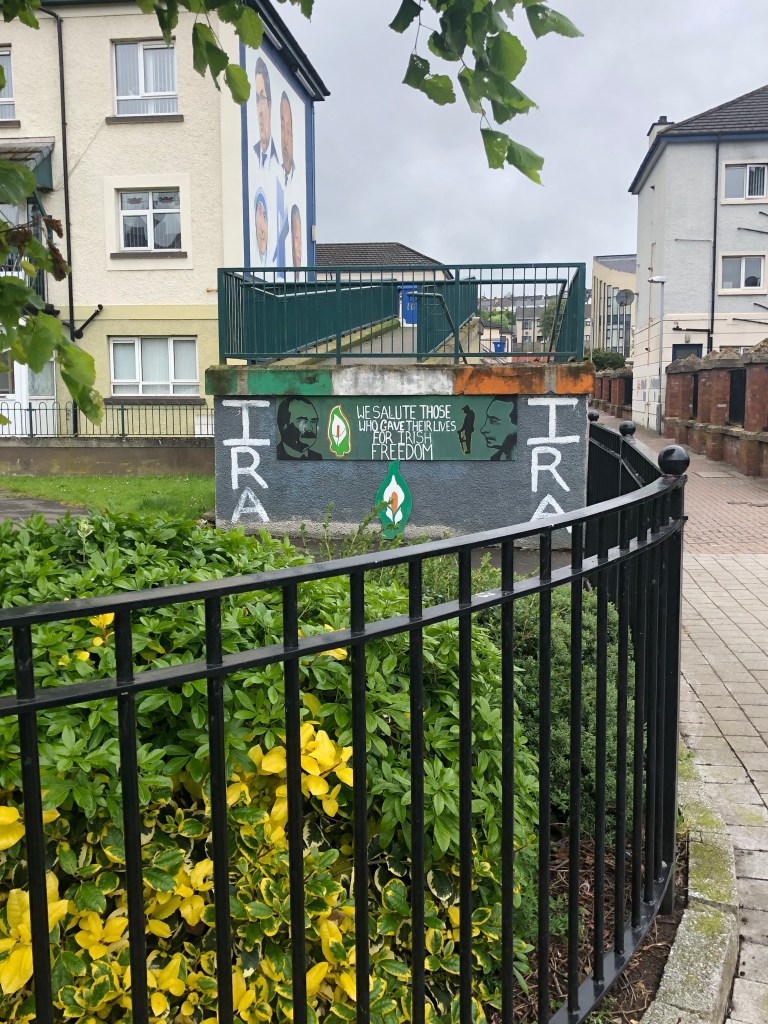
Memorial to some of the deaths that occurred in the Falls Road neighborhood
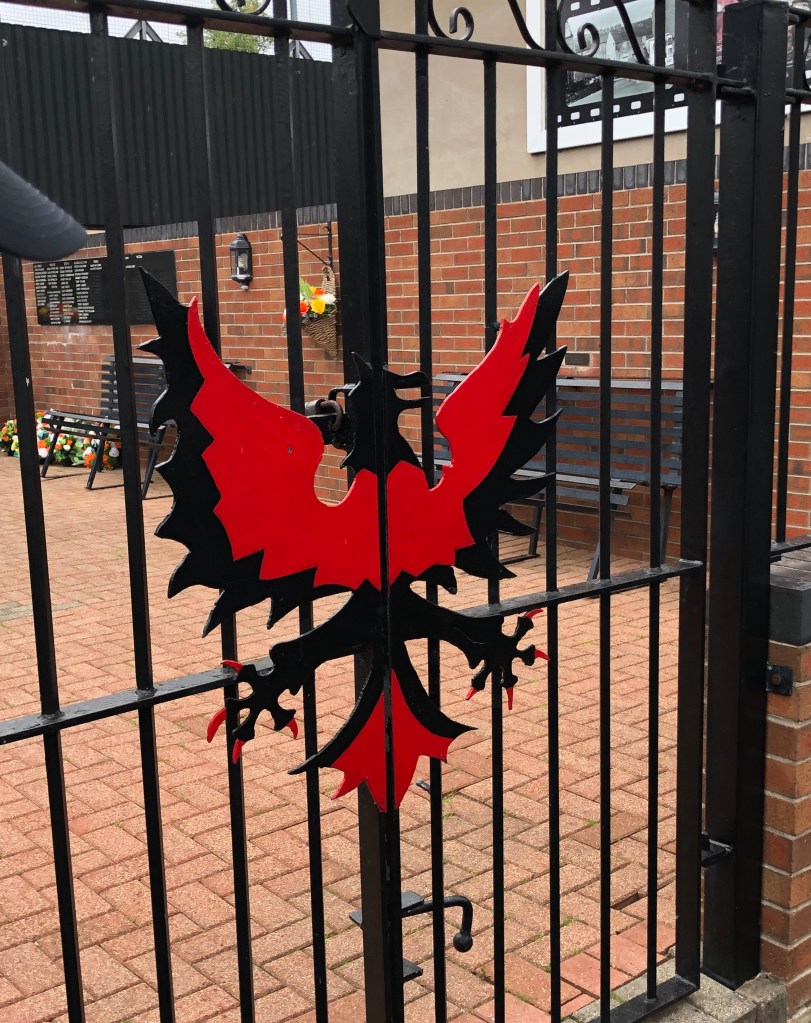
The Falls Road community is predominantly Catholic and thus nationalist. This means that they would like to see Northern Ireland unite with the Republic of Ireland. It also means that they are mostly of Irish descent. Their murals depict their heroes such as Bobby Sands and those who died in the Hunger Strikes in 1981. They also commemorate those who lost their lives to violence, during the years of conflict in Northern Ireland. The symbolism of the Phoenix is another thing that appears often in this community. It is the Irish Republic Army’s (IRA) symbol, and it symbolizes the Irish- Catholics rising from the ashes like the mythical phoenix does. The end it signifies them triumphing over the Protestants.
Phoenix: IRA symbol
Although both communities partake in the tradition of murals, it was actually started by Protestants. Catholics simply adopted it later to show their struggles and dreams. The Shankill Road community, which was previously mentioned, is a predominately Protestant community that interfaces the predominantly Catholic community, known as Falls Road. The two communities have been at odds with each other for years, and I do not simply mean that they merely dislike each other. The communities basically hate each other and stay away from people who live in the other community. The two communities are even separated by what is known as a peace wall. However, they share common issues such as poverty and lack of employment opportunities. But, such similarities are obscured by the labels of Protestant and Catholic.
In the end, murals have been a means for each community to express their hopes, fears, strengths and political leanings.
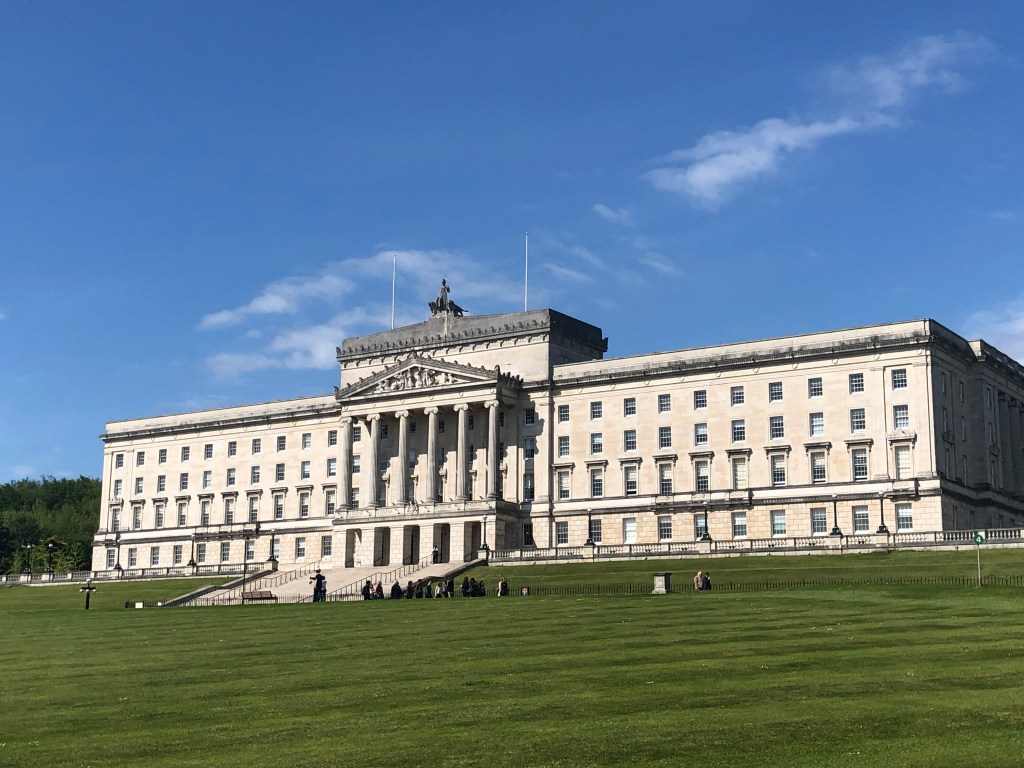
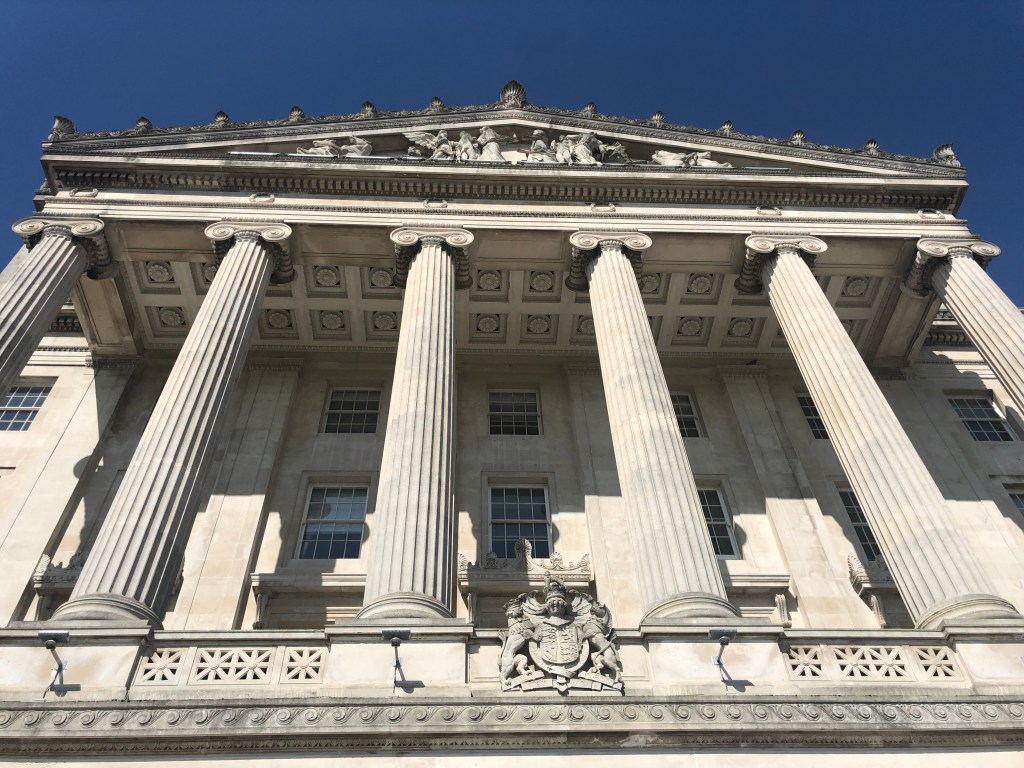
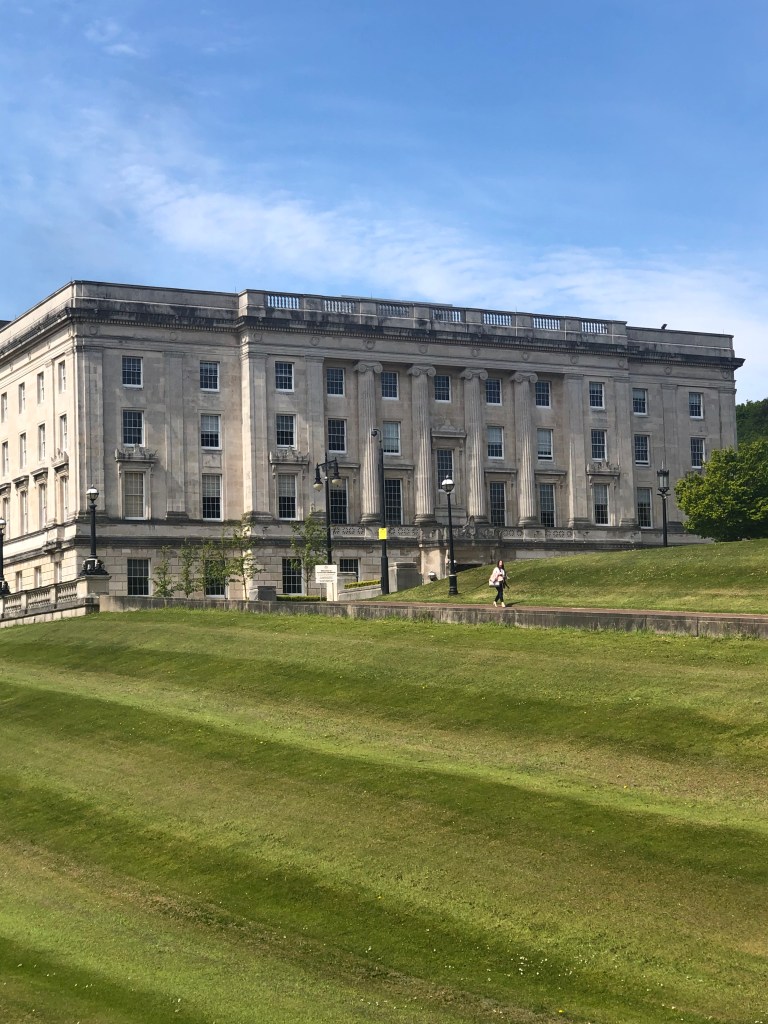
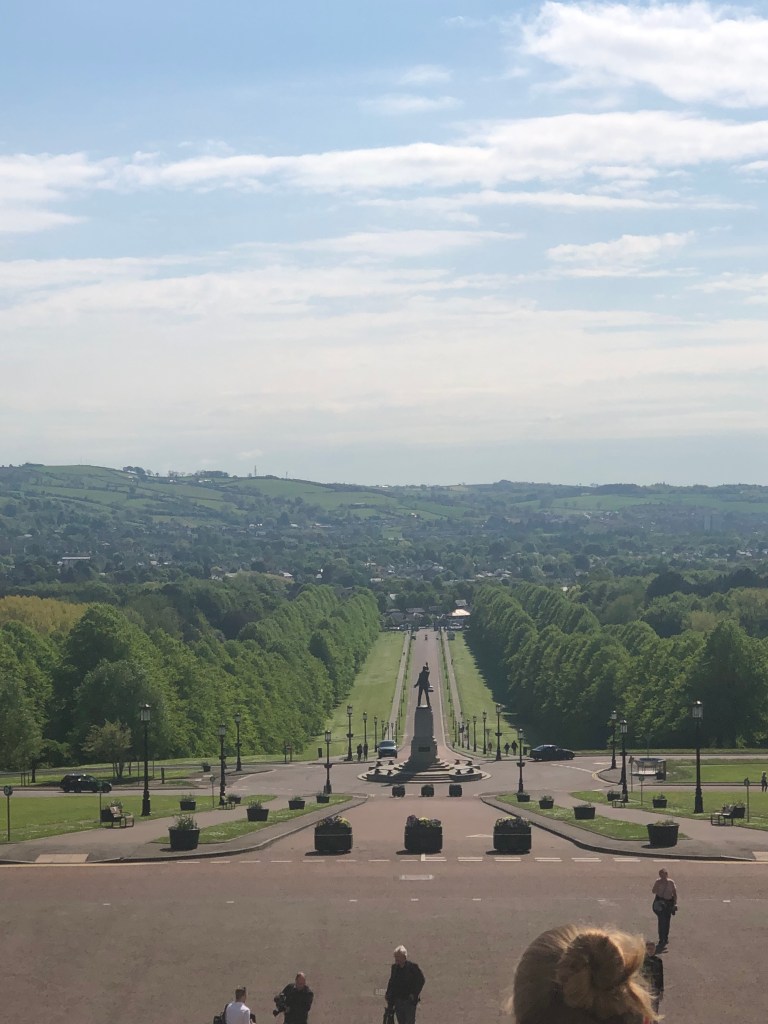
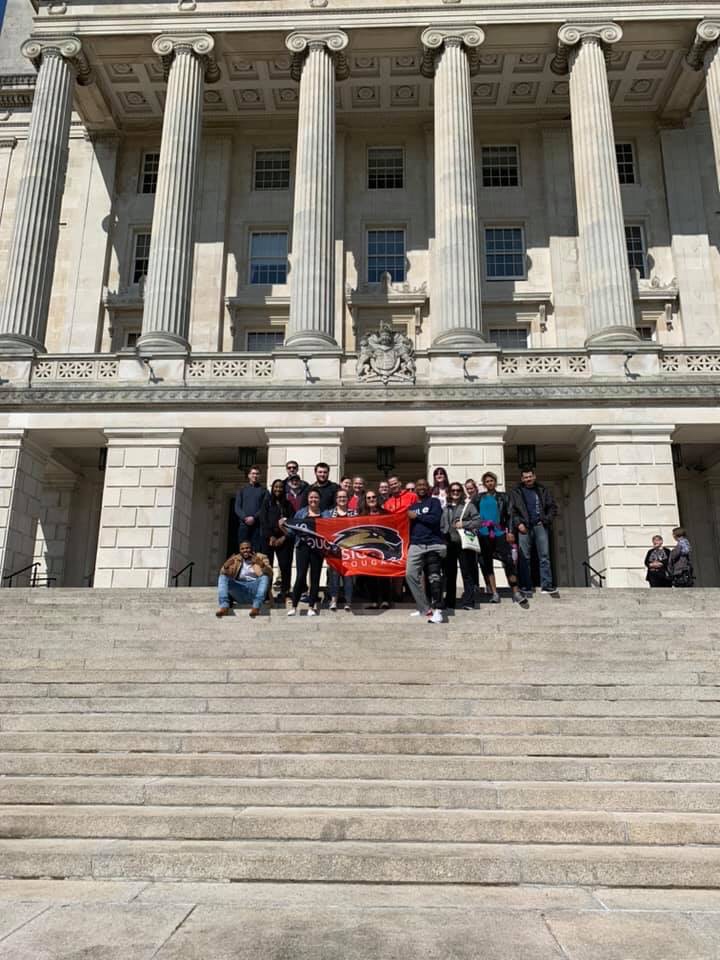
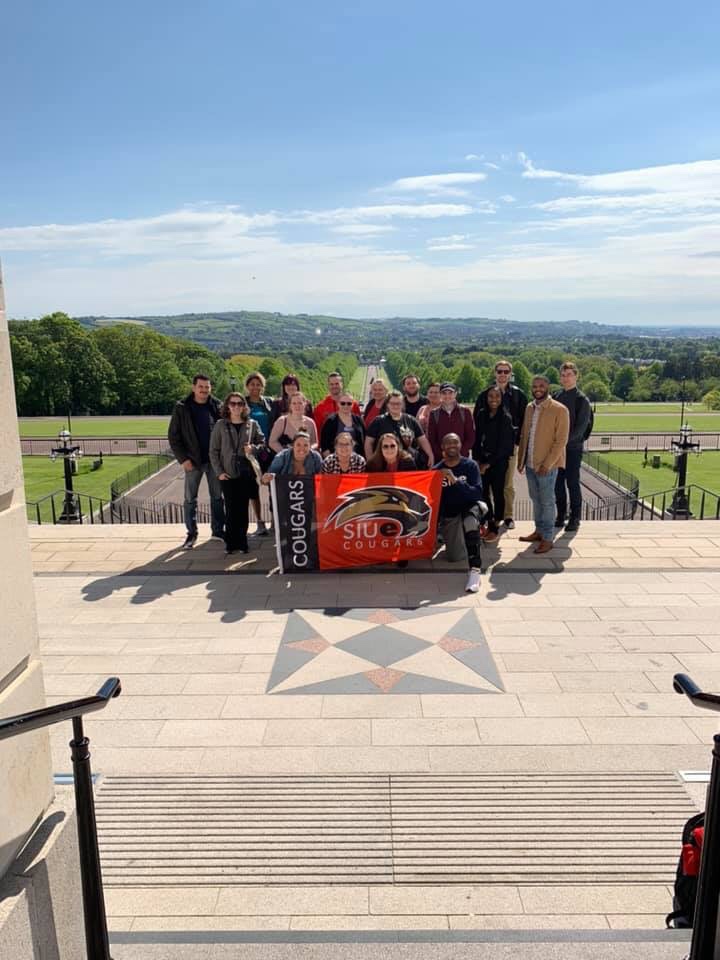
My trip to Stormont Building was amazing. I fell in love with the building before I even walked in. The stature of the outside surely matched the majesty of the inside. This building is not only beautiful but also fairly important. Stormont is where the members for Northern Ireland’s parliament spend their days debating and perhaps trying to come to some tacit agreement about their affairs. However, their ability to comprise is tied to Northern Irelands divide of Protestant versus Catholic and has resulted in Northern Ireland not having a government for two years. The two leading parties Sinn Fein and the Democratic Unionist Party (DUP) are severely divided and rarely if ever agree with the each other’s views.
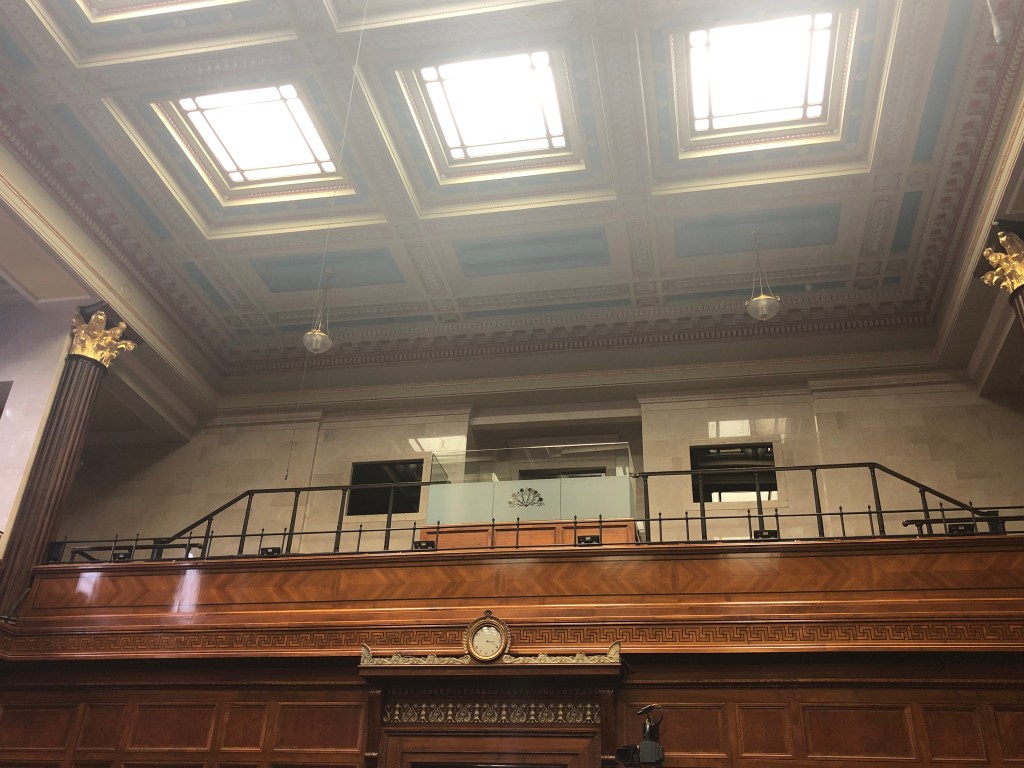
English Oak Paneling
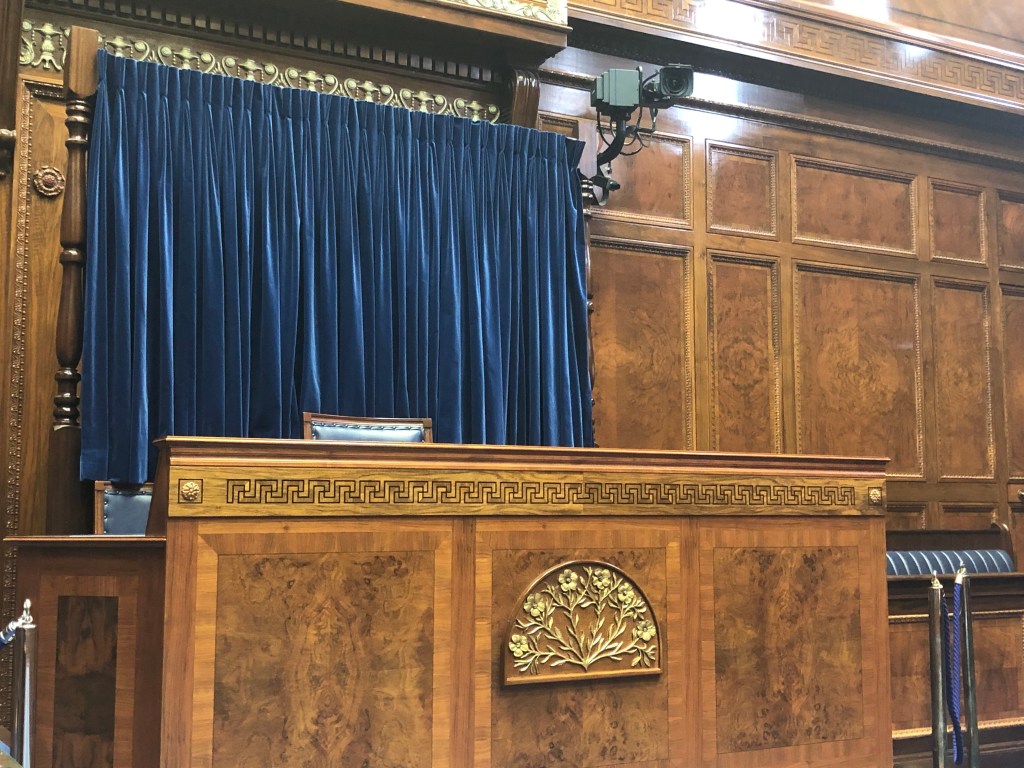
The building holds many significant details, but one of the most interesting, to me, is related to the paneling in the assembly chamber. My tour guide stated that all of the paneling was specifically made with English oak. Even when they ran out of English oak, they imported more because all of the wood paneling had to be made of nothing but English oak. This need for English oak seemed to be in line with the Protestant view of staying apart of the United Kingdom. It may have been a way to assert that Northern Ireland was under British rule and thus belonged to Britain.
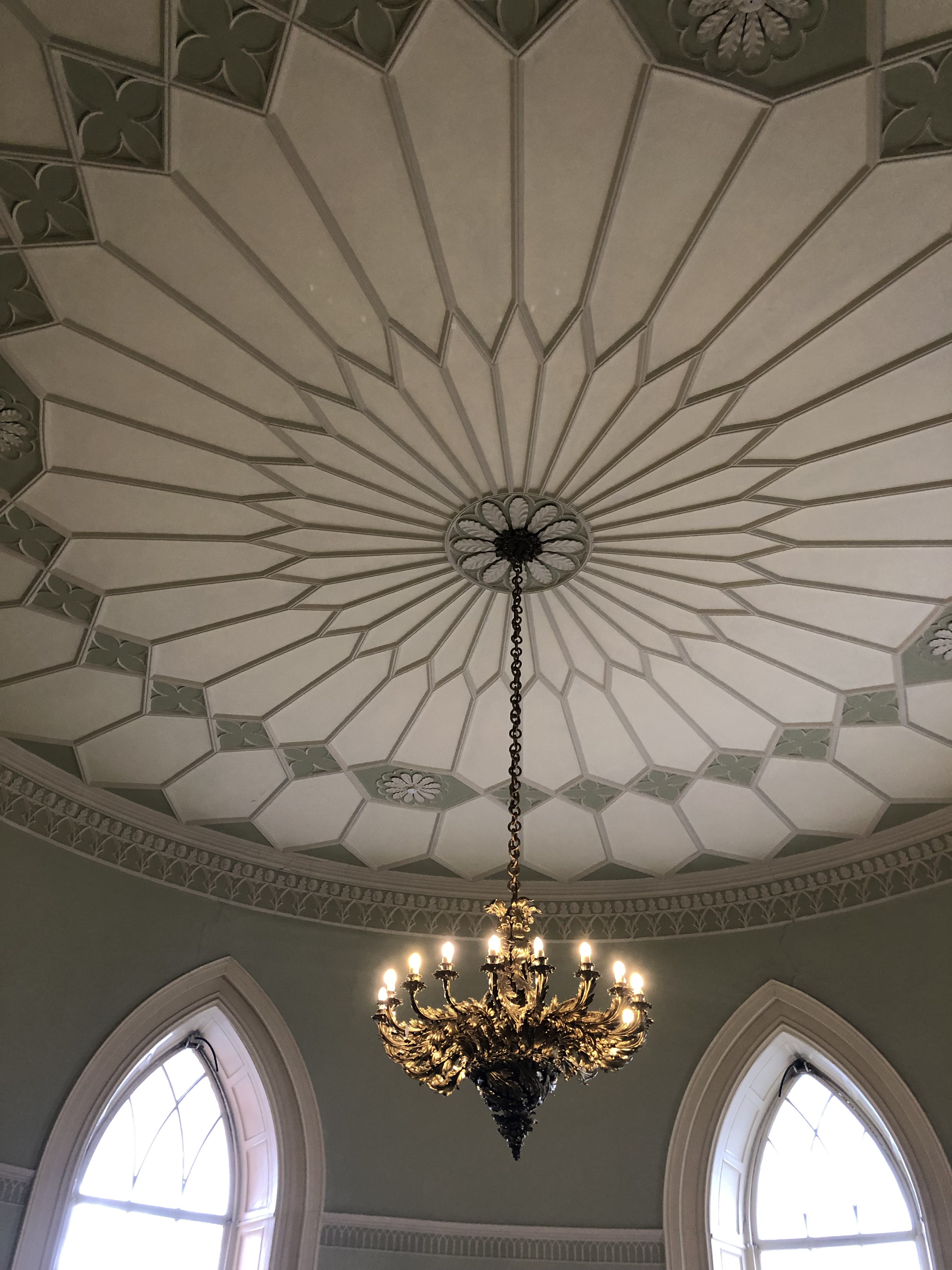
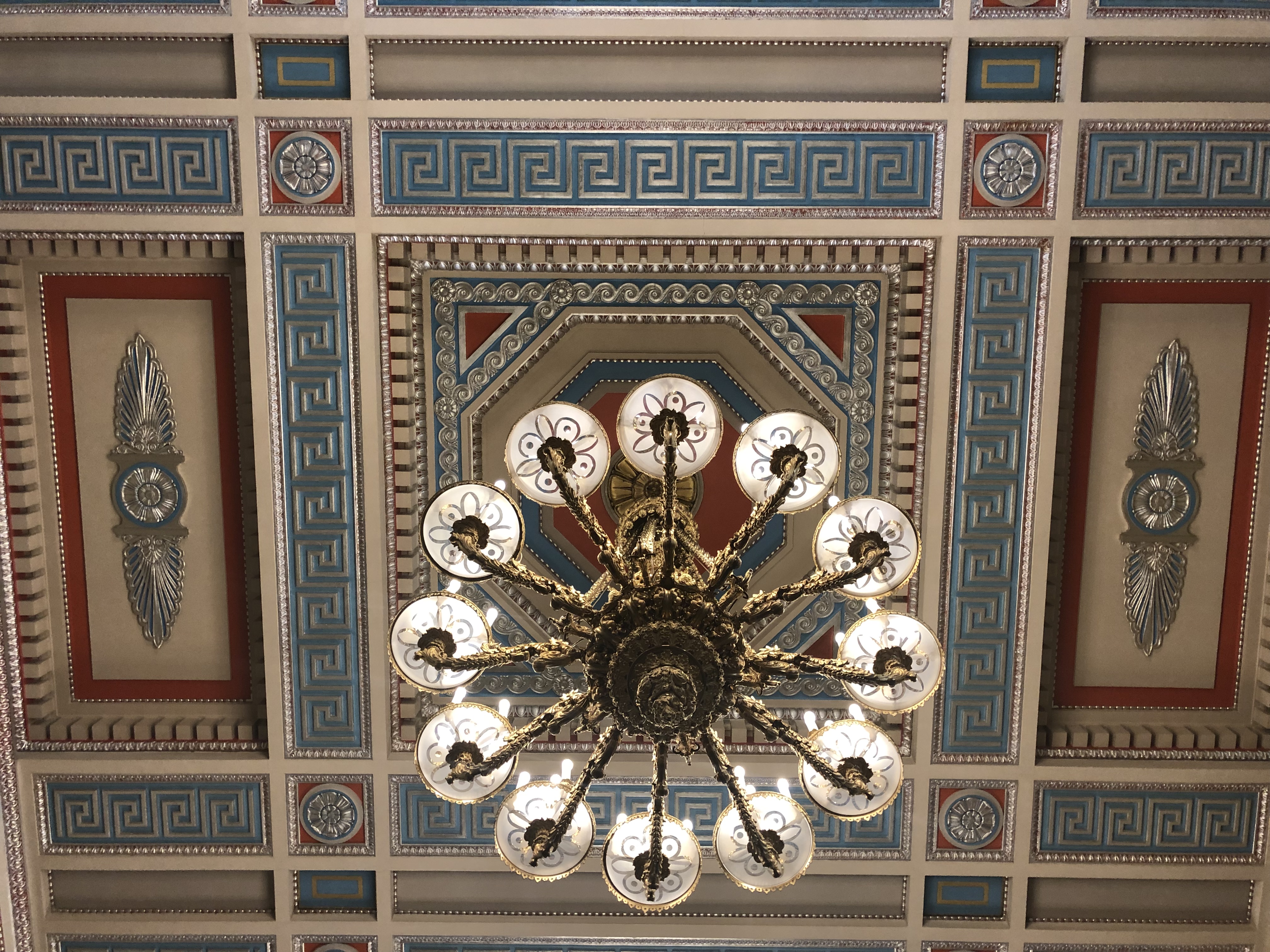
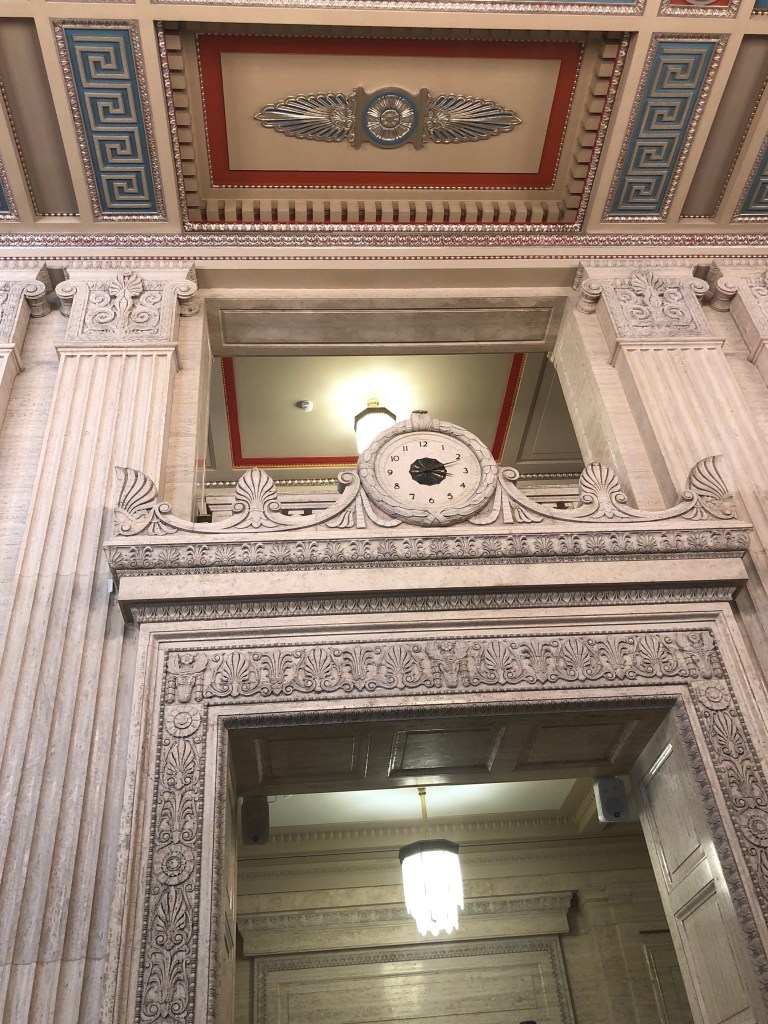
Ceiling in Stormont Building
While visiting Stormont, I quickly learned that I had to constantly look up. Even the ceilings in the building had a grand story to tell and were not just ornate for no reason. The picture above portrays an example of a ceiling design in Stormont that is a reminder of Northern Irelands loyalty to British royalty and thus Britain. The colors on the ceiling are not even slightly random. They were chosen because they are the colors of the English prince who came to visit the building. Additionally the chandelier in the picture, once hung from the ceilings of Windsor Castle before it was gifted to Northern Ireland’s Parliament. This is all very important because it symbolically shows Britains presence in Northern Irelands affairs and points out to nationalist that Northern Ireland’s identity is British not Irish.
Stormont Building
Stormont Building
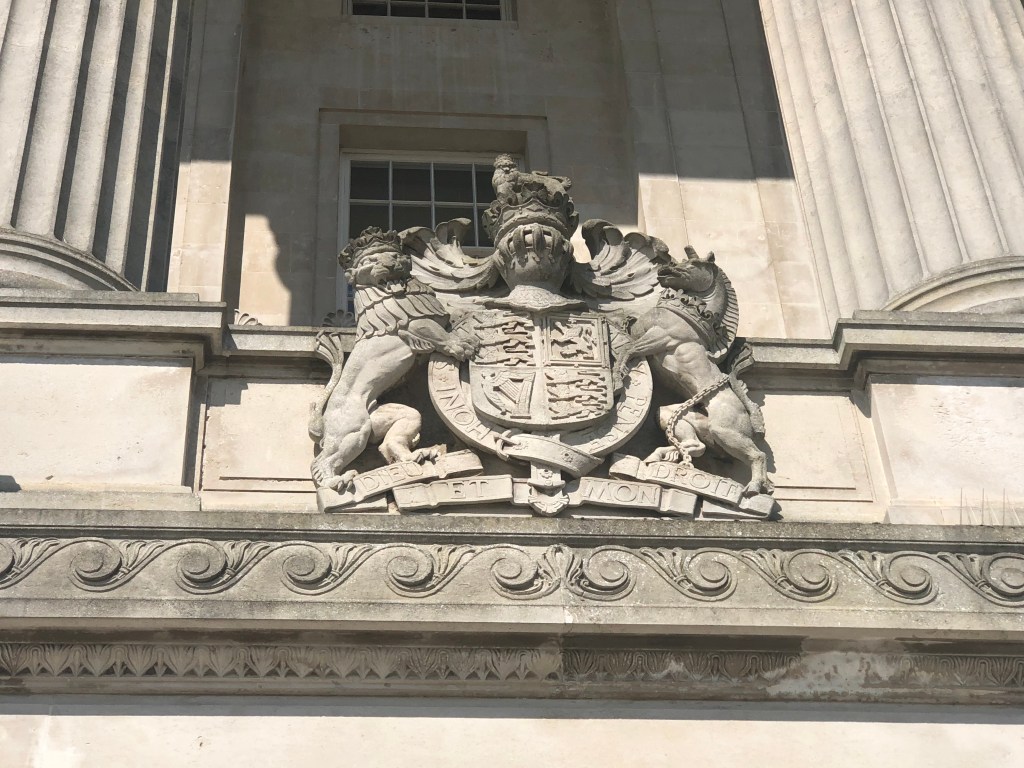
Stormont Building
Assembly Chamber : English Oak
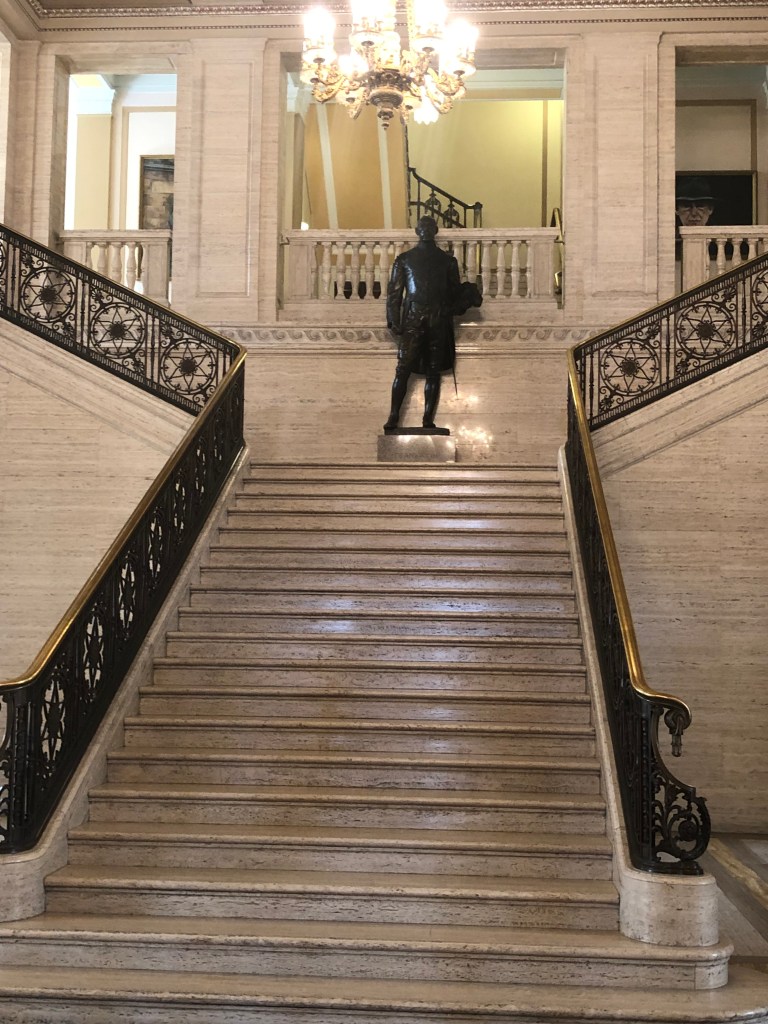
Great Hall
Lord Craigavon Protestant Hero who fought against rule by Catholic Ireland
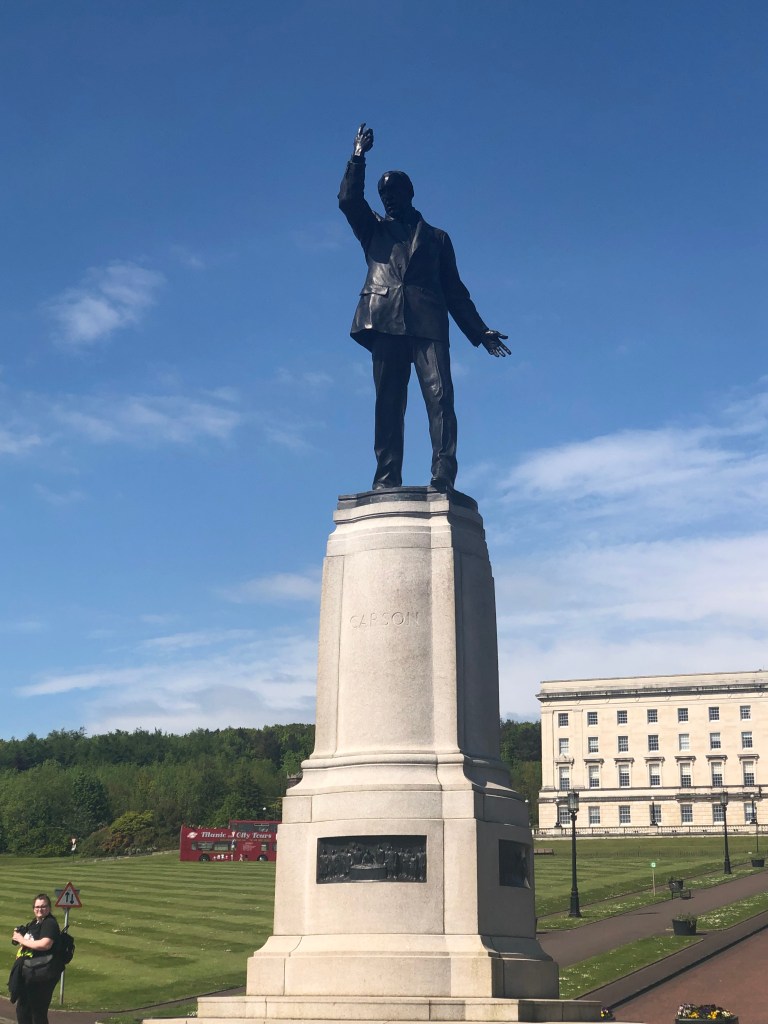
Edward Carson fought against unification of Ireland in 20th century
Prince of Wales Avenue
Above are photos that show some of the important aspects of Stormont Building and may even give greater insight into why the nationalist party- Sinn Fein- have a hard time working at a Parliament with so many historical reminders that they do not exactly belong.
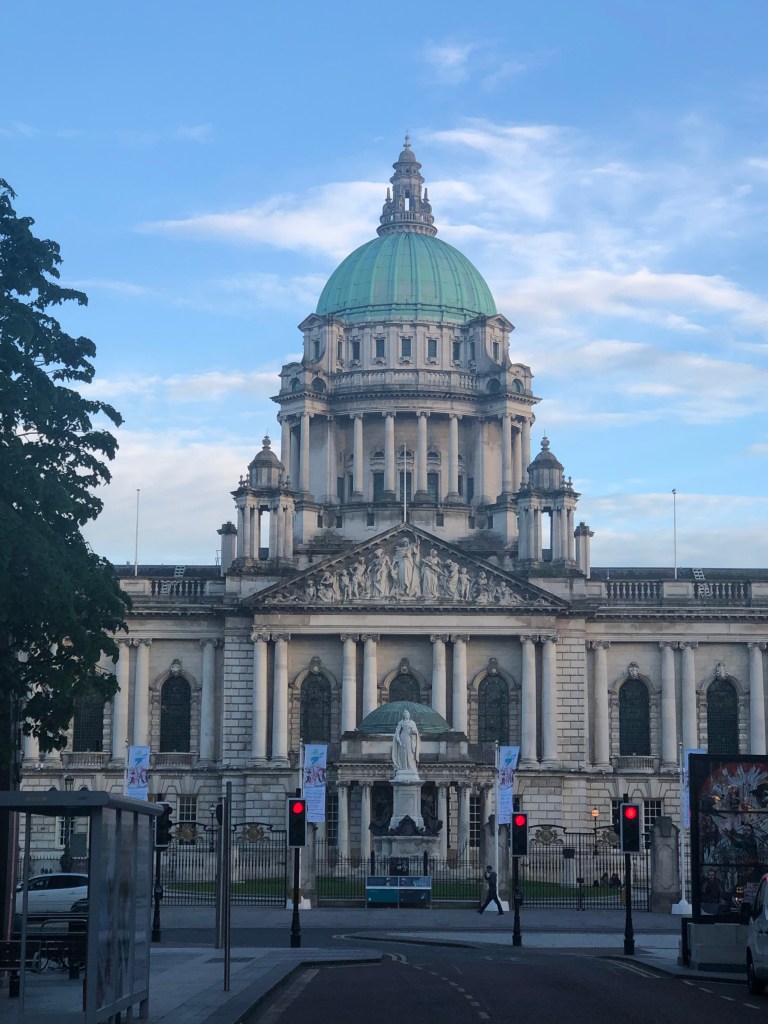
Belfast City Hall- Donegall Square A monument to the city’s charter
On Thursday May 16th, I had the pleasure of visiting the exquisite City Hall of Belfast. The building was built to celebrate Queen Victoria awarding Belfast city status. Interestingly, the building was so important that in order to give it prime real-estate they tore down a linen factory that resided on the very spot!
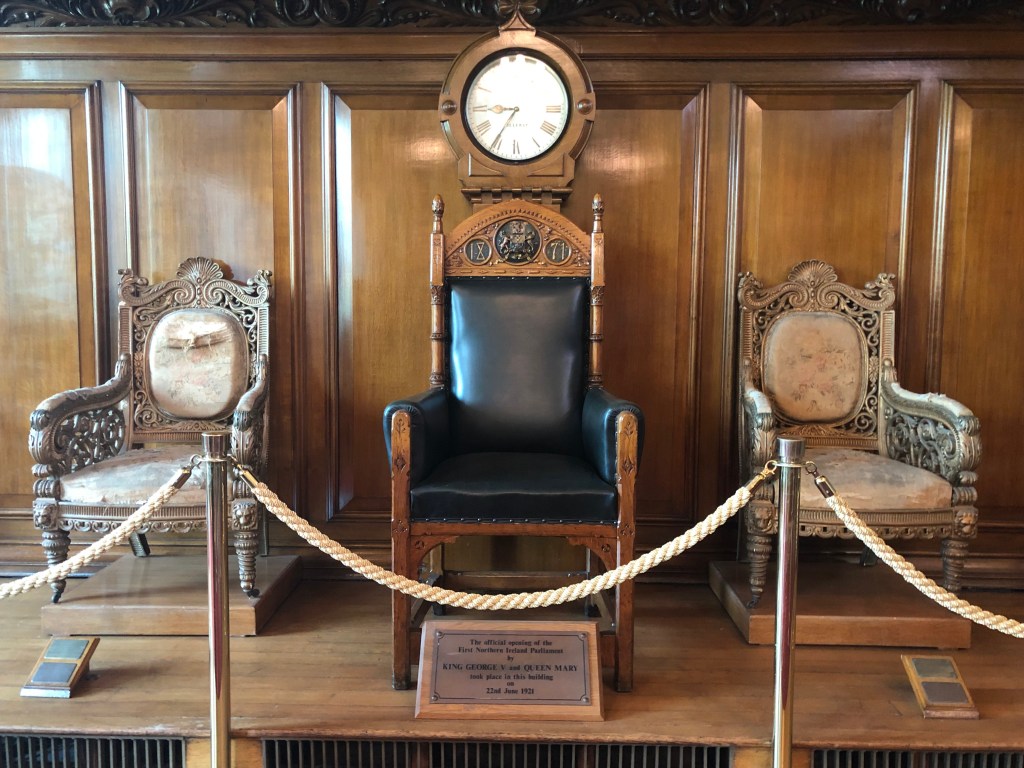
Additionally, the building was the site of the opening of the 1st Northern Ireland Parliament. So, it not only commemorates Belfast receiving city status but serves as a historical site, for the first instance of Northern Ireland taking the reins of its destiny into its own hands.
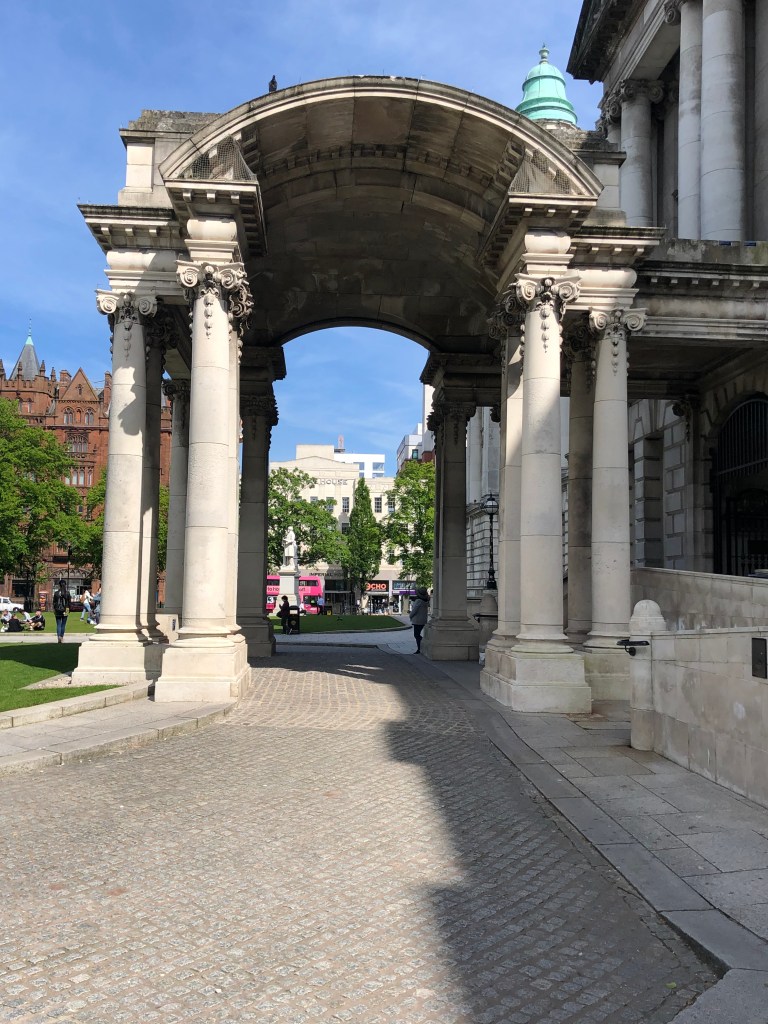
Entrance to City Hall
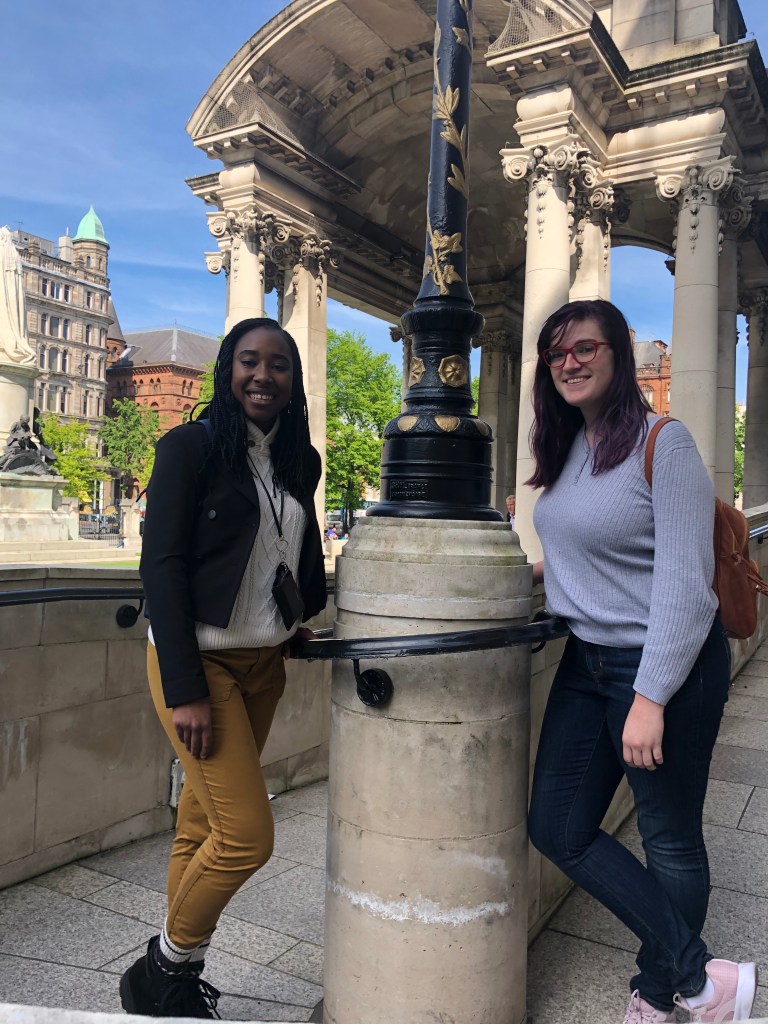
Ornate Lampost
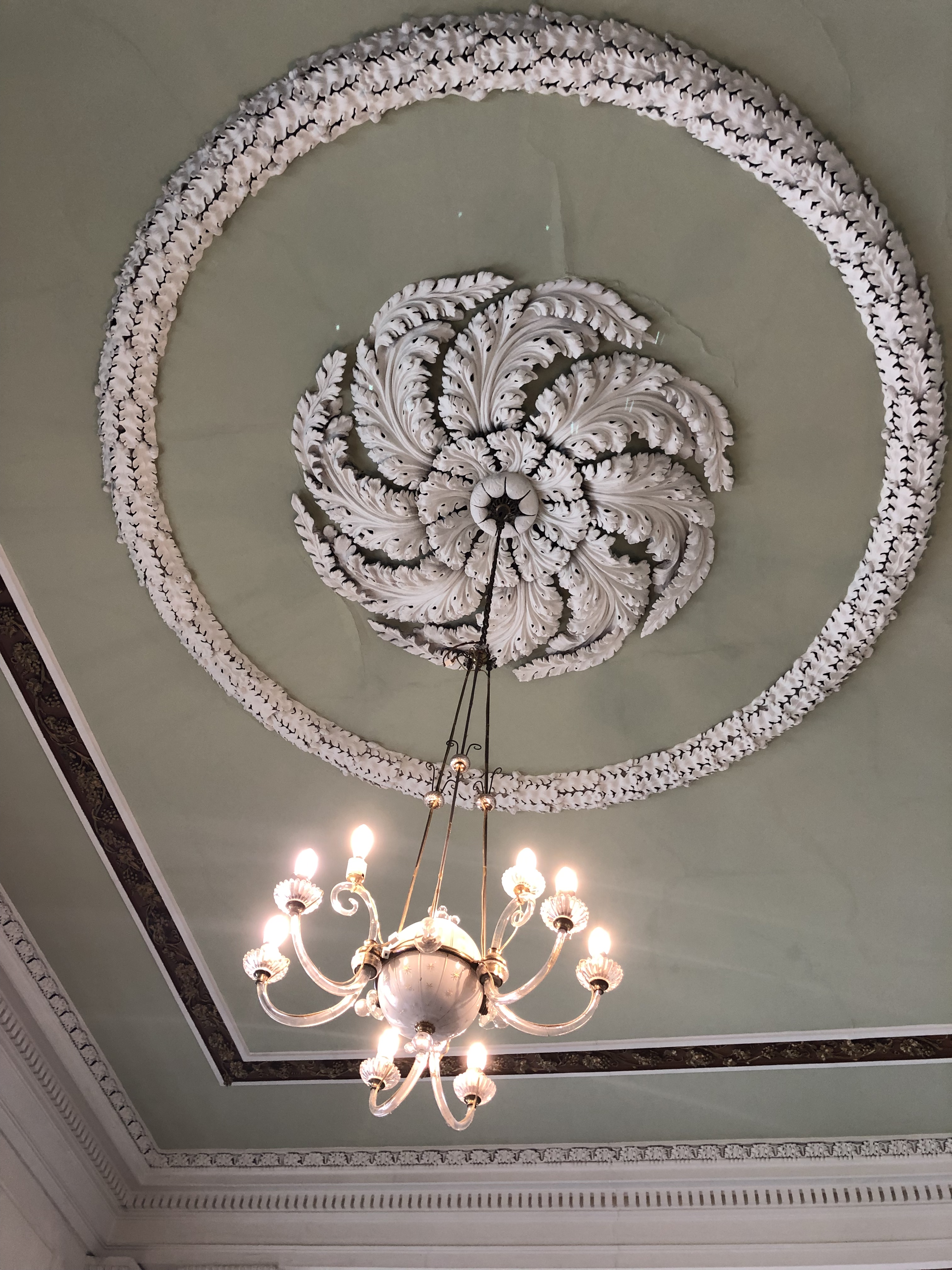
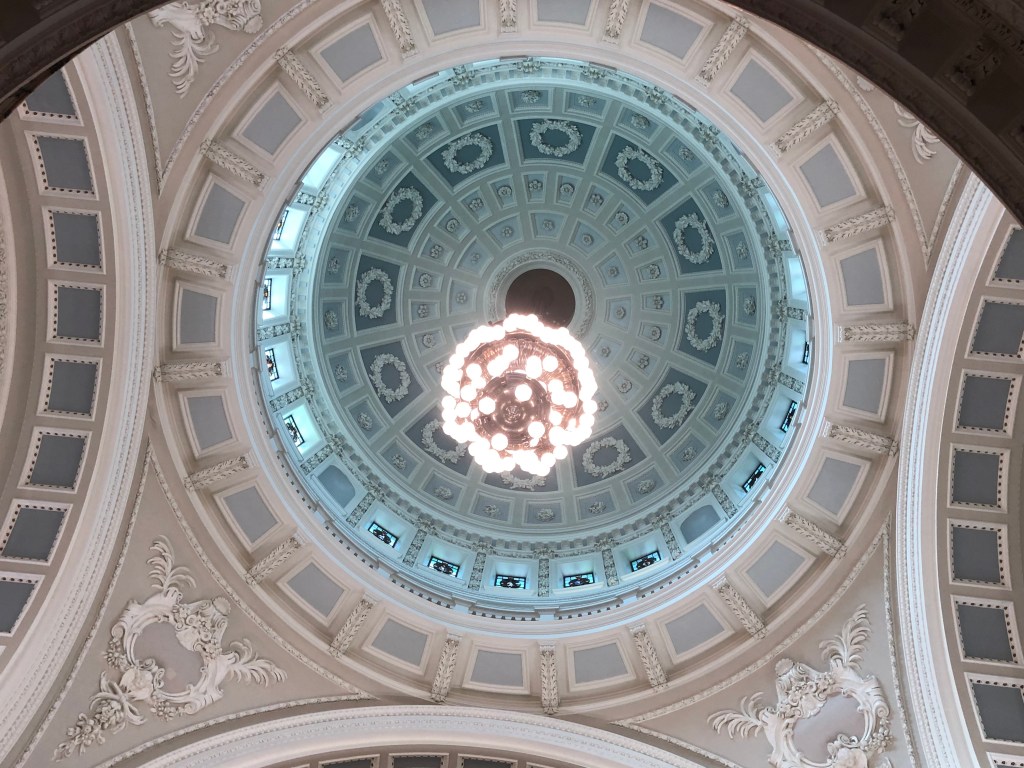
Decorative Ceiling
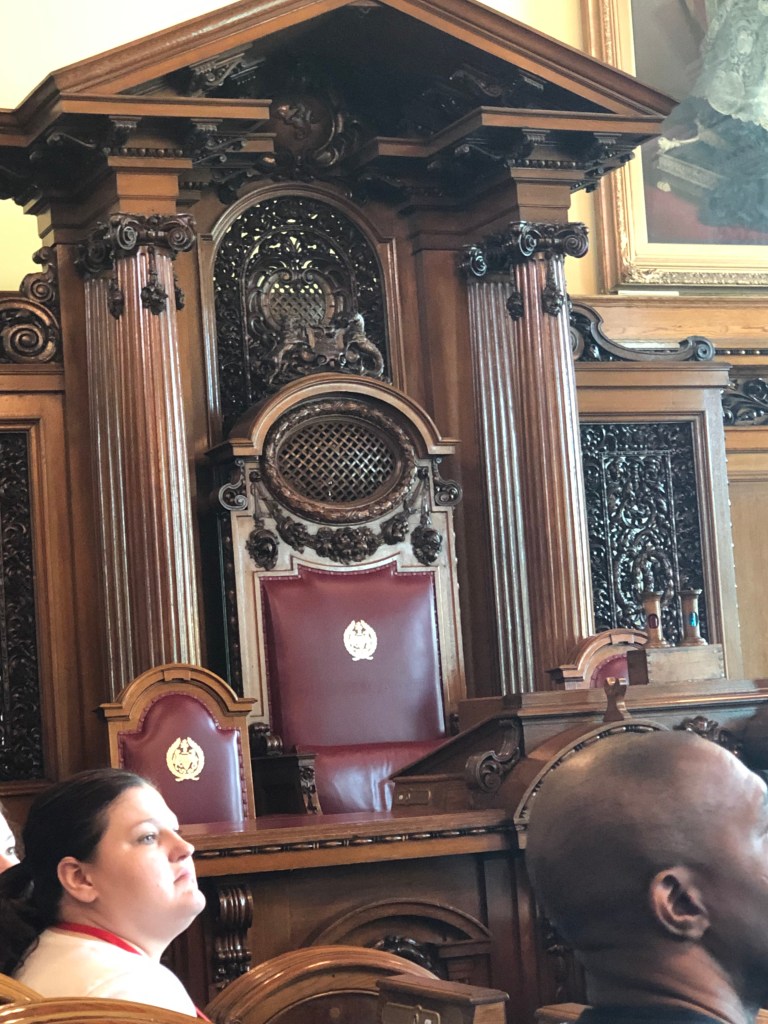
Lord mayor’s chair
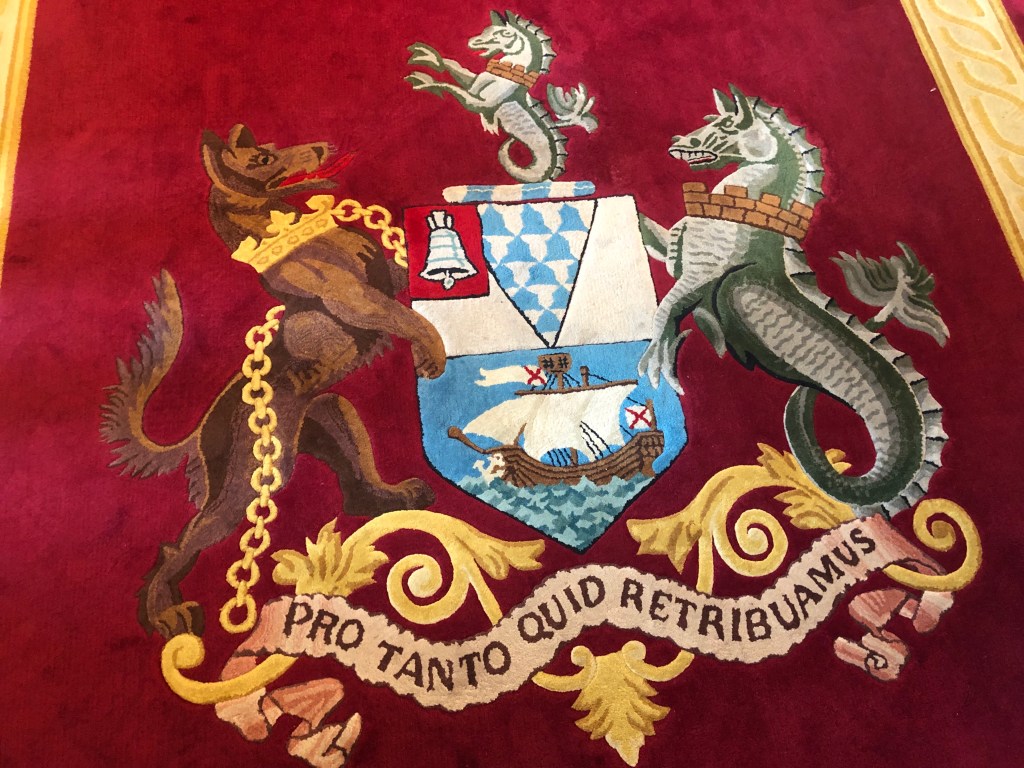
Belfast Coat of Arms
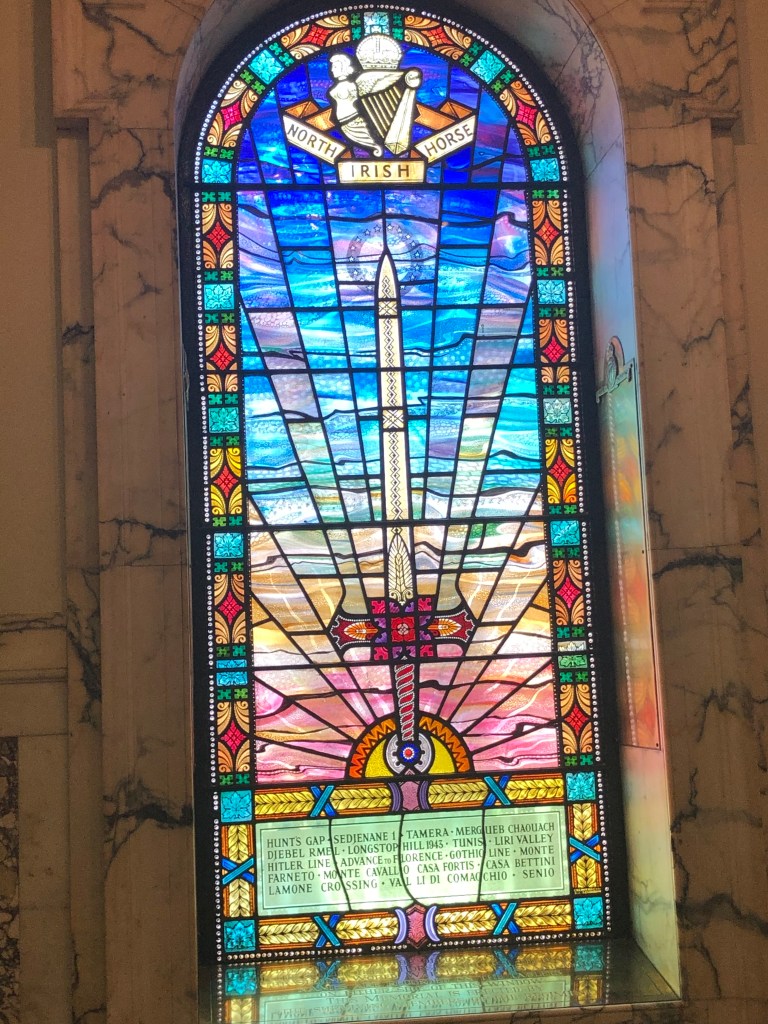
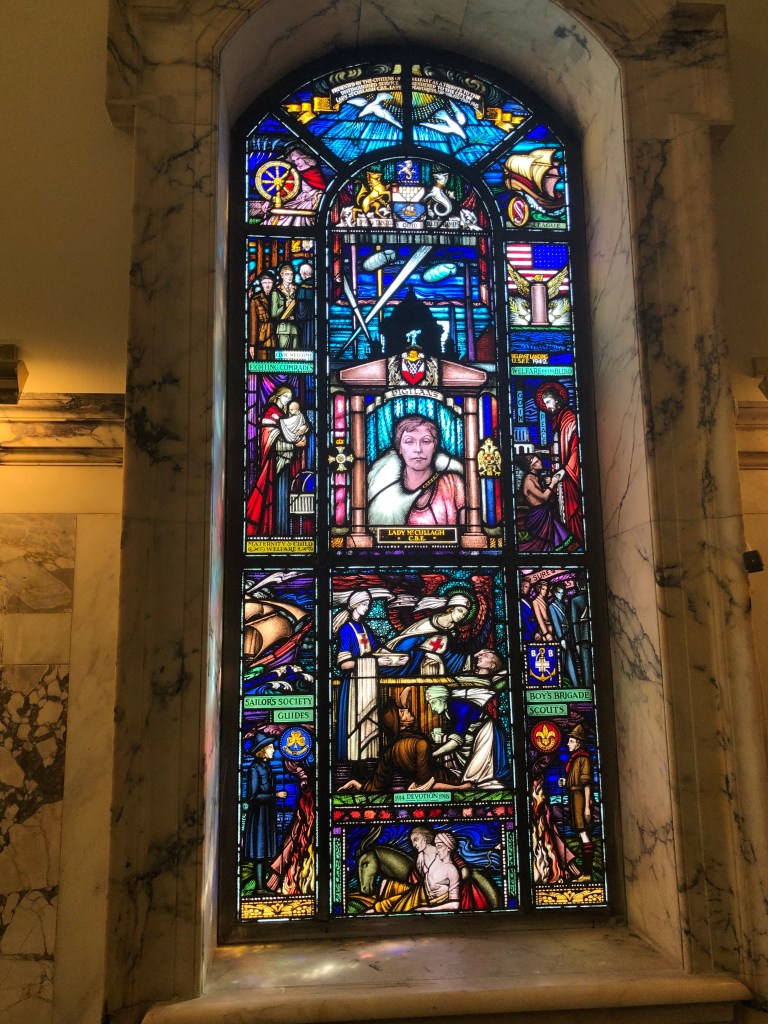
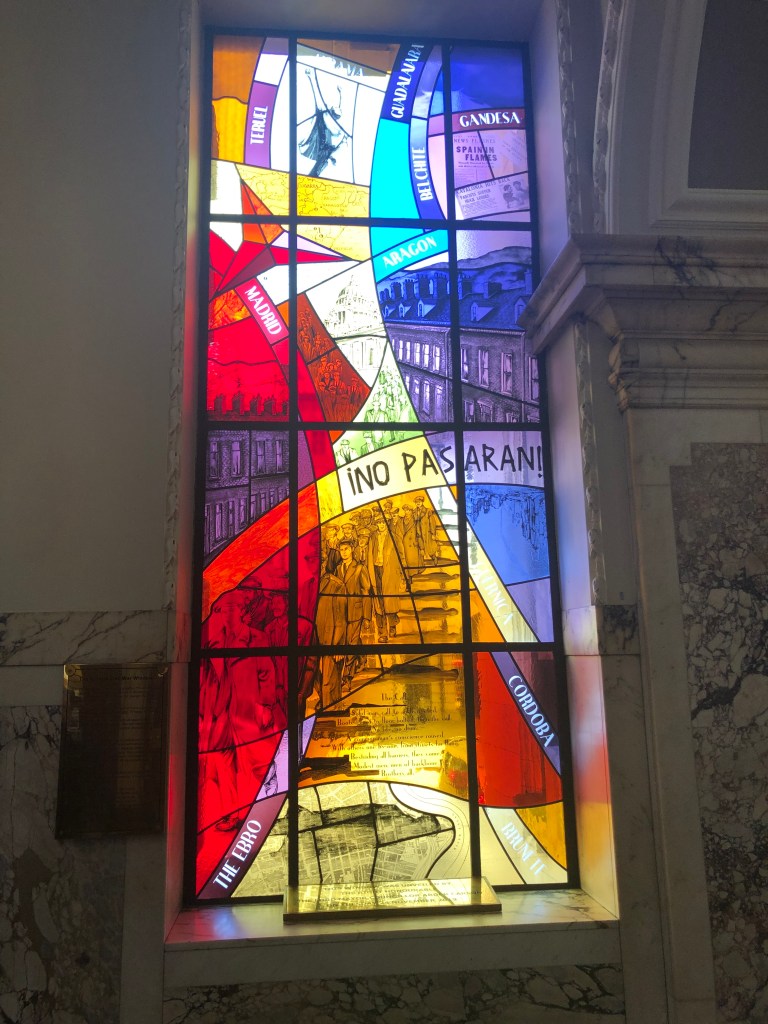
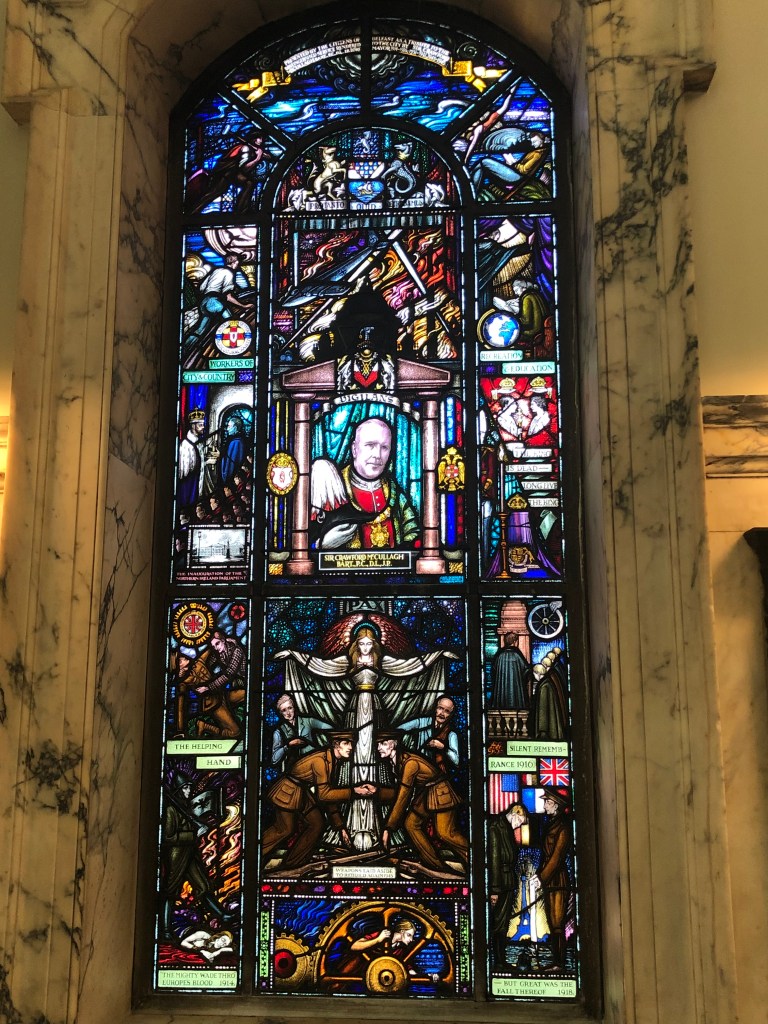
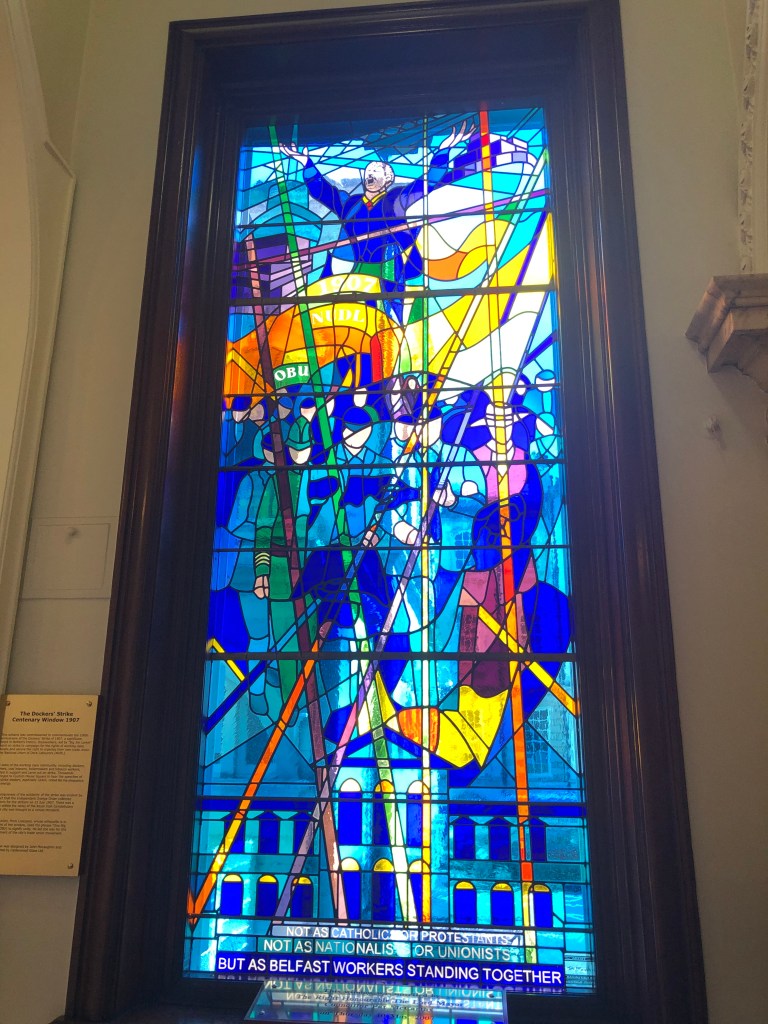
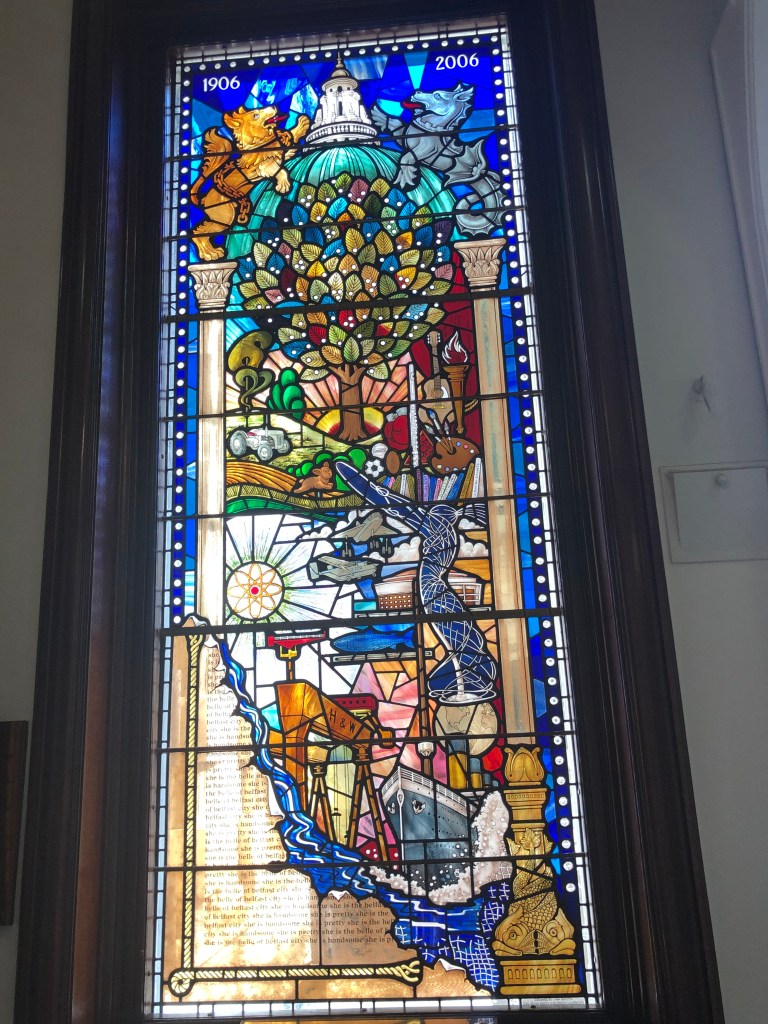
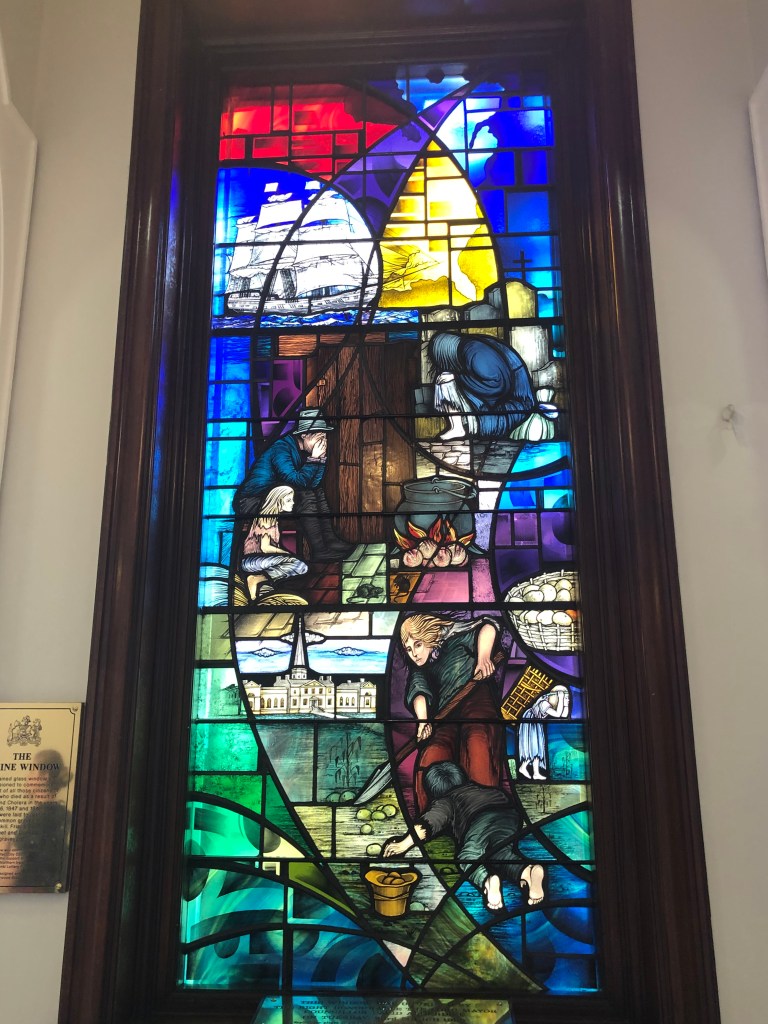
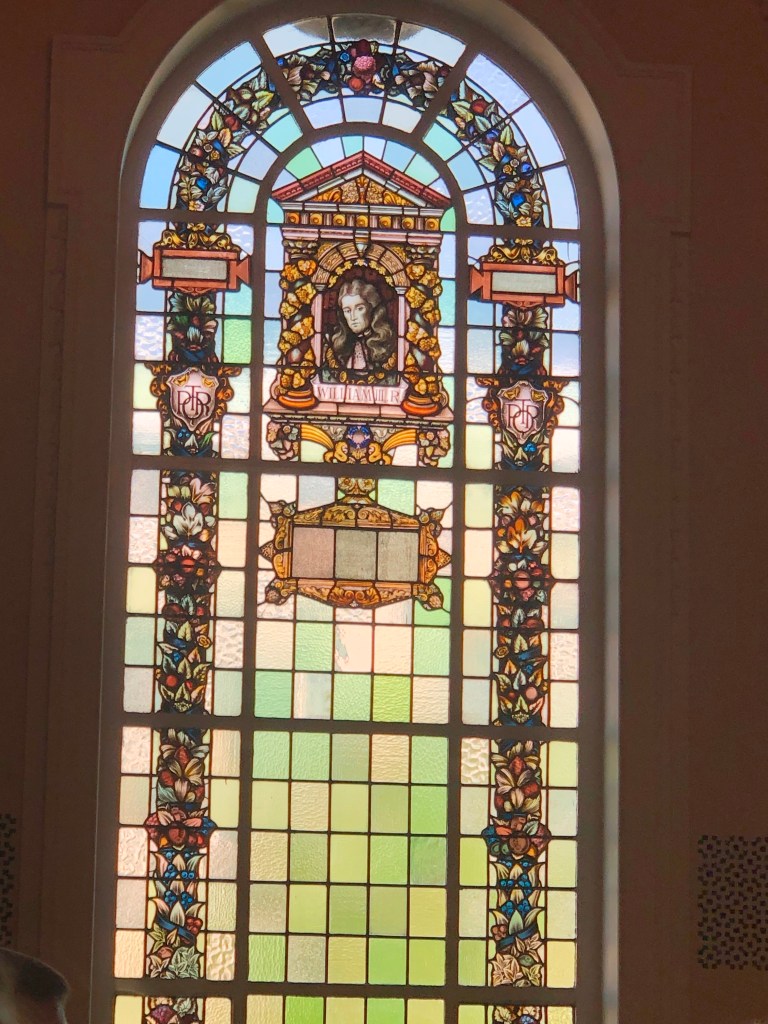
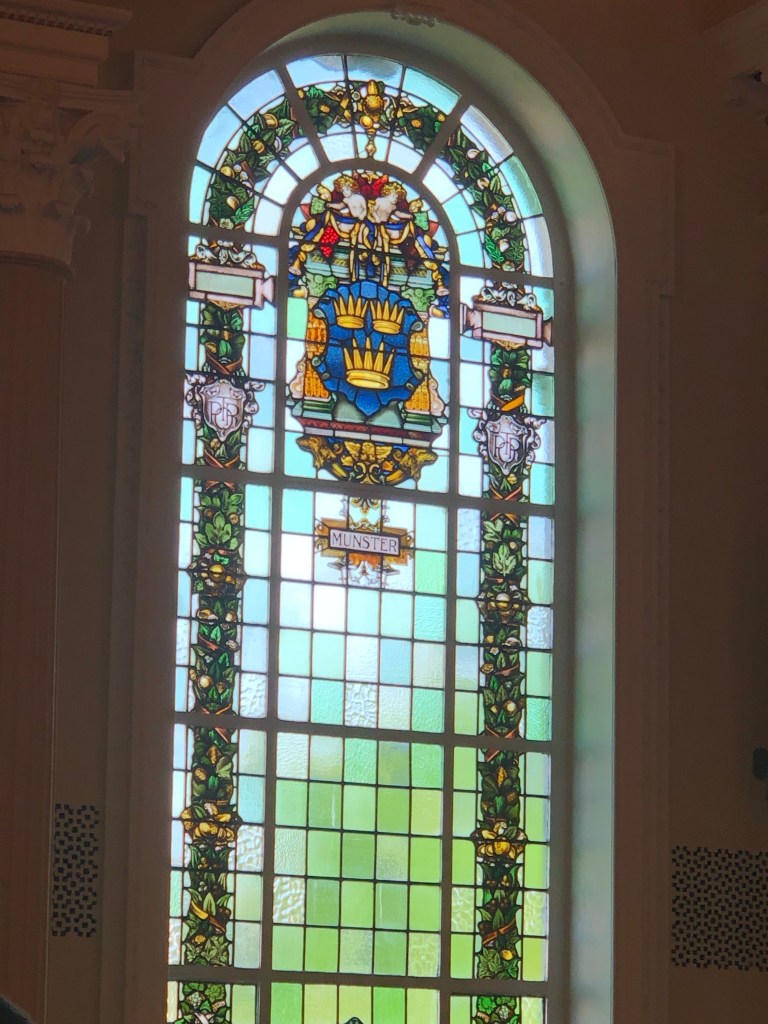
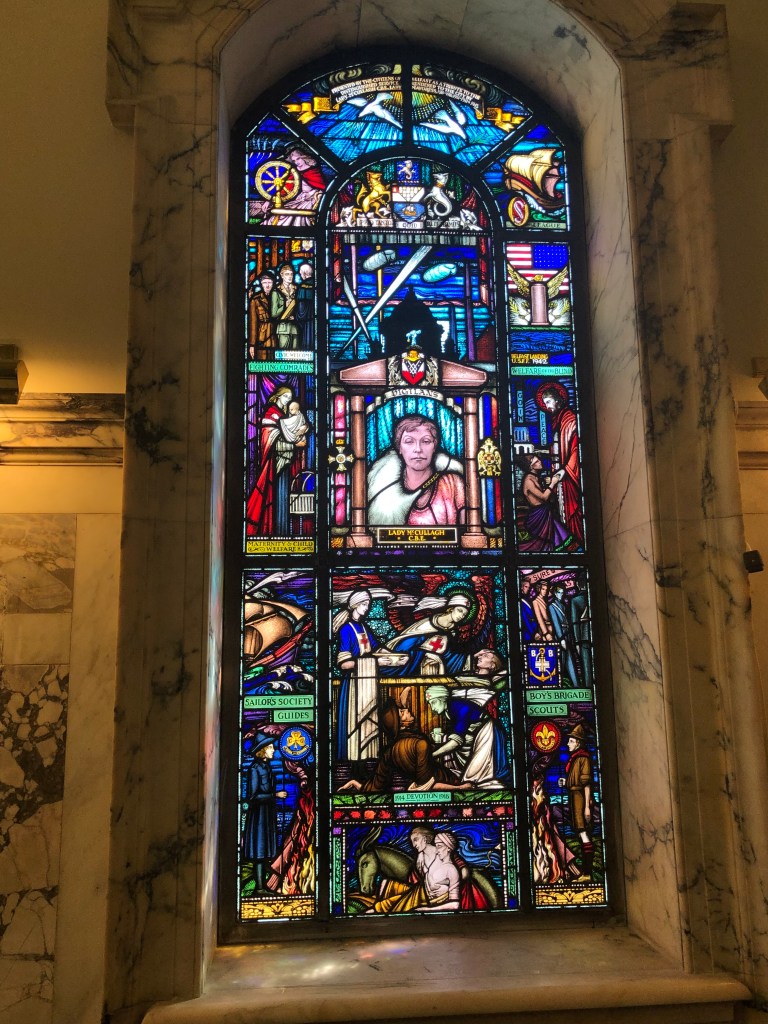
Stain glass windows that tell the Northern Ireland’s history
The pictures above provide a little bit of an insider view into Belfast City Hall. If you ever visit Belfast City Hall, be sure to pay close attention to the plethora of stain-glass windows in the building because they contain loads of both Irish and English symbolism that tell the city’s history!
 Hayley's Study Abroad Blog